The Shema is short enough to be remembered in a breath and large enough to accompany a life.
Many Jews first encounter it as a line said with eyes covered, a song from childhood, a phrase heard in synagogue, a bedtime ritual, or the text hidden inside a mezuzah on the doorpost. It can feel simple because the opening words are so familiar: “Hear, O Israel.” It can also feel overwhelming because those words carry belief, love, teaching, memory, body, home, children, and death. For background, read Deuteronomy 6:4–9 (Shema) .
For a beginner, the Shema is not only a prayer to memorize. It is a daily return. It appears in the morning and evening liturgy, in bedtime practice, around children, near the end of life, and inside the mezuzah passages described in Mezuzah and Doorways for Beginners . The same words move from synagogue to bedroom to doorway, making Jewish prayer feel less like one isolated event and more like a thread through the day.
A Sentence That Opens a World
The opening of the Shema comes from Deuteronomy. In transliteration, many people know it as Shema Yisrael, Adonai Eloheinu, Adonai Echad. Translations vary, but the line proclaims that God is one and that Israel is called to hear. The word “hear” matters. The prayer does not begin with an argument or a command to explain. It begins by summoning attention.
That attention is not private only. The line addresses Israel, the people, even when spoken by one person alone in a quiet room. A beginner saying the Shema at home joins a voice larger than the self. The room may be empty, but the words are communal. They have been said by parents and children, scholars and laborers, confident believers and people full of questions, people at ease in Jewish life and people finding their way back.
The Shema also widens immediately. The paragraphs that follow speak of loving God with heart, soul, and might, teaching these words to children, speaking of them at home and on the way, lying down and rising up, binding them on the hand and between the eyes, and writing them on doorposts and gates. That is why the Shema touches so many practices. It is not a floating sentence. It sends Jewish memory into bodies, homes, schedules, and generations.
Covering the Eyes
Many people cover their eyes for the opening line. The gesture is simple, but it changes the experience. Closing out the room for a moment can help the words become less decorative. The eyes stop searching. The body gathers. The voice has somewhere to land.
Not every community handles the gesture in the same way, and not everyone is physically able or comfortable doing it. Still, the custom teaches something useful to beginners. Jewish prayer is not only thought. It is carried by posture, breath, hands, books, melody, and repetition. Tallit and Tefillin for Beginners makes a similar point about morning prayer that can be held by the body. The Shema is less visibly elaborate, but a hand over the eyes can make the body part of the prayer.
The gesture can also soften embarrassment. A beginner may not know all the words, may read slowly, or may feel uncertain about belief. Covering the eyes gives a small shelter. The words do not have to be performed for the room. They can be received, tried, and returned to.
Morning and Evening
In Jewish liturgy, the Shema is part of the morning and evening services. Synagogue and Prayer for Beginners describes how a service can feel like a room already in motion, with page turns, standing, sitting, Hebrew, translation, and community sound. Inside that larger motion, the Shema is one of the great landmarks. Even when a beginner cannot follow every prayer, recognizing the Shema can make the service feel less featureless.
At home, the same pattern can become smaller and more personal. A person may say the Shema as part of morning prayer, before the day has fully scattered attention. Another may say it in the evening, when the house is quieter and the day can be gathered back. Someone learning gradually may begin with the first line, then add the next sentence, then learn the surrounding blessings or paragraphs with a teacher or siddur.
This is where patience matters. The Shema should not be reduced to a slogan, but beginners also should not wait until they can master the whole liturgical structure before beginning. A line returned to carefully can open the door to more learning. Jewish Texts and Learning for Beginners is helpful here because it treats Jewish learning as an ongoing conversation. The Shema is one of the texts that rewards being learned slowly.
Bedtime as a Jewish Threshold
The bedtime Shema is especially tender because sleep is a vulnerable threshold. The day is ending. A child may be afraid of the dark. An adult may be carrying unfinished worry. A family may be scattered across rooms. Saying the Shema before sleep places the body, the home, and the unknown night inside a familiar Jewish frame.
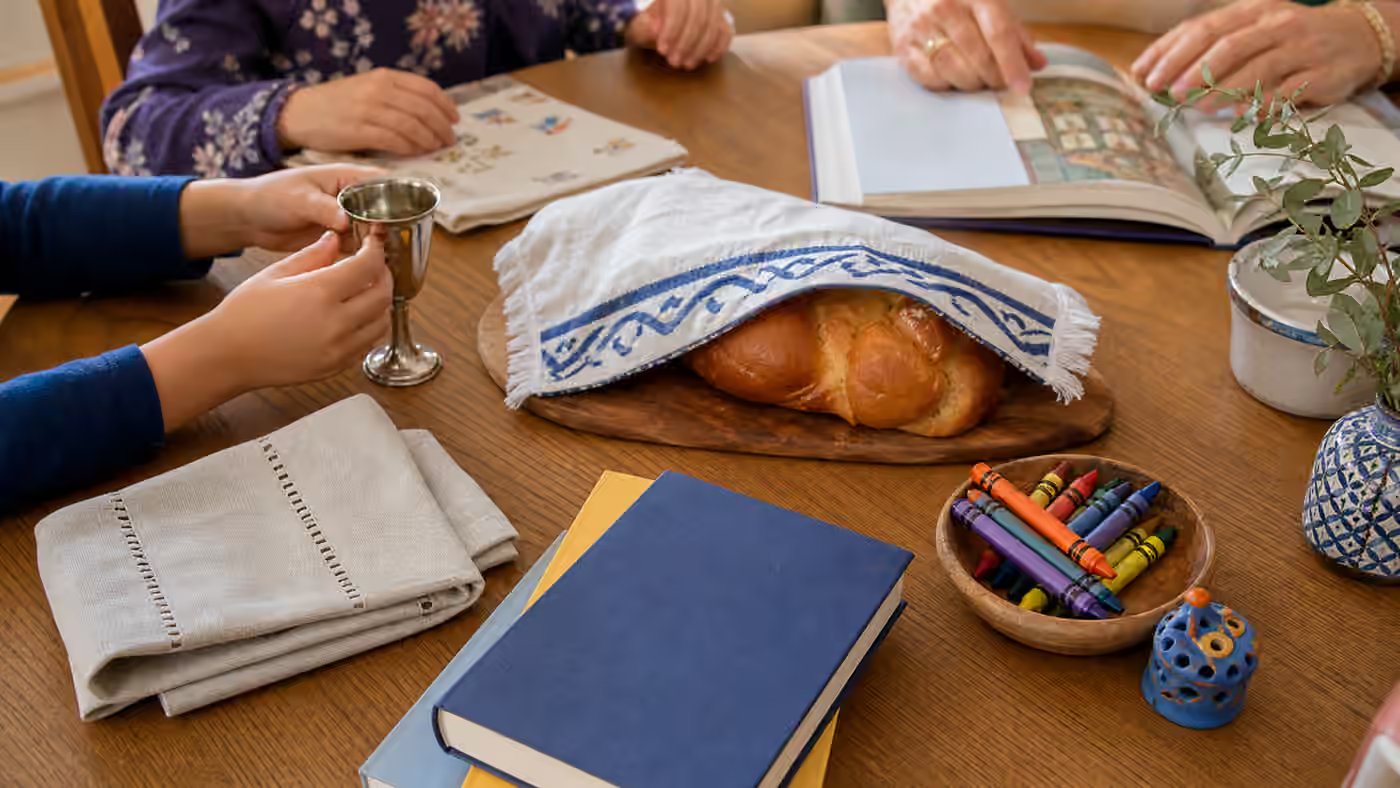
For children, the bedtime Shema may be one of the first prayers that becomes memory rather than information. A parent or grandparent may sing it. A child may mispronounce it for years and still know that the words belong to safety, love, and Jewishness. Later in life, the melody may return when other learning has faded. That kind of memory is not small. It is one way Jewish practice survives inside ordinary family life.
For adults, bedtime practice can be quieter. A siddur may include a fuller bedtime Shema with additional passages, reflection, forgiveness, and protection language. Some people say only the first line. Some add their own private prayers. Some use translation while learning Hebrew. The point is not to turn bedtime into a test. The point is to let the day end with attention rather than collapse.
Doorposts and Daily Motion
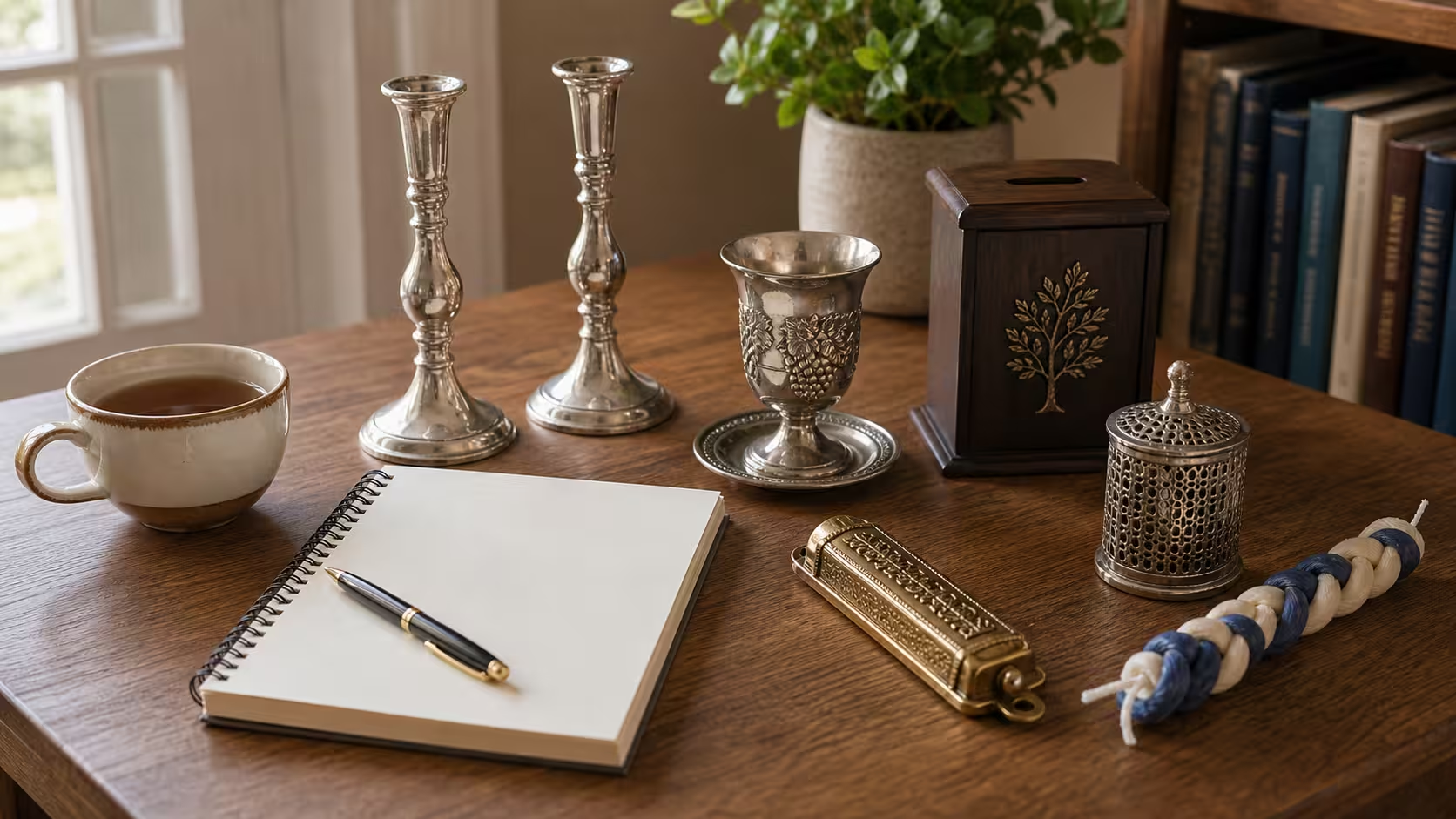
The Shema does not stay in the prayer book. Its words are written inside the mezuzah scroll, which is why a doorway can become a place of Jewish memory. Mezuzah and Doorways for Beginners explains that the case is not the center by itself. The parchment matters because it carries the passages that tell Israel to teach, speak, bind, and write these words.
That means the Shema is present even when nobody is saying it aloud. A person passes a doorway on the way to work, to the kitchen, to a child’s room, or out into the street. The mezuzah does not interrupt for long. It simply lets the words live at the edge of movement. This can make the prayer feel less confined to synagogue. Jewish life is not only what happens in formal services. It also happens while entering and leaving.
The home therefore becomes one of the Shema’s classrooms. Children hear it at night and see its container on the doorpost. Adults encounter it while rushing. Guests ask about the mezuzah and learn that Jewish text can be hidden in a visible object. A person who has not prayed in weeks may still touch the doorway and remember the first word: hear.
Belief, Questions, and Return
The Shema can be difficult because it sounds so clear. God is one. Israel must hear. Love is commanded. For people with uncertain belief, inherited pain, philosophical questions, or complicated relationships to community, the line may not feel simple at all. Jewish tradition has room for that difficulty, but it does not always make the first encounter easier.
A beginner does not need to pretend certainty. Saying the Shema can be an act of faith, but it can also be an act of listening toward faith, loyalty to inherited language, solidarity with the Jewish people, discipline, memory, or hope. Different teachers will frame that differently. The important thing is honesty. Mechanical recitation without attention can dull the words. Refusing ever to begin until every question is solved can keep a person outside a practice that might help them ask better questions.
Everyday Jewish Blessings describes blessings as small pauses that change the person receiving the world. The Shema is a larger pause. It asks the person not only to notice food, light, or time, but to notice the One before whom Jewish life is ordered. That can be comforting, challenging, or both.
A Thread Through the Day
If you want to begin, choose a real place for the Shema in your day. Morning before the phone. Evening before the house fills with noise. Bedtime with a child. A moment at the doorway after noticing the mezuzah. Keep a siddur or transliteration close enough to use. Learn the meaning, not only the sound. If you are part of a community, ask how the Shema is said there and listen for its melody in services.
Over time, the prayer may become less like a line you are trying to remember and more like a line that remembers you. It can meet you in synagogue, at home, beside a bed, at a doorway, in childhood, in grief, during return, or in the ordinary confusion of a weekday. Its strength is not that it explains everything. Its strength is that it calls again and again for attention.
Hear, it says, before the day begins. Hear, it says, before sleep. Hear, it says, as you cross the threshold. A Jewish life can be built from many practices, books, meals, holidays, and acts of care. The Shema is one of the threads that runs through them, quiet enough for a bedroom and strong enough to carry a people.