Some blessings are short enough to follow a person across a lifetime.
Shehecheyanu is one of them. It appears at holiday tables, candle lightings, first moments, seasonal fruit, new experiences, and thresholds that feel too meaningful to pass without words. A beginner may first hear it at Hanukkah, Rosh Hashanah, a seder, a baby naming, a conversion moment, or while someone holds a fruit they have not eaten all season. The blessing is brief, but the feeling behind it is large: we have lived, been sustained, and arrived at this time. For background, read Mishnah Berakhot 9:3 (blessings for new occasions) .
Everyday Jewish Blessings explains how Jewish blessing practice trains attention before and after ordinary eating. Shehecheyanu has a different rhythm. It is not said over every ordinary repetition. It marks arrival, renewal, and the strange tenderness of being present for a moment that did not have to be guaranteed.
The Blessing Names Arrival
The traditional blessing thanks God for granting life, sustaining us, and bringing us to this time. Even in translation, the movement is clear. Life is not assumed. Sustenance is not assumed. Arrival is not assumed. The blessing gives language to the fact that a person has reached a particular moment.
That is why Shehecheyanu can feel joyful and serious at once. A first night of Hanukkah candle lighting may be festive, but the blessing also remembers that another year has passed and the household is here again. A new fruit may be simple, but it carries seasonality, patience, and delight. A lifecycle moment may be celebratory, but it may also hold family memory, absence, uncertainty, or relief.
The blessing does not force one emotion. It gives the moment a container. People can arrive with joy, grief, nervousness, gratitude, or a mix that has no tidy name. Shehecheyanu is capacious enough for that.
Holidays Teach the Blessing Through Return
Many beginners learn Shehecheyanu through holidays. It is said at the first candle lighting of Hanukkah, at the beginning of many festivals, and in other holiday contexts according to community practice. Hearing it year after year teaches that the calendar is not merely repeating. The holiday returns, but the people have changed.
Hanukkah for Beginners shows this clearly. On the first night, the household may say blessings over the candles, including Shehecheyanu in many traditions. The candles are familiar, but the year is not. A child is older. A mourner may be lighting without someone who was present last year. A newcomer may be saying the words for the first time. A family may be in a new home. The blessing lets the old practice and new circumstances meet.
At Rosh Hashanah at Home , Shehecheyanu can also appear around the holiday’s first moments and, in many homes, around a new fruit on the second night. Customs vary, and a reliable siddur, teacher, or local community can guide exact usage. The larger lesson is accessible: the new year is not only counted. It is received.
First Times Are Not Always Simple
Because Shehecheyanu is associated with firsts, it can sometimes be treated as a cheerful stamp for anything new. Jewish practice is more careful than that. Communities have norms about when the blessing is said, and not every novelty calls for it. A new purchase, a new garment, a first performance of a mitzvah, or a seasonal fruit may raise different questions depending on custom, context, and whether the moment brings genuine joy or obligation. Beginners should learn from a siddur or teacher rather than inventing rules from a vague feeling.
Still, the emotional wisdom matters. First times can be vulnerable. The first Shabbat dinner you host may be messy. The first time you attend services may be confusing. The first time you light candles after a loss may catch in your throat. The first time you say a blessing in Hebrew may feel exposed. Shehecheyanu does not say, “This is easy.” It says, “You have arrived.”
Synagogue and Prayer for Beginners can help with public firsts, because many Jewish moments happen in rooms where other people seem to know the choreography. A blessing of arrival does not mean expertise has arrived. It means the person has reached the threshold and is allowed to stand there honestly.
The Blessing Belongs to Time, Not Performance
Shehecheyanu can be moving when sung by a room, whispered by a parent, said by a person alone, or read haltingly from a transliteration. Its power does not depend on dramatic delivery. In fact, overperforming the moment can make it smaller. The blessing works best when it is allowed to be simple.
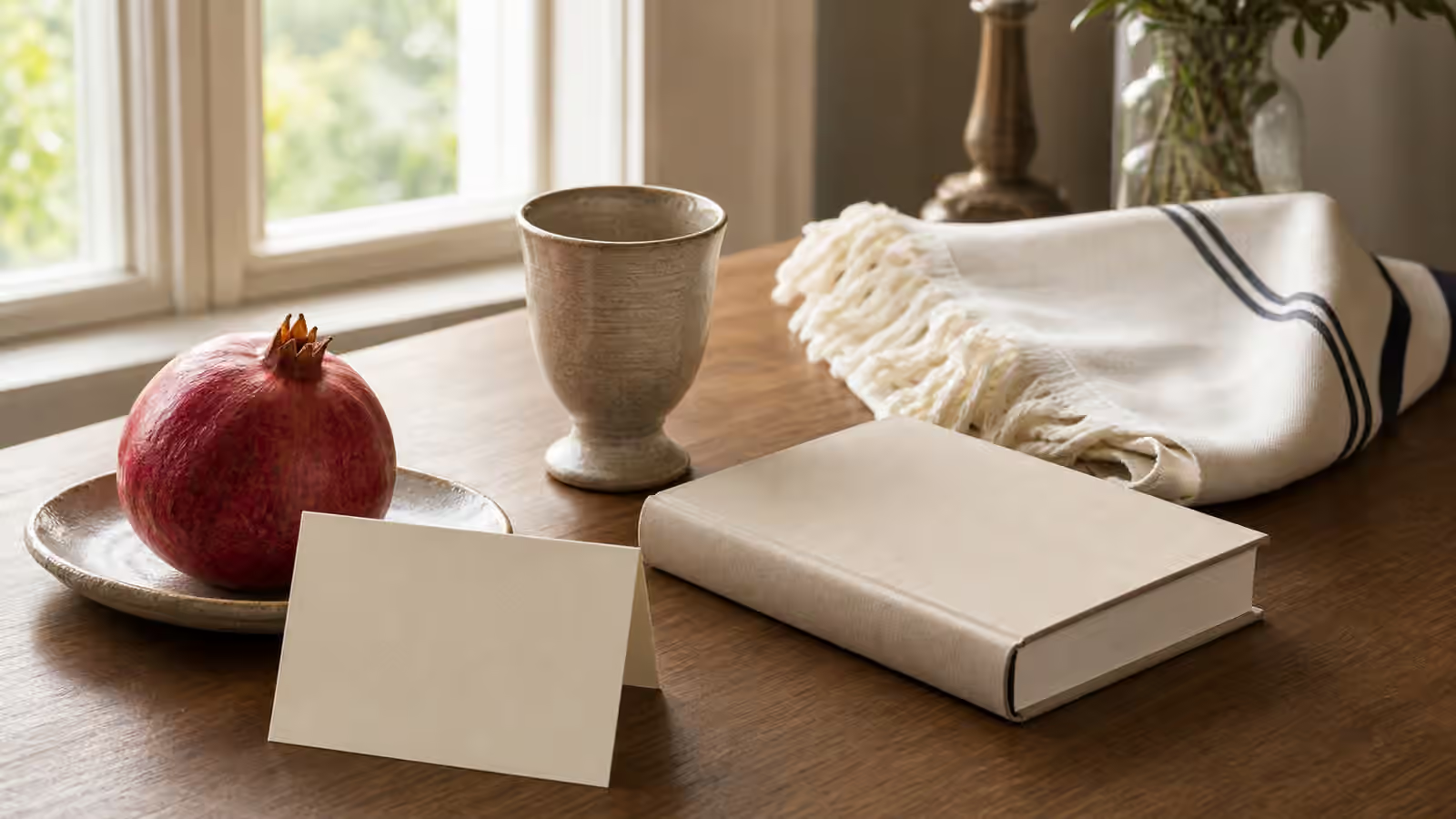
This is one reason it belongs near Jewish Home Rituals for Beginners . Home ritual often succeeds through ordinary placement: a cup, a candle, a fruit, a book, a doorway, a small giving box. Shehecheyanu can enter those spaces without turning them into a stage. It gives a household a way to pause when something new or seasonal is being received.
The pause matters because modern life often consumes firsts quickly. A person buys, posts, tastes, travels, celebrates, and moves on. Shehecheyanu slows the hand. It says that arrival deserves a word before possession, a breath before use, and gratitude before the moment is folded into memory.
The Blessing Can Hold Absence Too
A difficult truth about arrival is that not everyone arrives. A person saying Shehecheyanu at a holiday table may be aware of someone missing. A survivor may feel the weight of having reached a day others did not. A family may say the blessing at a joyful milestone while remembering years of struggle. This does not cancel the blessing. It deepens it.
Yahrzeit and Remembrance at Home explains how Jewish memory returns through candles, Kaddish, Yizkor, tzedakah, study, and family names. Shehecheyanu is not a mourning prayer, but it can coexist with memory. To say “we have arrived” is sometimes to know that arrival is fragile.
That fragility keeps the blessing from becoming sentimental. Gratitude is not denial. A person can bless a new season while carrying grief. A community can sing at a festival after a hard year. A household can celebrate a child while remembering an ancestor. Jewish time often holds joy and loss in the same room, not because the feelings are the same, but because real life rarely separates them neatly.
Learning Exact Practice With Humility
Beginners should treat Shehecheyanu as both accessible and worth learning carefully. It is accessible because the theme is immediately human. It is worth learning because Jewish blessings have forms, contexts, and inherited uses. A local rabbi, teacher, siddur, machzor, or trusted community guide can help answer when it is said for a holiday, object, mitzvah, fruit, or milestone.
This humility is not meant to frighten people away. It keeps blessing practice from becoming a private invention detached from community. Jewish Texts and Learning for Beginners makes a related point about the Jewish library: inherited language is a conversation across time. Shehecheyanu is part of that conversation. Saying it connects a small present moment with generations of people who also needed words for arrival.
If you are learning, begin by noticing where you hear it. At which holidays? In which melodies? Who says it? Does the room stand, sing, answer amen, or listen quietly? What feeling enters the space? Observation is a strong first teacher.
Arriving Is Already a Wonder
The blessing’s final words point to this time, not an abstract time. This candle. This fruit. This holiday. This child. This threshold. This room. Jewish practice often becomes concrete because concrete moments are where life actually happens.
The next time you hear Shehecheyanu, do not rush past it as a familiar tune. Notice the claim being made. Life has continued. Sustenance has held long enough for this moment to arrive. The calendar, body, household, or community has reached a threshold.
That does not make the moment perfect. It makes it worthy of attention. Shehecheyanu is one of Jewish life’s most generous small blessings because it teaches people to recognize arrival before arrival disappears into the next task.