Shabbat morning feels different from Friday night because the door has already been crossed.
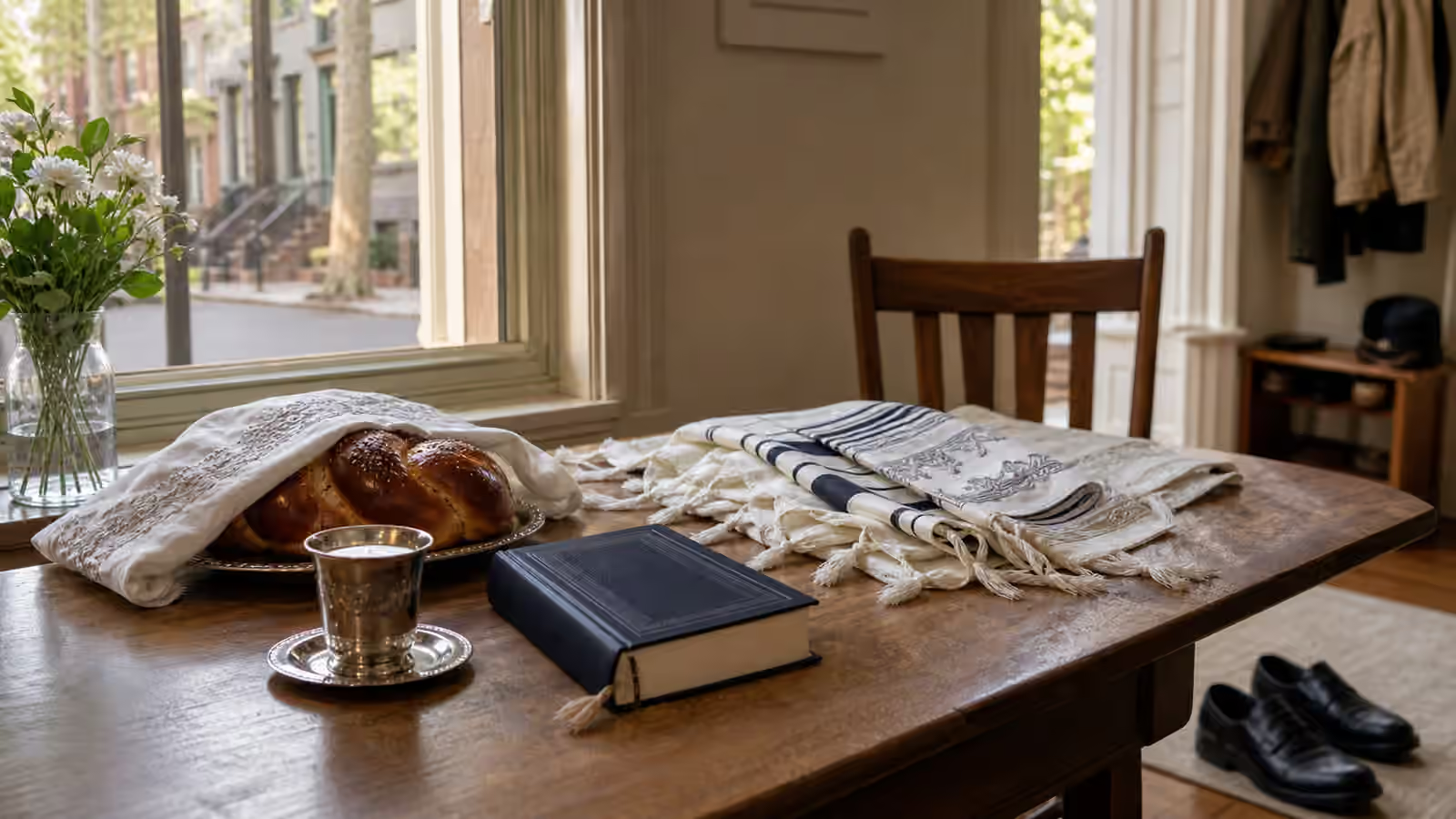
On Friday, the house is still shaking off the week. Candles, kiddush, challah, guests, and dinner make the entrance visible. By morning, the day has settled into the room. The table may still carry crumbs from the night before. A prayer book may wait near the door. Someone may be choosing walking shoes, folding a tallit bag, checking whether children are ready, or deciding quietly that this will be a slower home Shabbat instead of a synagogue morning. For background, read Exodus 20:8–11 (Shabbat) .
That range is important. Shabbat morning is not one identical script. Some communities gather for a long service with Torah reading, sermon, kiddush, and lunch. Some households pray at home. Some walk to synagogue. Some drive. Some sleep late because the week has been heavy. Some split the morning between family, learning, and rest. A beginner learns more by noticing how a community treats the morning than by assuming there is only one correct atmosphere.
If you entered Shabbat through Your First Shabbat Table , Shabbat morning shows you that the day has depth. Friday night welcomes. Morning sustains.
The walk can be part of the service
In many observant communities, the trip to synagogue is itself a Shabbat practice because people walk rather than drive. The walk slows the body before the service begins. Neighbors recognize each other. Children learn the route. The clothes, the tallit bag, the quiet streets, and the timing all tell the mind that this is not a weekday errand.
Other communities drive to synagogue or gather across larger distances. That does not make the morning meaningless. It does mean that the transition must be carried in other ways: leaving earlier, putting the phone away, entering the room with attention, or taking a minute before the first page to stop arriving internally. Shabbat often asks people to build thresholds where modern life has erased them.
A beginner visiting synagogue on Shabbat morning should read Synagogue and Prayer for Beginners and Siddur Navigation for Beginners before going. The service may be longer than Friday night, and it may move through more layers. There are morning blessings, psalms, the Shema and its blessings, the Amidah, Torah reading, a teaching or sermon, additional prayers, and closing songs, depending on the community.
You do not need to master the order on the first visit. Notice the landmarks. Notice when the ark opens, when people stand, when a page number is announced, when the congregation becomes quiet, and when the Torah scroll changes the room.
Torah reading makes the morning public
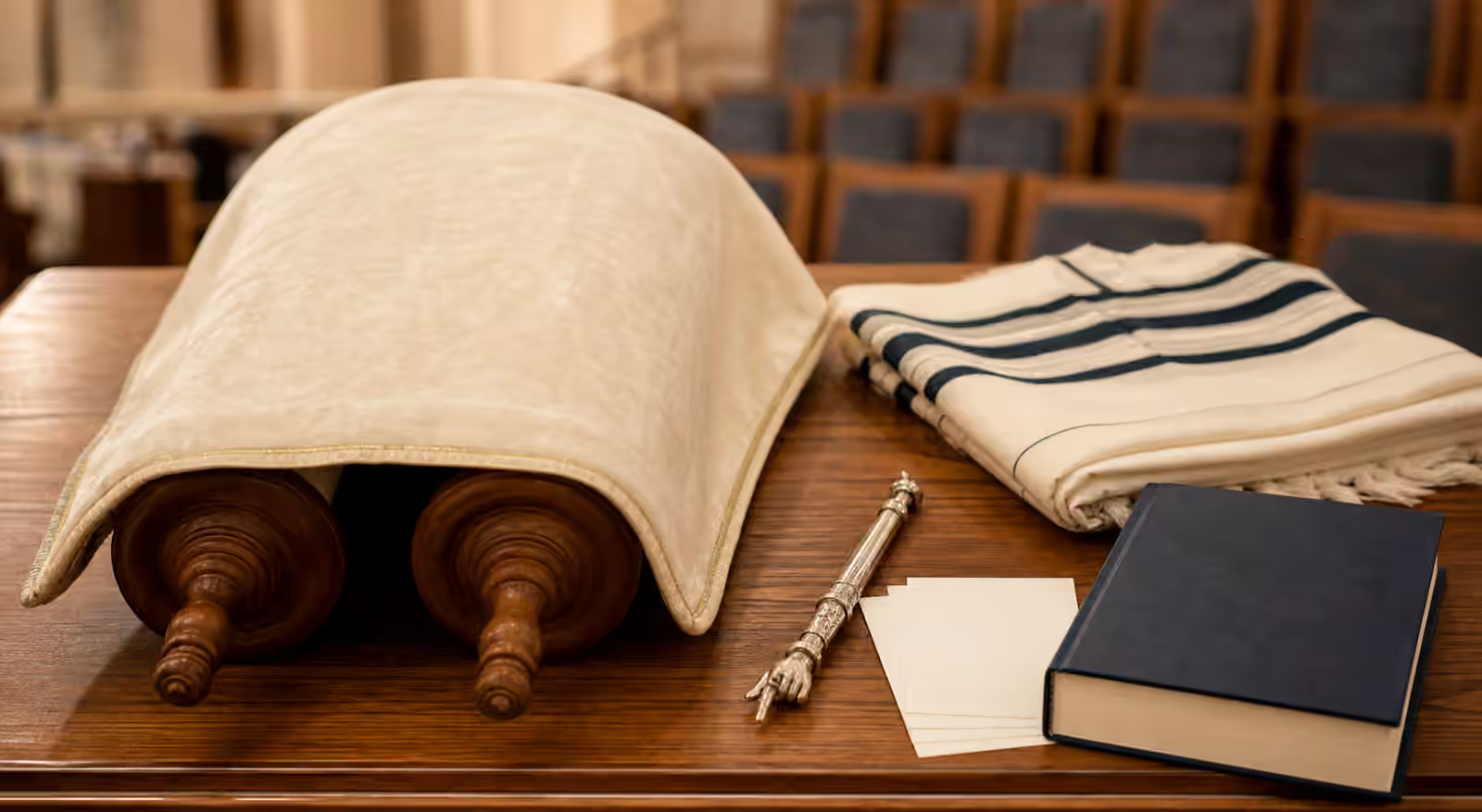
Shabbat morning is often centered on public Torah reading. A scroll is taken from the ark, carried with care, opened on the reading table, and chanted in portions. People may be called for aliyot, honors connected with blessings before and after the reading. The weekly portion links the local room to Jewish communities reading the same cycle elsewhere, even when customs, melodies, and sermon styles differ.
For a beginner, the Torah reading can feel formal and opaque. The Hebrew may be chanted from a scroll without vowels. The choreography may be unfamiliar. People may touch the Torah cover or belt with a prayer book, tallit fringe, or hand and then kiss the object or fingers. Some stand as the scroll passes. Some bow. Some follow in a printed book. Some listen with eyes closed.
The beginner task is not to imitate every gesture perfectly. It is to understand that Torah is being treated as a living center of communal attention. The scroll is not only an artifact. It is carried, heard, interpreted, and returned. Torah Reading in Synagogue for Beginners can help with the details, but the emotional point is simple: a community gathers around a text it never finishes learning.
Kiddush after services is not just snacks
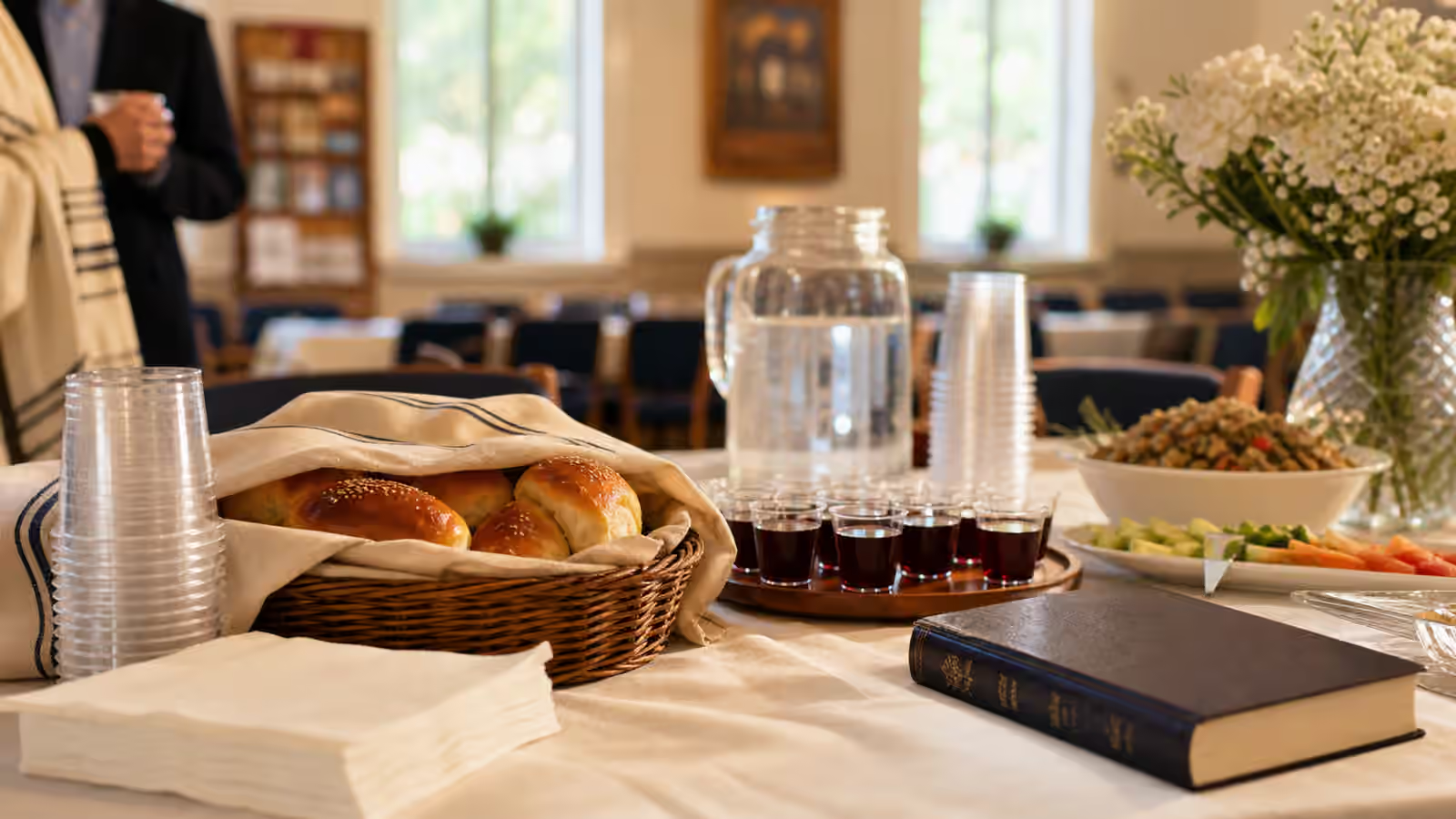
After services, many communities make kiddush, a blessing over wine or grape juice, and share food. In some synagogues this is a modest table with challah, cake, crackers, herring, vegetables, or fruit. In others it becomes lunch. Sometimes there is a sponsored kiddush for a lifecycle event, a yahrzeit, a birth, a bar or bat mitzvah, an aufruf before a wedding, or a communal celebration.
The food matters, but the social function matters more. Kiddush turns prayer into conversation. It gives newcomers a place to meet people. It lets mourners be noticed. It lets elders sit. It lets children find friends. It lets announcements become human rather than administrative. If the service felt like a room already speaking a language you barely know, kiddush may be where someone explains the language without making it feel like a lecture.
For visitors, this is also where kosher practice may become visible. Do not bring outside food unless you have asked. Do not assume that a synagogue kitchen follows the same standard as a private home. If food practice is new to you, A Beginner Kosher Kitchen and Kosher Hospitality With Care explain why clarity is kinder than guessing.
Lunch has its own rhythm
Shabbat lunch can be quieter than Friday night or louder, depending on the home. In traditional settings, cooked food may have been prepared before Shabbat and kept warm in permitted ways according to the household’s practice. Cholent, hamin, dafina, stews, salads, fish, breads, rice, kugel, and many other foods can appear, shaped by family, region, and community.
The meal often includes kiddush again before eating, handwashing in some homes, the blessing over bread, zemirot or table songs, divrei Torah or short teachings, and long conversation. Some families invite synagogue guests. Some host students. Some keep lunch simple because Friday night was the larger gathering. Some people eat alone and make the day gentle in smaller ways.
Lunch teaches that Shabbat is not only a dramatic entrance. It is a maintained atmosphere. The table has to carry ordinary human needs for food, rest, belonging, and quiet. A good Shabbat lunch does not need to prove anything. It needs to let the day keep breathing.
The afternoon changes the texture
After lunch, Shabbat often turns softer. Some people nap. Some learn. Some walk. Some visit friends. Some read. Some attend a class or return for Minchah, the afternoon prayer. Many communities have a third meal later in the day, seudah shlishit, which can feel intimate and wistful because Shabbat is beginning to lean toward evening.
This is where Shabbat Afternoon for Beginners becomes the natural next guide. The morning has public structure. The afternoon asks what rest feels like when nobody is trying to impress anyone. It may be the part of Shabbat that teaches the most because it resists productivity so quietly.
A beginner should not rush to turn the afternoon into a program. If your community has a custom, follow it. If your household needs quiet, honor that. If you are a guest, ask before assuming you can help clean, use devices, take photos, or leave at a certain time. Shabbat homes differ in what activities fit the day.
Morning helps the whole Shabbat make sense
Friday night can make Shabbat feel like a special dinner. Shabbat morning shows that dinner was only the beginning. The day has prayer, text, food, public life, private rest, and a slow return toward the week. The morning service can be demanding for newcomers, but it also offers a clear picture of Jewish communal life: people show up, read together, bless together, eat together, and let time be shaped by something older than their personal schedules.
You may not understand every page. You may not know every melody. You may not know whether to stand at the right moment. That is fine. Shabbat morning is learned by return. The second visit gives you a landmark you missed the first time. The third makes one melody less foreign. Eventually the morning stops feeling like an event you attend and starts feeling like a room you can enter.
That is the quiet gift of Shabbat morning. It teaches that sacred time is not only welcomed. It is inhabited.