
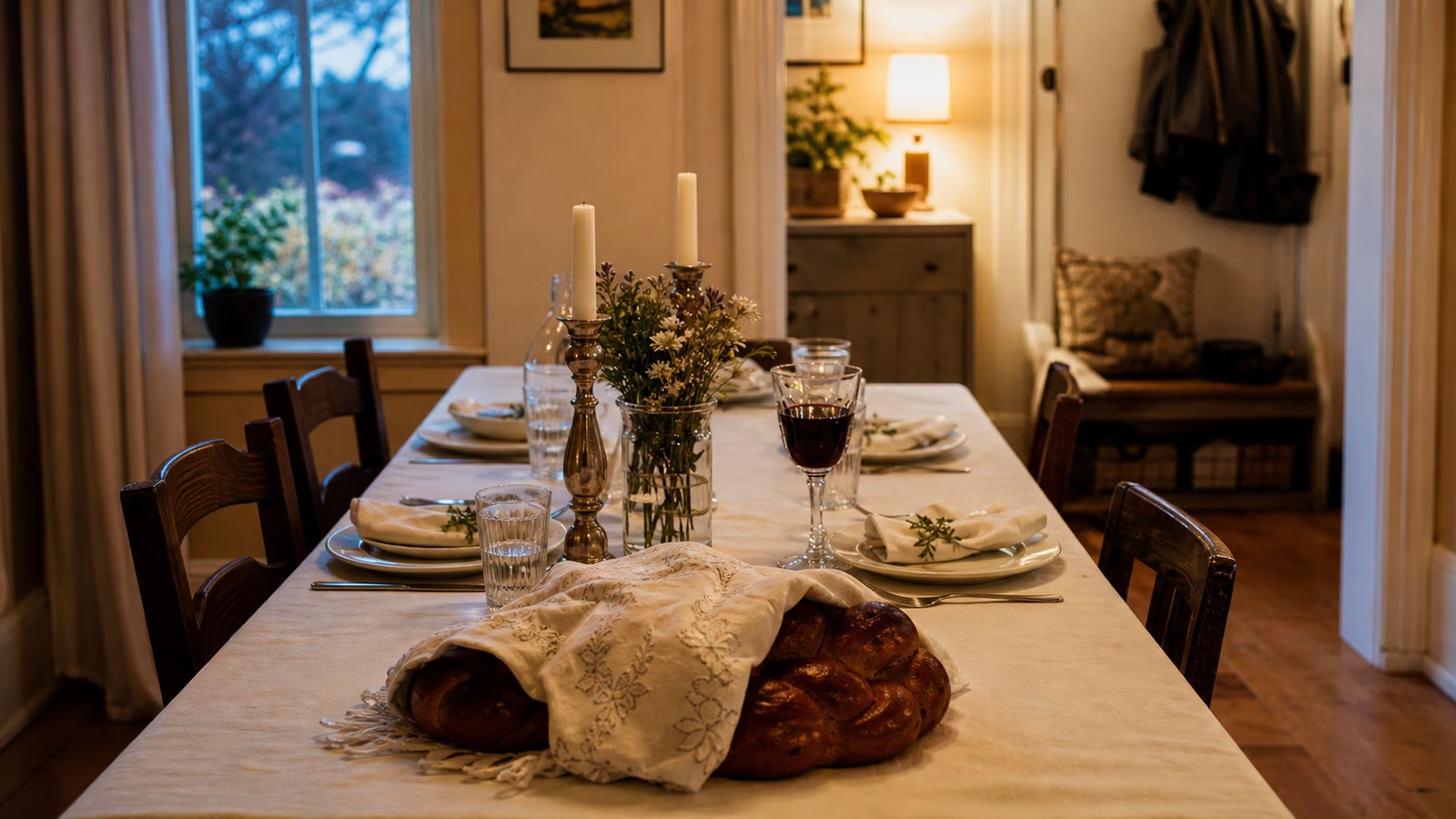
Shabbat hospitality often begins before anyone says a blessing. It begins with a message: Would you like to come for dinner Friday night? The invitation may sound casual, but it carries a whole world. Someone is opening a home, arranging food, making space at a table, and trusting that shared time can become part of Shabbat rather than an interruption of it.
For a beginner, this can feel both warm and intimidating. What should you bring? What time does dinner actually start? Are you supposed to dress up? Can you take photos? What if you do not know the songs? What if the home keeps kosher differently from you? What if you are not Jewish, new to Jewish practice, returning after many years, or visiting a community where people seem to know the rhythm already?
The good news is that Shabbat hospitality is not a performance exam. It is a practice of welcome. The details matter because they help people share a sacred time with less friction, but the goal is not to make guests nervous. The goal is to create a table where food, blessing, conversation, rest, and human dignity can sit together.

The Invitation Is Part of the Mitzvah
Jewish hospitality has deep roots. Welcoming guests is not merely good manners; it is treated in Jewish tradition as a serious act of kindness. A Shabbat table can be a place where a newcomer finds community, a student finds a second home, a single person is not left alone, a traveler is fed, and a family learns that their table is larger than their household.
The host does not need a perfect home to practice hospitality. This is important. If hospitality waits for matching chairs, a spotless kitchen, expensive food, and total confidence, it may never happen. A table with soup, bread, salad, paper napkins, and sincere welcome can carry more Shabbat than a beautiful table where everyone is tense.
At the same time, hospitality requires thought. A host should give guests enough information to arrive comfortably. If dinner starts after candle lighting, say so. If the home is phone-free after a certain time, say so kindly before the guest arrives. If guests should not bring cooked food because of kosher practice, explain what would be helpful instead. If there will be many children, a late meal, a long walk, or a very traditional prayer rhythm, a little warning can turn anxiety into readiness.
The invitation is not only the start of logistics. It is the first act of care.
A Guest Can Ask Without Apologizing
A thoughtful guest does not need to pretend they know everything. It is better to ask simple questions than to guess badly. You can ask what time to arrive, what to wear, whether to bring anything, whether flowers are useful, whether the host accepts packaged kosher wine or dessert, whether phones are put away, and whether there is anything you should know about the household’s practice.
These questions are not rude when asked respectfully. They show that you understand the home has a rhythm. Jewish practice varies widely. Some families drive on Shabbat and some do not. Some use electricity and some do not. Some serve meat meals, some dairy meals, some vegetarian meals, and some keep strictly kosher kitchens with rules about outside food. Some sing for a long time. Some make kiddush, bless children, wash hands, bless challah, and move into dinner with a familiar order. Some keep the meal very simple.
If you are not sure what to bring, ask. In many observant homes, bringing homemade food can create a real problem because the host may not be able to serve it. Flowers may be complicated if they need trimming or arranging after Shabbat begins. Wine may need kosher certification for the household to use it. A packaged dessert with an acceptable certification, a small host gift before Shabbat, or a thank-you note afterward may be better than improvising.
The point is not to become frightened of gifts. The point is to let the host tell you what helps.
Time Feels Different on Friday Night
Friday afternoon has its own pressure. Work ends, kitchens hurry, children melt down, showers run, tables are set, candles are prepared, and the week resists being put away. A guest who arrives wildly early may catch the household in its most chaotic hour. A guest who arrives late may miss candle lighting, kiddush, or the beginning of the meal. Different homes handle this differently, so timing is worth clarifying.
Once Shabbat enters, time often softens. A meal may last longer than an ordinary dinner. There may be songs, words of Torah, stories, lingering conversation, second helpings, dessert, tea, and the strange pleasure of not rushing to the next task. For a beginner used to restaurants or weekday schedules, the pace may feel unusually slow.
That slowness is part of the gift. You do not need to fill every silence. You do not need to check your phone. You do not need to turn the meal into debate or entertainment. Shabbat hospitality often works best when guests let themselves arrive fully, listen well, and accept that the table is not only about food.
Conversation Is Also a Form of Hosting
A Shabbat table can hold many kinds of conversation, but not every subject belongs everywhere. A host has some responsibility for the tone of the table. Guests do too. The meal should not become a place where one person dominates, interrogates a newcomer, performs expertise, argues politics until everyone tightens, or turns someone’s personal status into public discussion.
Good table conversation makes space. It notices the quiet guest without cornering them. It lets children speak without letting them run the entire room. It welcomes questions without turning beginners into representatives of all beginners. It allows Jewish learning without showing off. It tells stories that connect rather than humiliate.
Guests can help by asking generous questions, thanking the people who cooked, including those sitting near them, and avoiding assumptions. Not every person at a Shabbat table has the same Jewish background. Someone may be a convert, a non-Jewish spouse, a secular relative, a visitor from another tradition, a mourner, a person with difficult family history, or someone trying Jewish life again after a long absence. The table should be careful with people.
Hospitality is not only the host’s tablecloth. It is the emotional room everyone helps create.
Food Differences Need Grace
Food can be one of the tender places in Shabbat hospitality because it touches practice, health, culture, money, memory, and pride. A host may be trying to honor kosher rules, family recipes, allergies, vegetarian guests, picky children, budget limits, and the clock all at once. A guest may have dietary needs, religious boundaries, sensory limits, or anxiety about unfamiliar foods.
The simplest rule is to communicate early and kindly. If you have an allergy or serious dietary restriction, tell the host before the day of the meal. If you are the host, ask enough to keep guests safe without making them feel like a burden. If a guest cannot eat much, do not shame them. If the host cannot accommodate every preference, honesty is better than resentment.
Food at a Shabbat table is more than calories, but it does not need to become a test. Challah may be homemade or store-bought. Soup may be elaborate or simple. The meal may be traditional for one family and entirely new to another. The holiness of the table is not measured by complexity.
When in doubt, gratitude travels well.
Children and Newcomers Learn From the Atmosphere
Shabbat hospitality often includes children, and children reveal whether the table is flexible. Some homes are quiet and formal. Some are noisy and loose. Some children know every song. Some hide under chairs. Some guests are delighted by child energy, and others are overwhelmed. A good host sets expectations without pretending children are decorative objects.
Newcomers learn in a similar way. They may not know when to stand, answer amen, wash hands, stay quiet, sing, or begin eating. They will learn more from a relaxed cue than from a correction that embarrasses them. A host can quietly explain what is about to happen. Another guest can slide a book to the right page. Someone can say, “We usually wait until after the blessing,” without turning the moment into a scene.
The table teaches by atmosphere. If the room is kind, people can learn. If the room is tense, even simple rituals become hard.
Leaving Is Also Part of the Visit
A Shabbat meal does not end the same way in every home. Some guests walk home early. Some stay late into songs and conversation. Some sleep over. Some hosts need help clearing, while others may not want certain kinds of cleanup after Shabbat begins. A guest should follow the host’s lead and ask before doing things that might conflict with practice, such as turning lights on or off, washing dishes in a particular way, or handling certain objects.
The goodbye matters. Thank the host. Notice the work without making the host deny it. If you had a meaningful evening, say so. A message after Shabbat can mean a lot, especially because many hosts do not see their own table the way guests do. They may remember the soup that burned, the chair that wobbled, or the child who interrupted kiddush. You may remember that you were welcomed.
That is the heart of Shabbat hospitality. It takes ordinary things and asks them to carry holiness: a door, a chair, a cup, bread under a cover, a pot on the stove, a question asked gently, a place set for someone who was not there last week.
To be a good host is to make room without needing perfection. To be a good guest is to enter that room with respect. Between those two acts, Shabbat becomes more than a private rest. It becomes a shared table, and sometimes that is where Jewish life becomes visible for the first time.


