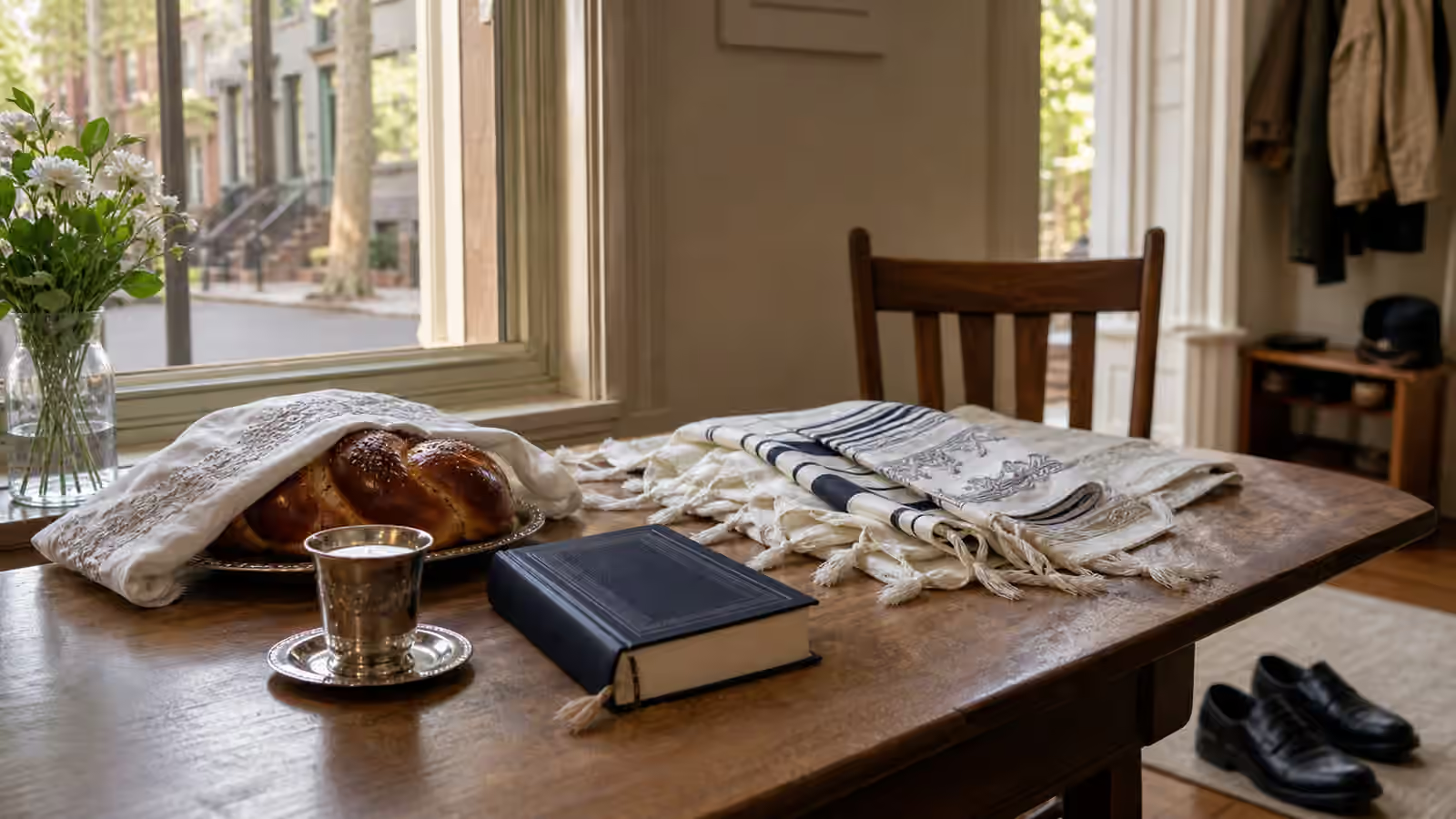
Beginners often learn Shabbat through the bright doorway of Friday night. Candles are lit. Kiddush is made. Challah is uncovered. Guests arrive, food appears, and the week releases its grip in a room that has been prepared for arrival. That beginning matters so much that it can accidentally hide the rest of the day. For background, read Shabbat 117b (Shabbat meals) .
Shabbat afternoon has a different temperament. It is less dramatic, harder to photograph, and often more revealing. The morning service may be over. Lunch has ended or is drifting toward a second cup of tea. Children are tired. Adults are deciding whether to nap, read, walk, learn, visit, sing, or let the house become quiet. The sun moves lower. Somewhere in the background, Havdalah is waiting, but nobody needs to rush toward it.
If Your First Shabbat Table teaches the entrance into sacred time, Shabbat afternoon teaches how to remain inside it after the novelty has worn off. It asks what rest feels like when the meal is finished and the day still has hours left to give.
Morning changes the room
In many communities, Shabbat morning centers on synagogue. People pray, listen to Torah reading, celebrate a bar or bat mitzvah, mark a yahrzeit, say Kaddish, gather for kiddush, or return home for lunch. Synagogue and Prayer for Beginners explains how to enter that room without pretending fluency. Shabbat afternoon begins after that public sound has traveled back into private homes and shared meals.
The transition can be gentle or chaotic. A family may host lunch guests and keep the conversation going for hours. A student may return from services with a question from the weekly Torah portion. A person who is mourning may come home after saying Kaddish and feel the house differently. A child may fall asleep on the couch still wearing nice clothes. Shabbat does not become less Jewish because the formal service has ended. It becomes domestic again, carrying the echoes of communal prayer into ordinary furniture.
This is why Shabbat afternoon can be a good teacher for people who worry that Jewish practice requires constant visible intensity. Some of the day is plain. People clear plates, stretch, read, walk, talk, and rest. The practice is not to make every minute look impressive. The practice is to let the day keep its shape.
Rest is not the same as collapse
The Hebrew word menuchah is often translated as rest, but Shabbat rest is not only exhaustion management. Collapse is what happens when the week has spent you completely. Shabbat rest is a different claim: a person is not only a producer, buyer, planner, responder, and problem solver. A household is not only a small office with beds. Time can be received rather than conquered.
That sounds beautiful until a real Saturday afternoon arrives and people feel restless. Beginners may discover that stopping is harder than starting. Without errands, devices, shopping, chores, or the usual weekday structure, the quiet can feel awkward. Some people become sleepy. Some become irritable. Some begin to understand how much of their life is held together by motion.
Shabbat afternoon does not solve that discomfort by lecture. It gives the body time to learn. A walk around the neighborhood, a conversation with no agenda, a chapter of a book, a nap, a slow visit, a song after lunch, or a few minutes with the weekly portion can all become ways to inhabit the day rather than merely wait for it to end.
Jewish Home Rituals for Beginners describes home practice as small returns. Shabbat afternoon is one of those returns. It may not be a single ritual object. It is a household atmosphere that becomes more legible through repetition.
The third meal has a quiet power
Many traditional Shabbat practices include three meals: Friday night, Shabbat lunch, and a third meal later in the day, often called seudah shlishit or shalosh seudos in Ashkenazi pronunciation. The details vary by community and household. In some homes it is bread, fish, salads, singing, and words of Torah. In others it is small, almost improvised, or folded into synagogue life. Some communities gather for it after afternoon prayer. Some families keep it simple at home.
The third meal can be easy to underestimate because it arrives when nobody is especially hungry. That is part of its meaning. Friday night dinner often has anticipation. Lunch has the relief of the morning. The third meal belongs to the fading edge of the day. It says that Shabbat is still here, even when the light is beginning to lean away.
For a beginner, this meal can teach tenderness. A small roll, a simple salad, a song, a teaching, or a quiet table may carry more emotional weight than a polished dinner. It does not need to compete with Friday night. It has its own work: to help people stay with Shabbat until Shabbat is ready to leave.
The table blessings in Kiddush and Table Blessings can make the first meals easier to understand. The third meal adds another layer. It reminds the household that sacred time is not only welcomed and enjoyed. It is accompanied.
Study belongs naturally here
Shabbat afternoon has long been a time for learning in many communities. The weekly Torah portion may be discussed at lunch. A class may meet between afternoon and evening prayer. A parent may read with a child. Friends may open a book together. A person may sit alone with a commentary and one good question.
This kind of learning does not need to be grand. The Weekly Torah Portion for Beginners explains how the parashah gives each week a textual doorway. Shabbat afternoon is a natural time to walk through it slowly. The service has already made the text public. The meal and quiet hours can make it conversational.
Jewish Texts and Learning for Beginners is useful here because it lowers the pressure to master the whole library. One paragraph can be enough. One question can be enough. The rhythm matters more than the performance. Learning on Shabbat afternoon is not a race against a syllabus. It is one way of letting the day speak in words as well as food and rest.
The approach to Havdalah changes the air
Late afternoon has a mood that many people recognize even before they know the liturgy. The day is still Shabbat, but the week is near. Some homes call this time bittersweet. Some sing slower songs. Some avoid talking too early about weekday tasks. Some feel relief, especially if Shabbat has been lonely, difficult, or physically demanding. There is no single emotional script.
Havdalah for Beginners explains the ritual that marks the end: cup, spices, flame, and blessing over separation. Shabbat afternoon is the emotional bridge toward that ritual. It lets the day narrow before it closes.
This is a helpful correction to the modern habit of abrupt endings. A weekend often dissolves into chores, screens, and anxious preparation. Shabbat asks for a cleaner threshold. Do not leave before you leave. Do not drag the weekday in too early if you can help it. Let the light change. Let the table become simple. Let the candle wait unlit.
A beginner’s Shabbat afternoon
If you are trying to practice, start with a small shape rather than an elaborate plan. After lunch, decide what kind of rest is honest for your household. Read, walk, nap, visit, learn, or sit with quiet. If a third meal is part of your practice or community, keep it simple enough that it does not become a burden. If you attend afternoon services, ask someone what to expect. If you are a guest, follow the host’s rhythm and do not rush the room toward the week.
The point is not to make Saturday afternoon picturesque. The point is to discover that Shabbat has depth after the first glow. Friday night welcomes. Morning gathers. Afternoon teaches staying. Havdalah releases. Together they make a day with a beginning, middle, and end.
When you learn that shape, Shabbat stops being only a dinner you attend. It becomes time you inhabit.