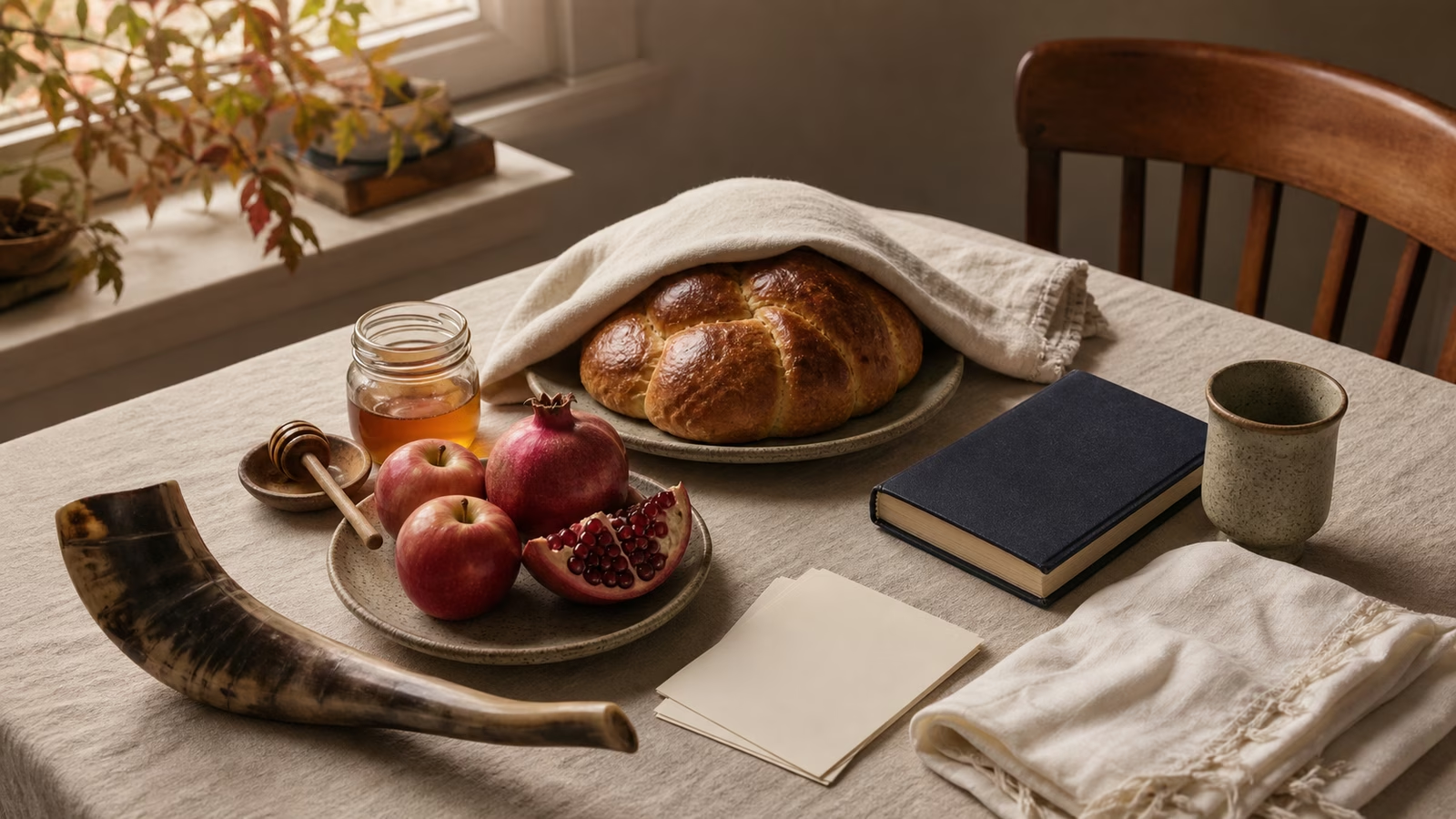
Rosh Hashanah often reaches a beginner through the table first. Long before the prayers are understood, there may be apples, honey, round challah, a pomegranate, greeting cards, a borrowed prayer book, and someone saying that the new year is coming. The scene is gentle enough to feel welcoming, but the holiday is not only sweet. It carries judgment, memory, sound, repair, and the strange courage of beginning again. For background, read Mishnah Rosh Hashanah 1 (new-year dates) .
High Holidays for Beginners gives the full seasonal arc from Elul through Yom Kippur. This guide slows down inside Rosh Hashanah itself, especially as it is felt in a home. A synagogue service may be the public center of the day, but the holiday also enters through kitchen counters, family phone calls, a child asking why the bread is round, and the quiet moment when a person realizes the year has turned.
The New Year Is Serious Sweetness
Calling Rosh Hashanah the Jewish new year is accurate, but it can make the holiday sound lighter than it is. It is not only a Jewish version of a calendar party. The day opens the Days of Awe, a season of accounting and return. The prayers speak about life, memory, responsibility, and mercy. The shofar breaks the air. People wish one another a good year because goodness is not assumed.
The sweetness at the table belongs inside that seriousness. Honey does not pretend that the past year was painless or that the coming one will be easy. It turns desire into a small ritual act: may the year be sweet. Apples, honey, round challah, and other symbolic foods do not solve the hard questions of the season. They let the body taste hope before the mind has finished its work.
The Jewish Holiday Year describes how each holiday has its own weather. Rosh Hashanah’s weather is bright and trembling. It asks a person to hold gratitude and unease at the same table. A beginner who notices both has understood something important.
The Table Teaches Without Explaining Everything
The Rosh Hashanah table can look familiar and unfamiliar at once. Bread, fruit, and a festive meal are ordinary enough. The way they are arranged makes them speak. Round challah may suggest the cycle of time, wholeness, continuity, or the hope that the year will not be jagged. Apples dipped in honey give sweetness a texture. Pomegranate may suggest abundance in communities where it is used. Other symbolic foods appear in many Sephardi, Mizrahi, Ashkenazi, and local family customs, sometimes with wordplay, blessings, or hopes attached.
A beginner does not need to master every custom in one year. It is better to ask what this household does and why. One family may keep the table simple with challah, apples, honey, and a few blessings. Another may prepare a seder-like sequence of symbolic foods. Another may have recipes inherited through migration, poverty, abundance, adaptation, or loss. These differences are not noise. They are part of how Jewish life travels through families.
If you are hosting, the kindest table is usable before it is impressive. Check food needs early, especially if guests keep kosher by a standard different from yours. Kosher Hospitality With Care explains why a sealed item from a trusted source may be more welcoming than an ambitious homemade dish that a guest cannot eat. If you are a guest, ask before bringing food. A gift that fits the household’s practice carries more warmth than a surprise that creates quiet trouble.
The Shofar Is Not Background Sound
The shofar is one of Rosh Hashanah’s central sounds. It is usually a ram’s horn, though practices and materials can vary within Jewish law and custom. Its calls can feel like alarm, sobbing, coronation, memory, or awakening. The sound is physical. It does not arrive as a paragraph. It does not explain itself neatly. It enters the room and interrupts whatever private story a person was telling about the year.
For beginners, this can be a relief. You may not know the Hebrew prayers. You may not know the structure of the service. You may not be sure what you believe. Still, the shofar can reach you because it uses breath and sound rather than polished argument. It says that a person can be called awake before they can describe exactly what waking requires.
Some people hear the shofar in synagogue. Some communities arrange outdoor or accessible opportunities for those who cannot attend a full service. Some households have a decorative shofar that is not used ritually, while trained people sound one in the proper setting. If you are unsure, ask a local community what they do. The main beginner mistake is treating the shofar as a seasonal prop. It is better understood as a call that asks for a response.
Greetings Carry More Than Politeness
Rosh Hashanah greetings can feel formal at first. People may wish one another a good year, a sweet year, or to be inscribed for life, depending on custom, language, and community. A beginner may stumble over the words, but the instinct is simple: speak blessing into the threshold.
These greetings matter because the holiday is relational. It is not only a private mood of self-improvement. The year that has passed includes other people. We have spoken, borrowed, ignored, helped, hurt, forgotten, and depended on one another. Rosh Hashanah begins a period when repair becomes harder to avoid.
That does not mean every greeting must become a confession. The holiday has ordinary warmth too. You can call a relative, send a card, write a note to someone lonely, or invite a person who might otherwise eat alone. But if there is harm that needs repair, a sweet greeting cannot replace a real apology. Jewish Speech Ethics for Beginners is a useful companion here because the season is full of words, and words can repair only when they are honest.
Home Practice Continues After Services
Many people experience Rosh Hashanah through synagogue services, where the machzor, the High Holiday prayer book, carries seasonal prayers and the shofar service gives the day a public shape. Synagogue and Prayer for Beginners helps with the room, the books, and the social cues. Yet the home remains part of the holiday’s work.
The meal after services can be tired, relieved, crowded, quiet, elegant, messy, or improvised. Children may remember the honey more than the sermon. Guests may be processing a long morning. Someone returning to Jewish life may feel both comforted and exposed. A good host lets the table breathe. Explain one custom at a time. Let people eat. Let the conversation move between ordinary life and the season’s questions without forcing every sentence to be profound.
Everyday Jewish Blessings can help a beginner understand why food blessings matter here. The Rosh Hashanah meal is festive, but it is still made of ordinary acts: lifting bread, tasting fruit, passing plates, noticing hunger, making room. The holiday does not float above the table. It learns to live there.
Tashlich and the Work Between Days
In many communities, Rosh Hashanah includes tashlich, a custom of going to moving water and symbolically casting away sins, often with verses recited nearby. Some use bread crumbs, though many communities avoid throwing food into water for environmental or practical reasons and use other gestures or no physical object. Customs vary. The deeper image is clear enough for a beginner: the year has carried failures, and a person needs a way to face them without pretending they are permanent.
Tashlich can be moving because it gives the body a simple action after heavy language. Walk to water. Stand there. Name what needs release. Watch the current move. The act is not magic. Harm still requires repair. Apologies still have to be made. Money still has to be returned. Habits still have to change. But the custom lets the heart practice letting go of denial.
The days after Rosh Hashanah matter as much as the meals. The Ten Days of Repentance lead toward Yom Kippur. A person may leave services inspired and then face the same inbox, family tension, or unfinished apology the next morning. That is not failure. That is where the holiday becomes real. Tzedakah and Giving for Beginners belongs in this season because return is not only inward. It asks what responsibility should look like with money, attention, time, and dignity.
A Beginner Can Start With One Honest Doorway
Rosh Hashanah can become overwhelming if you try to learn the whole season at once. There are services, foods, greetings, family customs, synagogue logistics, shofar notes, Hebrew phrases, table songs, prayers about judgment, and the emotional approach to Yom Kippur. The beginner does better by choosing one honest doorway.
Attend part of a service and listen for the shofar. Prepare a small table with apples and honey. Call someone before the year turns. Ask a host what their household does. Read a few pages about teshuvah. Write one apology that does not excuse itself. Give quietly. Notice what the sweetness at the table awakens in you.
The holiday will return next year with many of the same objects and a different you. That is part of its wisdom. The apple is familiar, but the hand holding it has lived another year. The shofar is ancient, but the person hearing it has new things to wake from. Rosh Hashanah begins not by pretending that time is clean, but by giving time a threshold. At that threshold, sweetness becomes a prayer, sound becomes a summons, and the table becomes one place where return can begin.