The easiest way into Jewish life is not a chart. It is a doorway on a Friday afternoon.
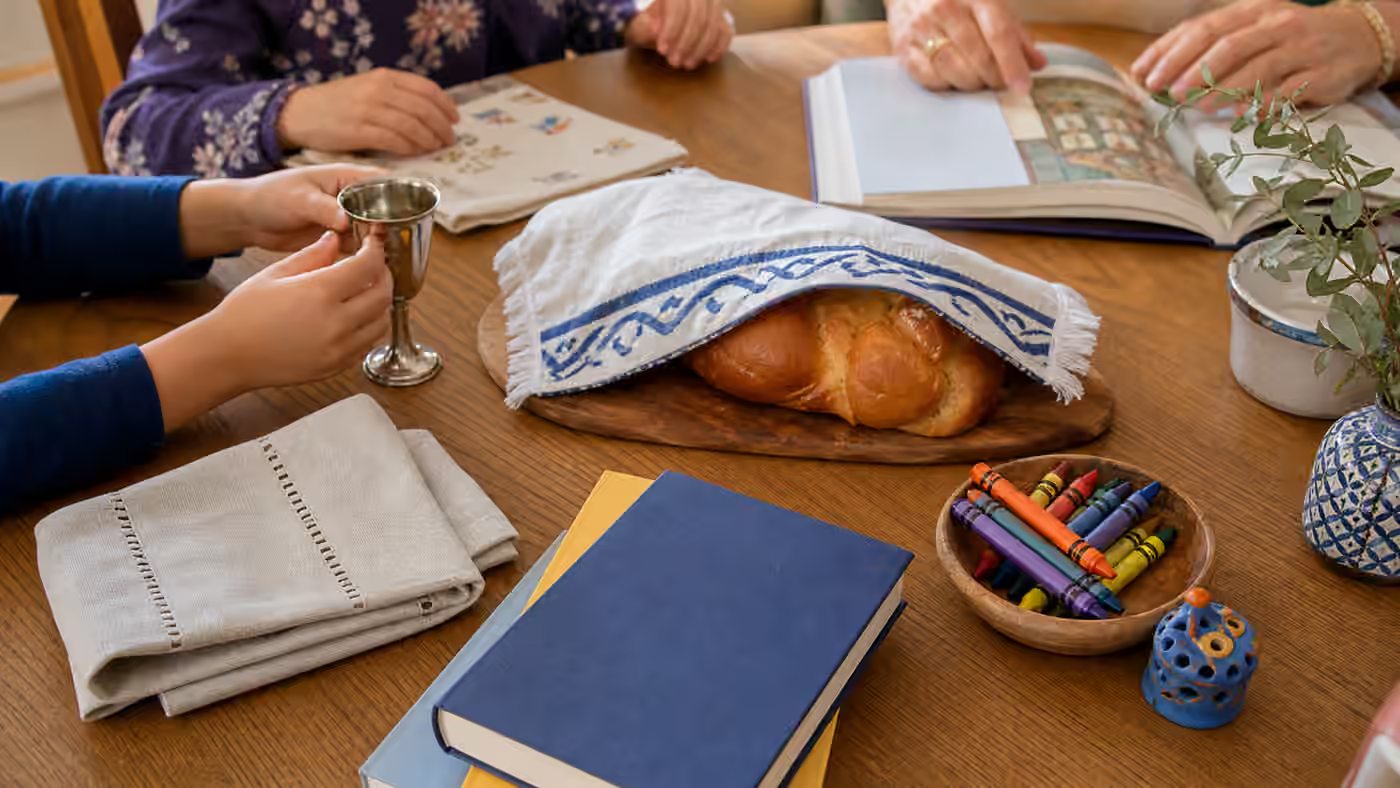
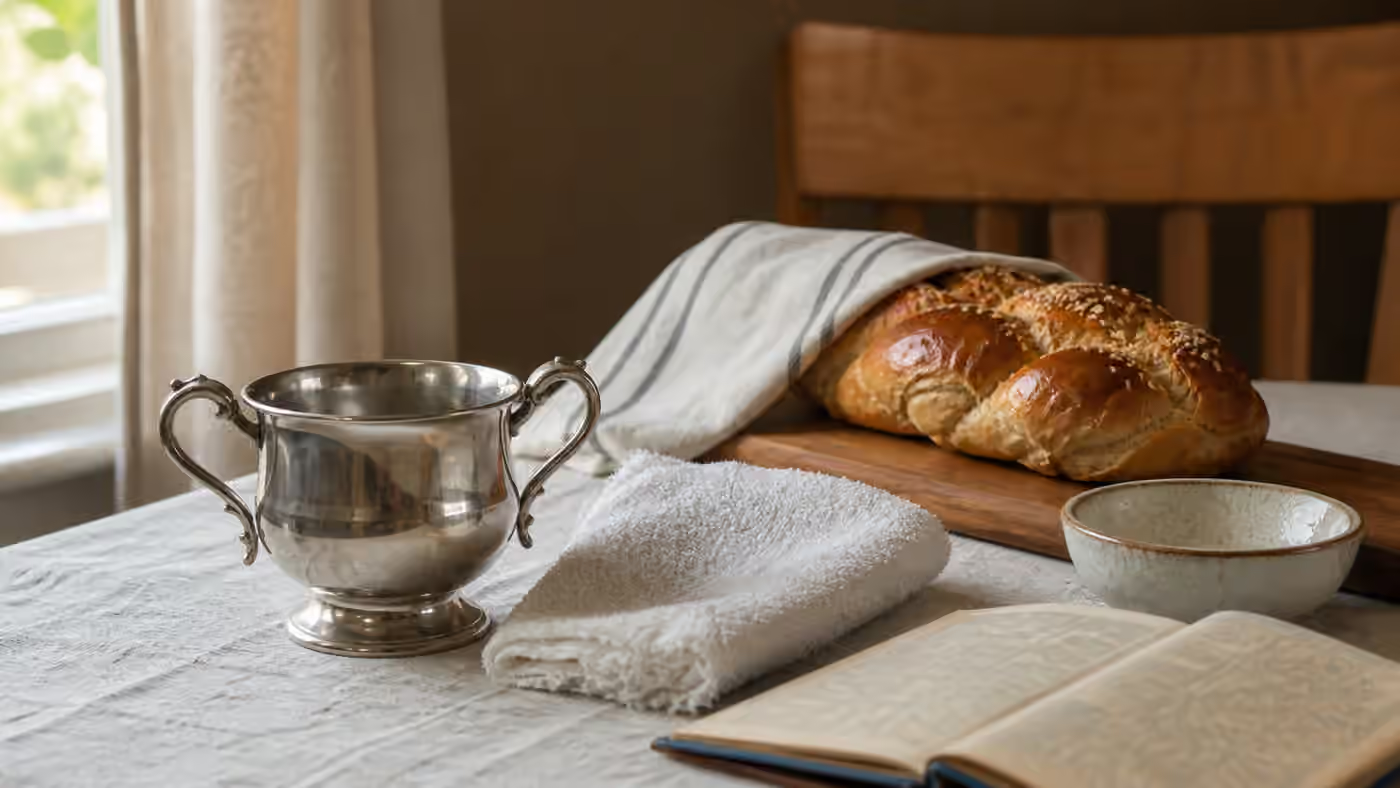
Imagine someone has invited you for Shabbat dinner. You arrive early because you are nervous. The house does not look like a museum or a textbook. It looks like a home trying to change gears. There may be a tablecloth. There may be challah under a cover, a cup for wine or grape juice, candles waiting on the sideboard, soup warming somewhere, a child asking a question, an adult trying to finish one last weekday task before the light shifts. Nobody has handed you a complete theory of Judaism. Yet the room is already teaching you the first lesson: Jewish life is often carried by time, table, memory, and people.
That is where a beginner should start.
Not because every Jew keeps Shabbat the same way. Many do not keep it ritually at all. Some families light candles every week, some go to synagogue, some host meals, some rest from electronics, some cook, some drive, some treat the day mainly as family time, and some are still figuring out what they want. Shabbat is not a single household script. It is a recurring question: what would it mean to stop treating life as only production?
When that question appears every week, it becomes a doorway to the rest of the landscape.
The first map is rhythm
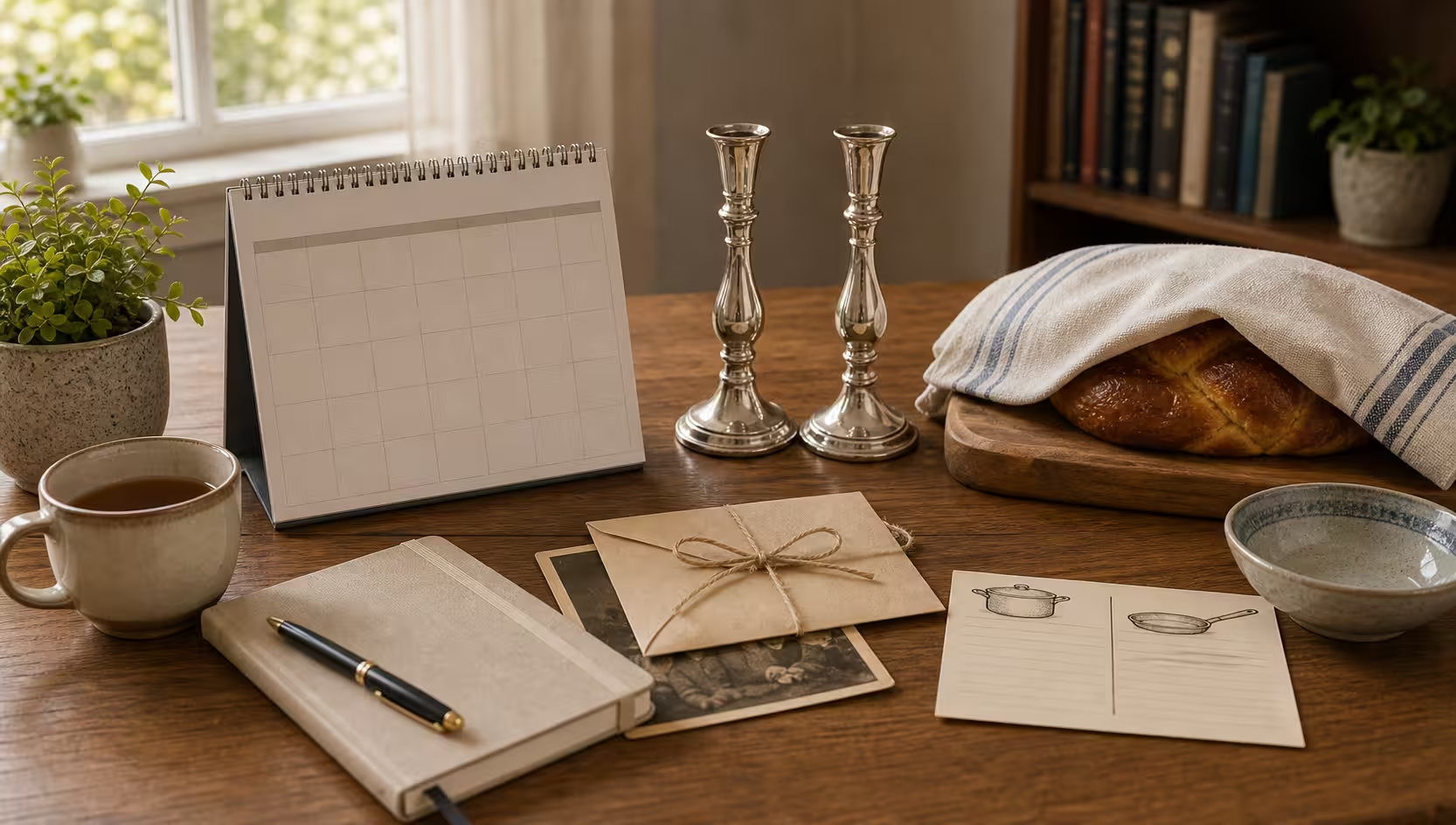
Jewish life has a rhythm before it has a syllabus. The week moves toward Shabbat. The year moves through holidays. A lifetime moves through naming, learning, marriage, illness, mourning, and memory. A family story moves through names, languages, migrations, recipes, photographs, and records. Food becomes part of the map because food is never only fuel at a Jewish table. It can mark a holiday, protect a boundary, carry a place, or tell you which grandmother’s kitchen someone still misses.
For a beginner, rhythm matters because it reduces panic. You do not have to learn everything at once. You can notice what kind of time you are in.
If it is Friday, the question might be Shabbat. If it is early fall, the question might be the High Holidays. If someone is having a baby, the question might be naming. If someone has died, the question might be shiva, kaddish, and how to show up without making the mourners manage your uncertainty. If you are staring at a ship manifest or a headstone, the question might be family history. Jewish life becomes less overwhelming when each question has a season, a room, and a human reason.
The table teaches vocabulary without making you memorize
At that first Shabbat table, words arrive naturally. Someone says kiddush and lifts a cup. Someone says challah and uncovers bread. Someone may say motzi before eating. Someone may bless children. Someone may explain that candles are lit before sundown in many homes because the day begins in the evening. You could write all those words on flashcards, but the table gives them a place in your body. The cup belongs to the pause. The bread belongs to the meal. The candles belong to the transition. The songs belong to the feeling that ordinary time has loosened its grip.
This is why guidebooks about Jewish life work best when they tell stories. Lists can name objects, but narration explains why the objects matter together. A kiddush cup alone is a cup. A kiddush cup in a room full of people waiting to begin becomes a small tool for declaring that the day has changed. A challah alone is bread. Challah passed from hand to hand becomes a way of making the meal communal before anyone has made an argument or told a joke.

The calendar is a spiral, not a pile
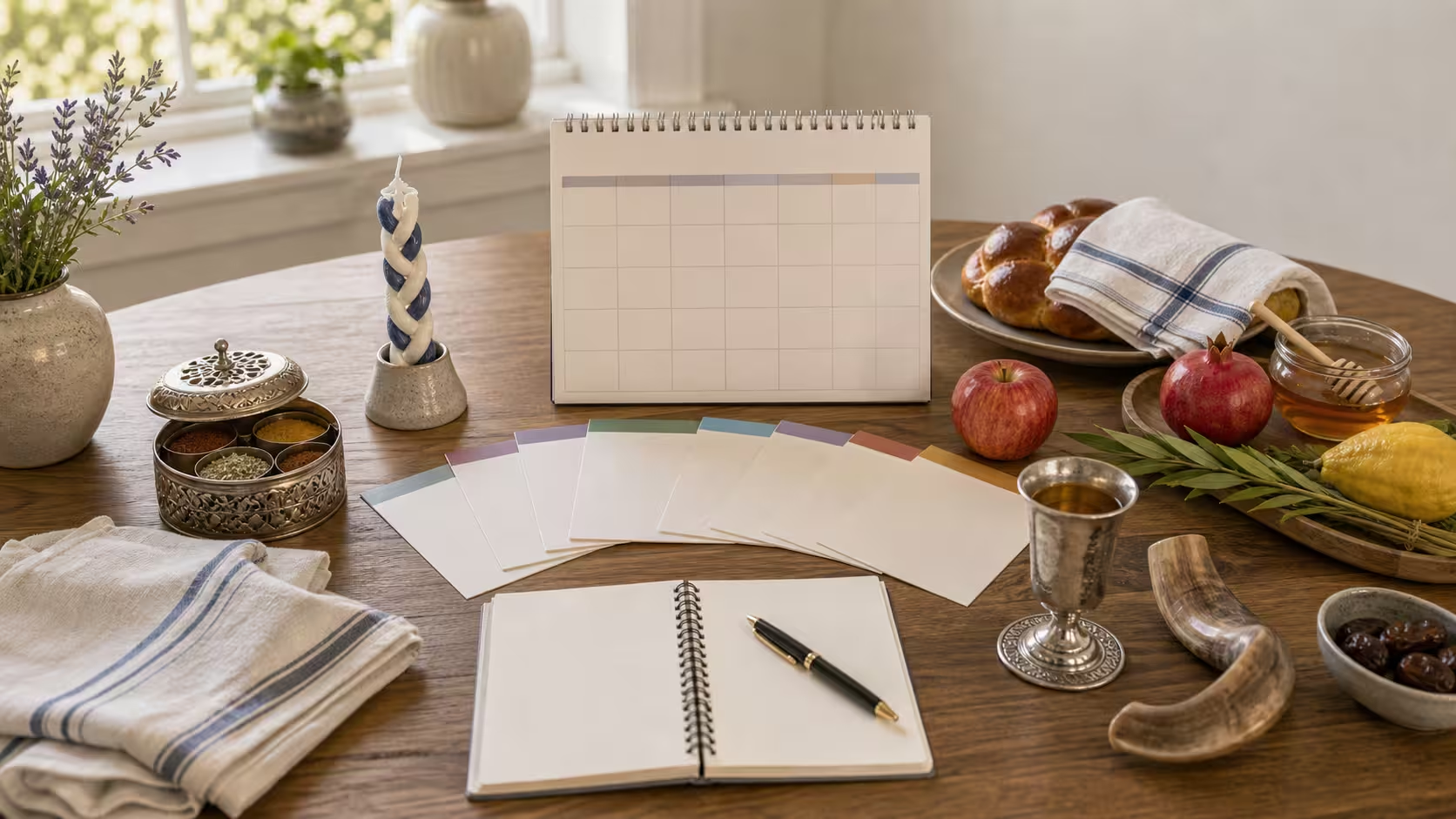
After Shabbat, the next intimidating thing is usually the holiday calendar. There are too many names. Rosh Hashanah, Yom Kippur, Sukkot, Simchat Torah, Hanukkah, Tu Bishvat, Purim, Passover, Shavuot, Tisha B’Av, and more. A beginner sees a pile. A person who has lived with the calendar sees a spiral.
The year returns to the same places, but never exactly as the same person. In the fall, the holidays ask about accountability, repair, harvest, fragility, and joy. In winter, Hanukkah brings light and public memory into short days. In spring, Passover turns liberation into a meal where questions are expected. Later, Shavuot returns to learning and receiving Torah. Fast days and memorial days interrupt the year with grief and historical consciousness. The calendar is not just information. It is emotional training over time.
The practical beginner move is to choose one holiday at a time and ask what it is trying to make visible. Do not start by mastering every food, song, date, and custom. Start by asking what human problem the holiday knows about. New year. Repair. Fragile shelter. Darkness. Freedom. Revelation. Loss. Memory. That question gives the holiday a center.
Kosher is a practice system, not a personality test
Food practice can make beginners anxious because it seems like the place where one wrong move becomes public. Someone says kosher, and suddenly every plate, sponge, ingredient, restaurant, and family invitation feels like a possible mistake.
The first calming truth is that kosher observance varies. Some people keep strictly separate meat and dairy dishes, buy only products with certifications they trust, and eat only in supervised restaurants. Some keep kosher at home but eat vegetarian outside. Some avoid pork and shellfish but do not separate dishes. Some grew up with one pattern and are experimenting with another. Some do not keep kosher but still understand its language because family or community life taught it to them.
So the beginner question is not, “What do all Jews do?” The better question is, “What standard is this household or community using, and how can I respect it?”
That question turns fear into hospitality. If you are hosting, ask guests what they need. If you are a guest, ask what would be helpful. If you are building a home practice, begin with clarity rather than perfection. Decide what you are actually trying to keep, label or separate what needs separation, and do not pretend that a kitchen can become meaningful by accident. Kosher practice is about attention. Attention is learned slowly.
Names are family archives
Names are another doorway. A Hebrew name, a Yiddish nickname, a Ladino name, an English name chosen at immigration, a patronymic on a headstone, or a repeated name in a family tree can all carry more than sound. Names often tell you who was loved, who was remembered, what language a family lived in, what country shaped a record, and what a child was being connected to.
This is why Jewish names can confuse genealogy beginners. One person may appear as Chaim in a Hebrew context, Hyman in an English record, Jaim in another language, and a local nickname inside the family. A surname may change spelling because a border moved, a clerk guessed, a ship manifest used one alphabet, or a family chose a simpler form in a new country. The task is not to find the one pure spelling. The task is to follow the person across contexts.
When you approach names this way, naming a child and researching an ancestor become related acts. Both ask what memory deserves to travel forward.

Lifecycle moments are community lessons
Jewish lifecycle events can look like private family milestones from the outside. A baby is named. A child becomes bar or bat mitzvah. A couple marries under a chuppah. A person dies and mourners sit shiva. But the pattern underneath is communal. The person is not floating alone through life. The community witnesses, teaches, celebrates, feeds, comforts, and remembers.
That can be hard for modern readers who are used to private spirituality. Jewish life often asks something more embodied. Show up. Bring food. Say the name. Help make a minyan if that is the family’s practice. Do not make mourners entertain you. Do not treat a bar or bat mitzvah as only a party. Do not treat a wedding as only romance. The lifecycle is a way of teaching that private life has communal edges.
The beginner does not need to know every prayer to understand the moral shape. Birth asks welcome. Coming of age asks responsibility. Marriage asks covenant. Illness asks presence. Death asks dignity. Mourning asks memory and support.
The next step is a real question
The quickstart ends where it began: with a real room. Read enough to enter respectfully, then let a real question lead you.
If you are going to Shabbat dinner, read the Shabbat guide and ask your host what to expect. If a holiday is approaching, learn that one holiday well enough to participate without pretending expertise. If you are cooking for Jewish guests, ask what kosher standard matters to them before planning a menu. If you are naming a child, ask which memories and languages your family wants to carry. If you are researching genealogy, gather documents before building a myth.
Jewish life is large because Jewish people have lived across languages, lands, communities, migrations, texts, kitchens, synagogues, arguments, and memories. A beginner-friendly path does not make that largeness small. It gives you a first handle.
Start with one Friday night. Watch the room change. Then follow the questions that remain.