Purim can feel like the Jewish calendar suddenly learned to laugh in public.
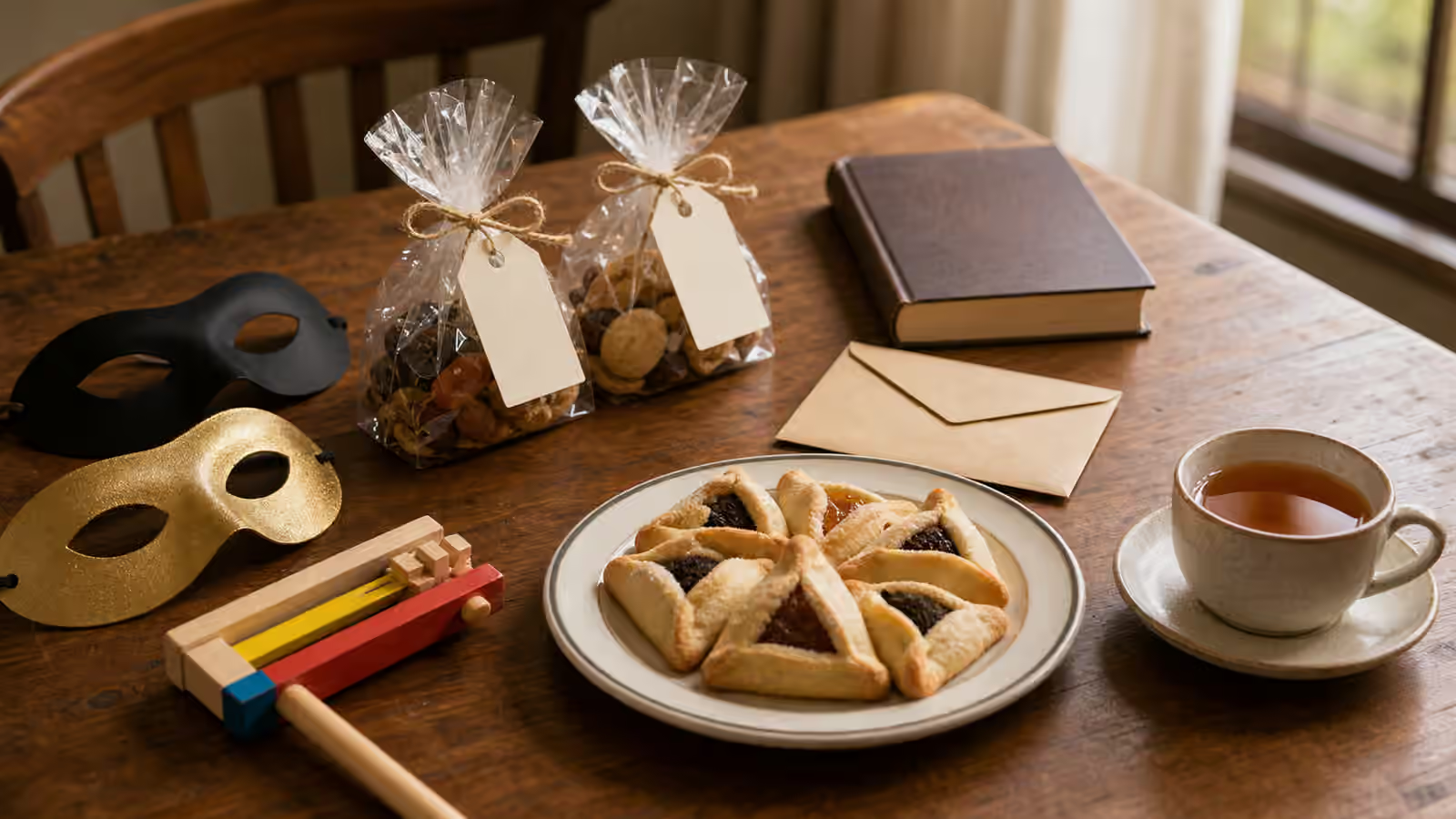
The room is louder than a beginner expects. Children may arrive in costumes. Adults may arrive in costumes too, sometimes with the seriousness of people who have been waiting all year for permission to be ridiculous. Someone is handing out triangular pastries. Someone else is shaking a noisemaker at the exact moment a name is read aloud. The service does not have the solemn weight of the High Holidays, the table order of Passover, or the candlelit quiet of Shabbat. Purim enters with noise, exaggeration, food, teasing reversals, and a story that is much sharper than its carnival surface first suggests. For background, read Esther 9:20–32 (Purim observance) .
That mix is part of the point. Purim is playful, but it is not shallow. It remembers a story in which Jewish vulnerability, political danger, hidden identity, courage, and communal survival all sit inside a royal court that can seem absurd until it turns deadly. If The Jewish Holiday Year gives Purim a place in the seasonal arc before Passover, a dedicated Purim guide can slow down inside the holiday’s own grammar: the Megillah, the noise, the costumes, the gifts of food, the gifts to people in need, and the meal that lets joy become communal rather than private.
The Story Is Told in a Court of Masks
Purim centers on the Book of Esther, often called the Megillah when read from a scroll or printed text for the holiday. The story is set in the Persian court. King Ahasuerus rules with wealth, insecurity, feasting, and spectacle. Esther becomes queen after hiding her Jewish identity. Mordecai, her relative, refuses to bow to Haman, a powerful official whose rage grows into a plan to destroy the Jews. The danger is not abstract. A decree is issued. A date is chosen by lot, which gives Purim its name. The Jews of the empire face catastrophe because a vain and dangerous man has gained the ear of power.
The story turns through hiddenness. Esther is in the palace but not fully known. Mordecai cannot simply force the king’s hand. Haman seems secure until he is not. The king appears powerful but is easily manipulated and often morally small. Even God is famously not named directly in the Book of Esther, which gives the story its strange spiritual texture. Salvation comes through timing, courage, reversal, and people acting when the moment opens.
For beginners, this matters because Purim is not only a children’s costume day. Costumes work because the story itself is full of concealment and revelation. Who is seen? Who is hidden? Who has power? Who is pretending not to know? Who risks being recognized? The mask is funny at the door and serious by the time the story settles.
The Megillah Reading Makes the Room Participate
The public reading of the Megillah is the holiday’s central act in many communities. It may happen in the evening and again during the day, depending on local practice. Some readings are careful and traditional, with a trained reader chanting from a scroll. Some are theatrical. Some include children, costumes, skits, signs, or gentle chaos. A beginner should expect variation and should let the community’s rhythm set the tone.
The famous noise comes when Haman’s name is read. People use graggers, stomp, boo, hiss, or otherwise blot out the villain’s name. This can look childish from the outside. It is better understood as ritualized moral refusal. The community does not sit politely while the name of genocidal hatred passes through the room. It interrupts. It teaches children, with their bodies, that memory is not neutral.
At the same time, the reading asks for attention. Some communities are strict about hearing every word, which means the noise has to stop quickly so the reader can continue. That tension is wonderfully Purim-like. The room is allowed to erupt, but the story still has to be heard. Joy is not the same as disorder. Noise serves memory; it does not replace it.
If you are new to synagogue space, Synagogue and Prayer for Beginners can help with the ordinary landmarks of the room: where people sit, how books are used, what it means to follow a service without knowing every word, and how to participate without performing expertise. A Purim reading may be friendlier to newcomers than a long formal service because the mood is open and embodied. Still, it helps to ask where to sit, when to make noise, and whether any part of the reading has a local custom you should know.
Costumes Let Reversal Become Visible
Purim costumes are not required in every community and are not the whole holiday, but they are one of the most visible ways Purim enters the body. A child dresses as a queen, a superhero, an animal, a scholar, a jester, or something assembled from whatever was found at home. Adults may wear hats, masks, bright jackets, or elaborate disguises. The room becomes briefly less fixed.
That looseness belongs to Purim because the story is built on reversal. The threatened become defenders. Haman’s plot collapses on him. Esther moves from hiddenness into speech. Mordecai moves from danger into honor. The day invites people to feel, in safe and playful form, that the social order is not as stable as it pretends. Power can be unmasked. Fear can turn. The person who seemed invisible may become the one whose voice matters.
Beginners should keep the play generous. Costumes that mock real people, ethnic groups, disabilities, poverty, or trauma miss the holiday’s moral intelligence. Purim is not permission to humiliate. It is permission to loosen stiffness, expose foolish pride, and remember that identity can be more layered than ordinary presentation allows.
Food Gifts Turn Joy Toward Other People
One of Purim’s beloved practices is mishloach manot, the sending of food gifts. The details differ, but the basic gesture is simple: give ready-to-eat food to another person so the day becomes shared. In some homes this means small bags with pastries, fruit, snacks, drinks, or homemade food. In some schools and synagogues it becomes an organized exchange. In some families it is modest and personal. In others it becomes elaborate enough that the original point can get buried under cellophane and theme colors.
The best way to understand mishloach manot is not as a gift-basket competition. It is a social repair practice disguised as festivity. The Book of Esther ends with Jews sending portions to one another and gifts to the poor. After danger and isolation, people make connection visible. Food moves from house to house. The day refuses to leave joy trapped inside one family’s table.
This is where practical sensitivity matters. If the recipient keeps kosher, has allergies, avoids alcohol, or follows a particular food standard, ask before assuming. A Beginner Kosher Kitchen explains why food questions are often community questions, not merely ingredient questions. A small gift that can actually be eaten is better than a beautiful package that creates awkwardness.
Giving Is Not a Decorative Extra
Purim also includes matanot la’evyonim, gifts to people in need. This practice can be easy to miss because costumes and pastries photograph better, but it sits close to the holiday’s heart. Purim joy is supposed to widen. A person who celebrates while ignoring hunger, precarity, or loneliness has not fully understood the day.
Tzedakah and Giving for Beginners explains that Jewish giving is not only generosity after a warm feeling arrives. It is responsibility given form. On Purim, that responsibility becomes urgent and festive at once. The holiday does not ask people to choose between laughter and obligation. It insists that real celebration must include people whose tables may not be full.
For a beginner, the practical move is to give through trusted channels, local community funds, or direct forms that preserve dignity. Customs vary, and communities often make it easy to give on the day itself. The tone matters as much as the transaction. Giving should not become a performance that turns someone else’s need into your holiday accessory. It should let more people enter the day with food, dignity, and relief.
The Meal Lets the Story Land
Purim often includes a festive meal, the seudah, usually during the day. The meal may be large or simple, quiet or raucous, home-based or communal. Songs, jokes, Torah thoughts, costumes, and toasts may appear. In some communities, alcohol is part of the atmosphere; in others it is limited or avoided. Anyone who does drink should do so with responsibility, care for guests, and attention to personal health and safety. The point of Purim is not to make people unsafe. The point is to let joy overflow without losing dignity.
Hamantaschen, the triangular pastries many Ashkenazi Jews associate with Purim, are probably the most familiar holiday food in many places. They may be filled with poppy seed, fruit, chocolate, or other fillings. Other communities have different foods, shaped breads, sweets, or local customs. The pastry is not the whole holiday, but food helps the story settle into memory. A child may remember the noisemaker and cookie before understanding court politics, and that is fine. Jewish life often teaches through taste before explanation catches up. Everyday Jewish Blessings makes the same point in ordinary form: food can train attention when it is received with words, memory, and care.
The meal also creates a bridge toward Passover. Purim’s laughter comes before Passover’s questions, but both holidays teach that Jewish memory belongs at the table. Purim asks how a community survives danger and sends food outward. The Passover Seder for Beginners asks how a community retells liberation through matzah, bitter herbs, questions, and song. Together they show that a table can be a school of memory without feeling like a classroom.
Hidden Courage Is the Serious Center
The most important sentence in Esther may be Mordecai’s challenge to Esther, when he suggests that perhaps she has come to royal position for just such a time. The line is often quoted because it names a frightening possibility: a person’s location, privilege, relationships, and timing may become a responsibility they did not choose. Esther cannot save everyone by feeling privately concerned. She has to decide whether to speak from inside danger.
That is why Purim should not be reduced to merriment. It is a holiday about what people do when power is unstable, prejudice becomes policy, and safety depends on courage that may arrive late and trembling. The hidden God of the story does not excuse human passivity. If anything, the hiddenness sharpens the demand. People must act without waiting for certainty.
For a beginner, Purim can begin with the visible things: a Megillah reading, a noisemaker, a costume, a pastry, a food gift, a donation, a meal. Those are real doors. Enter through them. But let the story ask its quieter questions too. What do you hide because it feels safer? Whose danger have you learned not to notice? When does humor expose truth, and when does it avoid it? What would it mean to use your place in a room for someone more vulnerable than you?
Purim laughs loudly because fear has not been allowed to have the final word. The laughter is not denial. It is the sound of a community telling an old story again, giving food across thresholds, making room for people in need, and remembering that hidden courage can change the ending.