The Passover seder begins before anyone reads a word.
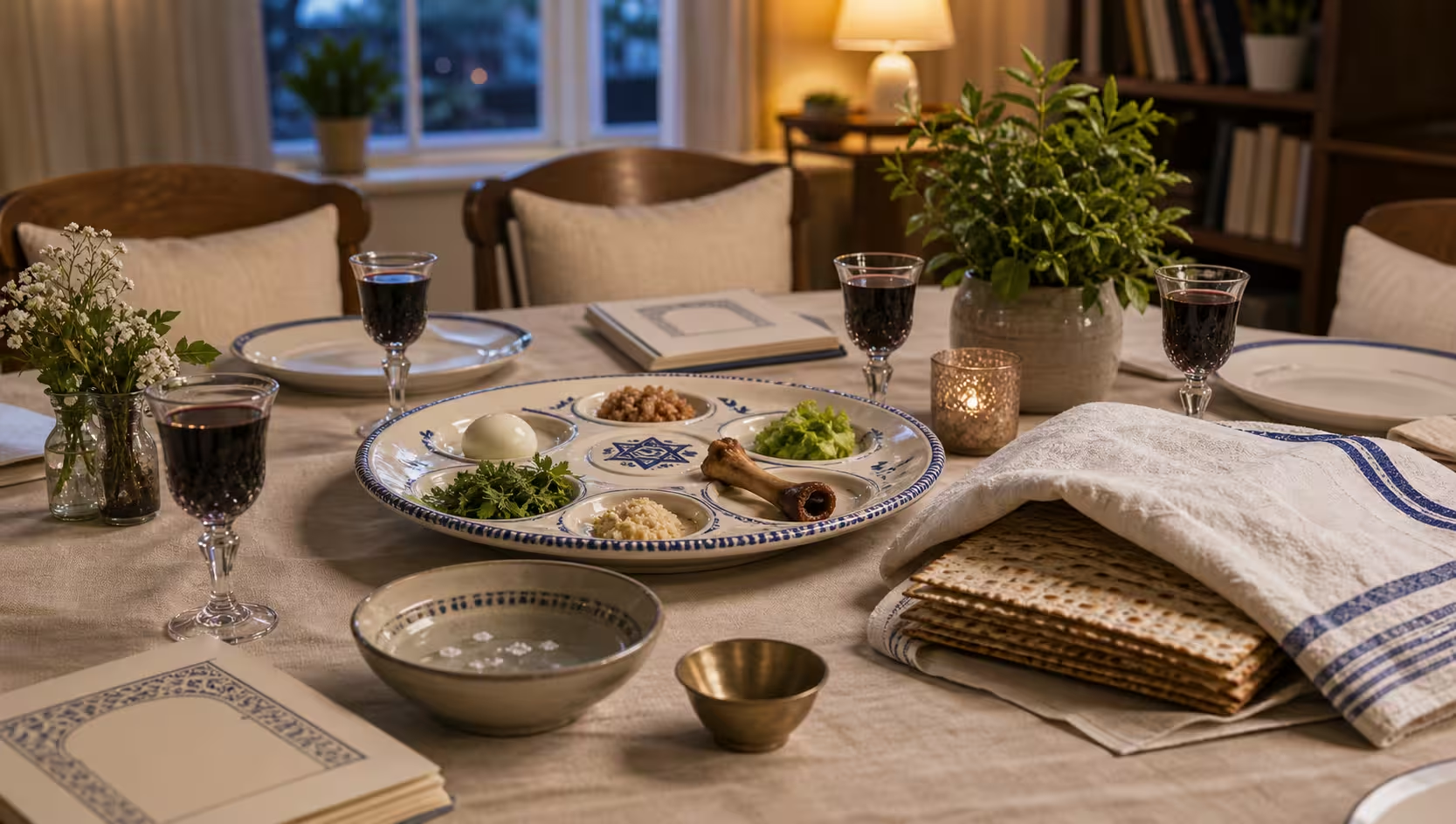
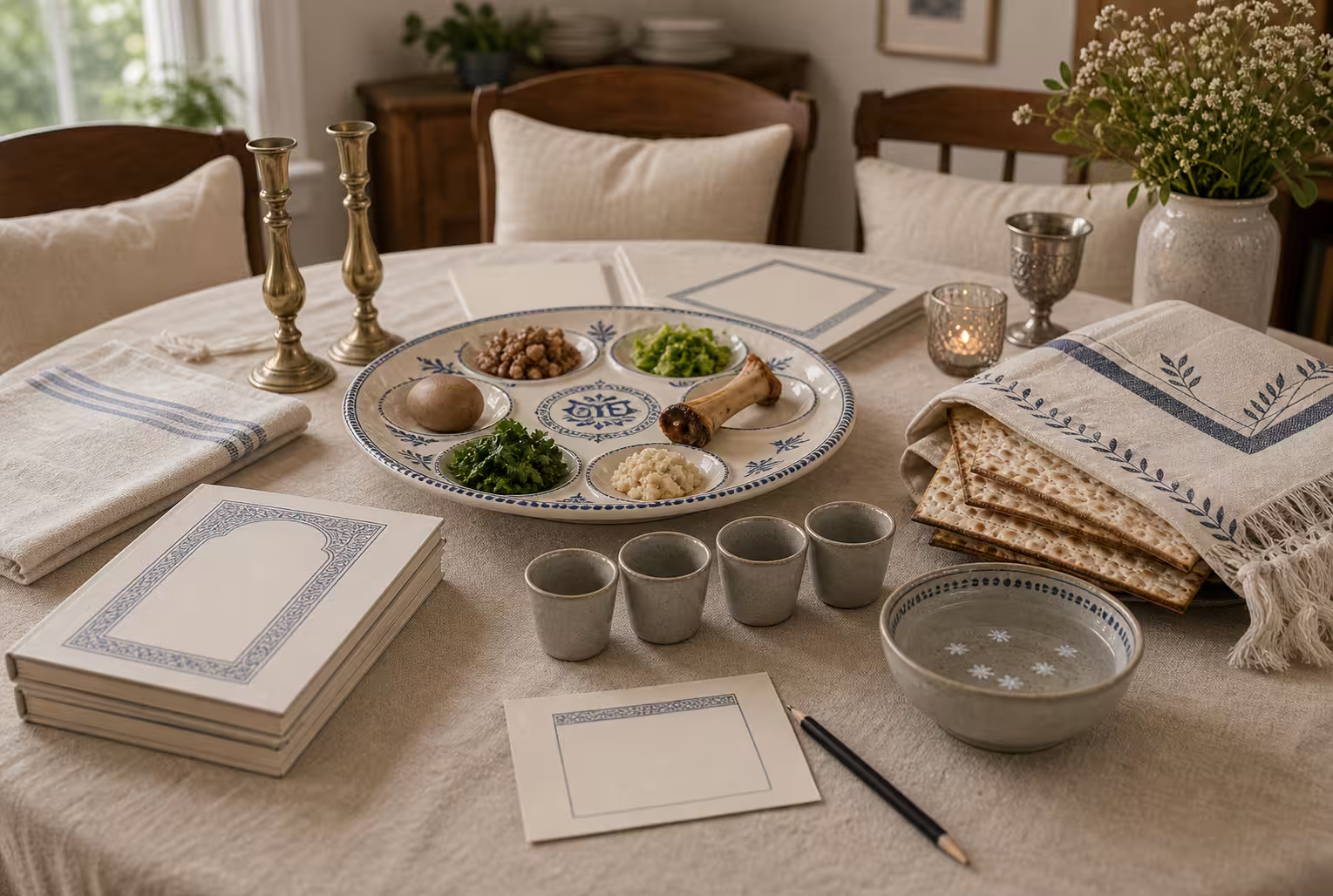
You see the table first: matzah under a cloth, cups waiting to be filled, a seder plate with foods that look like clues, pillows placed in odd positions, extra books stacked near the seats, and someone checking whether the salt water made it to the table. The room may feel formal, but it is not trying to be silent. Passover is a teaching meal. It expects voices.
That expectation is the first beginner lesson. The seder is not a dinner with a short blessing attached. It is a structured night of storytelling, symbolic eating, argument, memory, and questions. The Hebrew word seder means order, and the order matters because the night is designed to move people through a story, not simply tell them facts. You do not learn Passover by watching a lecture. You learn it by tasting bitterness, asking why the night is different, hearing old words in a new year, and noticing which parts of the story make the table wake up.
The central story is the Exodus: the Israelites leaving slavery in Egypt. But the seder does not treat that story as ancient scenery. It asks each generation to see itself as if it had gone out from Egypt. That sentence is one of the great engines of the night. It turns memory into responsibility. If liberation is not only something that happened long ago, then the table has to ask what freedom demands now.
The haggadah is a route, not a script for perfection
The book used at the seder is called a haggadah, from a root connected with telling. Haggadot vary enormously. Some are traditional and dense. Some include commentary, art, songs, transliteration, social justice readings, family notes, children’s prompts, or local customs. A beginner may open one and feel lost immediately.
Do not panic. The haggadah is a route through the evening. It tells you where the table is in the story. It also preserves the fact that Jews have been asking, answering, adapting, and arguing around this meal for a very long time.
If you are a guest, follow the leader’s page numbers or cues. If the table skips sections, sings extra songs, reads in multiple languages, or pauses for discussion, that is normal. Some seders are brisk and child-centered. Some last deep into the night. Some are mostly Hebrew. Some are mostly English. Some are intergenerational and chaotic. Some are quiet and contemplative. The order gives the night a spine, but every household gives it a voice.
The best beginner posture is active patience. You do not have to understand every paragraph in the moment. Listen for repeated themes: slavery, liberation, questions, children, bread of affliction, plagues, gratitude, and the hope that the story can keep changing people.
The seder plate turns memory into objects
The seder plate is often what beginners notice first because it looks like a ritual puzzle. Common symbols include bitter herbs, often horseradish or romaine, to recall the bitterness of slavery; charoset, a sweet mixture that evokes mortar and labor while tasting unexpectedly comforting; karpas, a green vegetable dipped in salt water; a roasted egg in many traditions; and a shank bone or alternative symbol recalling the Passover offering. Customs vary, and vegetarian or other adaptations are common in many homes.
The important thing is not only what each object means. It is what happens when meaning becomes edible.
Bitterness is not described from a distance. It is tasted. Salt water is not defined in a footnote. It is dipped into. Matzah is not only a cracker. It becomes bread of affliction, hurried bread, poor bread, and freedom bread, depending on where the seder is in the story. The same object can hold more than one meaning because human memory holds more than one feeling.
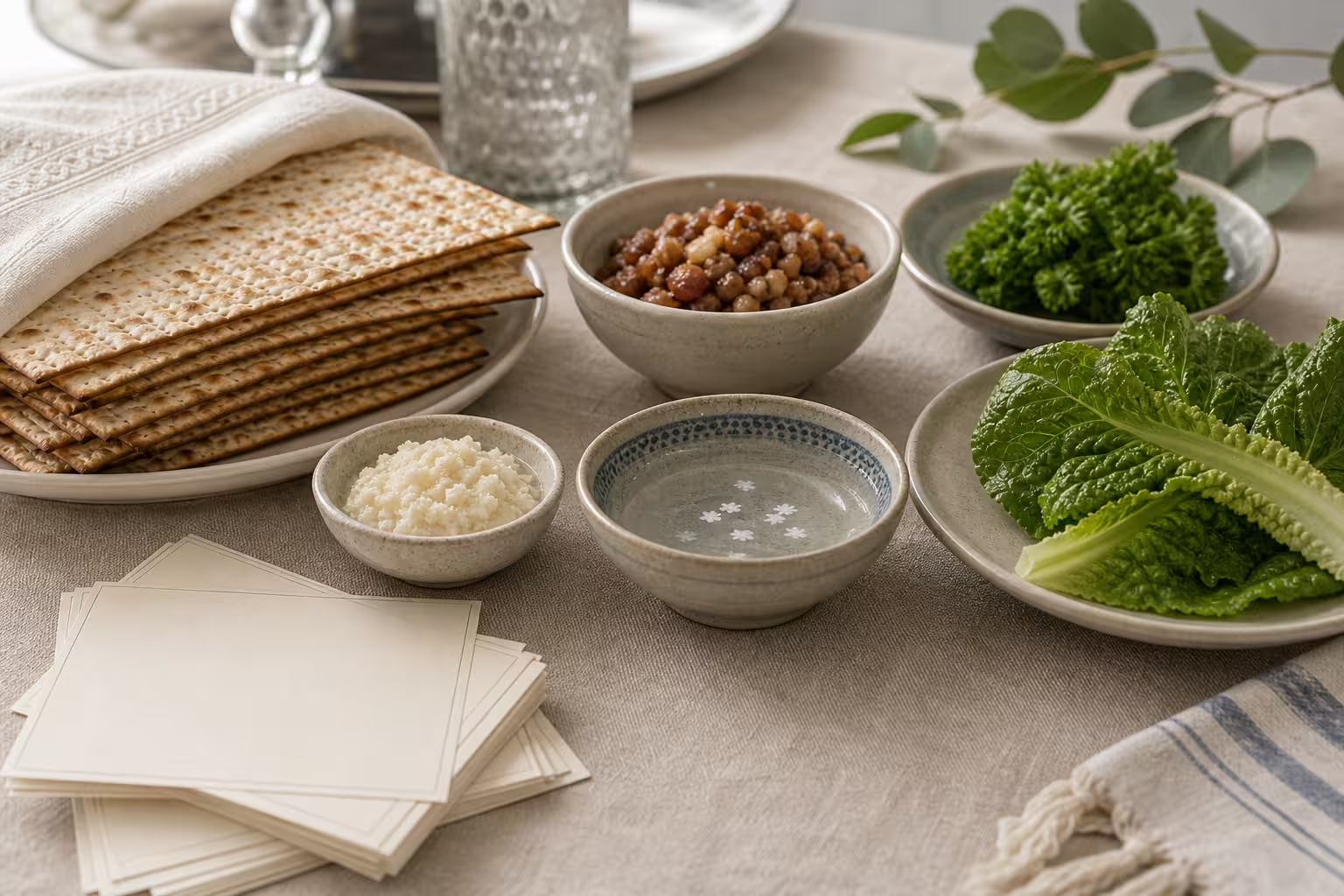
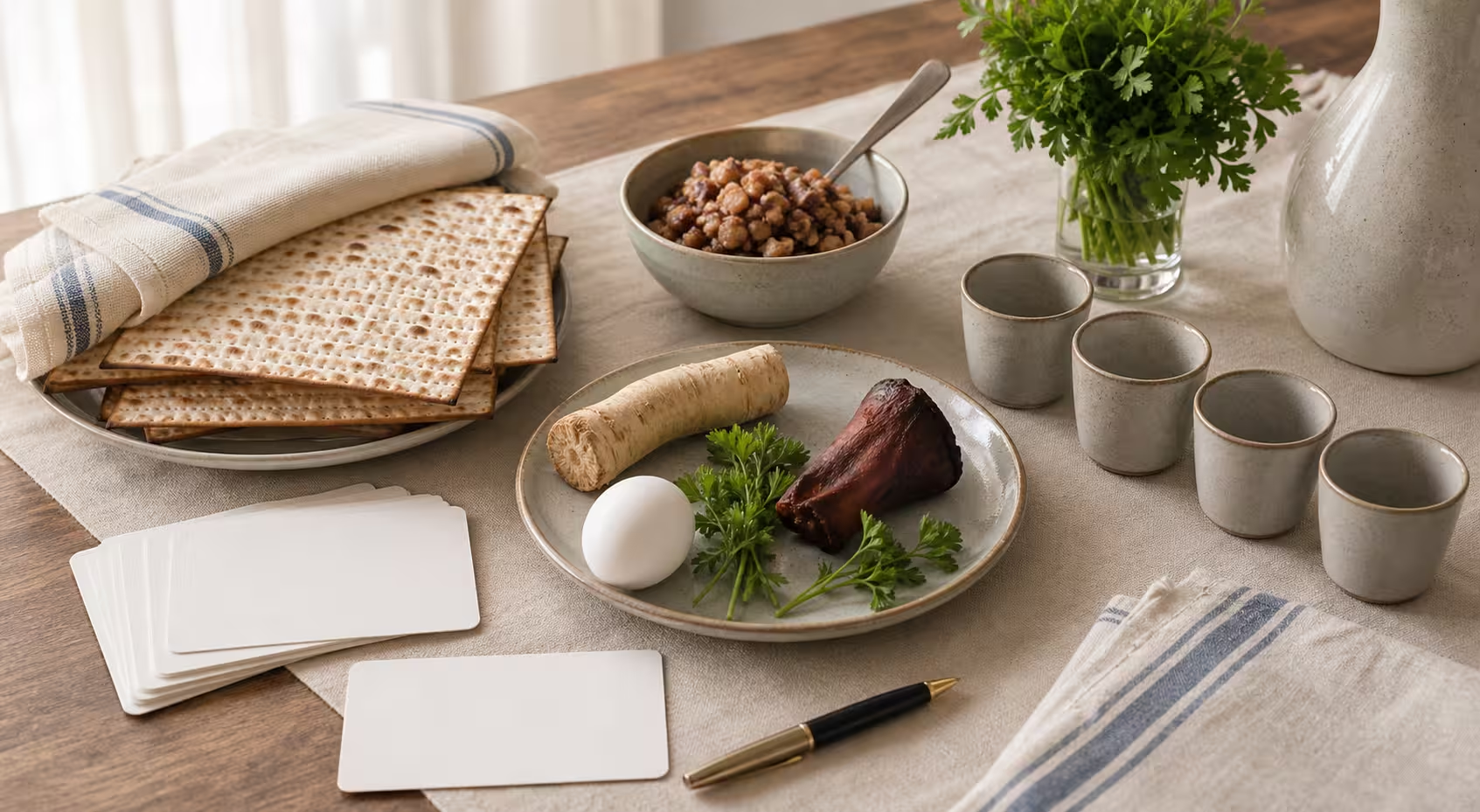
That is why the seder can feel so alive. It does not trust abstraction alone. It brings the body into the lesson.
The Four Questions make beginners essential
One of the most famous parts of the seder is the asking of the Four Questions, traditionally by the youngest capable person at the table. The questions ask why this night is different from all other nights, then point to matzah, bitter herbs, dipping, and reclining.
This is not a cute interruption before the adults get back to serious religion. It is a statement about how Jewish learning works. The night cannot proceed properly without questions. The beginner, the child, the person who notices that the room is strange, becomes necessary.
That should comfort adult beginners too. Not knowing is not an embarrassment at a seder. It is built into the design. The trouble comes when people refuse to ask, or when a table refuses to make room for real questions. A good seder does not only recite answers. It teaches people how to wonder responsibly.
If you are attending for the first time, you can ask simple, honest questions: “What are we about to do?” “Is this your family’s custom?” “Why do we recline?” “What does this food represent?” Ask at natural pauses and do not demand a seminar while someone is serving soup. But do not imagine that the night requires silent expertise. Passover honors the person who asks.
Food rules are part of the holiday’s atmosphere
Passover food practice can be intense. Many Jews avoid chametz, leavened products from wheat, barley, rye, oats, and spelt, during the holiday. Some families clean thoroughly, change dishes, buy specially certified products, and maintain careful standards for the whole week. Customs around kitniyot, such as rice, beans, corn, and lentils, differ among communities. Some families follow Ashkenazi restrictions; many Sephardi and Mizrahi families have different practices; modern households vary.
For a beginner, this means one practical thing: ask before bringing food. Do not surprise a Passover host with a homemade dessert or a bottle you assume is fine. The host may be navigating a specific standard. A sealed item with appropriate Passover certification may be welcome, but even that depends on the household. Flowers, fruit with guidance, or simply asking what would help may be better.
The food rules are not random severity. They make the Exodus story enter the pantry. For the duration of the holiday, ordinary bread disappears and matzah takes its place. The kitchen itself becomes a reminder that freedom has a texture.
The story becomes more honest when it includes discomfort
Passover is joyful, but it is not simple. The seder includes plagues, oppression, fear, and the moral cost of liberation. Some tables spill drops of wine while naming the plagues to diminish joy in recognition of suffering. Some discuss modern slavery, refugees, racism, antisemitism, political freedom, family estrangement, or personal constriction. Some keep the focus close to the traditional text. Some do both.
A beginner may be surprised by how much the seder can hold. Children search for the afikoman while adults talk about history. Songs coexist with hard memory. Sweet charoset sits beside bitter herbs. That mixture is not a flaw. It is the point. Freedom stories that contain only triumph become shallow. Passover asks people to remember pain without becoming trapped inside pain.
How to show up well
If you are a guest, ask when to arrive, what to bring, how people dress, whether phones are appropriate, and whether there are food restrictions. Arrive on time or slightly early if invited to help, because seders can run late and hosts often coordinate many moving parts. If you are given a reading, read at your pace. If songs are unfamiliar, listen and join when you catch the refrain. If children interrupt, let them be part of the night.
If you are hosting your first seder, keep the center clear. You do not need every possible commentary. Choose a haggadah or set of readings you can actually lead. Explain the flow before people are hungry. Build in real food at the right time. Invite questions, but do not let one confident guest take over the entire evening. Make room for children, elders, newcomers, and people with different Jewish backgrounds.
The seder is called an order, but its goal is not control. Its goal is transmission. The story passes through the table one more time, picking up the voices of the people who are there.
When the night ends, the plates are messy, the haggadot are scattered, and someone is wrapping leftovers. That aftermath is part of the teaching too. Freedom is not an idea kept clean in a display case. It is a story eaten with crumbs on the table, questions in the air, and the hope that next year finds everyone a little more awake.