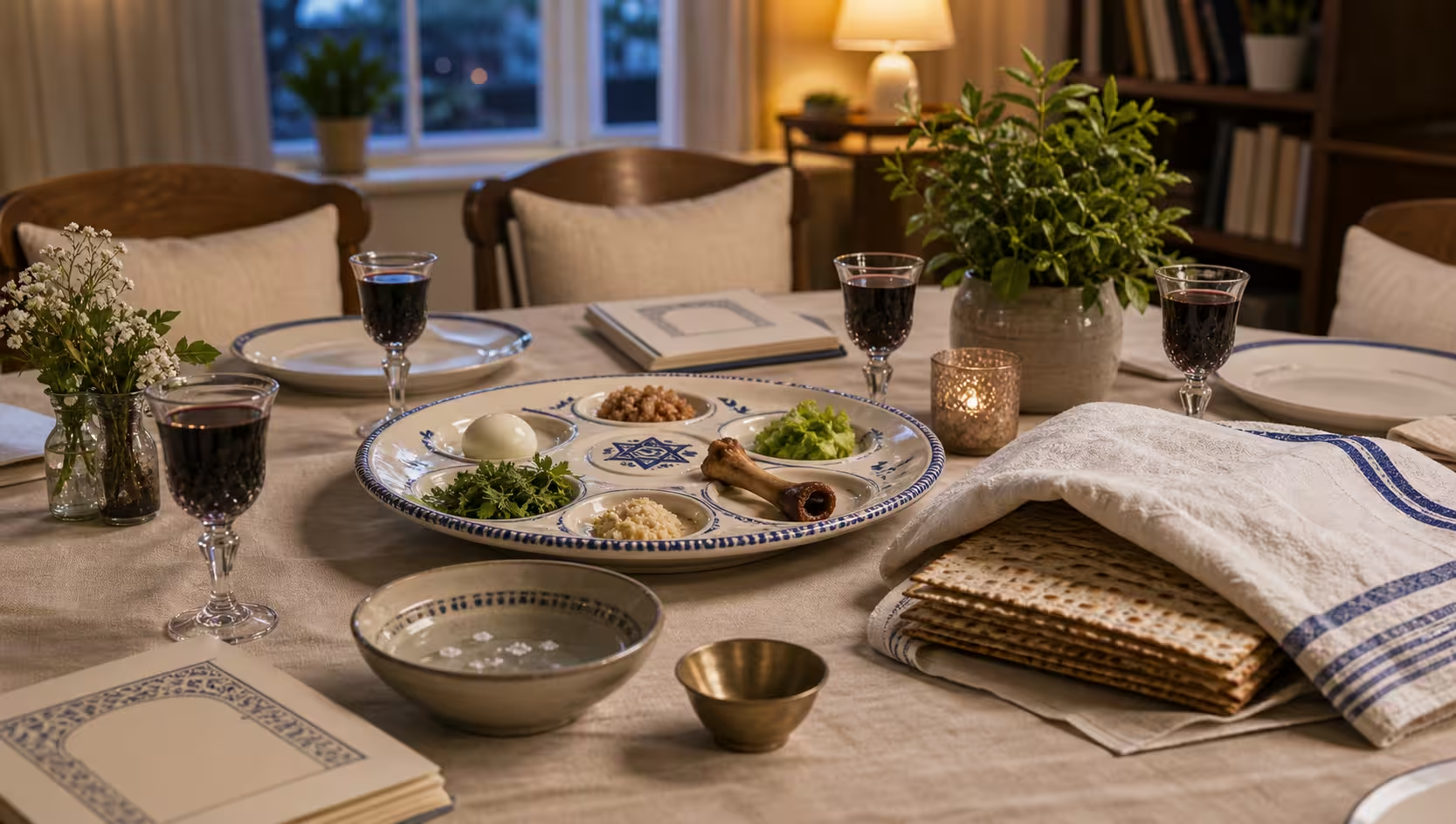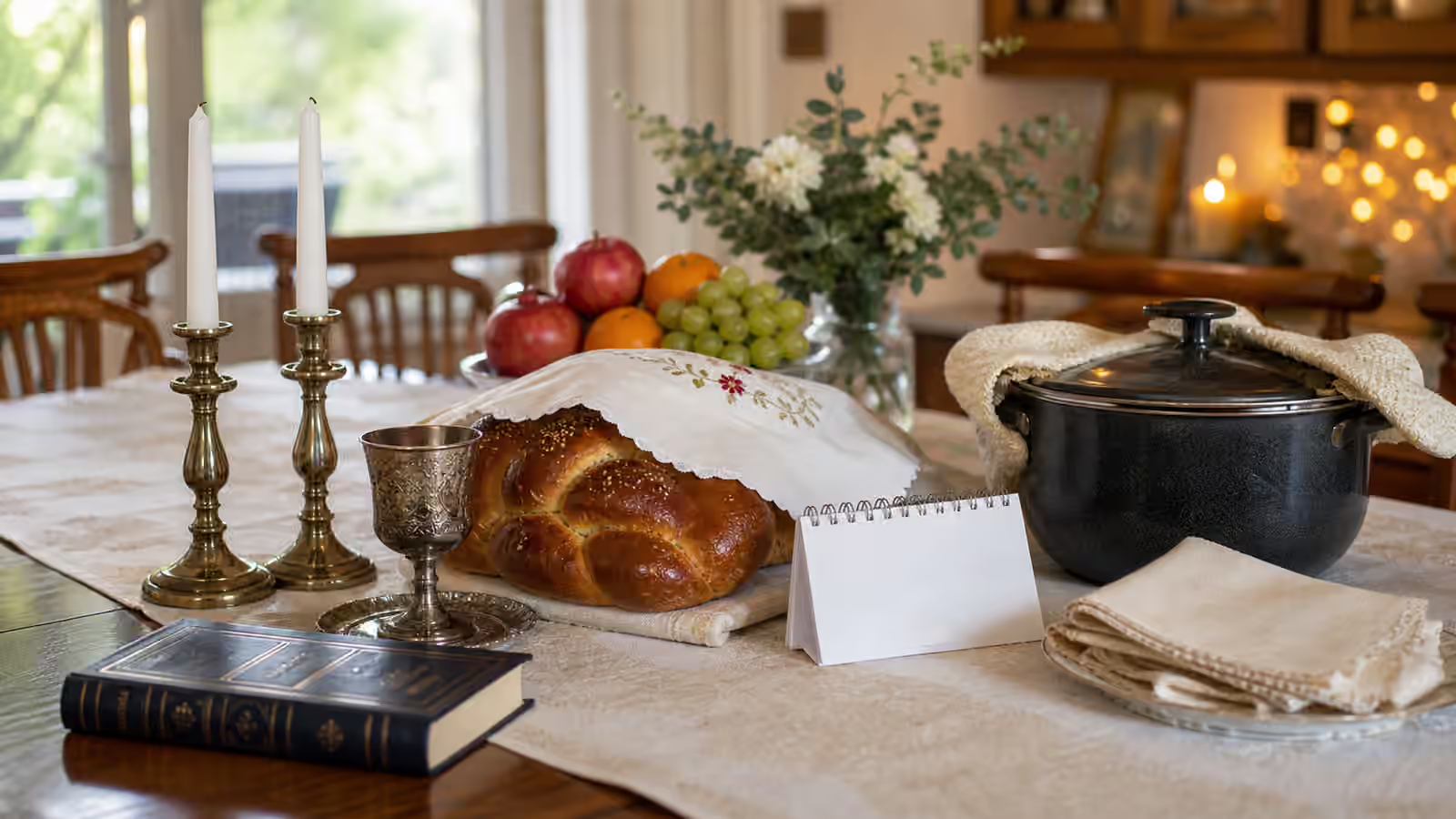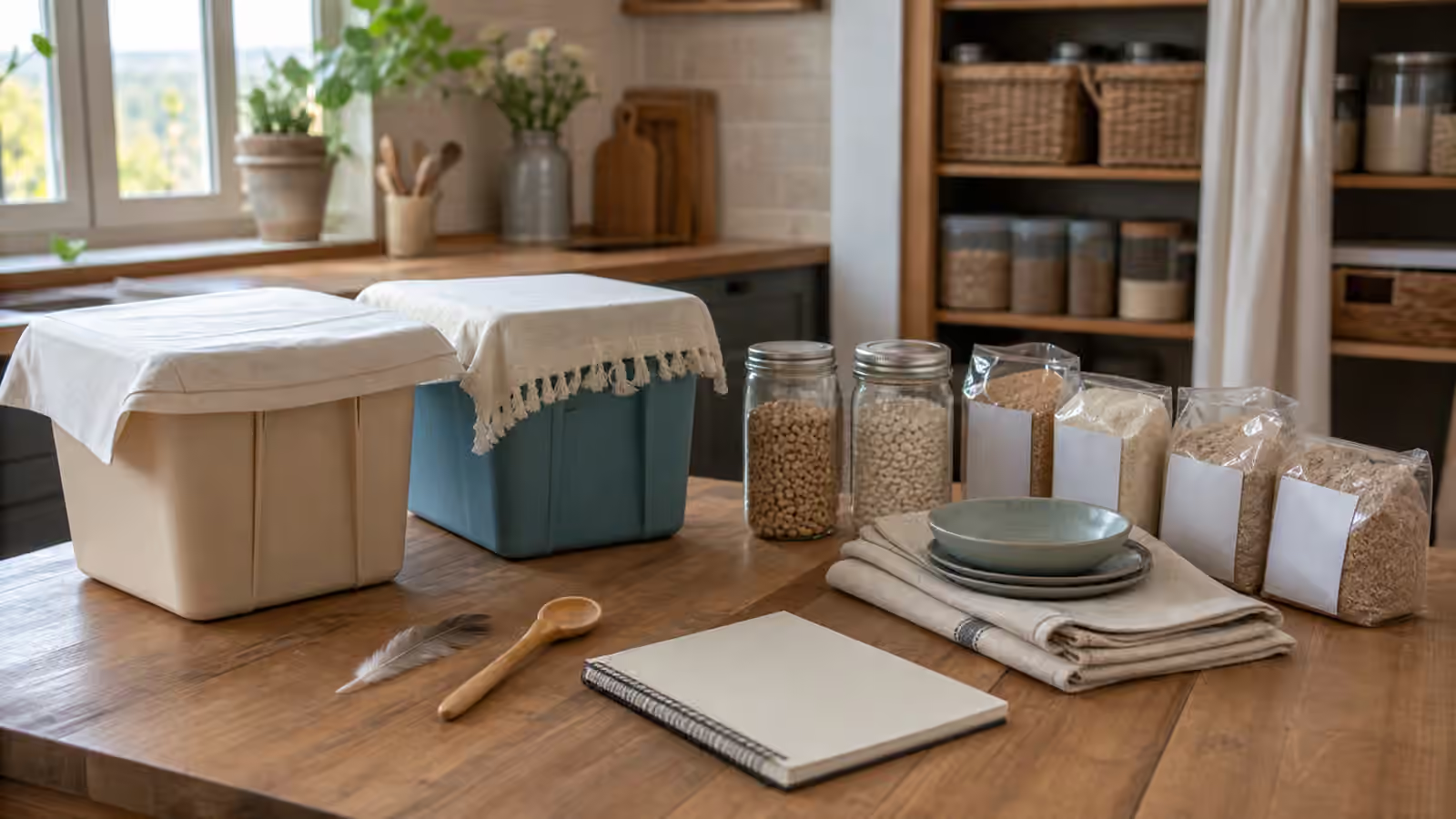
Passover preparation can look, from the outside, like a cleaning project that became a holiday.
Cabinets open. Pantry shelves are inspected. Matzah appears in places where bread used to be. Dishes may be changed, counters covered, recipes reconsidered, and invitations clarified. Someone asks whether a product is acceptable. Someone else remembers a family custom that complicates the answer. A beginner may wonder how a festival of liberation became so concerned with crumbs. For background, read Mishnah Pesachim 10 (the Seder) .
The answer begins with chametz. During Passover, Jewish practice traditionally avoids chametz, leavened foods made from wheat, barley, rye, oats, or spelt that have fermented or risen in a forbidden way. The details are much more precise than that sentence, and communities differ in how they prepare, what products they use, and how they handle related customs. But the beginner does not need to master every law before understanding the emotional structure. Passover asks a home to make the Exodus story physical.
The Passover Seder for Beginners explains the meal that teaches questions. This guide starts before the meal, in the home that is being asked to change.
Chametz makes memory concrete
Chametz is not only an ingredient category. It is a symbol that enters the cabinets. The Torah’s Passover story includes hurried departure, dough that did not have time to rise, and a people leaving bondage before ordinary bread could be prepared. Matzah becomes the bread of affliction and the bread of freedom, plain and paradoxical at the same time. Chametz becomes what is removed so that the story can be lived rather than merely discussed.
That removal can be simple in one home and elaborate in another. Some households sell chametz through a rabbinic arrangement, store it away, clean carefully, and use a separate set of Passover dishes. Some keep a more modest practice while still avoiding obvious bread and leavened grain products during the holiday. Some are learning for the first time and need a realistic first year rather than a theatrical one. Some have health, disability, childcare, work, budget, or housing constraints that shape what preparation can look like.
A beginner should be cautious with two mistakes. The first is treating every crumb as a moral crisis. The second is treating the practice as mere symbolism with no real standards. Passover preparation works best when seriousness and calm stay together.
The kitchen becomes a temporary world
Everyday kosher practice already trains a household to notice food categories, dishes, ingredients, trust, and guests. Passover adds another layer. A food that is kosher during the year may not be acceptable for Passover in a particular home. A kitchen that is organized for ordinary weeks may need temporary zones, covered shelves, different utensils, or a simpler menu.
This is why A Beginner Kosher Kitchen is useful before Passover. If kashrut is a system of attention, Passover is attention intensified for one week. The point is not to turn the kitchen into a theater of anxiety. The point is to let the kitchen participate in the story.
Different communities handle this participation differently. Customs around kitniyot, such as rice, beans, corn, lentils, and related foods, have historically differed between Ashkenazi and many Sephardi or Mizrahi communities, with modern practice varying as well. Some households use packaged foods only with Passover certification. Some rely on family customs. Some follow a rabbi’s guidance closely. Guests should not assume that their own family habit will fit another table.
If you are preparing your own home, choose a standard with guidance before you shop. If you are visiting, ask what the host needs. If you are bringing food, coordinate before buying or cooking. Passover is not a holiday for surprise casseroles.
Cleaning is not the same as panic
The practical work can become emotionally loaded. People joke about Passover cleaning because it is real work, but the jokes can hide pressure. A home with children, roommates, pets, limited storage, small appliances, or a shared kitchen may find the preparation genuinely hard. A person new to the practice may feel late before beginning.
It helps to distinguish cleaning for chametz from ordinary spring cleaning. Dust on a bookshelf is not chametz. A closet full of old papers is not chametz unless food is involved. Some households do use the holiday as a deadline for a wider reset, but that is not the same as the core obligation. Beginners often need permission to be focused.
The symbolic search for chametz, bedikat chametz, usually happens the night before Passover begins, with a candle or flashlight in many homes, a feather and wooden spoon in some customs, and a blessing and declaration according to traditional practice. Families may place small pieces of bread to be found, then remove and burn or dispose of them in the proper time and manner. The details vary, but the scene is memorable because it turns removal into ritual. The house is not merely cleaned. It is searched.
That search can teach children and adults alike that memory lives in corners. The Exodus is not only a story read from a book. It is something a family looks for under the table.
The seder depends on the preparation but is not swallowed by it
Passover preparation can become so large that it threatens to swallow the seder. This is a danger. The seder is not the reward after surviving the kitchen. It is the center that gives the preparation meaning. The cleaning, shopping, cooking, and changing dishes should point toward the night when people ask questions, tell the story, taste bitterness, eat matzah, drink wine or grape juice, sing, recline, argue, remember, and imagine liberation.
A beginner host may need to simplify so the seder remains human. A shorter menu served with attention may teach more than an exhausted feast. A clear explanation of what guests can bring may preserve more joy than vague politeness. A Haggadah that people can follow may matter more than the fanciest table object. The seder’s power comes from participation, not from household perfection.
This is especially important when guests include people with different backgrounds. Some may know every song. Some may not know why the night is different. Some may be children with limited patience. Some may be elders carrying memories of seders in other countries. Some may be exploring Jewish life for the first time. Preparation should make room for these people, not only for food.
Ask the better question
Passover can generate many technical questions. Is this ingredient acceptable? Can this appliance be used? What about pets? What about medicine? What about shared housing? What about travel? What about a relative’s custom? These questions deserve reliable answers from a rabbi, teacher, community, or trusted household authority. Generic advice often fails because Passover practice is both detailed and local.
The better beginner question is not, “How do I avoid every possible mistake alone?” It is, “Whose standard am I trying to honor, and who can help me understand it?” That question turns isolation into learning.
If you are hosting guests who observe Passover differently, ask early. If you are a guest, do not challenge the host’s standard at the table. If you are building a practice, write down what you did this year and what you want to learn before next year. Passover returns, and returning is part of the education.
The room changes so the story can enter
By the time the seder begins, the home may feel strange. Bread is gone or hidden away. Matzah is visible. The kitchen has different rules. The table is set with symbols. People may be tired. Yet the strangeness is the point. Passover asks a household to stop treating freedom as an abstract value. It asks people to taste haste, bitterness, memory, and gratitude.
The preparation is not meant to produce a spotless stage. It is meant to create a room where a difficult old story can be told honestly. Slavery, liberation, fear, courage, hunger, children, strangers, memory, and responsibility all come to the table. The cabinets changed because the story is not content to stay on the page.
That is why beginners should approach Passover preparation with care rather than dread. Learn the standard you are following. Ask before assuming. Simplify where simplification protects the holiday. Take the work seriously, but do not confuse stress with devotion.
The goal is a home ready to ask a question that never becomes old: what does it mean to leave narrowness, and what must change in the room so we can tell that truth?