The first Jewish song a beginner learns may not be learned from a page.
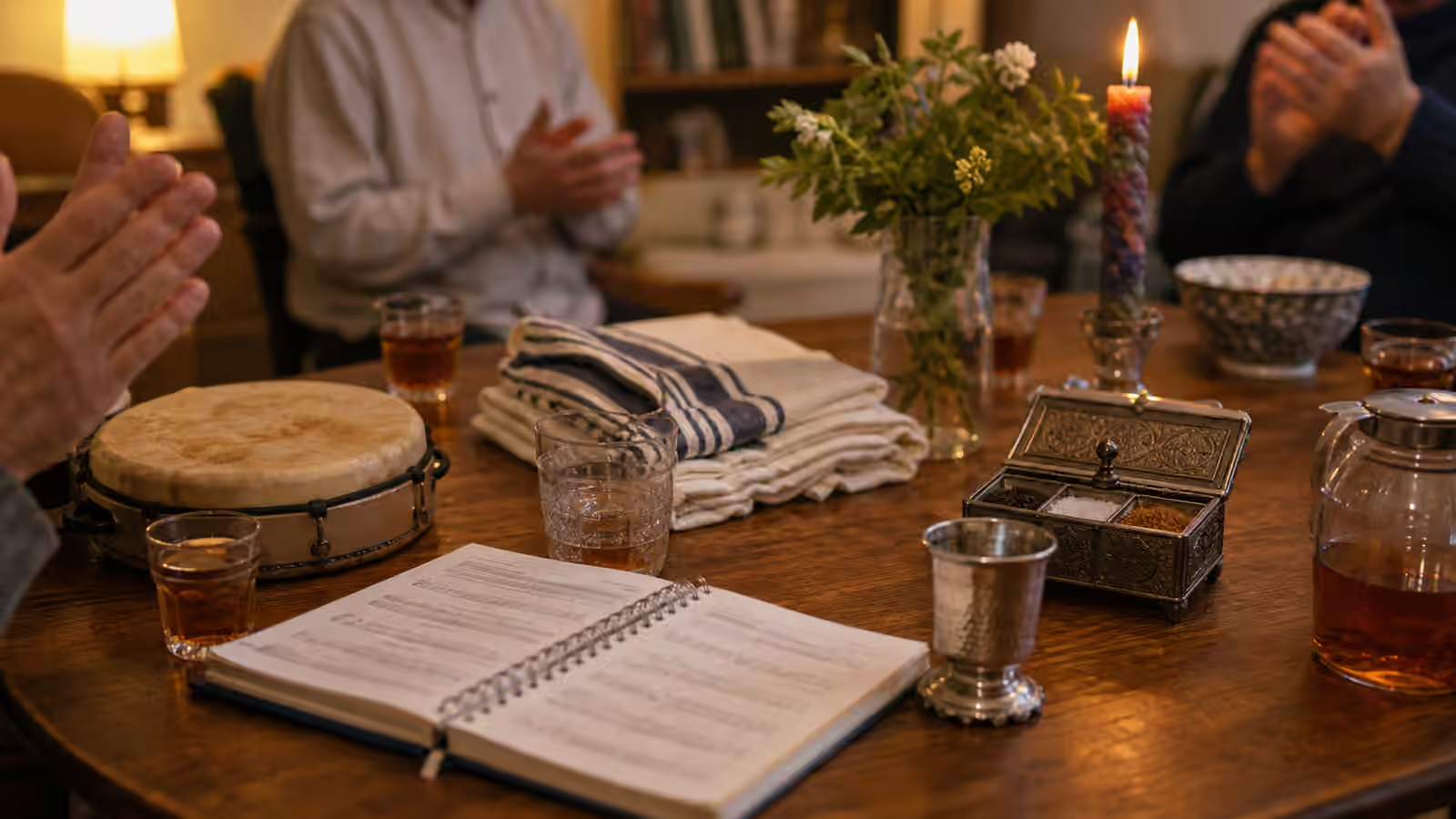
It may be learned at a Shabbat table, where everyone else seems to know when to enter and when to pause. It may be learned in synagogue, where a melody lifts a paragraph you cannot yet read. It may be learned at havdalah, when the flame is reflected in fingernails and the tune feels older than the room. It may be a wordless nigun, repeated until the person who felt like an outsider realizes that singing can teach before vocabulary catches up. For background, read Psalms 150 (praise and music) .
Jewish song is not one style. It includes table songs, synagogue modes, Hasidic nigunim, Sephardi pizmonim, Mizrahi melodies, Yiddish songs, Ladino songs, Israeli songs, camp tunes, High Holiday melodies, wedding songs, mourning melodies, children’s songs, and local habits that belong to one community because people have sung them together for years. Some are composed. Some feel anonymous because they have passed through so many mouths. Some are formal. Some are playful. Some are almost private family property.
For beginners, this can be both beautiful and intimidating. Music creates belonging quickly, but it also reveals who already belongs. A table can say “join us” with warmth and still leave a newcomer unsure which note comes next.
A nigun lets the body learn first
A nigun is often a wordless melody, though the term is used in different ways across communities. Many nigunim use repeated syllables rather than full lyrics. The melody may begin slowly, gather force, soften, rise again, and become a shared practice of attention. Because there are no words to translate, a beginner can enter through listening, humming, and repetition.
That does not make a nigun simple. A wordless tune can carry longing, joy, yearning, courage, tenderness, or a kind of spiritual stubbornness. In some Hasidic settings, nigunim are treated as serious vehicles for prayer or inner work. In other settings, a nigun may simply help a table settle, a group gather, or a service breathe between texts.
The beginner move is to listen for the arc. Where does the melody seem to rest? Where does it climb? When does the group become louder? When does the leader pull back? You do not need to sing loudly to participate. A quiet hum can be honest. Jewish song often welcomes return more than performance.
Table songs make Shabbat last longer
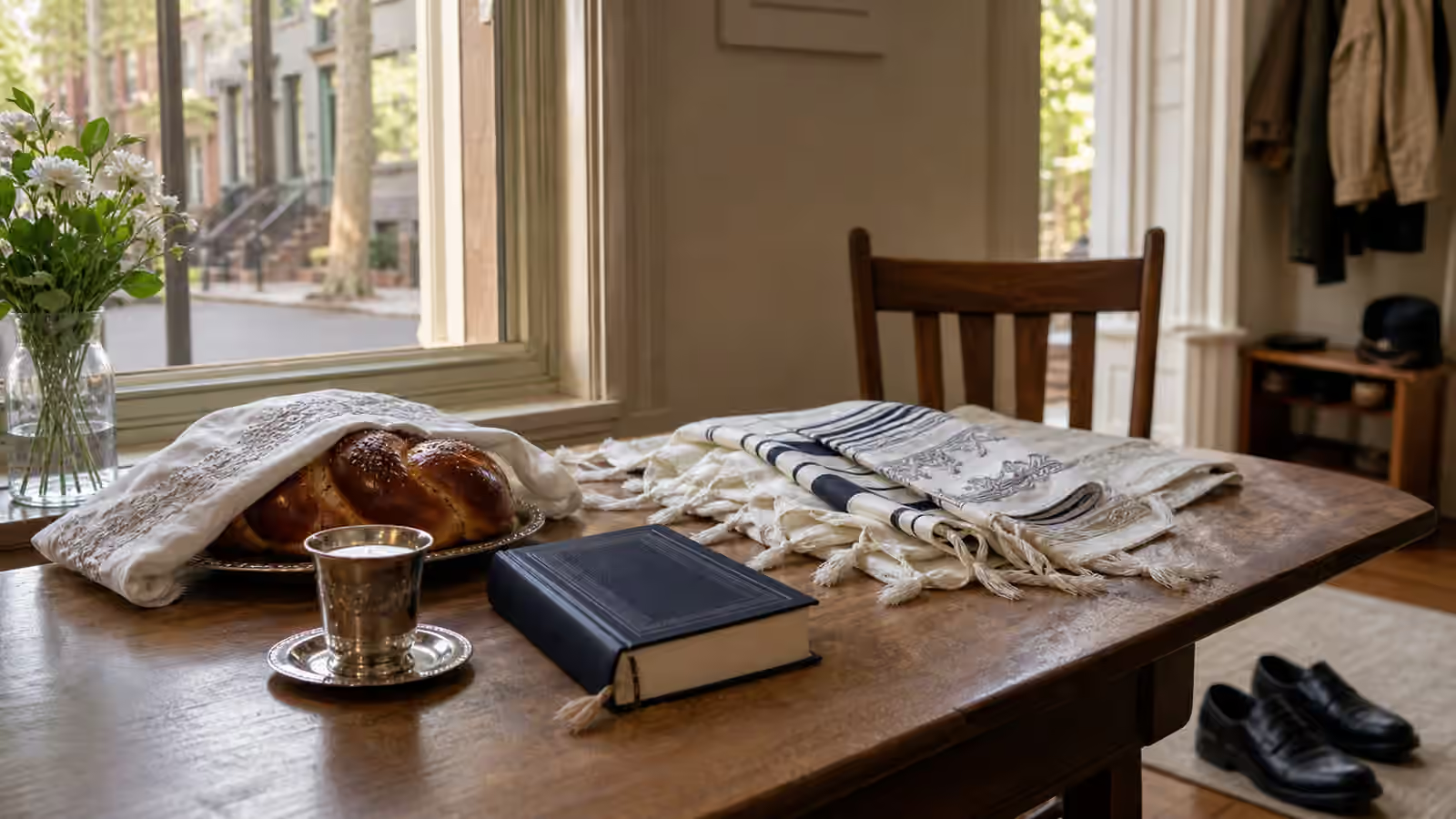
Shabbat meals often include zemirot, table songs sung on Friday night, Shabbat lunch, or late Shabbat afternoon. Some households sing many. Some sing one or two. Some do not sing at all, or only when guests are present. The songs may be in Hebrew, Aramaic, Yiddish, Ladino, English, or other languages depending on family and community.
At a table, song changes the pace. Conversation stops being the only social form. People who might not make speeches can join a refrain. Children learn by hearing the same melody every week. Guests learn that the meal is not only about food. The song stretches sacred time across the table.
Your First Shabbat Table and Kiddush and Table Blessings explain the structure of the meal. Song is one of the ways that structure becomes memory. A family may forget a sermon, but remember the tune a grandfather used for one line. A child may not understand every word, but know that the melody means Shabbat lunch is not finished yet.
If you are new, do not apologize for not knowing the songs. Let the host hand you a songbook if one is used. Watch for repeated parts. Join softly where you can. If a song has words you do not understand, ask later for a translation or context, not necessarily while everyone is in the middle of singing.
Synagogue melodies are maps of time
Synagogue music often tells people where they are in the service before the page does. A weekday melody differs from Shabbat. The High Holidays carry their own sound world. The melody for Kol Nidrei, the emotional opening of Yom Kippur evening, is recognizable to many Jews even when they do not attend synagogue often. Festival tunes, Torah reading melodies, and local nusach, the prayer mode or musical tradition, all help a community feel the calendar.
This is why a first synagogue visit can feel like arriving inside a song already underway. People know the turns. They know when the leader will repeat a phrase, when the congregation answers, when a tune signals standing, and when a quieter mode has begun. Synagogue and Prayer for Beginners helps with the room, but music is another map entirely.
Beginners should not confuse unfamiliarity with exclusion. Many communities carry melodies that took years to absorb. Even regular participants may know some sections well and mumble through others. Listening is participation when listening is attentive.
Every community has a musical accent
The same prayer can sound different in different communities. A Sephardi congregation may carry one musical grammar, an Ashkenazi shul another, a Hasidic gathering another, a liberal community with guitar another, a Yemenite or Moroccan tradition another. Even two synagogues with the same broad affiliation can have different tunes because a beloved leader, cantor, rabbi, camp, family, or migration history shaped the sound.
This is not a problem to solve. It is part of Jewish life. Music preserves routes that words alone cannot preserve. A melody may carry a city, a language, a teacher, a youth movement, a kitchen, or a vanished synagogue. People may feel protective of a tune because it carries grief or childhood, not because they think newcomers should struggle.
If you are learning across communities, expect difference. The tune you learned for one prayer may not be the tune used elsewhere. The blessing is not ruined. You have simply discovered that Jewish memory has many accents.
Singing asks for humility
Music can create a temptation to perform belonging. A beginner may sing loudly to prove comfort, or stay silent from fear of making a mistake. Neither extreme is necessary. The better posture is humility. Listen first. Join where repetition makes the entrance clear. Let the group carry the melody until you can carry a small part of it back.
This humility matters because some songs are tied to grief, protest, memory, or sacred intimacy. Not every melody is a campfire chorus. Some belong to prayer moments where joking would be painful. Some belong to mourning contexts where volume should be gentle. Some belong to weddings and dancing, where joy is the point. Context teaches how to sing.
It is also worth noticing who is leading. In some communities, formal cantors or prayer leaders guide the music. In others, a table leader starts a tune. In some, gender norms shape who leads publicly. In others, leadership is shared. A beginner does not need to resolve every communal difference before respecting the room.
Song remembers when speech is thin
Jewish song often appears where speech alone would be too flat. At havdalah, the tunes help people leave Shabbat without dropping it. Havdalah for Beginners explains the candle, spices, cup, and separation, but the ceremony’s feeling is inseparable from melody in many homes. At a wedding, songs make joy public. In mourning, certain melodies allow grief to move without being explained. On the High Holidays, music can hold awe, regret, and hope before anyone can summarize them.
This is why learning Jewish song is not an optional decorative layer. It is one way Jewish life stores emotional knowledge. A melody can tell you that the room is turning toward rest, memory, plea, celebration, or farewell.
Let one tune become yours by return
The best way to begin is modest. Choose one setting and return to it. Learn one Shabbat table song, one synagogue refrain, one nigun, or one havdalah melody. Record the name if you know it. Ask someone to sing it slowly if that feels appropriate. Find a recording from a trustworthy source if your community recommends one. Then bring it back to the table or room where it lives.
Do not try to collect melodies like souvenirs. Let them attach to practice. A Shabbat tune learned only as audio may be pretty. The same tune sung while people pass challah, wait for soup, and laugh at a familiar mistake becomes part of a life.
A beginner who sings softly is still learning. A beginner who listens carefully is not outside the music. Over time, the repeated melody does what repeated practice often does in Jewish life. It turns strangeness into recognition.
One day, someone else will be new at the table. You may notice them listening for the entrance. If you have learned well, you will not make them perform certainty. You will sing in a way that leaves room.