The family story often begins with a name that will not sit still.
On one paper, the man is David. On another, he is Dovid. In a synagogue record, he is David ben Moshe. On a ship manifest, the clerk has guessed at a spelling that does not quite match any language the family spoke at home. His grandchildren remember that everyone called him Dave. A cousin insists there was also a Yiddish nickname, but nobody agrees how to spell it.
A beginner might see this as a problem to solve. Which name was real?
Jewish family history asks a better question: what did each name do?
One name may have carried the person in prayer. One may have helped him work in a new country. One may have preserved his father. One may have protected him from ridicule. One may have been used only by his mother. One may have appeared because a clerk, teacher, employer, or immigration official needed a version that fit a form. The person did not vanish behind these names. He moved through them.
That insight connects naming, lifecycle, and genealogy. Jewish memory is rarely held in one place. It is distributed across rituals, documents, kitchens, graves, songs, and the people who still know which aunt was named for whom.
Naming is not only choosing something beautiful
Jewish naming customs vary widely. Ashkenazi families often name children after deceased relatives, while many Sephardi and Mizrahi families may name after living relatives as an honor. Some families choose Hebrew names that connect to biblical figures, virtues, ancestors, or sounds that echo a secular name. Some converts choose names that express a new spiritual belonging. Some children receive names in synagogue. Some families create home ceremonies. Some names carry Yiddish, Ladino, Arabic, Persian, Russian, Spanish, English, French, Amharic, or other linguistic histories alongside Hebrew.
The beginner’s mistake is to treat a Jewish name as a hidden password. It is better understood as a relationship. A Hebrew name used in ritual may connect someone to parents, peoplehood, Torah, and community. A secular name may connect the same person to country, school, work, and public life. A family nickname may carry warmth no official document can capture.
This is why naming conversations can become emotional. A child may be named for a beloved grandparent. A family may debate which side has been honored. A parent may want a name that is easy in the surrounding culture but still rooted in Jewish memory. A person returning to Jewish practice may discover a Hebrew name they had never used, or choose one for the first time.
Names are small vessels. Families pour a lot into them.

Birth, welcome, and the first public memory
Lifecycle begins before a person can remember it. A baby is born, and the community begins to tell the child who they are. For boys in many traditional communities, brit milah, circumcision on the eighth day when medically possible, is a covenantal ritual. For girls, many communities hold naming ceremonies in synagogue or at home, with a range of names and formats. Some families create alternative or additional ceremonies for children of any gender. Practice varies, and sensitive pastoral questions should be handled with knowledgeable local guidance.
What matters for a beginner is the communal shape. The child is not introduced as a private project. The child is welcomed into a people with memory. The name may recall ancestors. Blessings may ask for Torah, chuppah, and good deeds, a phrase that imagines a life of learning, relationship, and ethical action. Adults who attend are not only admiring a baby. They are witnessing a future.
Coming of age is responsibility, not only performance
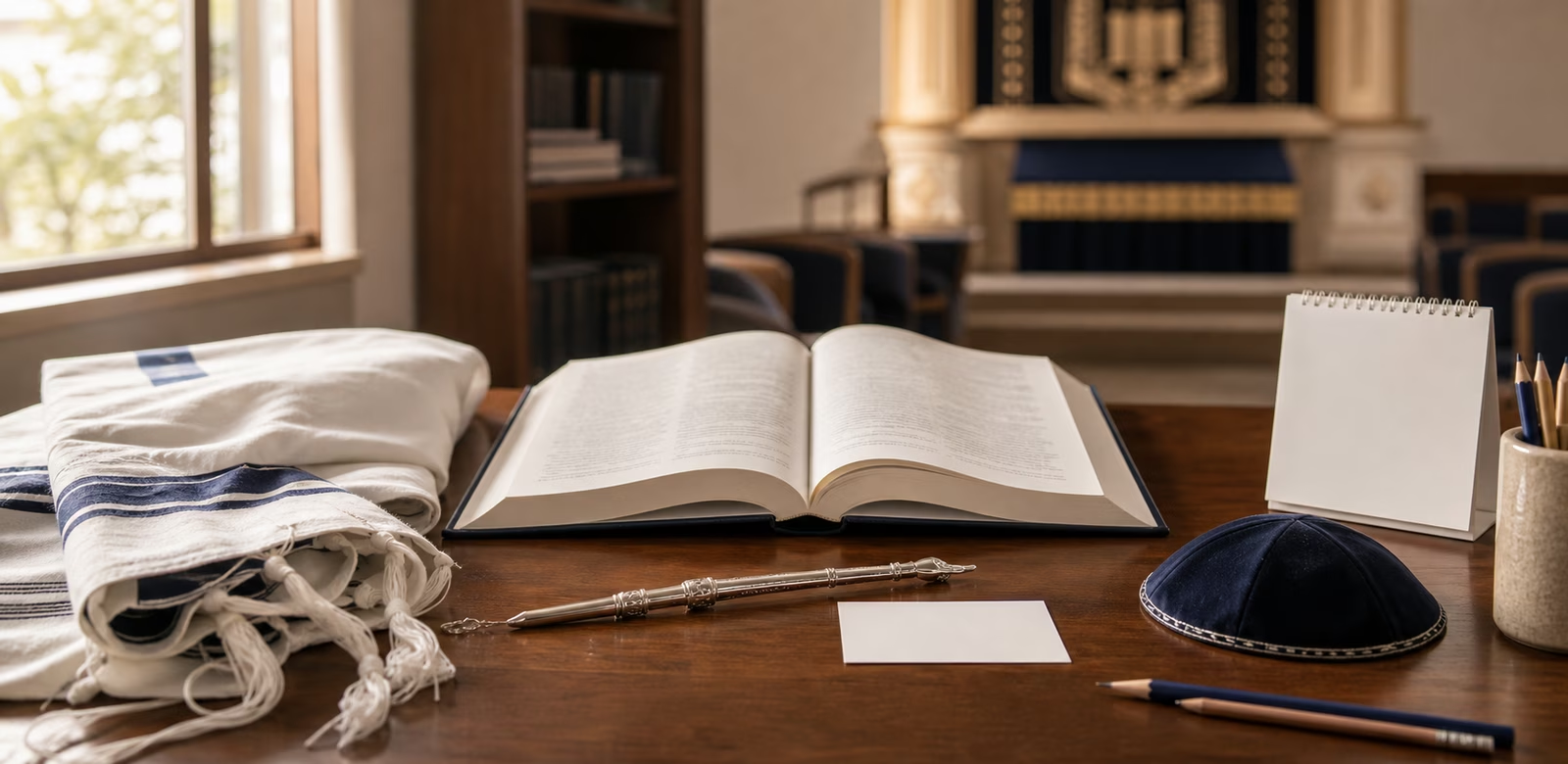
The bar or bat mitzvah is often misunderstood because the party is visible and the legal idea is less visible. Around age thirteen for boys and twelve or thirteen for girls depending on community, a Jewish child becomes obligated in mitzvot, commandments or sacred responsibilities. The ceremony may include being called to the Torah, leading prayers, chanting, teaching, giving a speech, or participating in community worship. In some communities, the format differs by gender, movement, and local custom.
The beginner sees a child reading Hebrew and a family celebrating. The deeper story is responsibility. The young person is no longer only being carried by the community’s obligations. They are beginning to carry them too.
This is why a bar or bat mitzvah can be moving even when the chanting is imperfect. The moment is not a talent show. It is a public threshold. A child stands in front of people who have fed, taught, corrected, and loved them, and takes a first visible step into adult Jewish responsibility.
Marriage creates a Jewish home in public
A Jewish wedding may include a chuppah, blessings, rings, a ketubah, wine, circling in some customs, the sheva berachot, and the breaking of a glass. Each element has layers, and practices vary across communities and couples. A beginner does not need to master every interpretation to understand the public claim: two people are building a home, and the community is not merely watching romance. It is witnessing covenant.
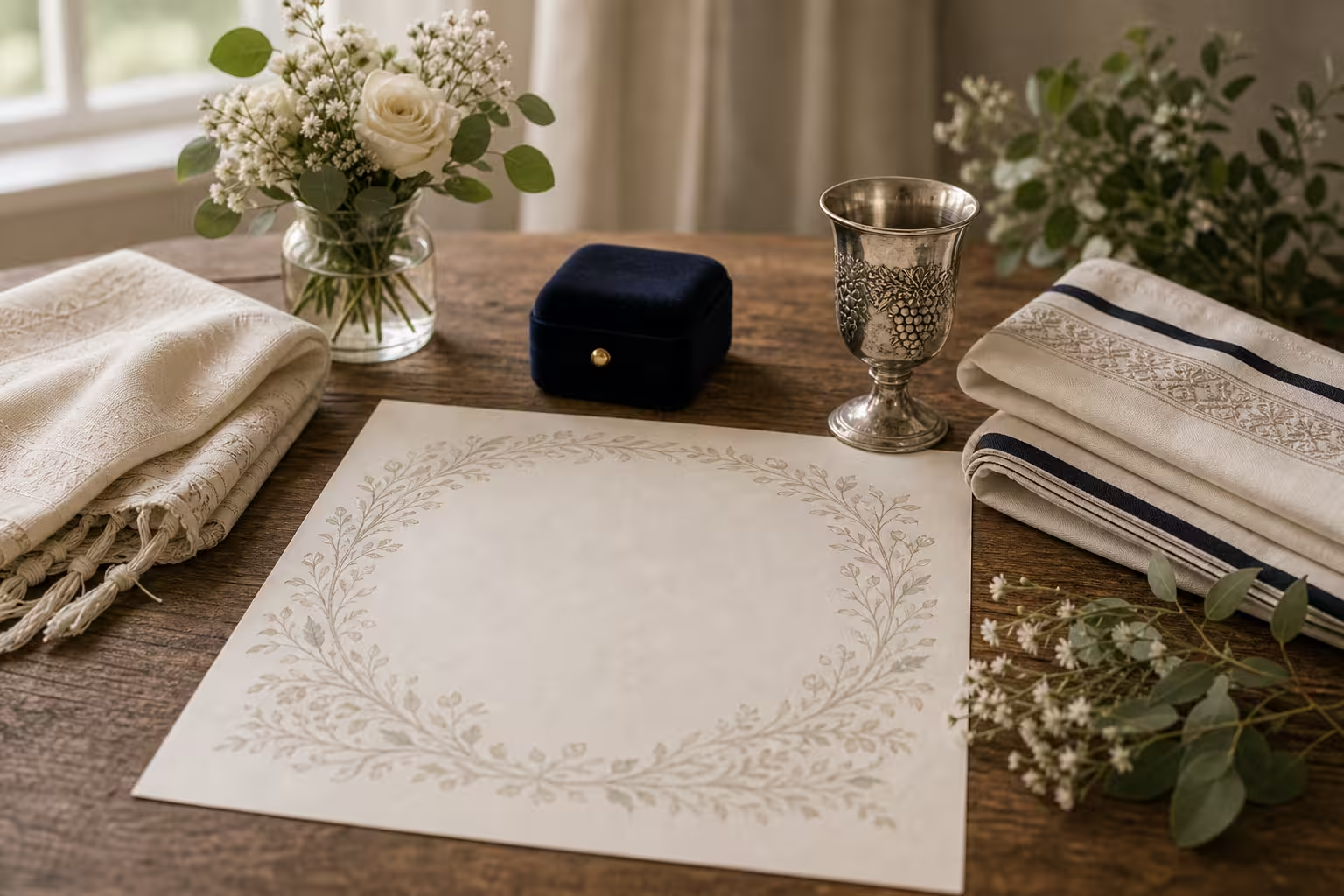
The ketubah is a good example. Many people notice it as art, and it can be beautiful. But it is historically a marriage document with obligations. In modern communities, the text may be traditional, egalitarian, legal, poetic, or adapted in consultation with clergy. The point is that Jewish marriage is not only a private feeling. It has words, witnesses, duties, and a homeward direction.
Weddings also reveal the diversity of Jewish life. Interfaith families, queer couples, converts, blended families, secular relatives, and multiple Jewish traditions may all meet under the same canopy. The strongest ceremonies do not pretend these realities are simple. They shape them with honesty and care.
Mourning is where community becomes concrete
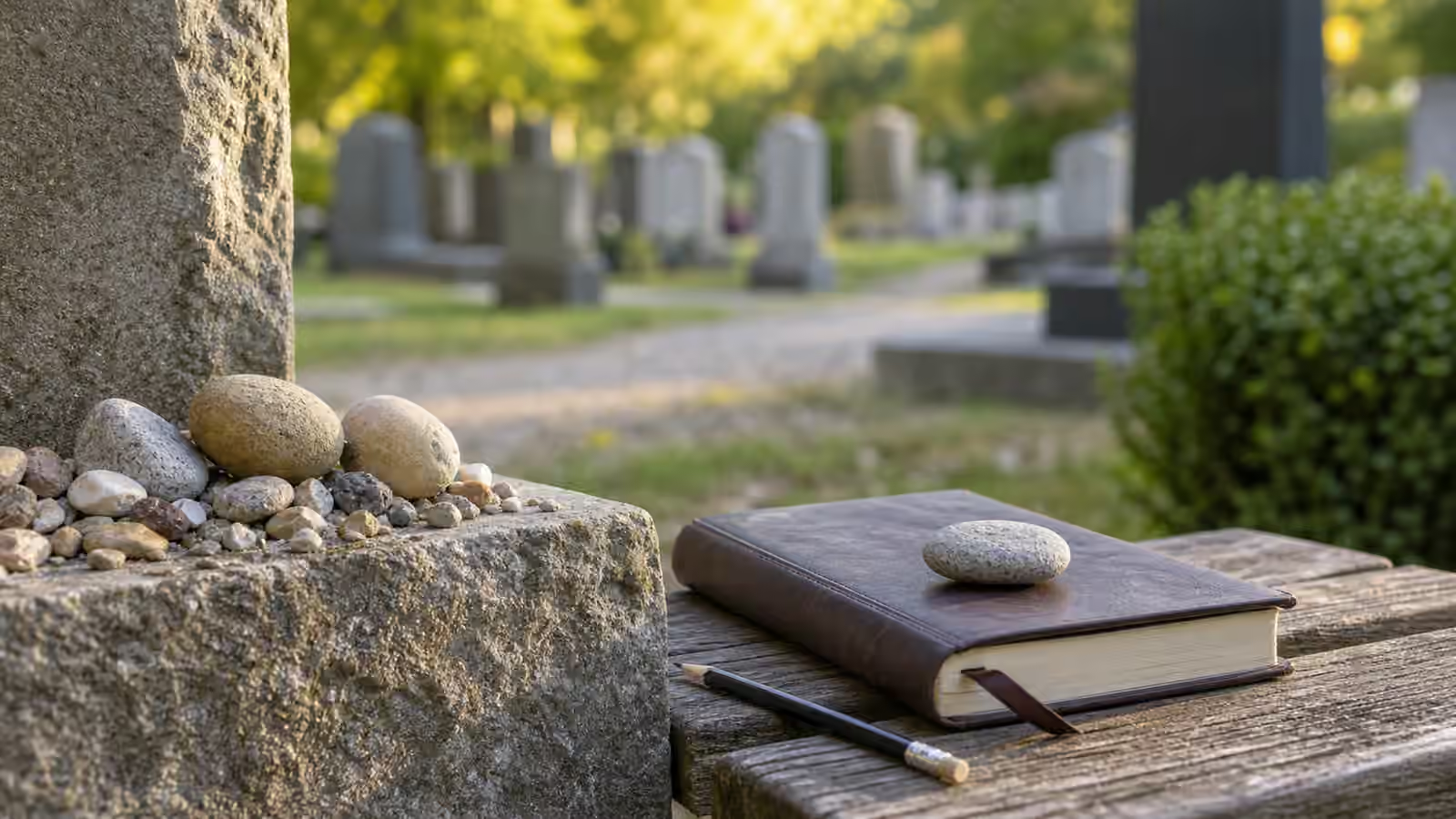
Jewish mourning practices are among the clearest examples of ritual serving human need. After a death, there may be taharah, ritual preparation of the body, a funeral, burial, tearing a garment or ribbon in kriah, shiva, sheloshim, kaddish, yahrzeit, and memorial practices. Details vary, and local guidance matters.
For a beginner, shiva is the doorway to understanding. Mourners sit, often at home, and the community comes to them. Visitors do not come to be entertained. They come to be present. Food arrives because grief should not have to cook. Stories may be told because memory needs witnesses. Silence may be more appropriate than advice.
This is the moral beauty of the practice. The mourner’s world has broken, and the community quietly rearranges itself around the break. The visitor does not fix death. The visitor helps the mourner not stand alone inside it.
Kaddish can also surprise beginners because the mourner’s prayer does not mention death directly. It magnifies and sanctifies God’s name. People have written volumes about that fact. At a simple level, it means grief is carried in community, rhythm, and praise even when explanation fails.

Genealogy begins with evidence, but it needs tenderness
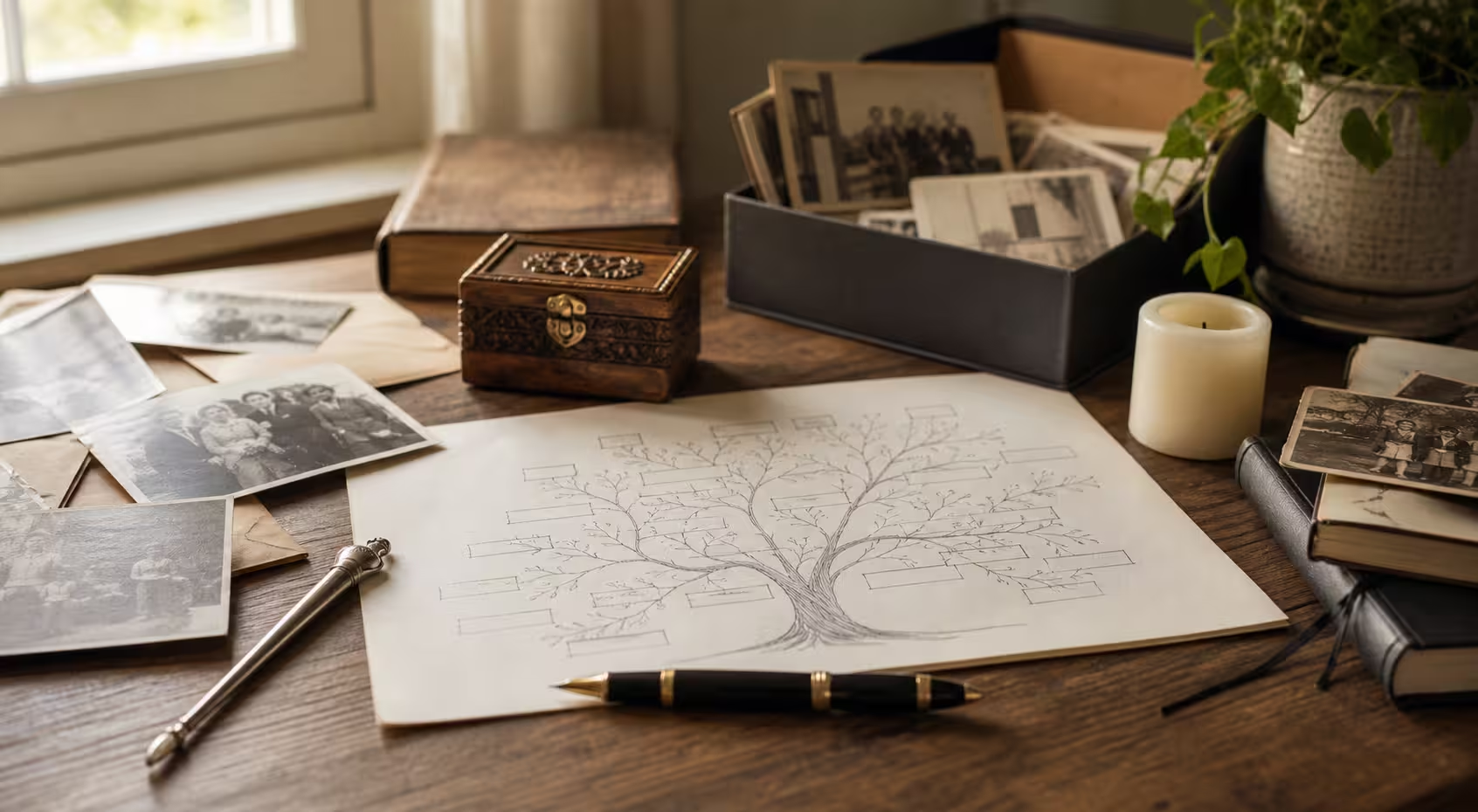
Family history research can feel like detective work, and in many ways it is. You gather civil records, synagogue records, cemetery inscriptions, immigration documents, census entries, naturalization papers, military records, photographs, oral histories, town books, newspapers, and DNA matches if appropriate. You compare dates. You track spelling variants. You build timelines. You resist the temptation to merge two people just because the names are similar.
But Jewish genealogy also needs tenderness because the records may pass through migration, poverty, persecution, language loss, changed borders, and trauma. Some archives are missing because communities were destroyed. Some relatives changed names because assimilation promised safety or opportunity. Some stories were not told because they hurt too much. Some family myths contain truth in symbolic form even when the details are wrong.
The beginner should start with living memory before it disappears. Ask relatives what they know. Record voices with permission. Scan photographs. Write down names as spoken, even if you do not know how to spell them. Ask for towns, not only countries. “Russia” or “Poland” may mean different borders in different decades. A town name, even an approximate one, can open a world.
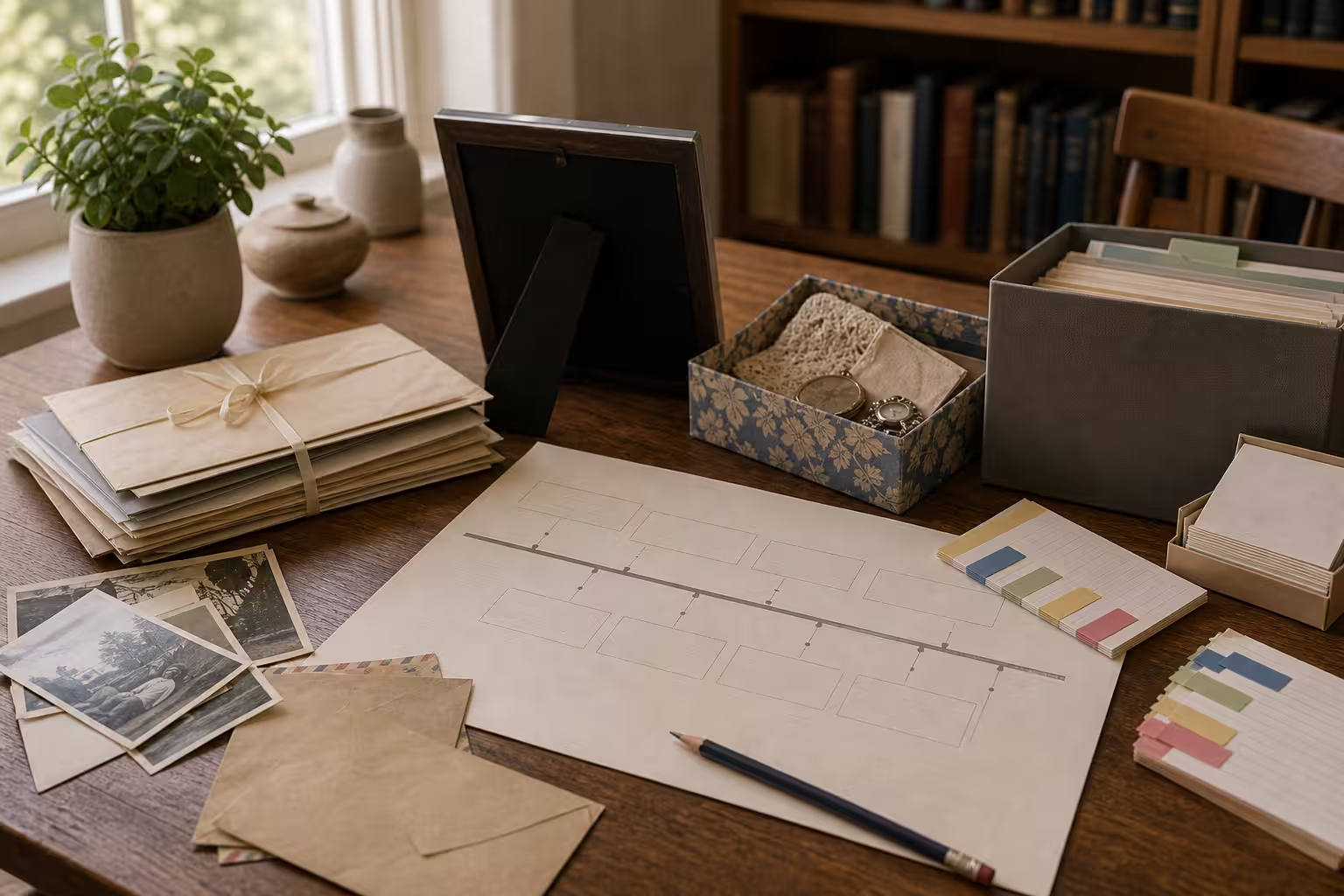
Then move to documents. Build from the known to the unknown. Keep citations. Save original images. Track alternate spellings. Learn enough history to understand why a record was created and what it can or cannot prove.
The same thread runs through it all
Names, lifecycle, and genealogy are often taught separately, but they are one story about continuity.
A baby receives a name, and memory moves forward. A young person becomes responsible, and learning moves forward. A couple marries, and a home moves forward. A mourner says kaddish, and love moves forward through grief. A researcher opens a record, and a forgotten spelling moves forward into speech again.
The goal is not to turn family into nostalgia. Jewish memory is not only looking backward. It is asking what obligations the past creates in the present. If you learn an ancestor’s name, what dignity do you owe them? If you carry a relative’s name, what kind of life might honor without imitating? If you attend a lifecycle event, what role does the community need from you?
The family story begins with a name that will not sit still. Follow it patiently. It may lead you to a document, then a town, then a custom, then a holiday recipe, then a cemetery inscription, then a living cousin, then a question nobody can answer. That is not failure. That is what memory often feels like: a trail of partial lights.
Your task is to carry the light honestly.