
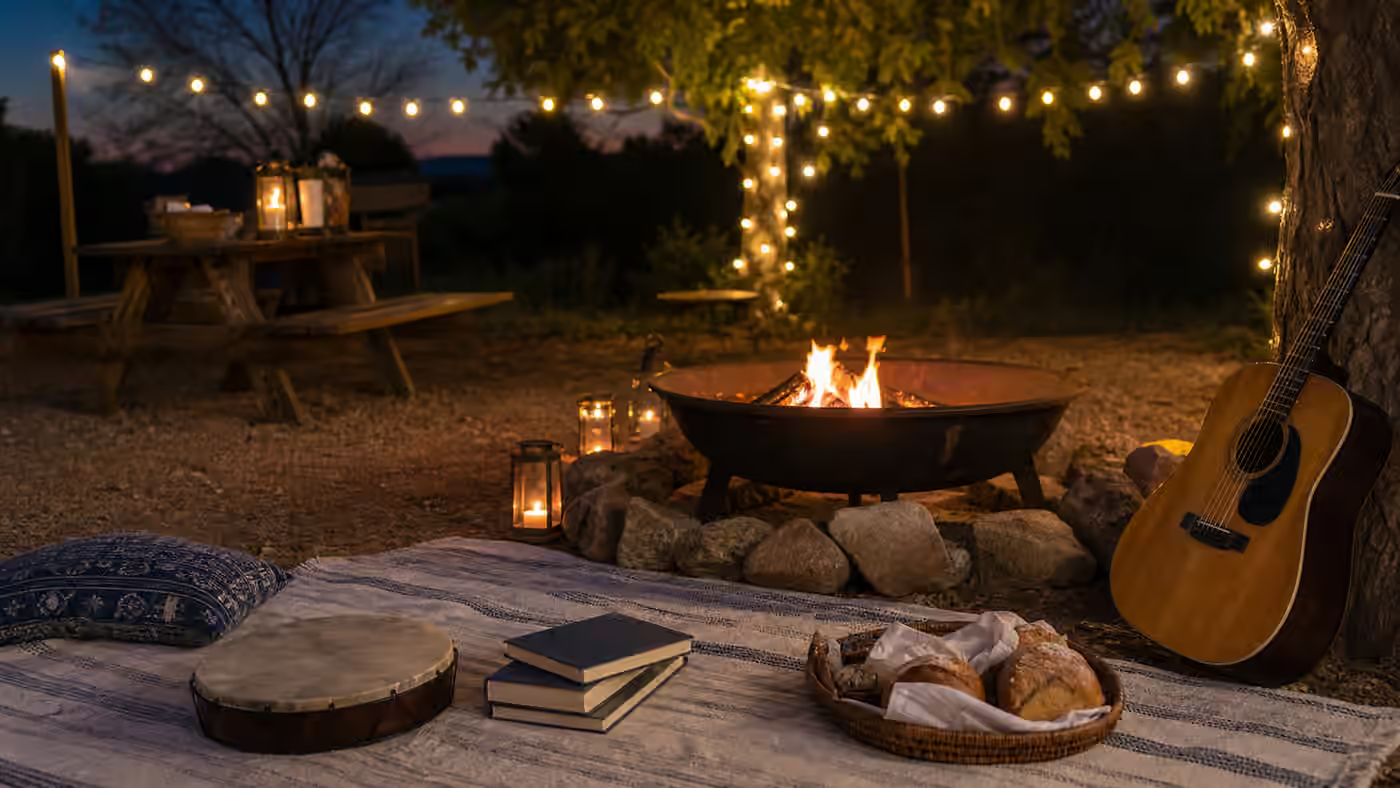
Lag BaOmer can feel like a sudden spark in a quiet stretch of Jewish time.
The seder is behind you. Shavuot has not yet arrived. The days are being counted one by one, and then the thirty-third day appears with bonfires in some communities, outdoor gatherings, music, haircuts, weddings, children’s outings, and stories of sages and hidden light. A beginner may wonder whether Lag BaOmer is a major holiday, a folk celebration, a mystical anniversary, a school picnic, or a pause in a season of restraint. The honest answer is that it has become many of those things in different Jewish settings. For background, read Yevamot 62b (background to Omer mourning traditions) .
Counting the Omer explains the seven-week path from Passover to Shavuot. Lag BaOmer sits inside that path. Its name refers to the thirty-third day of the Omer, using the Hebrew letters lamed and gimel to represent thirty-three. To understand the day, you have to feel both the counting and the interruption. The Omer is steady, daily, and cumulative. Lag BaOmer is the day when many communities allow brightness to break through.
A Day Inside the Count
The Omer begins during Passover and carries Jewish time toward Shavuot , the holiday associated with Torah, learning, revelation, harvest, and covenant. In many traditional communities, the Omer period also carries practices of restraint. Weddings, haircuts, live music, or festive gatherings may be limited during part or all of the period, depending on custom. These restraints are linked in Jewish memory to mourning for students of Rabbi Akiva and to other historical sorrows layered onto the season.
Lag BaOmer is widely treated as a break or easing in that mourning period. The details vary. Some communities allow weddings. Some schedule haircuts for children. Some hold picnics, parades, learning gatherings, or bonfires. Some mark the day lightly. Some barely mark it at all. Minhag for Beginners is useful here because Lag BaOmer is one of those days where local custom can be more visible than a beginner expects.
That variety should not make the day meaningless. It means the day has gathered different memories in different places. A person who knows only one version may be surprised elsewhere. A person entering Jewish life through a community school may think of Lag BaOmer as a field day. A person entering through Hasidic or Sephardi settings may meet it through devotion to Rabbi Shimon bar Yochai. A person in a synagogue with little outdoor celebration may hear the name and move on. All of these encounters can be real.
Rabbi Shimon and Hidden Teaching
Lag BaOmer is strongly associated in many communities with Rabbi Shimon bar Yochai, a second-century rabbinic figure linked in later Jewish tradition to mystical teaching and to the Zohar. The day is often described as the anniversary of his death, and in some communities it is treated not with somber mourning but with hillula, a joyful commemoration of a righteous person’s spiritual legacy. The large gatherings at Meron in northern Israel are the most famous expression, though a beginner need not begin with pilgrimage to understand the theme.
The association with hidden teaching helps explain why fire became so powerful as an image. Fire reveals and conceals. It gives light, draws people together, and can also become dangerous if handled carelessly. In mystical language, light can suggest Torah, soul, radiance, and secrets of divine wisdom. In a neighborhood or schoolyard, the same fire may simply be a bonfire with songs and potatoes. Jewish life often holds both levels at once.
A beginner should avoid flattening Lag BaOmer into spectacle. The fire is not only atmosphere. It is memory, custom, teaching, and community gathered around visible light. At the same time, a fire is still a fire. Local safety rules, adult supervision, environmental conditions, and common sense matter. A Jewish celebration is not made more authentic by ignoring risk.
Why Children Often Remember It
Lag BaOmer is one of the days children may remember bodily. They remember going outside, smelling smoke, carrying food, singing, playing games, or staying up a little later than usual. In some communities, young boys receive a first haircut around this age and season according to local custom, adding another layer of family memory. Schools and youth groups may use the day for archery, picnics, hikes, or field activities, sometimes connecting these to stories about Rabbi Akiva’s students or Jewish resilience under Roman rule.
The child-friendly quality can be a gift, but it can also make adults underestimate the day. A picnic is not trivial if it teaches that Jewish time has outdoor weather, communal energy, and seasonal rhythm. A child who knows Lag BaOmer as a firelit evening between Passover and Shavuot may understand the calendar with the body before understanding the sources.
Children at the Jewish Table describes how children learn through repeated scenes before full explanation. Lag BaOmer extends that lesson outside the dining room. Jewish memory can be learned at a table, in a synagogue, beside a cemetery, under a sukkah, and also near a safely tended flame.
Weddings, Haircuts, and the Relief of Permission
Where the Omer is observed with restraint, Lag BaOmer can feel like permission returning. Music resumes. Couples marry. People cut hair. Communities gather more festively. Even people who do not know every reason may sense the emotional pattern: after weeks of holding back, one day opens.
This opening should be handled with care. The relief is not an escape from the count. It is part of the count. The Omer continues after Lag BaOmer. Shavuot has not arrived yet. The day is a window, not the destination. That is why it can feel so bright. It does not cancel the quiet days before or after. It lets light enter them.
For a household or community, the question is what form of light is honest. A small outdoor meal may be enough. A class on Rabbi Shimon may be enough. A song around a contained fire may be enough. A synagogue announcement and a little teaching may be enough. Not every community needs to imitate the largest celebration it has seen online or heard about from elsewhere.
The Fire Should Not Become the Whole Meaning
Because bonfires photograph well, they can dominate the imagination. But a beginner should know that Lag BaOmer is not reducible to fire. It is a day inside the Omer, a pause in mourning customs for many, a day attached to Rabbi Shimon bar Yochai, a communal outdoor marker, and a reminder that Jewish time has minor days whose meanings are carried by memory more than by household obligation.
The Jewish Holiday Year helps place such days in context. Not every observance has the same weight as Passover, Yom Kippur, or Shabbat. Smaller days still matter because they give texture to the year. They show that Jewish time is not a flat road from major event to major event. It has sparks, pauses, hills, and local songs.
If you are beginning, ask how your community marks Lag BaOmer. If there is a gathering, learn what it is trying to remember. If there is a fire, treat safety as part of the mitzvah of not harming people. If there is learning, listen for what light means in that setting. If there is no visible celebration, count the Omer anyway and notice that the thirty-third day has passed through the calendar.
Lag BaOmer does not need to become large to be meaningful. A small flame can teach that even a season of restraint has room for warmth. The count continues, but it continues with the memory that light can appear in the middle, not only at the end.


