
The first kosher kitchen I understood was not the strictest kitchen I had seen. It was the clearest.
There were two cutting boards in different colors, two sets of serving utensils, a shelf where packaged foods waited to be checked, and a person who could explain the household standard in two calm sentences. The kitchen did not feel anxious. It felt intentional. That distinction matters for beginners because kosher practice is often introduced as a maze of prohibitions, when the lived experience is more often a system of attention.
Kashrut is the Jewish food practice system commonly described as keeping kosher. It includes which animals may be eaten, how meat is slaughtered and prepared in communities that eat meat, separation of meat and dairy in many traditional homes, rules around wine and grape products in some settings, the special intensity of Passover food practice, and the use of certification marks on packaged foods. That description is accurate, but it can make the subject sound like a locked cabinet.
The better first question is: what is food doing in Jewish life?
Food marks time. Food preserves family memory. Food creates boundaries. Food makes hospitality real. Food turns a home into a place of practice. Kosher law and custom shape all of those functions, but the emotional center is not paranoia about ingredients. It is the decision that eating can be part of a covenantal life.
The kitchen is where abstract practice becomes furniture
In a book, kosher categories look clean. Meat. Dairy. Pareve, meaning neither meat nor dairy. Permitted species. Prohibited species. Certified. Not certified. Passover. Everyday. In a kitchen, those categories become drawers, labels, sink habits, shopping routines, and conversations with guests.
That is why a beginner should not start by memorizing edge cases. Start with the household standard.
One home may keep separate meat and dairy dishes, utensils, pots, sponges, counters, and storage. Another may keep one set of vegetarian dishes and avoid cooking meat at home. Another may buy only certified packaged foods but not maintain full separation. Another may avoid pork and shellfish as a cultural or family boundary while not using the full halakhic system. Another may be in transition, adding practices slowly. All of these homes may use the word kosher differently, and that difference is not a reason to stop asking questions. It is the reason questions matter.
If you are eating in someone else’s home, the relevant standard is theirs. If you are hosting someone who keeps kosher, the relevant standard is theirs too. A confident host asks early, specifically, and without making the guest feel burdensome. “What would make food work for you in my kitchen?” is better than “You can eat this, right?” The first question invites clarity. The second pressures the guest to reassure you.
Certification is a trust shortcut, not magic ink
Packaged food introduces another beginner word: hechsher, a kosher certification mark. You may see small symbols on labels from certifying agencies. These marks indicate supervision according to that agency’s standard. They are useful because modern food production is complex. A cookie may contain emulsifiers, flavorings, processing aids, shared equipment concerns, and ingredients whose source is not obvious from the front label.
But certification is not magic ink. Different communities trust different certifiers. Some people require specific symbols. Some are comfortable with broader lists. Some rely on ingredient reading for certain products and certification for others. Passover certification has its own layer. A beginner should not assume that one kosher-looking mark answers every question for every person.

This can feel frustrating until you understand the social structure. Kashrut is not only a private diet. It is a trust network. A certification mark tells a consumer that someone knowledgeable has inspected or supervised according to a defined standard. Choosing which marks to trust is often a community decision.
Meat and dairy are the visible beginner challenge
For many beginners, the most visible kosher practice is the separation of meat and dairy. Traditional kosher homes do not cook or eat meat and dairy together, and many maintain separate dishes, utensils, cookware, and sometimes sinks or preparation areas. Waiting times between meat and dairy vary by custom. The details can become complex quickly.
A practical beginner does not need to master every detail before understanding the purpose of clarity. If a household separates meat and dairy, ambiguity becomes the enemy. Which spoon stirred the soup? Which cutting board held cheese? Which sponge touched which pan? A well-run kosher kitchen reduces confusion through visible systems: colors, shelves, labels, habits, and calm repetition.
This is why the kitchen in the opening story felt peaceful. The rules had become architecture. Nobody had to panic because the room itself carried memory.
If you are building your own practice, begin with one standard and make it visible. If you are not ready for full separation, be honest about that. If you are ready, do not rely on memory alone. Create a system that a tired person can follow on a busy night.

Pareve is the quiet helper
Pareve foods are neither meat nor dairy. Eggs, fish, fruits, vegetables, grains, and many packaged foods may be pareve depending on ingredients and preparation. Pareve foods can be useful because they can often be served with either meat or dairy meals, though fish has additional custom considerations in some communities.
For hosting, pareve thinking can make life easier. A vegetarian soup made in appropriate cookware, a salad with certified ingredients, fruit, roasted vegetables, or a sealed certified dessert may solve more problems than an ambitious main dish. Many hosts get into trouble because they try to prove generosity through complexity. Kosher hospitality often works better when the food is simple and the standard is clear.
That does not mean reducing Jewish food to bland safe options. It means respecting the guest’s actual practice. A beautiful dish that someone cannot eat is not hospitality. A simple dish that someone can trust may be deeply generous.

Passover is not just extra kosher
Passover deserves special mention because beginners often assume it is everyday kosher with matzah added. In many communities, Passover involves removing chametz, leavened products from wheat, barley, rye, oats, and spelt, and using foods and equipment suitable for the holiday. Customs around kitniyot, such as rice, beans, corn, and lentils, differ especially between Ashkenazi and many Sephardi or Mizrahi communities, and modern practice continues to vary.

This is why a food that is kosher during the year may not be acceptable for Passover in a particular home. It is also why you should never surprise a Passover host with homemade food unless you have coordinated carefully. The holiday kitchen is a temporary world with its own rules, memories, and emotional stakes.
The story behind that intensity is liberation. Passover food rules are not random difficulty. They turn the Exodus story into a lived environment. The absence of chametz, the presence of matzah, the cleaning, the shopping, and the seder table all say that memory has entered the kitchen.
Kosher does not erase culture
One of the mistakes outsiders make is imagining kosher food as one cuisine. In reality, kosher practice has traveled through many cuisines. Jewish communities have adapted local ingredients, trade routes, climate, poverty, abundance, migration, and religious law into foodways that differ widely. A kosher table might include Moroccan fish, Persian rice, Yemenite bread, Iraqi kubbeh, Ashkenazi kugel, Ethiopian stews, Syrian pastries, Israeli salads, American deli, vegan adaptations, or new dishes created last week.
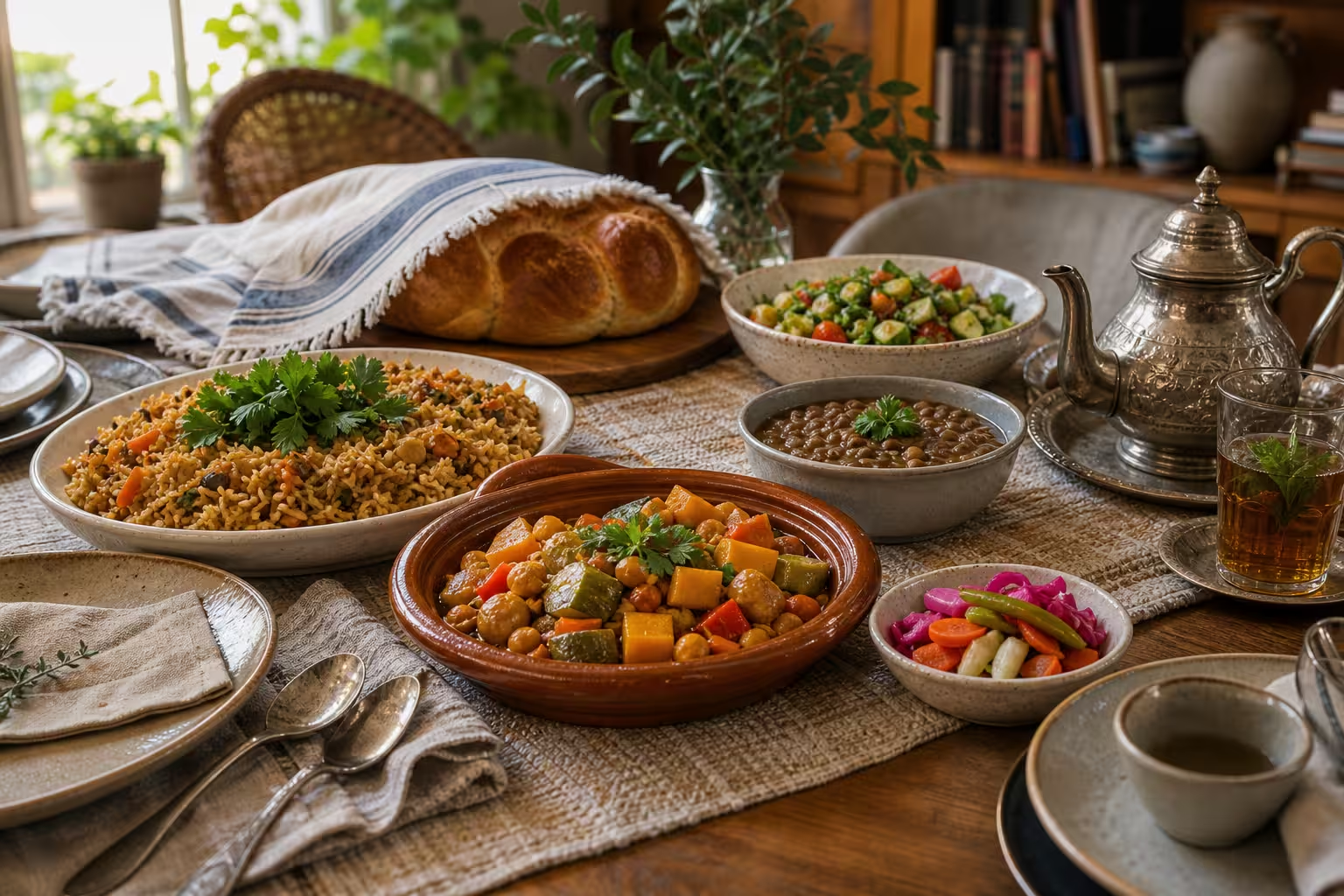
Kashrut sets boundaries, but culture gives the food its voice. The same law can produce different flavors in different places. That is part of Jewish food’s richness.
The respectful beginner learns to ask better
If you remember only one practical lesson, remember this: ask before food becomes urgent.

Ask your guest what they eat, what certifications matter, whether food from your kitchen works, and whether sealed packaged items would be better. Ask a local rabbi or teacher if you are changing your own kitchen and want guidance. Ask your community what standard is expected for shared events. Ask stores and caterers specific questions rather than relying on vibes.
The goal is not to become anxious. The goal is to make trust easier.
Kosher practice can seem like a wall from the outside. Inside a lived home, it can become a rhythm: shop with attention, cook with separation, bless with gratitude, host with clarity, and eat as if the ordinary act of feeding yourself belongs to something larger.
That is the story behind the labels. A kosher kitchen is not only a set of rules. It is a room where memory, discipline, appetite, and community learn to share counter space.