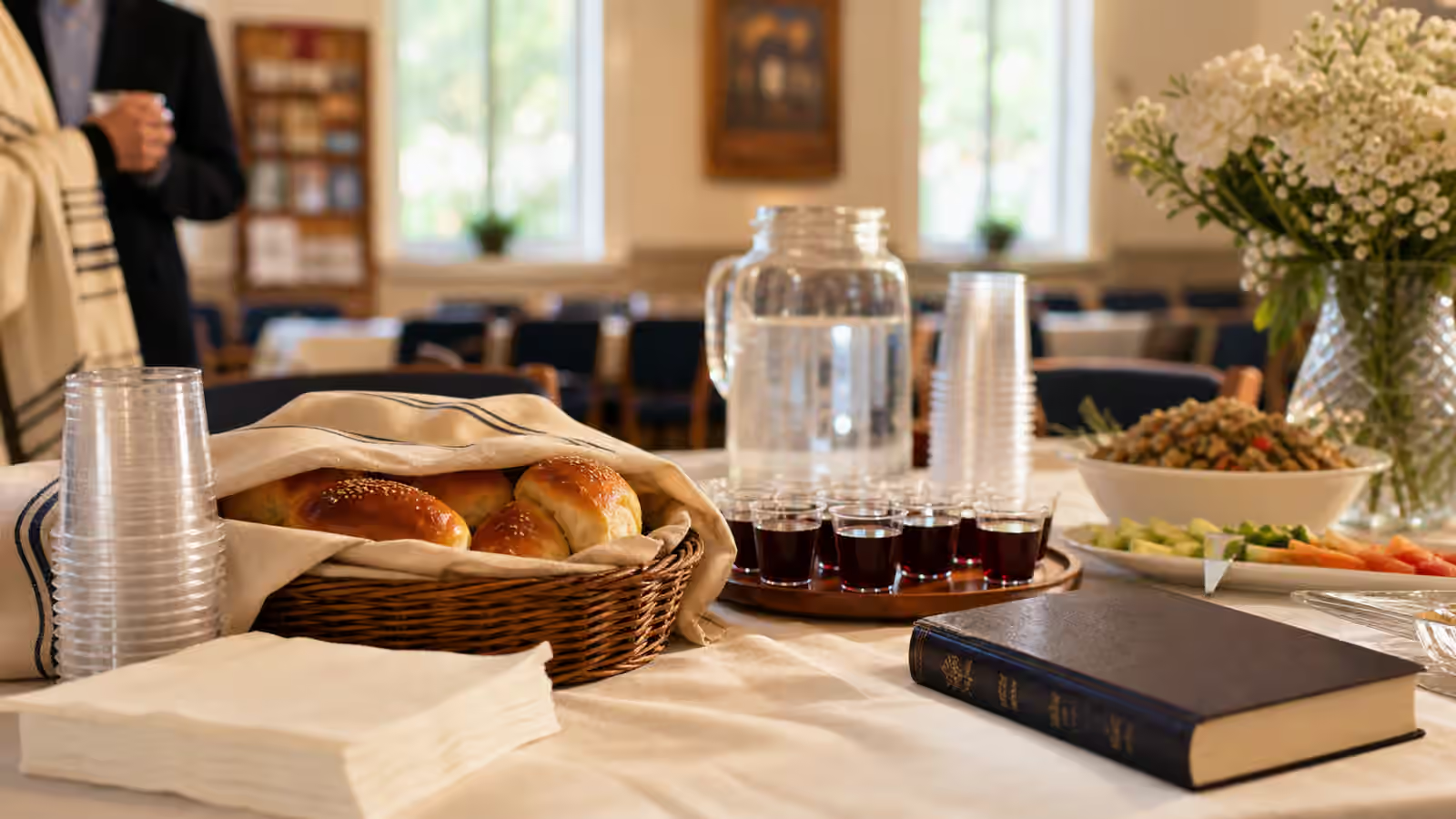
Kosher hospitality often succeeds before the food is cooked.
It succeeds in the message sent early, the question asked without embarrassment, the sealed package bought instead of the homemade dessert that cannot be served, the host who explains the household standard calmly, and the guest who answers honestly rather than trying to seem easy. By the time everyone sits down, the meal may feel relaxed. That ease was not accidental. It was built by trust. For background, read Genesis 18:1–8 (hospitality) .
A Beginner Kosher Kitchen explains the larger system of kashrut: categories, certification, meat and dairy separation, Passover intensity, and the way food practice creates trust. This guide focuses on the social doorway. What happens when people with different standards want to eat together? How does a host ask without making the guest feel difficult? How does a guest protect their practice without turning the meal into a courtroom?
The answer begins with a simple truth. Food is never just food at a Jewish table. It carries law, memory, family pride, money, appetite, allergies, health needs, community standards, and the desire to welcome people well. Kosher hospitality does not remove that complexity. It gives the complexity a respectful language.
Ask Before the Menu Becomes Personal
Food questions become harder when someone has already shopped, cooked, plated, and imagined the evening. A host who waits until the last minute may feel rejected when a guest cannot eat something. A guest who waits until arriving may feel trapped between politeness and practice. Early questions protect everyone.
The best questions are specific and open. A host can ask what food would work, which certifications matter, whether the guest eats food cooked in the host’s kitchen, whether vegetarian food is enough, whether sealed packaged food is easier, and whether takeout or catering from a trusted source would be better. The tone matters as much as the words. The guest should not feel as if their answer is a problem to be solved with visible strain.
A guest can be equally clear. If only food from a certified kosher kitchen works, say so. If sealed fruit, packaged snacks with a trusted hechsher, or disposable plates make the visit possible, say so. If you are comfortable with some homes and not others, explain the practical boundary without ranking the host’s Judaism. Clarity is kinder than vague reassurance that later becomes impossible.
The Household Standard Is Not a Guessing Game
Jewish homes use the word kosher in different ways. Some keep fully separate meat and dairy dishes and cookware. Some keep vegetarian kitchens. Some buy certified packaged foods but do not maintain strict separation. Some avoid pork and shellfish as a family boundary. Some keep kosher only for Passover. Some are learning gradually. Some host people whose standards are stricter than their own and need outside food to make the meal work.
This variation can be confusing, but it is not a reason for suspicion. It is a reason for honest description. A host should be able to say what the kitchen does and does not do. A guest should be able to say what they need. Nobody benefits from pretending that one vague word answers every practical question.
Shabbat Hospitality makes this point around Friday night and Shabbat meals, where timing, candles, phones, songs, children, and food all meet. Kosher hospitality adds the trust layer. The host’s generosity is not measured by how elaborate the meal becomes. It is measured by whether the guest can actually eat with confidence.
Homemade Food Can Be Loving and Unusable
One of the tenderest mistakes is bringing homemade food to a kosher home that cannot serve it. The intention may be beautiful. The result may be awkward. A cake baked with care may have ingredients the host cannot verify, equipment concerns the host cannot resolve, dairy or meat questions that do not fit the meal, or Passover issues that make it unusable for that holiday.
This is why a guest should ask before bringing food. In many homes, flowers delivered before Shabbat, a sealed bottle of acceptable wine or grape juice, packaged dessert with a trusted certification, fruit, or a non-food host gift may work better than cooking. In some homes, even those options need coordination. The point is not to make hospitality cold. It is to make generosity usable.
Hosts should also be careful with pride. If a guest cannot eat your food, that does not necessarily mean they distrust you as a person. Kashrut is often about systems and standards, not personal affection. A guest may love you deeply and still need a sealed meal from somewhere else. If the relationship is strong, it can survive a covered container on the table.
Pareve Can Lower the Temperature
Pareve food, neither meat nor dairy, often helps mixed settings. Fruit, many vegetables, some grains, eggs, fish according to community custom, and certified packaged foods may be pareve depending on ingredients and preparation. A pareve dessert can avoid serving dairy after a meat meal. A pareve or vegetarian spread can reduce the number of categories a host has to manage.
Still, pareve is not magic. Equipment, certification, fish customs, Passover rules, and individual standards may still matter. A salad made in a non-kosher kitchen may not work for some guests even if every ingredient looks simple. A packaged item may have a symbol one guest accepts and another does not. The practical lesson is not that pareve solves everything. It is that simpler categories can make conversation easier.
Everyday Jewish Blessings is a useful companion because food practice and blessing practice often meet at the same table. A meal may raise both questions: what food can be eaten, and what blessing is said before it? Keeping those questions distinct helps beginners avoid turning one dinner into a fog of anxiety.
Shared Meals Are Not Always the Goal
Hospitality does not always require everyone to eat the same food. A guest may bring their own sealed meal. A host may order from a kosher restaurant or caterer for one person and cook for others. A group may meet for tea, fruit, a walk, study, or conversation instead of a full meal. A synagogue event may provide a clearly labeled certified option while other food follows a different standard. None of these arrangements has to be humiliating if handled with dignity.
What makes an arrangement uncomfortable is usually not the separate food itself. It is the emotional commentary around it. Do not announce repeatedly that the guest cannot eat anything. Do not apologize so dramatically that the guest must comfort you. Do not ask the guest to explain kashrut to everyone while they are hungry. Do not pressure someone to make an exception because the dish took effort. A calm accommodation can feel normal when the host treats it as normal.
Guests also carry responsibility. If you need special arrangements, offer help. Give enough notice. Be gracious when someone tries sincerely. Do not use another person’s home as the place to correct their practice. If a mistake happens, handle it quietly where possible. The goal is a relationship, not a public victory.
Passover Raises the Stakes
Passover hospitality has its own intensity. A food that works all year may not work for Passover. Chametz, kitniyot customs, Passover certification, separate equipment, family traditions, and the emotional weight of holiday preparation can make the kitchen feel like a temporary world. The Passover Seder for Beginners shows how the table teaches questions, memory, and liberation. Behind that table is often a great deal of food planning.
If you are invited for Passover, ask what to bring before buying or cooking anything. If you are hosting, explain the standard early. If relatives have different customs, name that gently before the holiday pressure rises. A Sephardi or Mizrahi family that eats rice or legumes on Passover and an Ashkenazi guest who does not may need a plan. A person with allergies may need a plan. A person who cannot afford specialty food may need support given discreetly.
The seder is meant to tell the story of liberation, not to trap people in avoidable awkwardness. The more serious the food rules feel, the more important the human tone becomes.
Trust Is the Main Ingredient
The best kosher hospitality is rarely the most complicated meal. It is the meal where people know what is being offered, what is not being offered, and why. It is the host who asks without resentment. It is the guest who answers without defensiveness. It is the table where different standards can be acknowledged without becoming the only subject.
This kind of hospitality teaches a broader Jewish lesson. Practice is not only private discipline. It becomes real in relationships. Kashrut asks people to care about ingredients, equipment, labels, timing, and categories, but it also asks them to care about trust. A person can be technically careful and socially harsh. A person can be warm and still careless with another person’s practice. The better path holds both: respect for the system and respect for the person.
A meal that everyone can eat with confidence may look simple. Covered bread, fruit, sealed snacks, soup from a trusted kitchen, clearly separated serving pieces, or takeout in labeled containers may not seem dramatic. But when a guest relaxes, when a host stops guessing, when no one has to choose between belonging and conscience, the table has done real work.
Kosher hospitality begins before the food is cooked because trust is prepared before the table is set. Ask early. Answer honestly. Keep the meal usable. Let generosity be measured not by display, but by whether the person in front of you can receive it.