The first decision at the synagogue door can feel larger than it is.
There may be a basket of kippot near the entrance, a coat rack, a stack of prayer books, a greeter, and people moving with the quiet confidence of habit. A visitor pauses and wonders what to put on, what to take off, whether a phone should disappear, whether a photo is allowed, whether a seat is open, and whether everyone else already knows that the visitor does not know. For background, read Mishnah Berakhot 5 (prayer and attention) .
Most of the time, Jewish spaces are not trying to trap visitors with hidden etiquette. They are trying to preserve a room where prayer, study, mourning, celebration, and community can happen with dignity. Etiquette is the set of small habits that help the room work.
Synagogue and Prayer for Beginners explains how to enter the service itself: books, standing, sitting, Torah reading, and the social room. This guide slows down at the doorway. It is for the person who wants to show respect before they understand every custom.
A Kippah Is Small, But It Carries Meaning
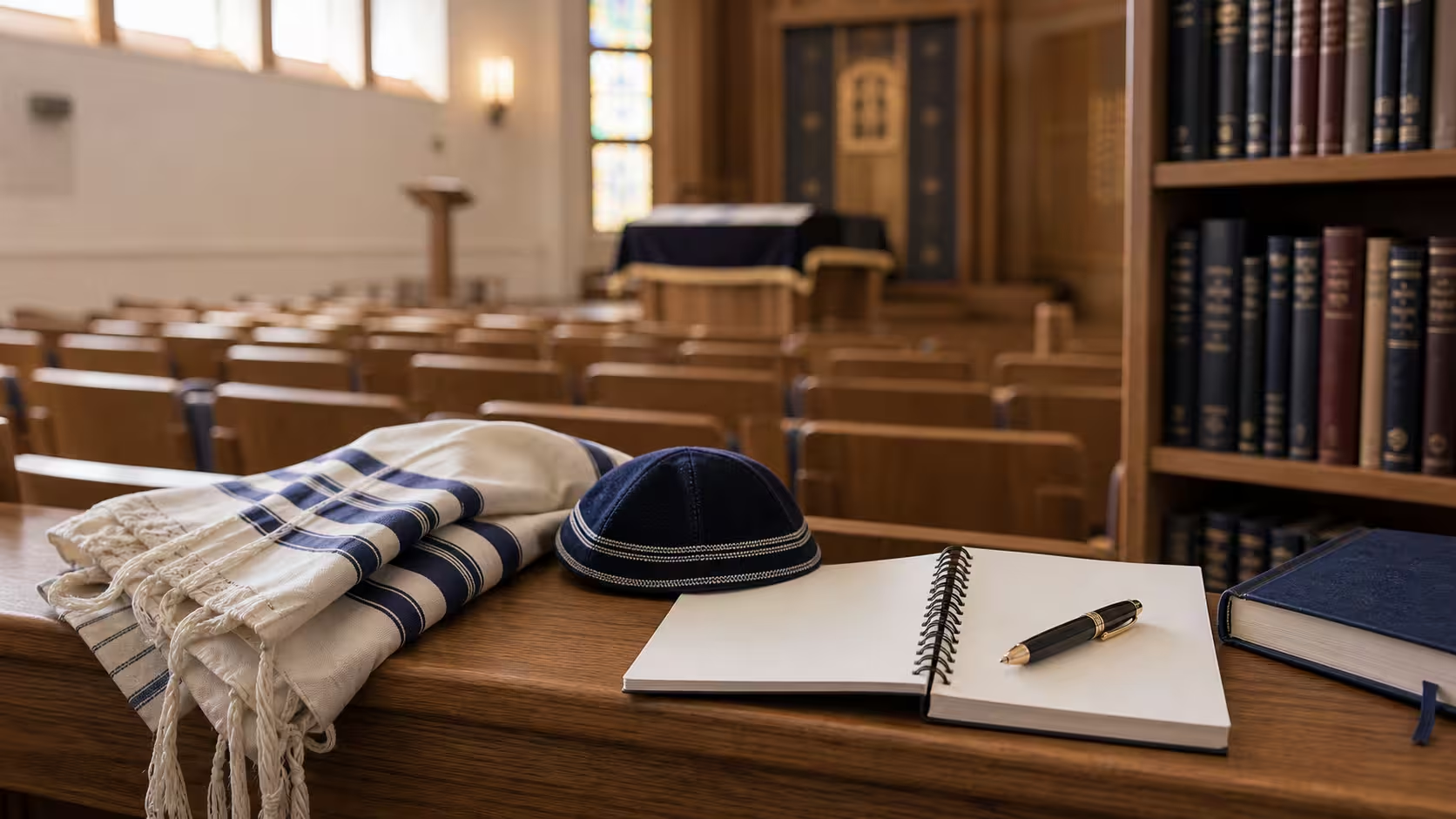
A kippah, also called a yarmulke in Yiddish, is a head covering worn by many Jews in prayer, study, meals, and daily life, depending on community and personal practice. In some synagogues, men are expected to cover their heads. In others, everyone may be invited or expected to do so. In some liberal communities, a head covering is optional. In more traditional settings, norms may differ by gender and role. Local practice matters.
For a visitor, the simplest move is to notice what the community provides and ask if uncertain. If there is a basket of kippot at the entrance, it usually means visitors may use one. If a greeter offers one, accept it if you are comfortable. If you are unsure whether you should wear one, ask quietly. The question is ordinary, not embarrassing.
The meaning of a kippah is often described as humility before God, awareness of something above the self, or a visible sign of Jewish practice. It can also carry family, cultural, denominational, and personal meanings. A knitted kippah, black velvet kippah, suede kippah from a wedding, colorful fabric kippah, or no kippah at all can communicate different contexts, though outsiders should be careful not to overread. Clothing signs are real, but they are not a complete biography.
If you borrow a kippah, treat it as a ritual courtesy, not a costume. Put it on respectfully. Return it if it belongs to the synagogue. Do not use it for jokes or photos. The object may be small, but the room around it is not.
Dress Expectations Are About the Room, Not Display
Dress norms vary widely across Jewish communities. A weekday morning minyan may include business clothes, school clothes, work boots, and people on their way to the rest of the day. A Shabbat morning service may be more formal. A wedding, bar or bat mitzvah, funeral, shiva visit, festival service, or casual learning event may each have its own texture. Some communities expect modest dress in a more traditional sense. Others emphasize neatness more than specific coverage rules. Climate, culture, security, age, and local style all matter.
The beginner question is not, “What do all Jews wear?” There is no such outfit. The better question is, “What would let me enter this room without making my clothing the center of attention?”
For many synagogue visits, clean, modest, comfortable clothing is a safe starting point. Shoulders, knees, head coverings, hats, jeans, sandals, and formalwear expectations differ by community, so ask when the event matters. If you are attending a lifecycle event, the host or synagogue office can usually give a plain answer. If you are visiting for the first time and have no one to ask, choose the respectful middle rather than theatrical formality or deliberate casualness.
Dress also needs compassion. People arrive from work, illness, grief, travel, poverty, disability, and complicated lives. A community that cares only about polished surfaces has misunderstood something. Still, a visitor can show care by dressing as if the room matters.
Phones and Photos Can Change the Room
Phones are one of the easiest places to stumble because ordinary social habits conflict with ritual habits. In many synagogues, phones should be silenced or put away during services. In more traditionally observant communities on Shabbat and holidays, using a phone, taking photos, writing, or recording may violate the community’s practice. In other communities, phones may be used for accessibility, security, livestreaming, or prayer texts, but casual scrolling still changes the feel of the room.
The respectful default is simple: silence the phone before entering and keep it away unless you know it is appropriate. If you need it for medical, accessibility, childcare, or emergency reasons, use discretion and ask for help if needed. Jewish etiquette should not make a person unsafe.
Photography needs even more care. Do not photograph a service, Torah scroll, mourner, child, or private moment without explicit permission. At a bar or bat mitzvah, wedding, or communal event, there may be professional photographers or specific rules. At a shiva house, photos can feel especially intrusive. A memory does not become more real because it was captured while making other people uncomfortable.
This is partly about Jewish law and custom, partly about privacy, and partly about attention. A service asks people to be present. A phone can quietly move the mind out of the room.
Ritual Objects Are Not Props
A synagogue contains objects that can look inviting to touch: Torah scrolls, prayer books, tallitot, tefillin, ark curtains, pointers, kiddush cups, candles, memorial boards, and books on shelves. Some are public, some are personal, some are fragile, and some are used only by people with a particular role in the service.
If you are unsure, ask before handling. Do not open the ark, touch a Torah scroll, lift ritual silver, unwrap tefillin, or try on a tallit simply out of curiosity. Tallit and Tefillin for Beginners explains how those objects belong to morning prayer and embodied practice. They are not museum pieces, but they are also not casual accessories.
Prayer books are usually meant to be used. If a greeter hands you a siddur or chumash, take it. If there are several books, ask which one the service uses. If you do not know which direction a Hebrew book opens, let someone show you. That tiny moment of help can be a relief for everyone. Most communities would rather answer a clear question than watch a visitor suffer silently.
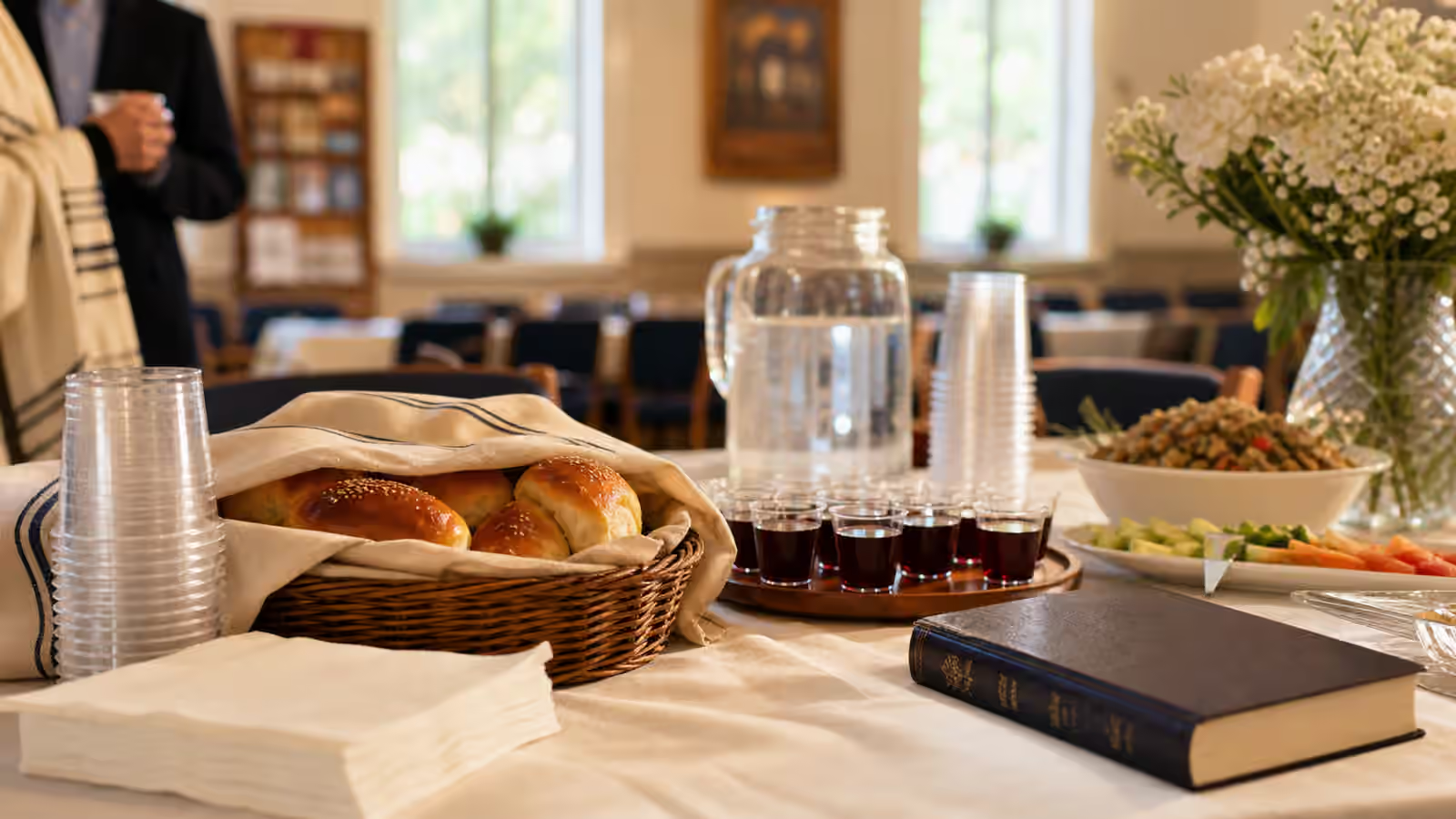
Food objects have etiquette too. At kiddush or oneg after services, wait until the community begins if a blessing is being said. If the food is kosher and you brought something, do not place it on the table without coordinating. Kosher Hospitality With Care is useful because synagogue hospitality is still hospitality across food standards.
Seating Teaches Community Geography
Where to sit can be surprisingly stressful. Some synagogues have open seating. Some have regulars who tend to sit in the same places. Some have gender-separated seating, family seating, choir areas, accessible seating, reserved rows for mourners or honorees, or security patterns that visitors do not immediately understand.
If there is a greeter, ask where you should sit. If there is no greeter, choose a seat that is visible but not central, unless invited otherwise. Avoid sitting in a place that looks reserved, near the service leader’s lectern, or in a row set apart for a family event. If someone gently redirects you, do not take it as humiliation. You have learned one more piece of the room’s map.
During the service, standing and sitting are forms of participation. Follow the people around you if you are able, but remember that accessibility matters. A person who cannot stand should not perform pain for etiquette. If you are unsure whether to bow, face the ark, or kiss a prayer book after it touches the Torah, watching quietly is better than copying in panic.
Siddur Navigation for Beginners can help after the door has been crossed. The prayer book is easier when you are not also worrying about your coat, phone, and seat.
Life Cycle Events Add Emotion
Etiquette changes under emotional pressure. A bar or bat mitzvah service includes pride, nerves, family logistics, and guests who may not know synagogue norms. A funeral includes grief and restraint. A shiva visit asks for quiet presence rather than social performance. A wedding may mix joy, ritual, photographers, food standards, and relatives from different communities.
The same principle works across these settings: let the purpose of the room lead your behavior. At a bar or bat mitzvah, do not treat the service as only a pre-party. At a funeral, do not make mourners manage your curiosity. At shiva, Visiting Shiva explains why presence matters more than perfect words. At a wedding, Jewish Weddings for Beginners can help you understand the canopy, ketubah, blessings, and celebration without reducing the event to unfamiliar choreography.
If you make a small mistake, recover plainly. Move when asked. Put the phone away. Return the object. Say thank you. Jewish communities are made of people, not etiquette machines. What matters is whether correction makes you more attentive.
The Best Visitor Posture Is Warm Attention
A beginner often wants a universal script. Wear this. Sit there. Say this. Never do that. Jewish life does not always offer that kind of script because communities differ. A Reform temple, Orthodox shul, Sephardi synagogue, campus minyan, Reconstructionist havurah, Hasidic shtiebel, hospital chapel service, and family shiva house may all use different signals.
Warm attention travels better than any script. Look for provided objects. Ask short questions. Let greeters help. Keep your phone away. Treat ritual items with care. Dress so that your clothing does not demand the room’s attention. Follow the community’s lead without pretending fluency. Accept correction without drama.
That posture does not make you invisible. It makes you easier to welcome.
The doorway will feel less intimidating with practice. The basket of kippot becomes familiar. The prayer books have a place. The room has a rhythm. The first decision at the synagogue door turns out not to be a test of belonging. It is an invitation to enter with humility, notice the people already praying and gathering there, and behave as if their room is worthy of care.