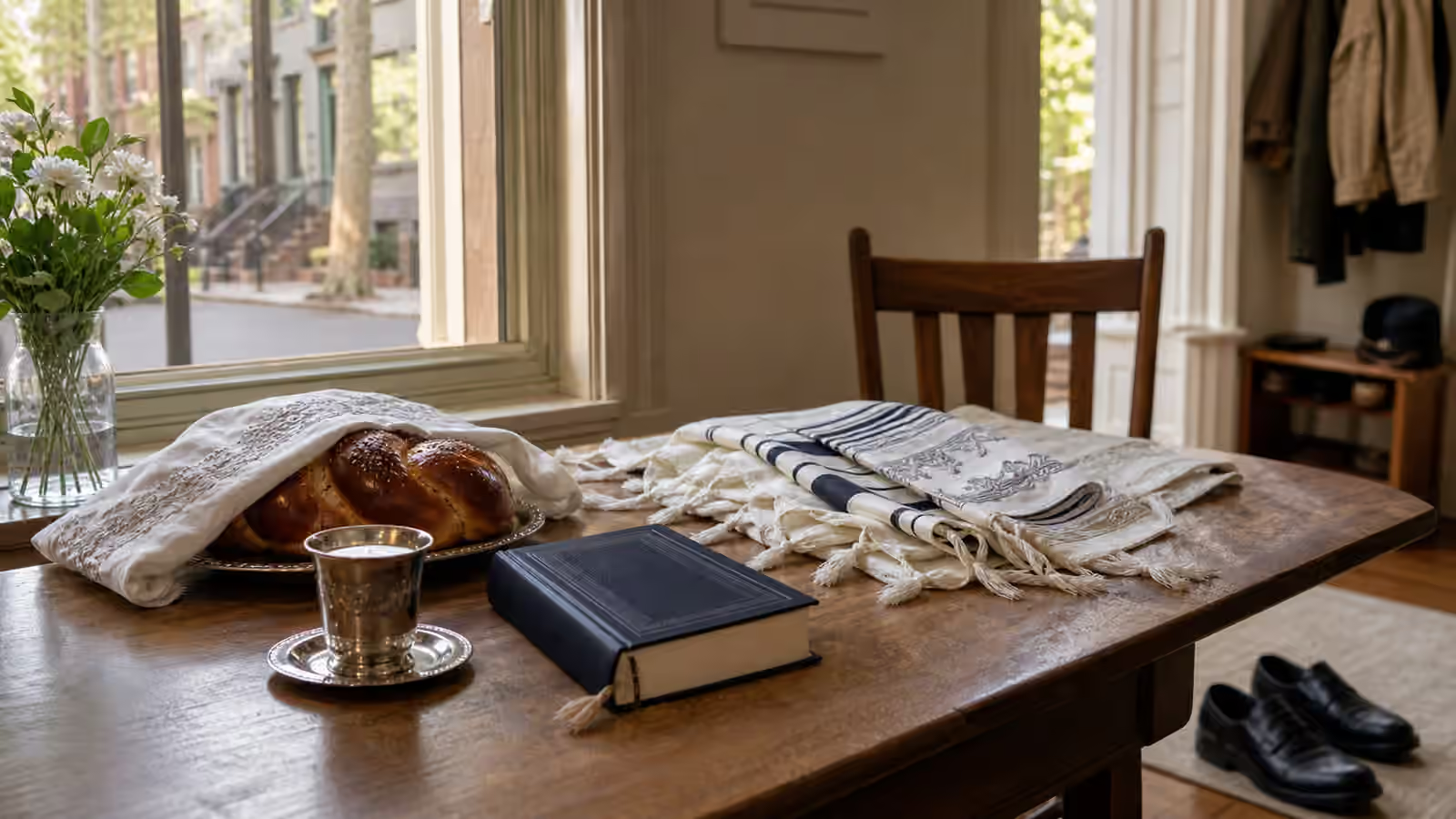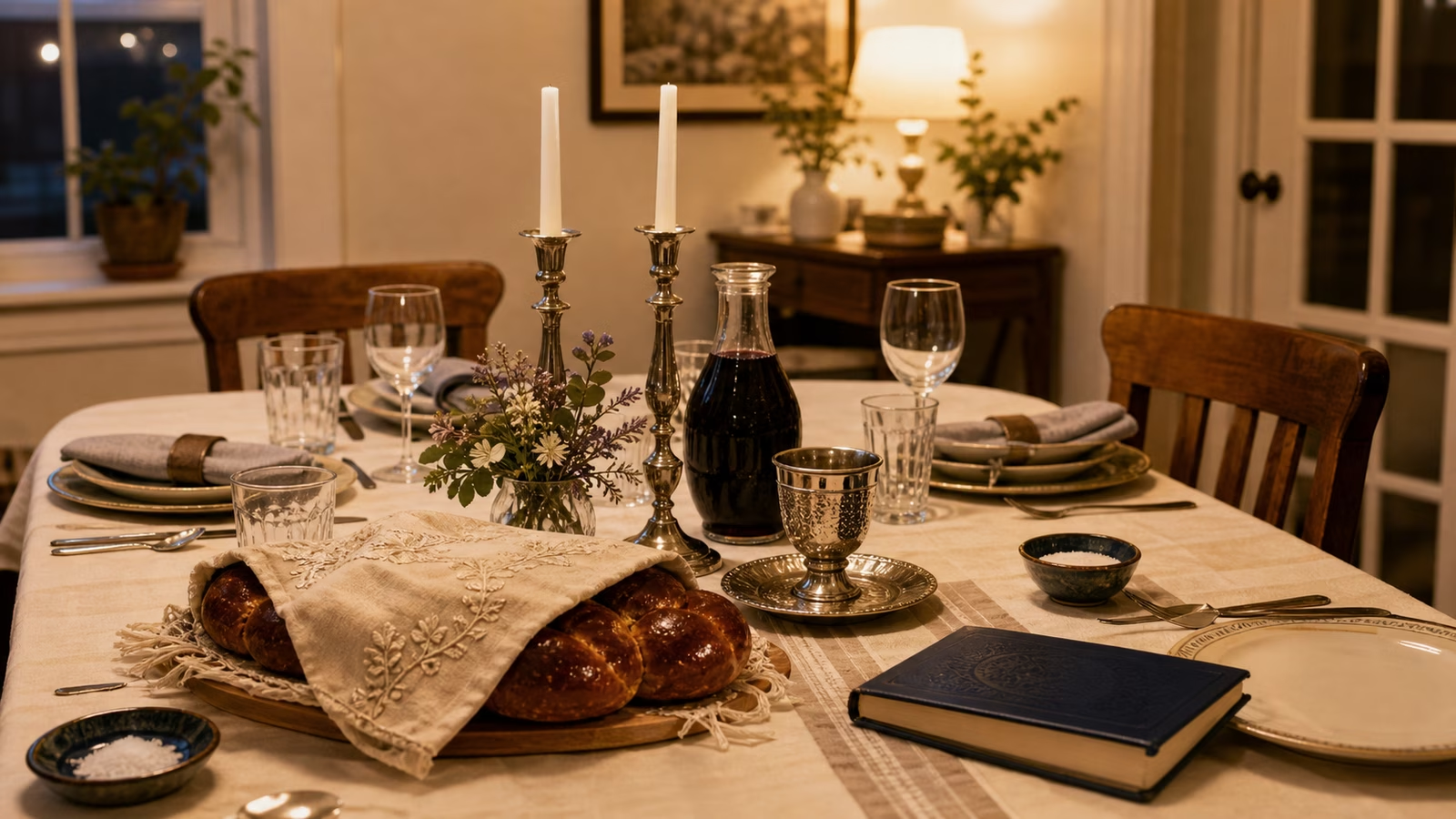
The Shabbat meal often begins before anyone eats. A cup is lifted, people settle, the table becomes quiet in its own imperfect way, and words older than the people in the room make the meal feel different from dinner on any other night. That moment is Kiddush, the sanctification of Shabbat over wine or grape juice, and for many beginners it is the first time Jewish home practice feels both beautiful and slightly intimidating.
The intimidation is understandable. There may be Hebrew, standing or sitting customs, a covered challah, handwashing, a blessing over bread, songs, children waiting for grape juice, guests who know the rhythm, and someone quietly pointing to a page. If you are new, the sequence can feel like choreography everyone else learned years ago. But the table is not supposed to be a stage where beginners fail. It is a home practice, and home practices are learned by being near them.
Kiddush is not magic words added to a meal as decoration. It is a declaration that this time is different. The week had tasks, deadlines, buying, selling, commuting, fixing, answering, and rushing. Shabbat arrives and the cup says, in effect, we are stepping into another kind of time. The food matters, but the meal is not only food.

The Cup Marks the Threshold
Wine has a long place in Jewish ritual because it represents joy, dignity, and the marking of significant moments. Many households use wine for Kiddush. Many use grape juice, especially for children, people avoiding alcohol, or families where grape juice simply works better. The point is not sophistication. The point is a cup that carries the blessing.
The person making Kiddush may stand or sit depending on custom. Others may stand, sit, listen silently, hum along, answer amen, or follow from a book or card. Some families chant quickly. Some sing slowly. Some use a traditional melody. Some keep the moment very simple. There are differences between Friday night Kiddush and daytime Kiddush, and differences across communities, but the beginner does not need to master all of that at once.
What matters first is attention. The cup is lifted. The blessing names Shabbat. The table receives the moment. Even if you do not know every word, you can understand the shape: ordinary time is being set apart.
If you are a guest and do not know what to do, watch the host. If people stand, stand if you are comfortable. If people sit, sit. If a cup is passed or small cups are poured, follow the household’s rhythm. A good host will not expect you to arrive knowing every custom.
The Covered Challah Is Waiting
The covered challah is one of the most visible parts of the Shabbat table. Two loaves often sit under a cloth, though households vary. The covering has several explanations in Jewish teaching and custom, including ideas about honoring the bread and recalling the manna in the wilderness. For a beginner, the simplest thing to notice is that the bread is present but waiting. It has a role, and its moment comes after Kiddush.
That waiting changes the table. Bread is one of the most ordinary foods in human life, but on Shabbat it becomes ceremonial without becoming distant. People look forward to it. Children may watch the cover. Guests may smell it. Someone may hold the knife or tear the loaf by hand, depending on custom. Salt may be nearby. The ordinary loaf becomes part of a memory system.
After Kiddush, many households move toward washing hands before bread. This can be unfamiliar if you have only seen handwashing as ordinary hygiene. Ritual handwashing before bread has its own practice and blessing in many communities. Guests may be shown a cup, sink, towel, and what to do. In some homes, people do not speak between washing and eating the bread. In others, practice is looser. The beginner’s best approach is to ask quietly or let someone guide you.
The goal is not embarrassment. The goal is entry into a rhythm.
Blessings Teach Attention to Ordinary Things
Jewish blessings often take ordinary acts and make them noticed. Drinking, eating bread, lighting candles, smelling spices, seeing natural wonders, hearing news, learning Torah, and many other experiences can be framed by blessing. The blessing does not invent the significance from nothing. It teaches the person to pause long enough to receive the act as more than consumption.
At the Shabbat table, this matters because dinner can easily become logistics. Is there enough food? Did the soup stay hot? Who needs a fork? Did the toddler spill juice? Are the guests comfortable? Blessings do not remove that chaos. They place a thread through it. The table may still be noisy, but the meal has a center.
This is why beginners should not imagine that a good Shabbat table is always perfectly quiet and graceful. Real tables have interruptions. Someone loses the page. A child asks whether they can drink yet. A guest arrives late. The challah knife is in the kitchen. A melody starts in two keys. The holiness of the table is not destroyed by these things. Often it lives inside them.
Learning the Words Takes Time
Some people learn Kiddush as children and carry the melody in their bodies. Others encounter it as adults and feel clumsy. Some can read Hebrew but do not understand it. Some understand the meaning but cannot follow the letters. Some use transliteration. Some listen. Some are returning to practice after years away and feel a private ache around what they do or do not know.
A generous table makes room for all of that. If you are learning, start by listening. Notice the recurring sounds. Follow a transliteration if it helps. Learn the first line, then another. Ask someone after the meal to show you where the blessing is. Practice at home with a recording from a tradition you are connected to if that is appropriate for you. Do not turn the learning into a humiliation exercise.
If you are hosting beginners, make the words accessible without turning the table into a classroom unless that is what guests want. A brief explanation can help. Too much explanation can make the food go cold and the ritual feel like a lecture. The art is to open the door, not trap everyone in the doorway.
Guests Notice the Atmosphere More Than the Precision
A host may worry about whether the tune was correct, whether the challah was homemade, whether the table looked good, or whether the sequence matched the way they grew up. Guests often remember something else. They remember being included. They remember someone quietly handing them a cup. They remember the pause before the meal. They remember that the bread was shared.
This does not mean details do not matter. Details carry memory. But hospitality matters too. A table can be technically precise and emotionally cold. It can also be simple and deeply welcoming. The strongest Shabbat meals usually hold both: respect for the practice and care for the people present.
If you are a guest, you can help by entering the rhythm with patience. Put away the phone if that is the household norm. Do not mock unfamiliar customs. Do not turn every ritual moment into a question that must be answered immediately. Ask later when the meal has space. Gratitude is also part of the practice, even when nobody calls it a blessing.
The Meal Begins, But the Blessing Continues
After Kiddush, washing, and bread, the meal opens. Conversation rises. Food moves. The ritual beginning does not disappear; it gives the rest of the meal a frame. The people at the table may talk about the week, Torah, family, politics, children, grief, jokes, or nothing especially elevated. Shabbat does not require every sentence to be profound. It asks the meal to sit inside sacred time.
For beginners, this may be the most important lesson. Kiddush is not a performance that must be perfected before you can belong at the table. It is a doorway. You can stand near it before you understand everything. You can listen before you sing. You can answer amen before you know the whole blessing. You can taste the challah and learn slowly.
Jewish life is often transmitted this way: not by mastering a manual first, but by being present when someone lifts a cup, covers bread, makes space, and lets the ordinary table become a little more than ordinary. The words matter. The people matter. The rhythm matters. Over time, what once felt like choreography may begin to feel like coming home.