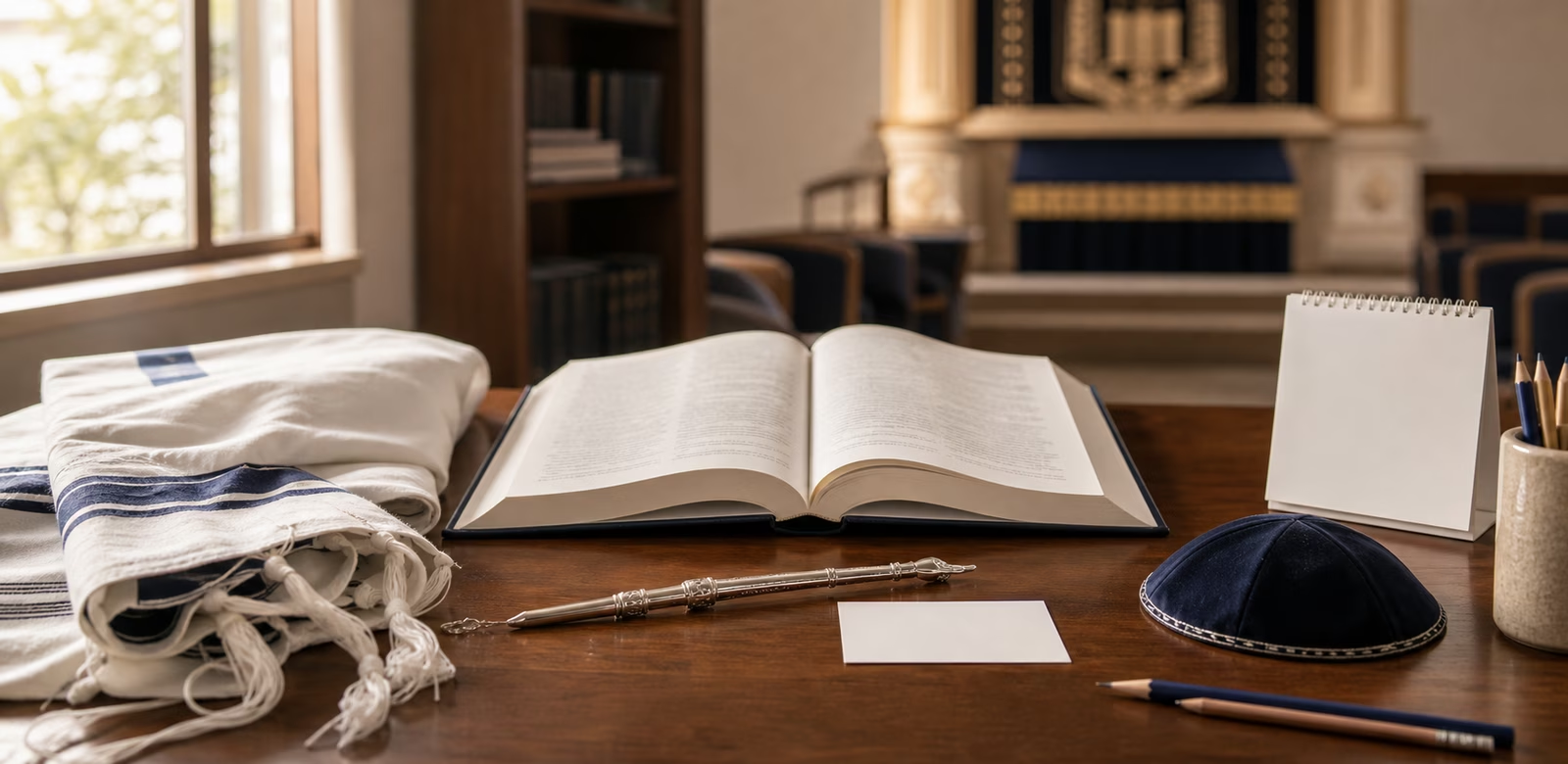
The first thing many guests notice at a Jewish wedding is that the room seems to be waiting for more than a ceremony.
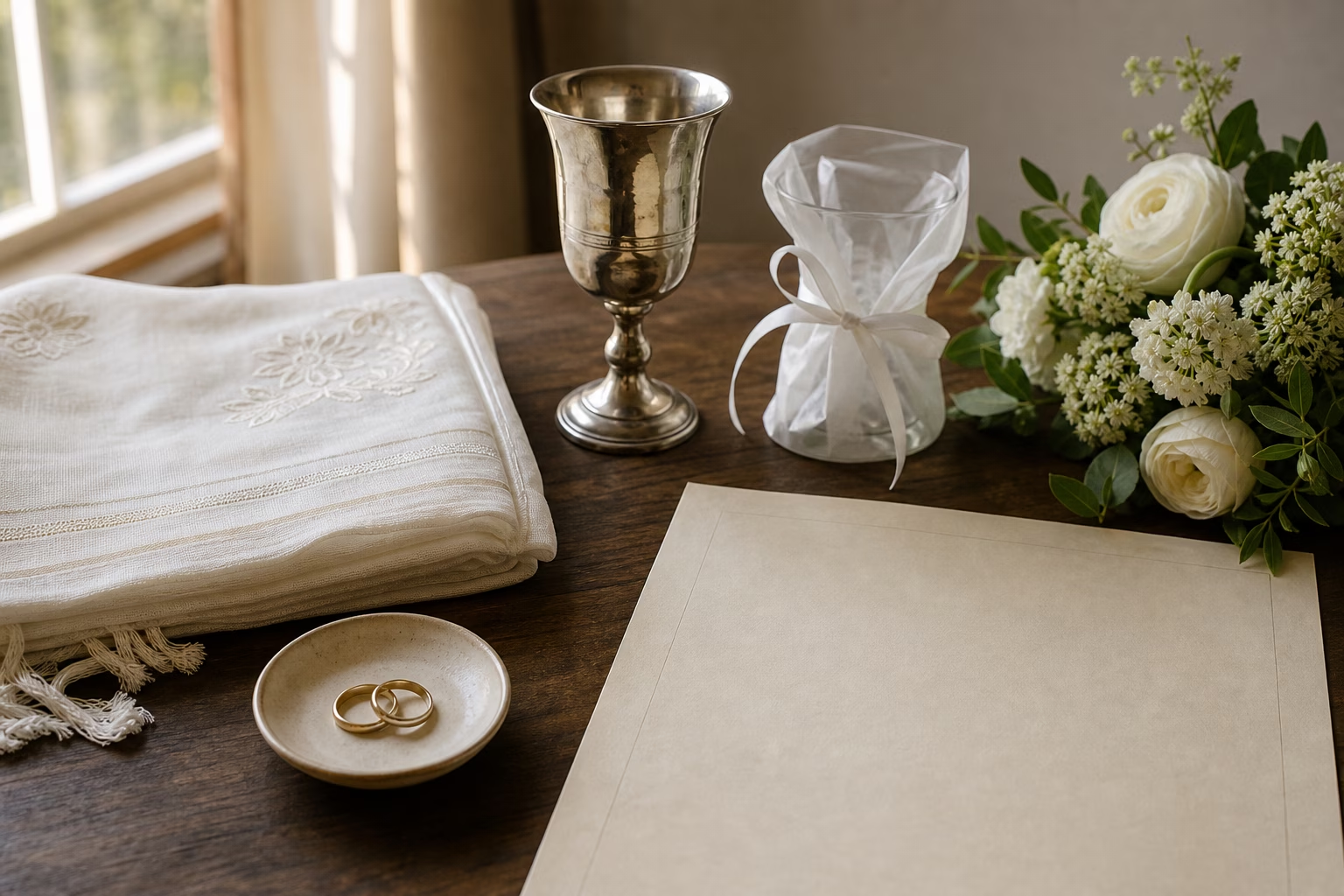
There may be a canopy standing at the front, open on all sides. There may be a table with a cup of wine, a ketubah waiting to be signed or displayed, rings in a small dish, flowers, a wrapped glass, and relatives who are trying to stay calm while also finding the person who has the seating cards. Someone may be checking whether the musician knows when to begin. Someone may be asking where the witnesses are. Someone may be helping a grandparent reach a chair before the processional starts.
Jewish weddings can be elegant, simple, traditional, liberal, Sephardi, Ashkenazi, Mizrahi, interfaith, multilingual, deeply halakhic, mostly cultural, backyard modest, synagogue-based, hotel-grand, or held under a canopy made by friends. A beginner should not expect one wedding to explain every other wedding. But many Jewish weddings share a recognizable moral shape: private love is being placed inside public blessing, communal memory, obligation, and joy.
That is why a Jewish wedding is not only a romantic scene. It is a lifecycle moment, and lifecycle moments in Jewish life are rarely private in the narrow sense. As Names, Lifecycle, and Family History explains, naming, coming of age, marriage, mourning, and memory all ask the community to witness a change. At a wedding, the couple steps forward, but the room is not scenery. The room is part of the act.

The Chuppah Makes a Home Visible
The chuppah, or wedding canopy, is one of the clearest signs that you are watching a Jewish wedding. It may be a tall frame covered by cloth, a family tallit held by friends, a floral structure, or a simple portable canopy. Its sides are usually open, which lets the symbol do two things at once. It suggests a home, and it refuses to make that home a closed fortress.
That openness matters. Marriage creates intimacy, but Jewish life does not imagine that intimacy as isolation. A couple needs private space, but they also need witnesses, meals, neighbors, elders, teachers, friends, and people who will show up when delight becomes work. The chuppah says that a household is beginning, and that the household belongs inside a web of responsibility.
Guests often watch the couple walk toward the chuppah with parents, relatives, attendants, or friends. Some communities have circling customs, where one partner circles the other or both circle each other. Some do not. Some ceremonies include music that feels ancient; others include contemporary songs or quiet instrumental pieces. The beginner does not need to decode every gesture while standing there. It is enough to understand that the movement toward the canopy is a movement toward a new threshold.
If you have read Jewish Home Rituals for Beginners , the chuppah may feel familiar in a surprising way. Jewish home practice often turns thresholds into reminders. The mezuzah marks a doorway. Shabbat candles mark the entrance into sacred time. A chuppah marks the doorway into a shared home that may not yet have walls, furniture, or a mailing address, but already has a public story.
The Ketubah Is More Than Art
Many guests first encounter the ketubah as a beautiful object. It may be calligraphed, painted, printed, framed, translated, modern, traditional, spare, or elaborate. It may be signed before the ceremony in a smaller gathering, then displayed later. People may gather around it because it looks like art, and often it is art. But it is not only art.
Historically, the ketubah is a Jewish marriage contract. In traditional settings, it sets out obligations and protections within a particular legal framework. In many contemporary communities, ketubah language may also express mutual covenant, spiritual commitments, family hopes, or the couple’s chosen theology. Different communities handle the form, language, witnesses, and authority of the document differently, and couples often receive guidance from a rabbi, cantor, officiant, or knowledgeable teacher.
A beginner does not need to master those legal and ritual distinctions to appreciate the ketubah’s seriousness. It teaches that love is not left as a feeling alone. It is given words, witnesses, obligations, and memory. The couple may be overwhelmed by flowers and schedules, but the ketubah quietly insists that marriage has content. People are promising something.
This is one reason the signing can feel intimate. Before the public ceremony, there may be a smaller room where the couple, witnesses, close family, and clergy gather. The mood can be tender and practical at once. Someone signs carefully. Someone asks where the pen went. Someone makes sure the names are correct. Jewish ritual often lives in that mixture of gravity and ordinary logistics.
Wine, Rings, and the Public Act of Commitment
Many Jewish weddings include blessings over wine. Wine or grape juice appears in Jewish life whenever time is being marked with dignity: Shabbat kiddush, holidays, havdalah, and many lifecycle moments. At a wedding, the cup helps the room understand that this is not a casual promise. Time is being lifted and named.
The ring exchange is another moment guests recognize quickly, though the details vary. In many traditional ceremonies, one partner gives a ring or item of value to the other in the act of kiddushin, the sanctifying first stage of marriage. In many egalitarian ceremonies, partners exchange rings or make reciprocal declarations. Some communities preserve older formulas closely. Others adapt language to reflect mutual commitment, gender equality, or the couple’s circumstances.
What matters for a beginner is not to flatten all these practices into one script. The ring is small, but it makes commitment visible. It lets the room witness an act that could otherwise remain invisible. A private intention becomes public speech, a physical object, and a remembered moment. That is a recurring pattern in Jewish ritual. A cup, a candle, a ring, a document, and a canopy are not magic props. They are tools for making human commitments harder to ignore.
The Seven Blessings Widen the Room
The sheva brachot, or seven blessings, are among the most beloved parts of many Jewish weddings. They praise creation, human joy, the forming of a couple, and the rejoicing of Zion and Jerusalem. Depending on the community, they may be chanted in Hebrew, translated, divided among honored guests, sung with familiar melodies, or framed with additional readings.
The blessings do something important: they refuse to let the wedding shrink into only the couple’s romance. The language moves outward. It speaks of creation, humanity, community, history, and the joy of bride and groom in traditional wording. Some contemporary ceremonies adapt language while trying to preserve that widening motion. The couple stands at the center, but the blessings place them inside a larger human and Jewish story.
This can surprise guests who expect weddings to be purely personal. Jewish weddings are personal, sometimes intensely so. The couple may have chosen each other across distance, family complexity, conversion, grief, illness, second chances, or years of ordinary loyalty. Yet the ritual keeps lifting the story beyond biography. Joy is treated as something the community has a duty to increase.
That duty may continue after the ceremony. In some communities, festive meals with sheva brachot are held during the week after the wedding. The custom turns celebration into a rhythm of hospitality. The couple is not simply launched and abandoned. They are accompanied into the first days of married life by meals, blessings, stories, and sometimes a great deal of singing.
Breaking the Glass Holds Joy and Memory Together
Near the end of many Jewish wedding ceremonies, a glass is placed underfoot and broken. Guests often shout “Mazel tov!” immediately afterward. For newcomers, this can feel like the easiest moment to understand because the room tells you what to do. The sound is sharp, the cheer is joyful, and everyone suddenly relaxes.
Still, the custom carries more than a signal that the ceremony is over. Explanations vary. Many connect the broken glass to the memory of the destruction of the Temple in Jerusalem, a reminder that even at the height of joy, Jewish memory includes loss. Others speak more broadly about the fragility of human happiness, the brokenness of the world, or the irreversible nature of the commitment. Families and communities may explain it in their own language.
The beginner should resist reducing the glass to a charming photo moment. Its power comes from the tension. Jewish life often refuses to separate celebration from memory. At Passover, liberation is tasted alongside bitterness. At a wedding, joy rises beside the sound of something breaking. The result is not gloom. It is mature joy, the kind that knows the world is not whole and still blesses a new household into being.
How to Be a Thoughtful Guest
If you are attending a Jewish wedding for the first time, the best posture is attentive participation. Arrive on time, but know that some wedding schedules include a signing, reception, tisch, bedeken, family photos, or other moments before the ceremony. Follow the invitation and any instructions from ushers or family. If there are kippot available, guests may be invited to wear one, regardless of gender in many communities, though practice varies. If you are unsure, watch the room or ask quietly.
During the ceremony, let the community’s cues guide you. Stand when others stand. Be present under or near the chuppah if you have been asked to be there, and stay seated if you have not. Avoid treating ritual objects as props. Do not step into the aisle for a photograph if the family or officiant has asked guests not to. If Hebrew is used and you do not understand it, listen for tone, repetition, and movement. You are not failing by needing translation.
Food questions deserve the same respect as ritual questions. Some weddings keep a strict kosher standard. Some use a kosher caterer. Some are vegetarian or dairy to accommodate guests. Some are not kosher but still shaped by Jewish food memory. If you have dietary needs, communicate them early through the channel the couple provides. If you are helping host or bring food for wedding-adjacent meals, A Beginner Kosher Kitchen will help you ask clearer questions before you make assumptions.
The celebration after the ceremony may include dancing that looks unfamiliar. At some weddings, guests dance in circles, lift the couple on chairs, entertain them with playful routines, or create a separation between men’s and women’s dancing. At others, the dancing looks like any local wedding reception with a few Jewish songs folded in. The rule is simple: join when invited, make room when you are unsure, and understand that dancing can be a mitzvah of joy rather than only entertainment.
The Wedding Is a Beginning, Not the Meaning of Marriage
A wedding can absorb enormous attention. Clothing, food, relatives, ceremony language, music, photography, seating, travel, family expectations, and budget can make the day feel like the whole point. Jewish ritual gently disagrees. The wedding matters because it opens a life, not because it completes one.
That is why the most meaningful image may not be the dramatic kiss, the raised chair, or the perfect table setting. It may be the couple standing under a canopy that is intentionally temporary. The chuppah will be taken down. The flowers will wilt. The glass will remain broken. The ketubah may be hung in a home where ordinary dishes pile up and ordinary forgiveness becomes necessary. The blessings will have to become patience, hospitality, fidelity, humor, and repair.
If Synagogue and Prayer for Beginners teaches how to enter a communal room, a wedding teaches how a room can carry two people across a threshold. The community does not create the marriage for them. It witnesses, blesses, feeds, sings, and remembers. Then it sends them toward the work that no ceremony can do on their behalf.
That is the beauty of a Jewish wedding for a beginner to notice. The ritual is full of objects, words, customs, and songs, but its heart is clear. A home is being imagined before it exists. A promise is being given public weight. Joy is being treated as a communal responsibility. Memory is invited even when the room is happy. The couple stands under an open canopy, and the people around them help make the first shelter.