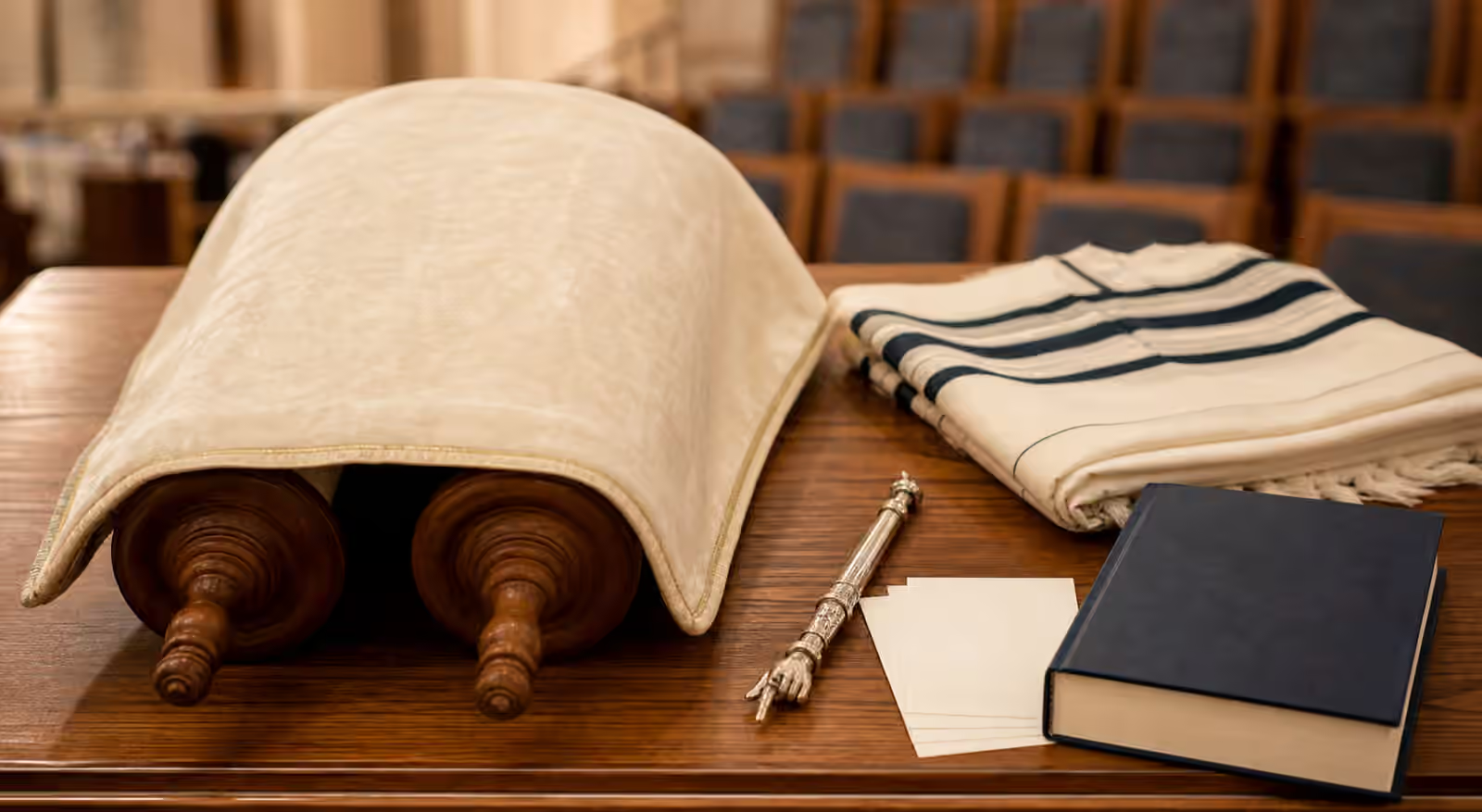
A Jewish home library does not need to begin as a wall of books. It can begin with one shelf, one prayer book, one holiday guide, one notebook, and a place where questions are allowed to sit for a while. The goal is not to look impressive. The goal is to make Jewish learning available at the scale of ordinary life: before Shabbat, before a holiday, after a child asks a question, when a family story surfaces, or when a word in services keeps appearing and you finally want to know what it means.
Many beginners imagine a Jewish library as something inherited fully formed. In some homes, that is true. There may be old siddurim, a chumash with a family inscription, a haggadah from several seders ago, a yahrzeit calendar tucked into a drawer, and books that moved from one apartment to another without anyone deciding whether they still fit the household. In other homes, there is almost nothing yet. Both starting points are normal. A library is not proof that you already know. It is a tool for learning, remembering, and making practice easier to return to.
The first useful book is usually a siddur, a Jewish prayer book. Even if you do not pray every day, a siddur gives shape to the language of Jewish time. It contains weekday prayer, Shabbat prayer, blessings, psalms, and often notes that help you follow a service or a home ritual. The siddur makes the invisible rhythm visible. You can open it before lighting candles, before kiddush, before Havdalah, or before walking into synagogue with less anxiety. If Synagogue and Prayer for Beginners is about finding your place in the room, the siddur is the book that lets you find your place on the page.
Choose a siddur you can actually use. That may mean clear layout, translation, transliteration, commentary, sturdy binding, or a version that matches the community where you pray. Jewish communities do not all use the same prayer book, and the differences matter. A book that is perfect for one synagogue may feel confusing in another. If you attend a particular congregation, ask what they use. If your practice is mostly at home, choose the book that helps you enter the rhythm without turning every page into a research project.
After the siddur, many people add a chumash, the Five Books of Moses with commentary and weekly portion structure. This is not only for scholars. A chumash lets you follow the Torah reading cycle and gives the weekly parashah a place in the house. The point is not to read every note at once. It is to have a reliable doorway. On a quiet evening, you can read a few verses. Before a bar or bat mitzvah, a family can see where the portion lives. During the year, the stories stop floating as isolated fragments and become part of a repeated public reading.
Commentary is where a Jewish library starts to feel like a conversation. One voice explains grammar. Another notices ethics. Another asks why a detail appears where it does. Another connects the text to later practice. A beginner does not need a huge set of commentaries. One accessible commentary can be enough to teach the habit that Jewish reading often includes argument, memory, and interpretation. The page is not a museum case. It is a table with more than one chair.
Holiday books are the next practical layer because Jewish time asks for preparation. A haggadah for Passover, a High Holiday machzor if you attend services, a book that explains the holiday year, and a few home guides can prevent each holiday from arriving as a surprise. The Jewish Holiday Year and Jewish Months and Rosh Chodesh make the calendar less mysterious, but the shelf helps you return to the same season with a little more confidence each time.
A useful holiday book does more than list dates. It explains mood. Passover is not only a meal with symbolic foods. It is preparation, questions, memory, cleaning, storytelling, and the strange feeling of moving from ordinary dinner into a ritual script. The High Holidays are not only long services. They are return, repair, accounting, sound, fasting for those who do, food before and after, and the emotional weight of beginning again. A book that tells you what the holiday feels like can be more helpful than one that only tells you what to do.
The home library should also make room for Jewish life-cycle moments. A beginner may not need a large library on weddings, baby naming, mourning, conversion, bar and bat mitzvah, or cemetery practice, but a few clear guides can make difficult or joyful moments less disorienting. When a shiva visit appears on the calendar, Visiting Shiva and Jewish Mourning can be the difference between avoidance and showing up gently. When a name is being chosen, Names, Lifecycle, and Family History can help a family treat the moment as memory rather than paperwork.
Not every book has to be formal. Family memory belongs on the shelf too. A binder of recipes, photocopied letters, immigration documents, cemetery notes, synagogue programs, old photographs, and recorded stories can sit beside published books because it teaches a different kind of Torah: the lived path of your own people. Jewish Genealogy First Weekend is a good companion here. The home library should not make family history feel smaller than printed commentary. In many homes, the family folder is the book people open first.
Children’s books deserve care even in adult households. They are often the clearest introductions to holidays, values, and ritual objects. A children’s Shabbat book can explain the table more directly than an adult encyclopedia. A picture book about tzedakah, hospitality, or a holiday can give adults language they did not know they needed. If children visit the home, the books become invitations. If they do not, the books can still soften the entrance into unfamiliar practice.
The danger in building any library is buying too much before reading anything. A shelf can become a monument to intention. Better to choose a few books and build a rhythm around them. Keep a notebook nearby. Write down questions without demanding immediate answers. Mark a page before Shabbat. Read one paragraph after Havdalah. Look up one blessing before using it. Bring a question to someone who knows more. Jewish learning grows well when curiosity is allowed to be steady instead of dramatic.
It also grows better in community. Books are important, but they are not a substitute for teachers, rabbis, synagogue communities, family elders, study partners, and people who can explain how a practice lives in a particular place. Jewish life is full of variation. A book may describe one custom while your community follows another. That difference is not automatically a contradiction. It is a reminder that the shelf should support relationship, not replace it.
A beginner’s Jewish home library is successful when it lowers the threshold. The siddur is easy to reach. The haggadah is not lost the week before Passover. The holiday guide has bookmarks. The family binder is not buried. The notebook holds questions. The books do not accuse anyone from the shelf. They wait.
Over time, the shelf begins to tell the story of the home. A book arrives because a holiday was confusing. Another arrives because a child asked about a name. Another because a synagogue service became less foreign. Another because someone wanted to learn with a friend. That is how a library becomes Jewish in the deepest practical sense. It does not only contain Jewish books. It becomes part of Jewish time.