Jewish genealogy often begins with a sentence that sounds almost useless.
“They came from somewhere near Minsk.”
Or: “Her name was Sarah, but not exactly Sarah.”
Or: “The family changed the name at the port.”
Or: “There was a brother who went to Argentina, but nobody talked about him.”
Beginners want these fragments to behave like clues in a tidy mystery. Follow the line, open the right website, and the family tree will assemble itself. Real family history is less tidy and more rewarding. The fragments are not useless. They are unprocessed evidence. Your first weekend is not about solving the whole family. It is about turning fragments into a research plan.
The most important rule is simple: start with what is known, then move outward. Do not begin in the eighteenth century because an online tree looks exciting. Begin with living memory, documents in the house, names on photographs, cemetery inscriptions, immigration papers, naturalization files, marriage certificates, synagogue records, and the stories relatives repeat even when they are not sure why.
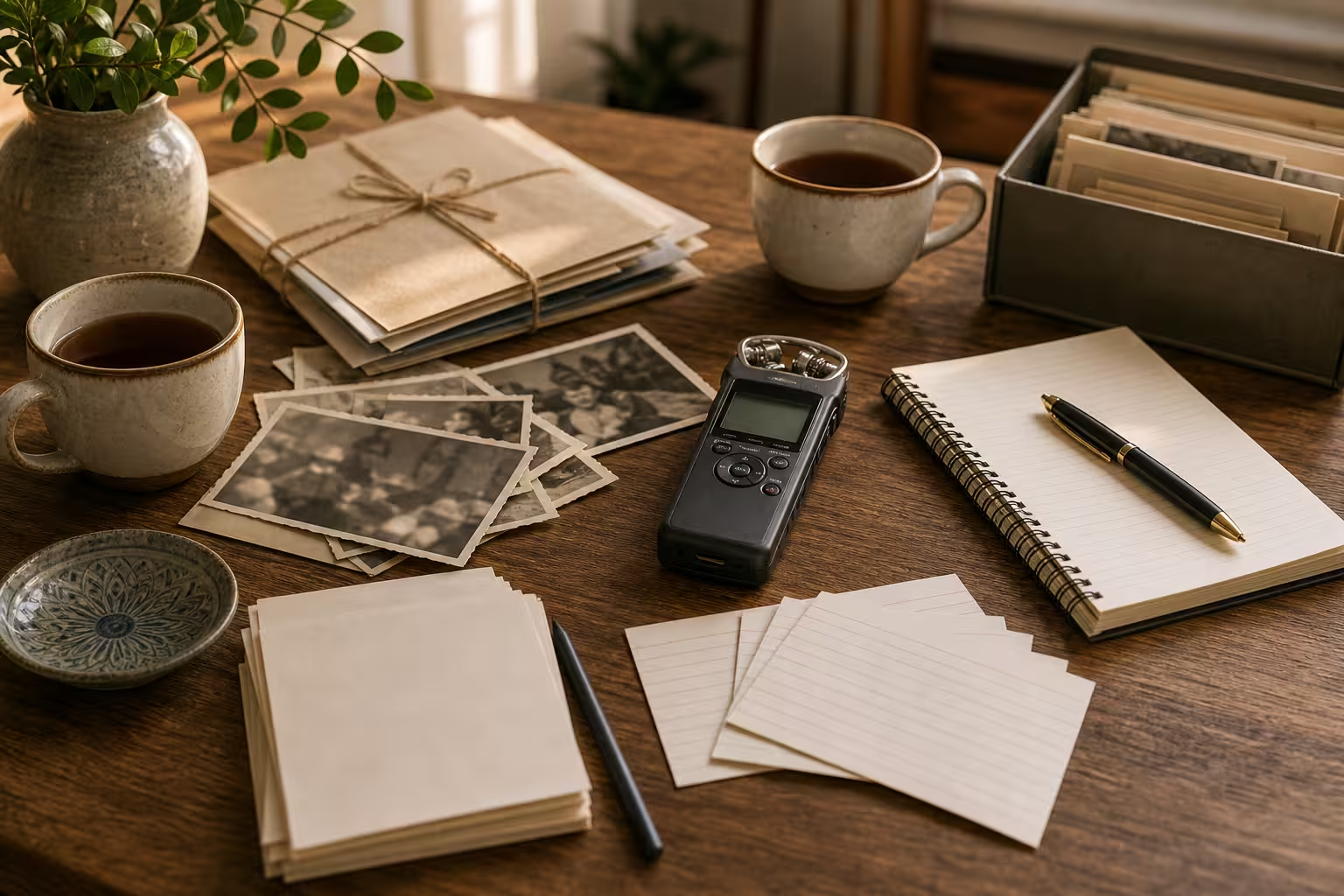
Friday evening: gather without arguing
Use the first evening to collect, not to correct. Ask relatives what they remember. Record audio or video only with permission. Photograph documents and the backs of photographs. Write down exactly what people say, including uncertainty. If an aunt says the town sounded like “Brisk” or “Brest” or “Bresk,” do not force one spelling yet. Capture the sound and the context.
Ask for names in every form. Secular names, Hebrew names, Yiddish names, Ladino names, nicknames, married names, maiden names, patronymics, and names used only in prayer may all matter. Ask who was named after whom. Ask which languages were spoken at home. Ask what country the family said they came from, then ask what town. Countries changed borders. Towns anchor research.
This first step requires tenderness. Family stories may include migration, poverty, estrangement, adoption, conversion, divorce, changed names, hidden origins, antisemitism, war, or grief. Do not treat relatives like malfunctioning databases. They are people carrying memory. Let them be partial. Let them be emotional. Let silence count as information too.
Saturday night or Sunday morning: build a timeline
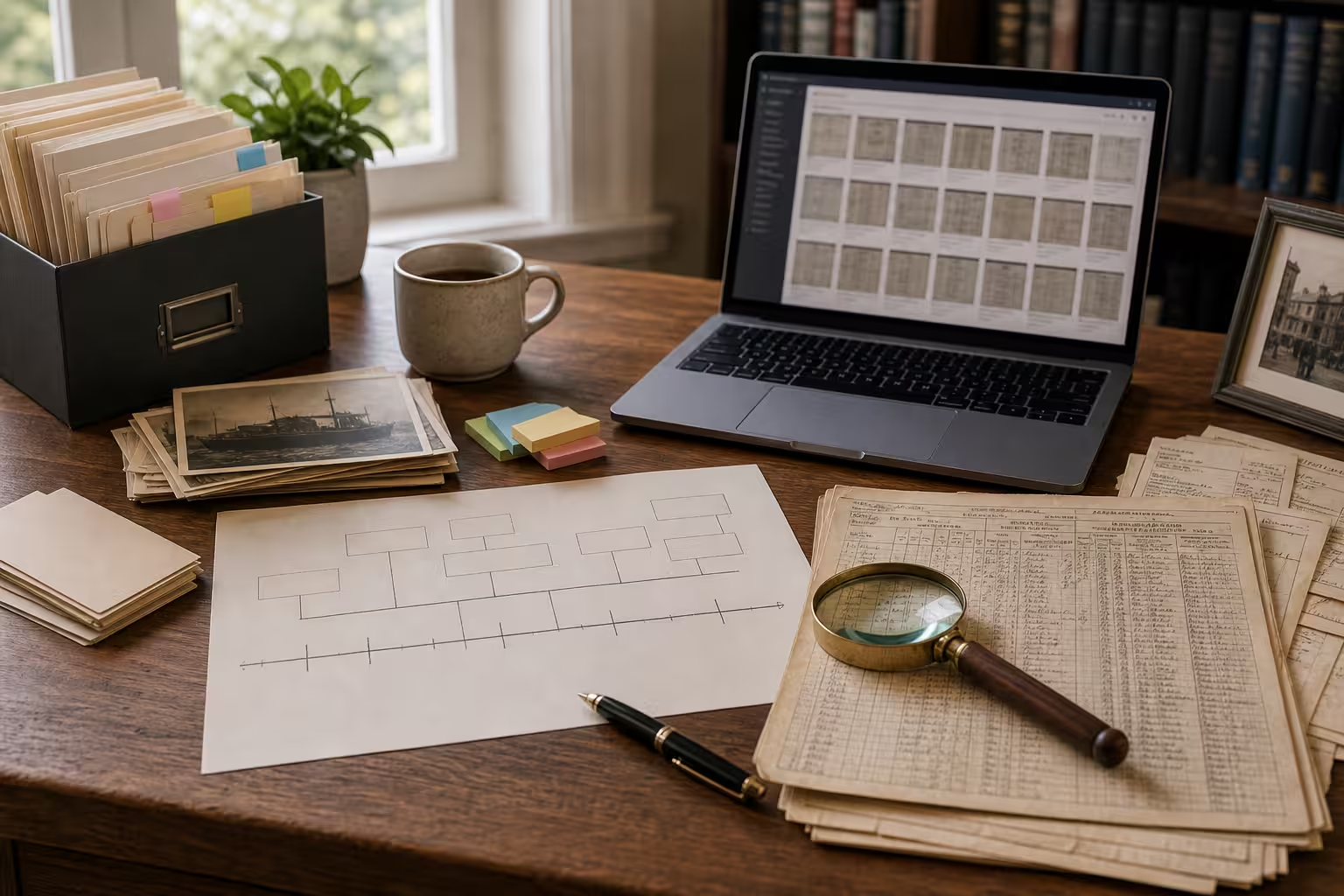
After gathering, create a simple timeline for one person or one couple. Do not try to chart everyone at once. Choose a known ancestor close enough that records are available: a grandparent, great-grandparent, or immigrant couple.
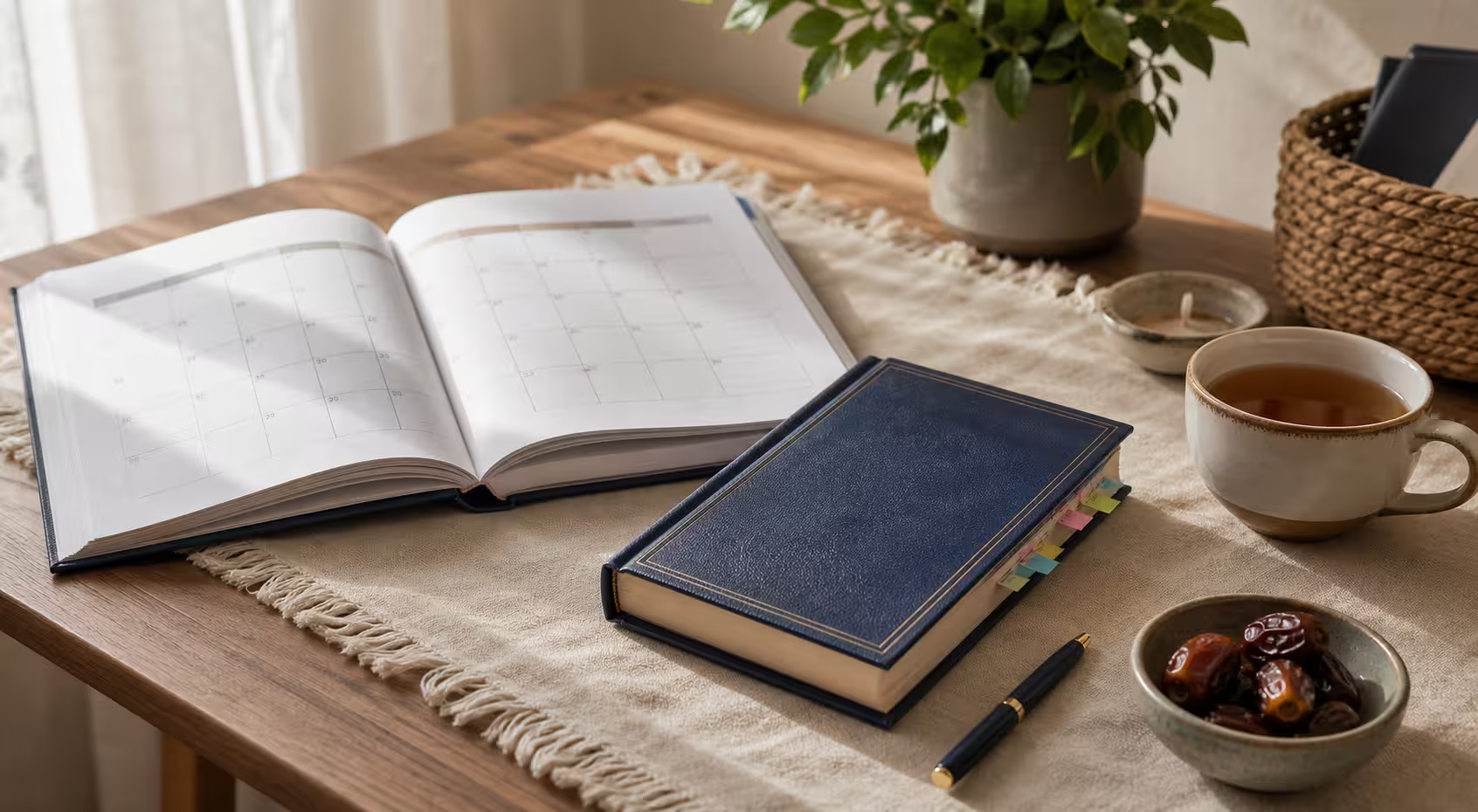
Make columns for date, place, name used, event, source, and confidence. Add birth, marriage, immigration, residence, children, naturalization, death, burial, and any known synagogue or community connection. If you do not know a date, use an estimate and mark it as an estimate. If two records disagree, keep both. Your job is not to hide conflict. Your job is to make conflict visible.
This timeline will show you what to search next. If someone appears in a census in 1920 but not 1910, immigration or name change questions emerge. If a headstone gives a Hebrew father’s name, that can distinguish two people with the same English name. If a marriage record names a town, that town becomes a research target. If every document gives only a country, you may need passenger lists, naturalization petitions, obituaries, landsmanshaft records, or family letters to find the town.
Names will change, so follow relationships
Jewish names move across alphabets, languages, and bureaucracies. A Hebrew name may become a Yiddish nickname, then an English approximation, then a shortened professional name. Surnames may be spelled several ways by different clerks. Women may appear under maiden names, married names, initials, or local naming customs. Children may Americanize faster than parents. Families may choose new names for safety, opportunity, pronunciation, or personal preference.
This means you should not search only one spelling. Build a cluster of evidence around relationships. Who are the spouse, children, parents, siblings, witnesses, neighbors, sponsors, or burial society members? A passenger list might be ambiguous until you notice the destination uncle. A census record might be uncertain until the children’s names align. A cemetery record might become clear because the Hebrew name names the father.
The old family claim that a name was changed “at the port” is often more complicated than the story suggests. Names were more commonly changed through later choices, clerks, schools, employers, courts, or gradual usage. But do not mock the story. It may preserve a real memory of dislocation, pressure, or reinvention even if the mechanism is wrong.
Towns matter more than countries
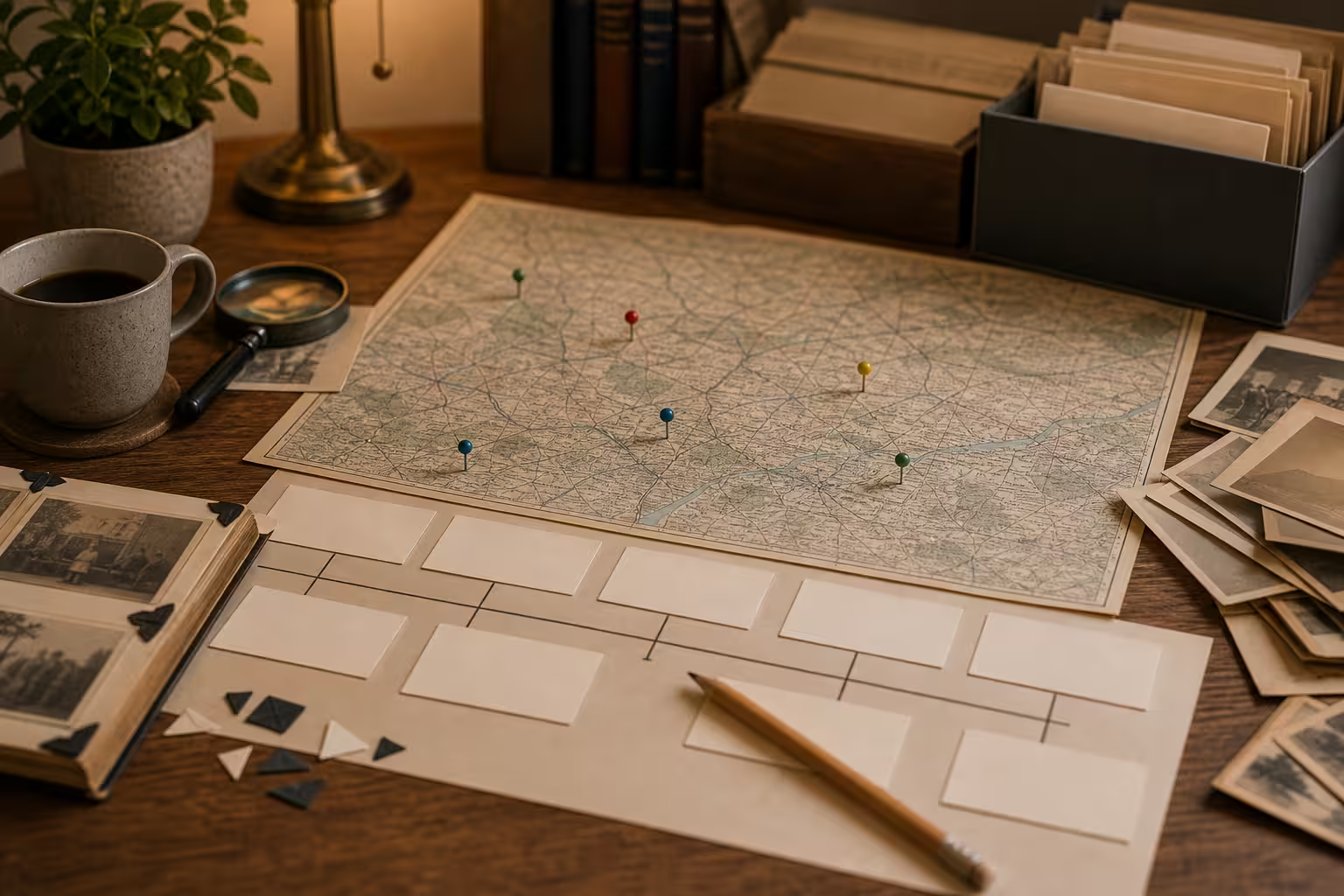
For many Jewish families, especially Ashkenazi families from Eastern Europe, the town is the key. A record that says Russia, Poland, Austria, Galicia, Hungary, Romania, or Lithuania may reflect an empire, border, province, or later family shorthand. The same town may have names in Yiddish, Hebrew, Polish, Russian, German, Ukrainian, Lithuanian, Romanian, Hungarian, or other languages. Spellings vary.
Once you have a possible town, research its historical jurisdiction. What country controlled it when your ancestor lived there? What records existed? Which archives hold them now? Was there a Jewish community? Are there memorial books, cemetery projects, synagogue registers, tax lists, school records, or landsmanshaft societies connected with emigrants from that town?
Do not jump from a surname to a town without proof. Many families shared common names. A town match is strongest when it connects to multiple records, relatives, oral history, or community evidence.
Cemeteries can speak in two languages
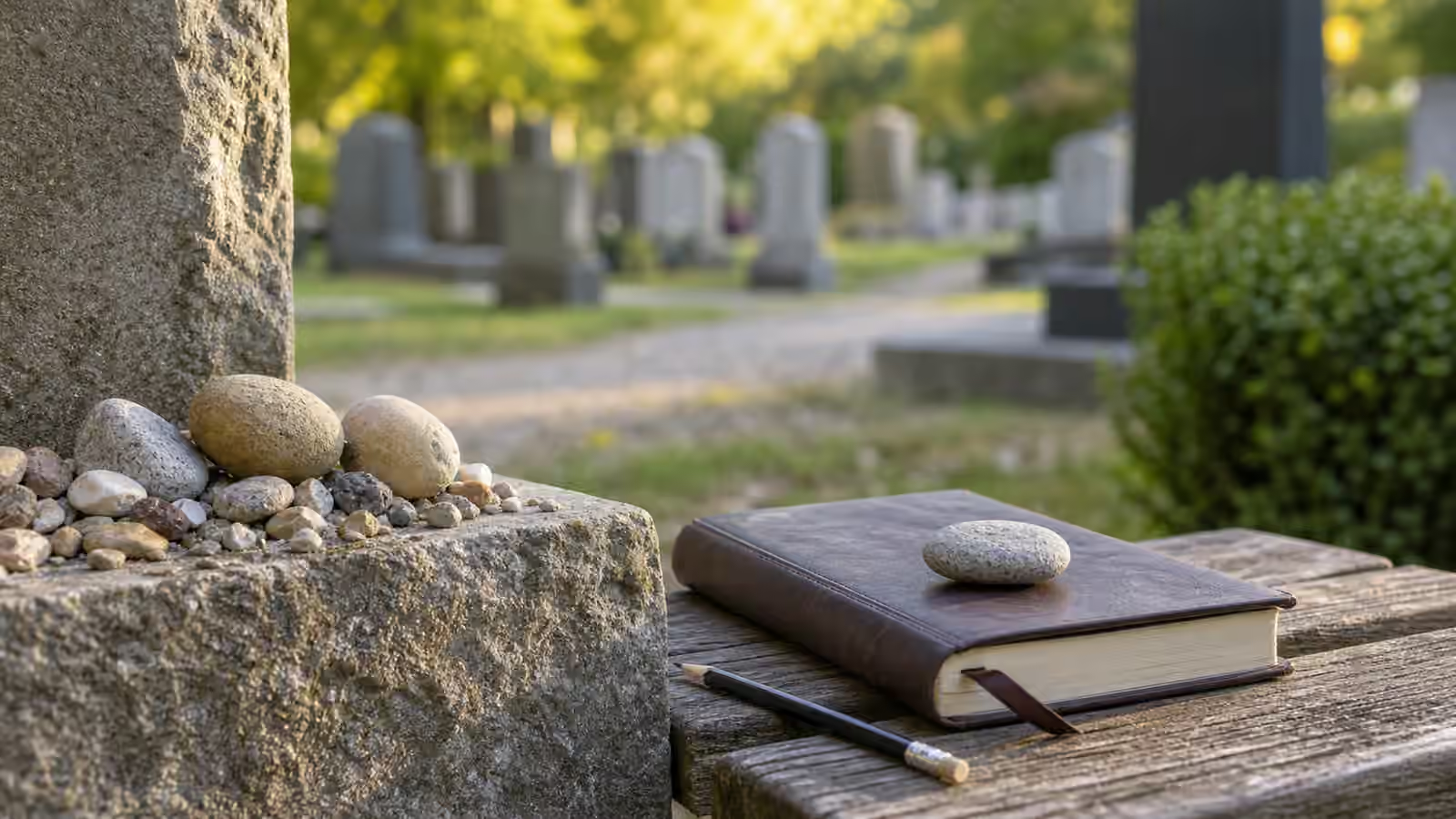
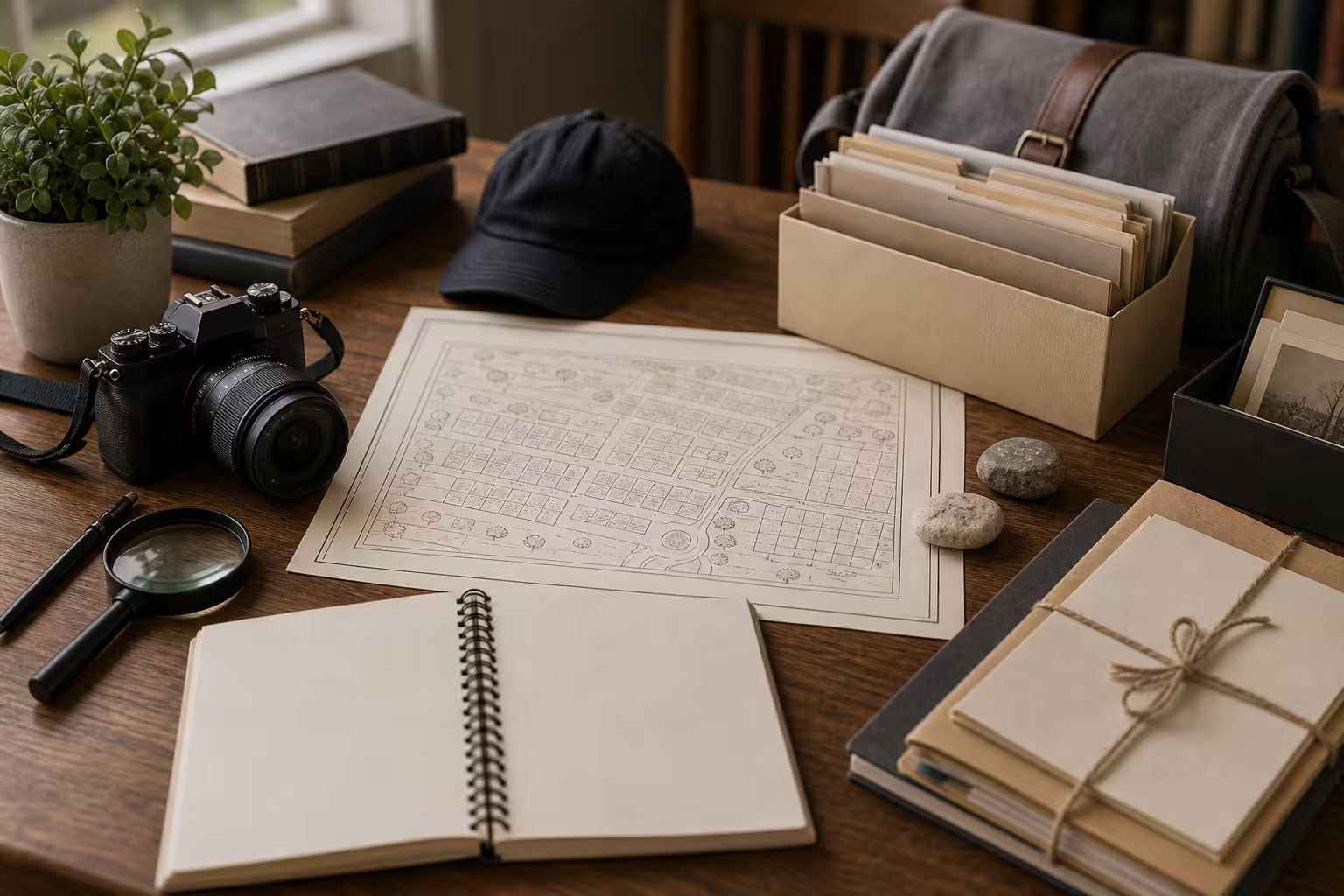
Jewish cemetery records and headstones can be extraordinarily useful. A stone may include the person’s Hebrew name and their father’s Hebrew name, dates in Hebrew and civil calendars, symbols, abbreviations, and community affiliations. Burial society plots may group people from the same town or mutual aid society. Nearby graves may reveal relatives.
If you visit a cemetery, photograph the whole stone, close details, neighboring stones, row markers, and entrance signs. Be respectful. Follow cemetery rules. Do not make rubbings if prohibited or likely to damage the stone. If you cannot read Hebrew, save clear images and ask someone knowledgeable. Automated tools can help but should not replace careful reading.
Cemetery evidence is not perfect. Dates can be wrong. English and Hebrew sides may disagree. Names may be stylized. But headstones often preserve relational information that civil records omit.
Online trees are hints, not proof
Online genealogy platforms can be helpful, but they can also multiply errors at industrial speed. A tree with many names is not necessarily a well-proved tree. Beginners often copy a branch because it feels generous. Later, they discover they have adopted someone else’s unrelated ancestors.
Use online trees as hints. Ask what source supports each claim. Does the record actually name the person, or did someone attach it because the name looked close? Are the dates plausible? Could a mother have had children in two countries in the same year? Are two people with the same name being merged? Does the town match, or only the country?
Good genealogy is slower than copying, but it is kinder to the dead. It does not use ancestors as decoration.
End the weekend with a research log
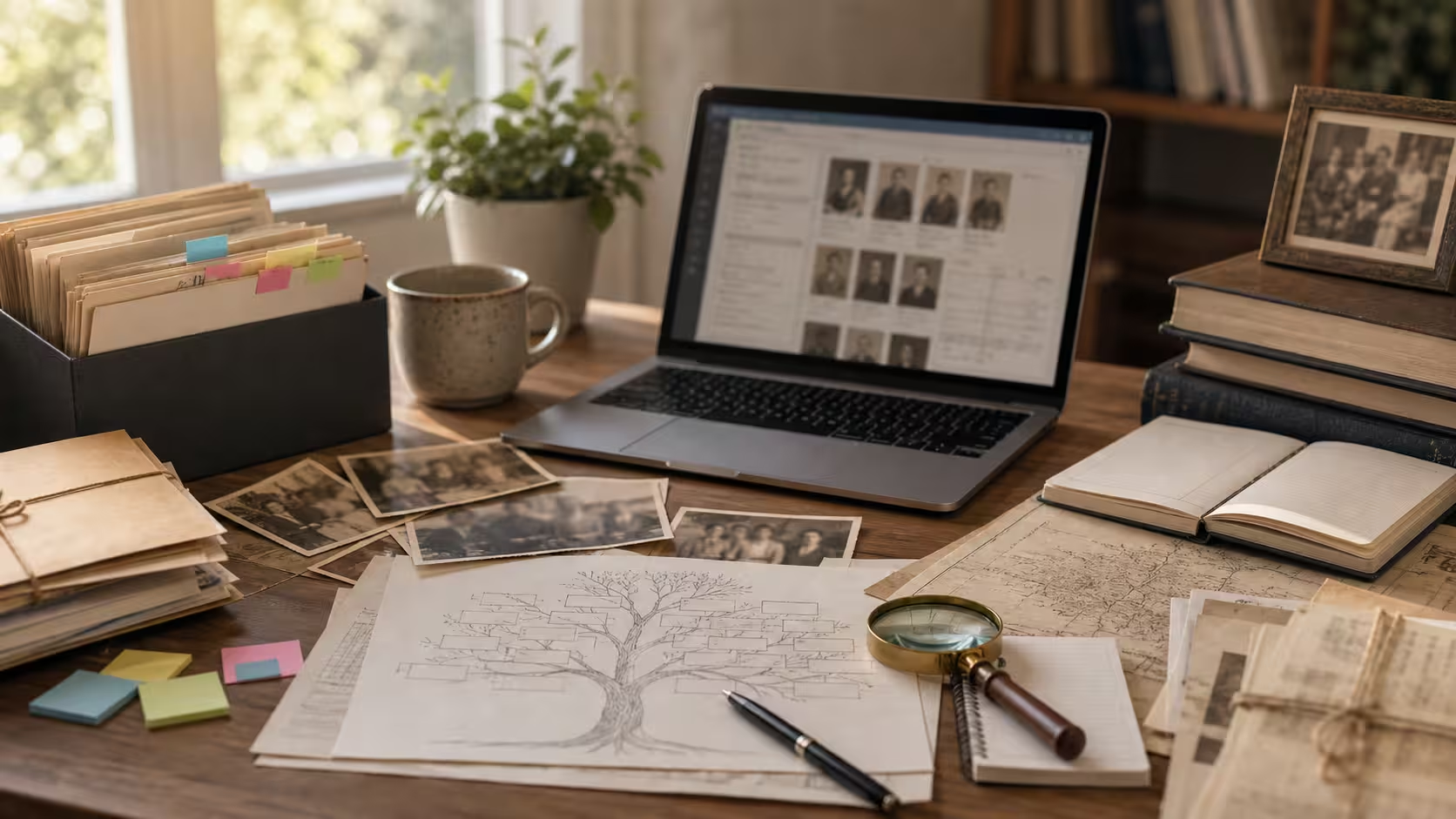
By Sunday evening, you should have three things: a timeline for one person or couple, a folder of images and documents, and a research log. The log can be simple. Write the date, what you searched, where you searched, terms used, results found, and what remains uncertain. Include negative searches. Knowing what did not work prevents you from repeating the same search later.
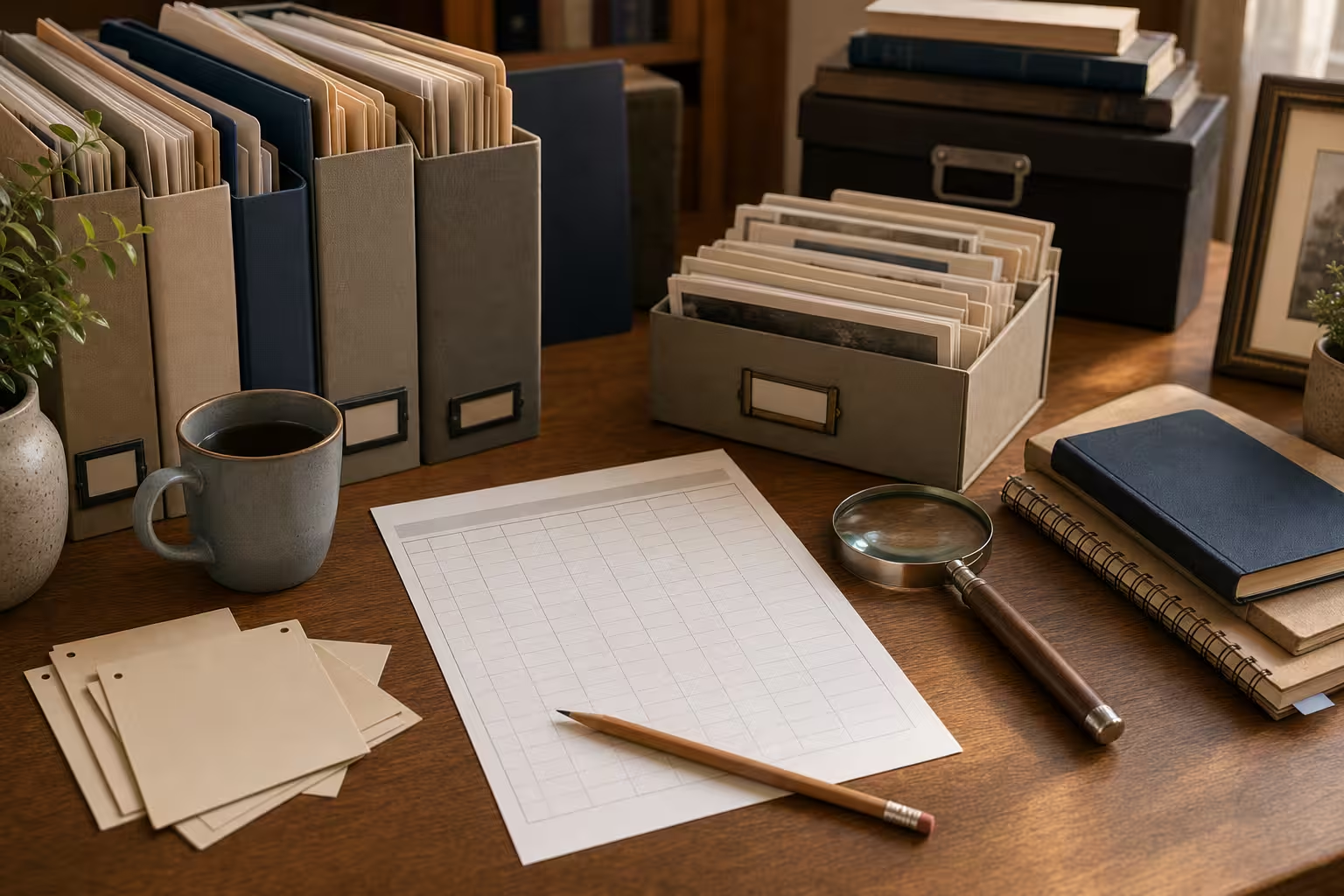
Then write a one-page summary in ordinary language. “Here is what we know. Here is what we think. Here is what we do not know. Here are the next three records to find.” This summary is more useful than a sprawling tree. It lets relatives respond, correct, and contribute without needing to understand your software.
Your first weekend will probably not give you a complete lineage. It may give you something better: a disciplined relationship with memory. You will know which stories are strong, which are fragile, which names need variants, which towns need historical context, and which records can move the search forward.
Jewish genealogy is not only about finding ancestors. It is about restoring specificity. A person becomes more than “from somewhere near Minsk.” A name gains its other forms. A town returns to the map. A grave speaks across languages. A silence becomes something you can approach with care.
That is enough for a first weekend. Not a finished tree. A trail you can follow honestly.