A Jewish cemetery asks people to slow down before they know what to say.
The path may be quiet, but it is not empty. Names gather on stones. Family stories become dates, Hebrew letters, symbols, and places in a row. A person may arrive with grief, curiosity, obligation, genealogy notes, a child asking direct questions, or a memory that feels too private for a public field. Even when the visit is brief, the place changes the volume of ordinary behavior. For background, read Maimonides — Mourning 1 (mourning background) .
This guide is for the beginner who wants to visit respectfully. It does not replace the guidance of a cemetery office, chevra kadisha, rabbi, funeral director, or local community. Jewish burial customs vary, cemetery rules vary, and family expectations can be tender. The basic posture, though, is stable: enter gently, protect dignity, avoid turning memory into display, and leave the place no worse than you found it.
Jewish Funerals and Burial for Beginners explains the first threshold after death. A cemetery visit may happen days later, months later, years later, or generations later. It is one way the living continue a relationship with the dead without pretending the death has been undone.
A Stone Says You Were Here
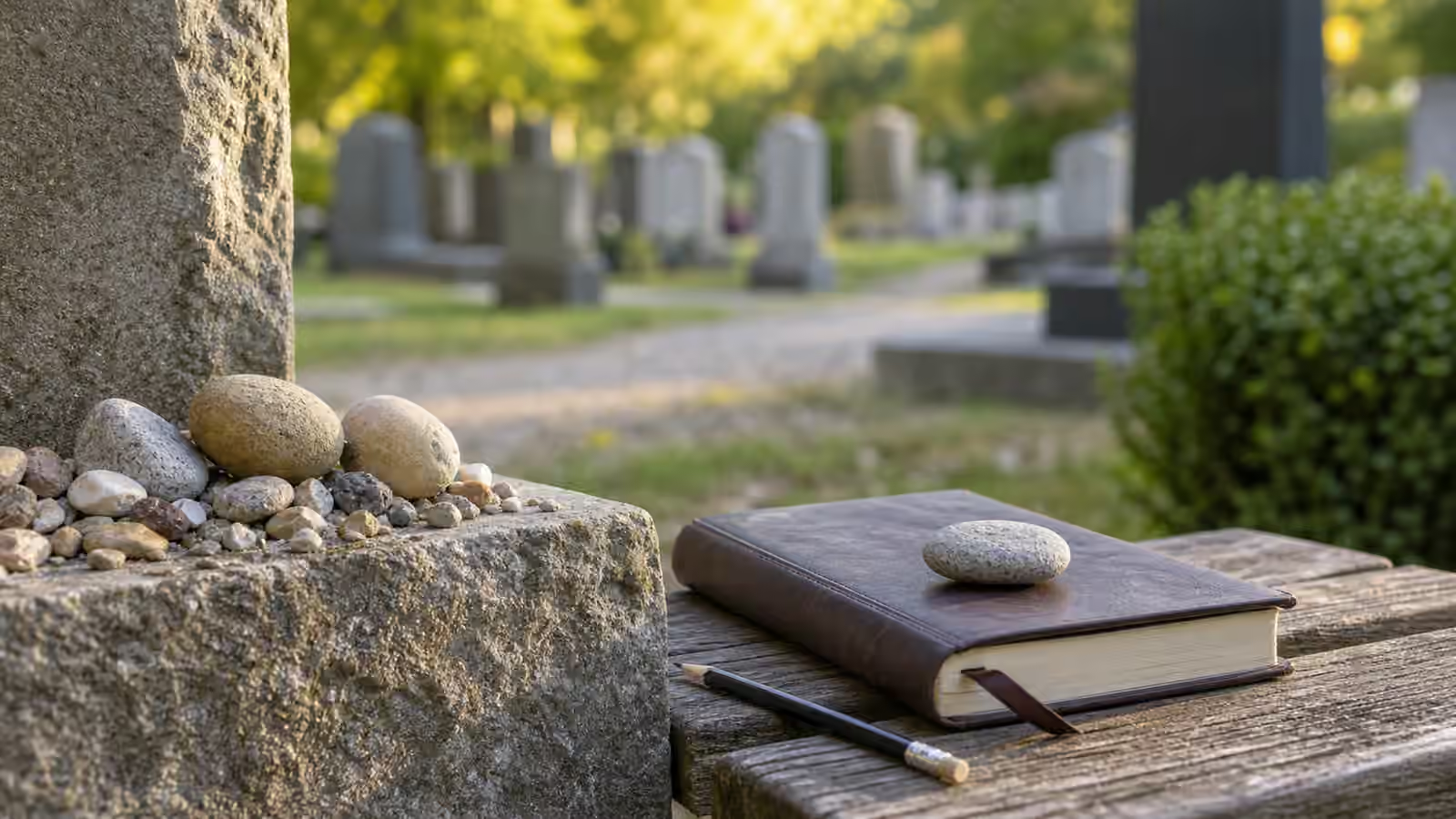
Many Jewish visitors place a small stone on a grave marker. The custom is widely recognized, though its explanations vary. A stone may say that someone came, that memory has weight, that the visit was not only inward, and that the grave is still held in attention. Unlike flowers, a stone does not quickly fade. It is modest and durable.
Beginners sometimes worry about doing this incorrectly. Choose a small stone that will not damage the marker. Place it gently where stones are usually placed, often on top of the marker or at its base, depending on the stone’s shape and cemetery practice. Do not remove stones left by others unless cemetery staff have directed maintenance. Those stones may be the only visible sign that someone came before you.
The stone is not magic. It is a gesture. Its power comes from restraint. You do not need an elaborate object, a public speech, or a photograph to prove that the visit mattered. The smallness is part of the language.
Read Names With Care
A cemetery is a book, but not one to consume casually. Names, dates, Hebrew inscriptions, family relationships, and symbols may tell a story. They may also hide one. A short life, an unfamiliar name, a changed surname, a missing relative, a Hebrew name beside an English one, or a shared plot can raise questions that the stone cannot answer.
Names, Lifecycle, and Family History shows how Jewish names carry memory across generations. At a grave, names become especially concrete. A Hebrew name may connect a person to parents. An English or local name may reflect migration, assimilation, safety, aspiration, or bureaucracy. A family name may have changed more than once.
If you are doing genealogy, Jewish Genealogy First Weekend can help you keep notes responsibly. Write down what the stone actually says, not what you hoped it would say. Photograph only if cemetery rules allow and if family privacy is respected. Be careful before posting grave images publicly. A grave marker may be visible in public space and still belong to a living family’s grief.
The Body Still Matters
Jewish burial practice treats the body with dignity. That dignity continues in the cemetery. Walk where paths allow. Do not sit, lean, or place bags on grave markers. Do not step on graves if there is another way to move. If the ground layout makes that impossible, walk with care rather than panic. Cemeteries are practical places as well as sacred ones.
Dress and behavior should fit the seriousness of the visit. That does not require theatrical mourning, but it does ask for restraint. Loud phone calls, casual eating over graves, jokes that ignore the setting, and careless photography can wound other visitors. If children come, prepare them without frightening them. Explain that this is a place for quiet voices, gentle walking, and questions asked respectfully.
Kippah, Dress, and Synagogue Etiquette for Beginners focuses on synagogue, but the broader lesson applies: Jewish spaces teach through local norms. Some visitors cover their heads in a Jewish cemetery. Some communities expect it. Some cemeteries have rules about hours, flowers, plantings, stones, candles, cleaning, and photography. Follow them.
Yahrzeit, Unveiling, and Returning
Some cemetery visits happen around yahrzeit, the anniversary of a death on the Jewish calendar. Yahrzeit and Remembrance at Home explains candles, Kaddish, memory, study, and tzedakah connected to that day. Visiting the grave can be one part of the observance, though not everyone is able to go.
Another common visit is an unveiling, when a grave marker is formally dedicated after burial, often months later, depending on community and family custom. The gathering may include psalms, prayers, memories, and the physical act of revealing the marker. For some families, the unveiling is when the loss becomes newly real. The funeral was urgent; shiva was full of people; months later, the stone stands still.
Visiting Shiva teaches that mourners need presence more than explanations. The same is true at a graveside gathering. Do not force meaning. Do not tell people how they should feel because time has passed. Grief changes shape, but it does not follow a public schedule.
Cleaning and Repair Need Permission
A visitor may see a marker covered with dirt, lichen, fallen leaves, or age. The impulse to clean can be loving, but it should be cautious. Some cleaning methods damage stone. Some cemeteries have rules about maintenance. Some families may not want a marker altered without consent. If repair is needed, contact the cemetery office or a qualified professional rather than experimenting.
It is usually safe to remove loose debris gently if allowed, but avoid chemicals, scraping, pressure washing, wire brushes, paint, chalk, shaving cream, or any method that promises easy readability at the stone’s expense. A grave marker is not a craft project. It is a witness. If you need to read an inscription for family history, try different light, a careful photograph, or cemetery records before touching the stone aggressively.
This restraint can feel frustrating when a name is almost visible. It is still part of respect. The dead do not need us to solve every puzzle in one visit.
When Memory Is Complicated
Not every cemetery visit is peaceful. A person may be visiting someone who caused harm, someone they barely knew, someone whose Jewish life was hidden, someone whose grave was neglected, or someone whose family story includes estrangement. A grave can intensify questions rather than resolve them.
Jewish tradition has strong practices of honor for the dead, but honor does not require falsifying a life. If a visit is emotionally difficult, go with support or keep it brief. If you need a prayer, a psalm, silence, or a sentence in your own words, use what helps you remain truthful and respectful. If you cannot visit, memory can still be held through candle lighting, study, tzedakah, conversation, or private reflection.
The cemetery is one doorway into Jewish memory, not the only one. For some families, geography, cost, disability, distance, war, migration, lost records, or unsafe relationships make visiting impossible. The absence of a visit does not prove absence of love.
Leave Quietly
When you leave a Jewish cemetery, do so without rushing the place into closure. Some people wash hands after leaving, using water near the cemetery gate or at home, depending on local custom. Some do not speak until they have left the grounds. Some give tzedakah. Some simply sit in the car for a moment before starting the engine. Learn the custom of your community if you have one, and do not mock practices you do not yet understand.
A good visit may be brief. You find the grave, place a stone, say a prayer or a name, notice the dates, and leave. That can be enough. The visit is not measured by the number of words spoken. It is measured by whether dignity was kept.
Jewish cemeteries hold grief, history, migration, broken records, beloved names, and ordinary human lives. The beginner who enters gently will learn that remembrance is not only an emotion. It is a practice of feet, hands, eyes, silence, and small stones placed with care.