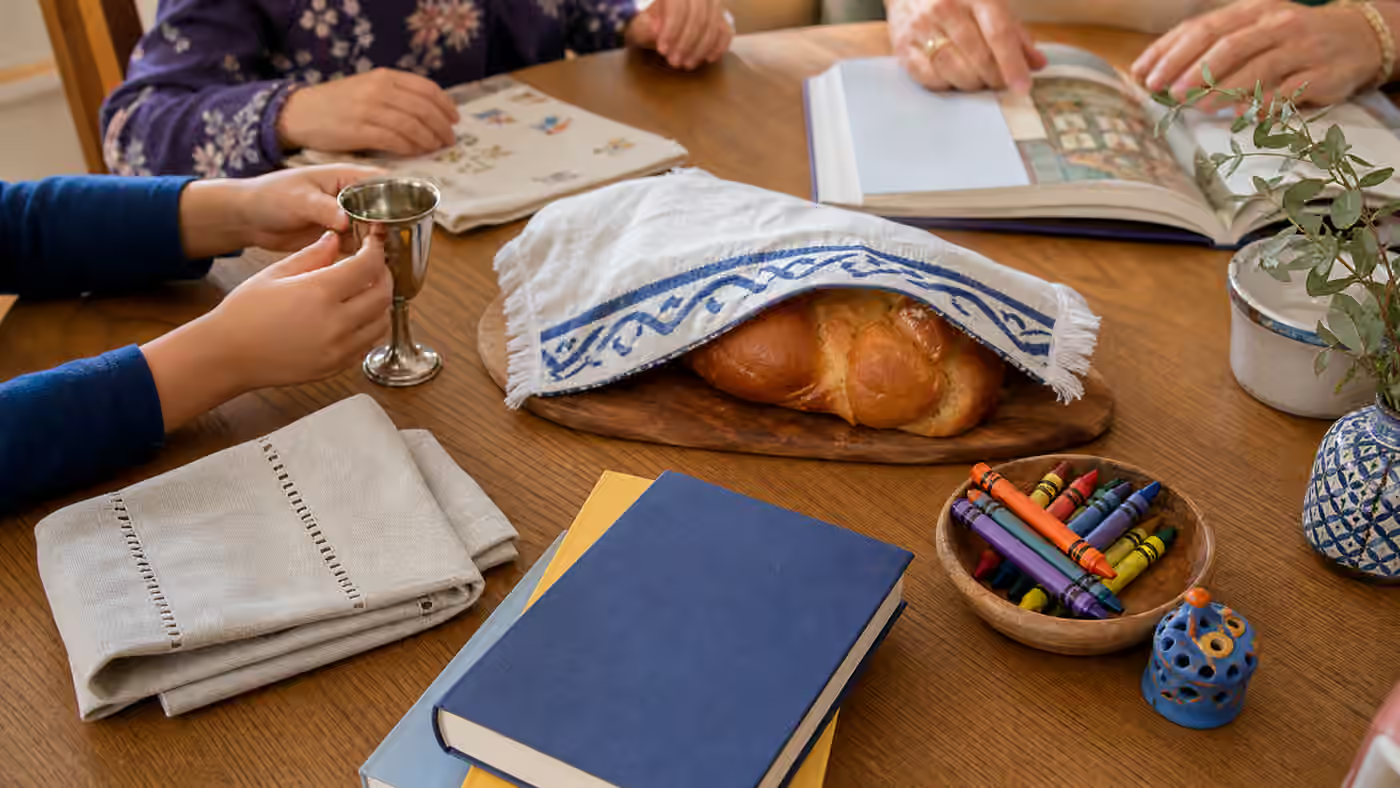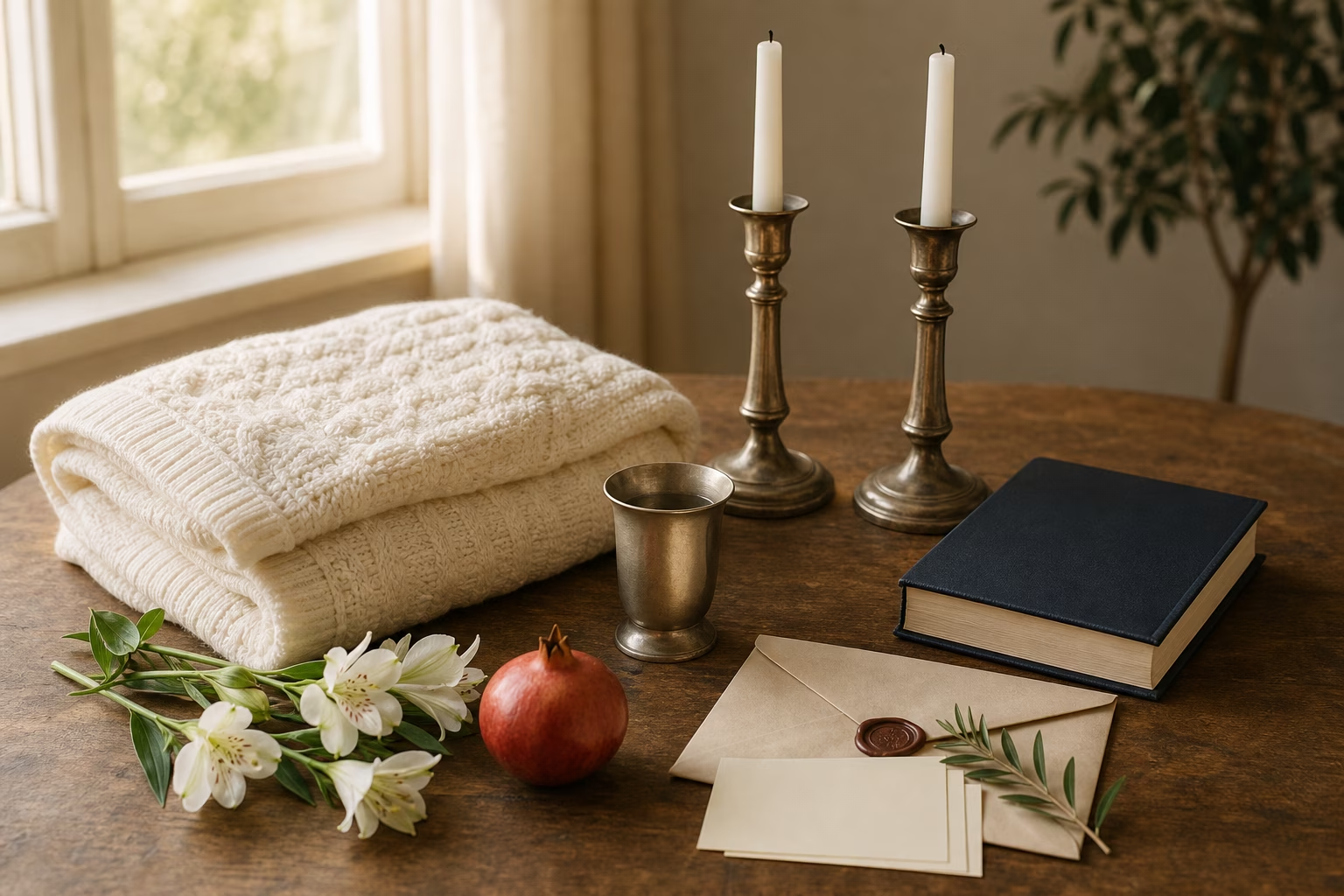
A baby naming begins before anyone says the name aloud.
It may begin with grandparents quietly repeating possibilities at a kitchen table, with a parent opening an old envelope of documents, with a family asking which ancestor is still waiting to be remembered, or with two people realizing that the child in their arms will enter more than one story at once. There is the civil name on papers, the name spoken at home, the Hebrew name used in Jewish ritual, and sometimes a Yiddish, Ladino, Judeo-Arabic, or local family name that carries a whole vanished room inside a few syllables.
Jewish baby naming is not only about choosing a beautiful sound. It is a way of welcoming a child into family, peoplehood, memory, blessing, and responsibility.
The details vary widely. Some families hold a brit milah, the covenant of circumcision, for a baby boy on the eighth day when possible according to Jewish law and health considerations. Some hold a simchat bat, a celebration for a daughter, at home, in synagogue, or in another communal setting. Some communities use other names for welcoming ceremonies. Some children are named in synagogue when a parent is called to the Torah. Some families create intimate home rituals, especially when adoption, conversion, interfaith family life, medical needs, distance, grief, or complicated family history shape the moment.
The variety can make beginners nervous. They may ask what the single correct Jewish baby naming ceremony is, as if every community shares one script. A better first question is: what kind of welcome is this family trying to give, and which Jewish community will help them give it with care?

A Hebrew Name Is a Relationship
A Hebrew name is often used when a person is called to the Torah, receives certain blessings, is mentioned in prayers for healing, appears in a ketubah or other Jewish legal document, or is remembered after death. It usually includes the person’s own Hebrew name followed by a link to parents, often in the form “son of” or “daughter of” in Hebrew. Different communities have different conventions, and contemporary families may make thoughtful choices around gender, adoption, conversion, blended families, and parental names.
For a beginner, the important point is that the Hebrew name places a person in relationship. It is not only a label. It says that this child belongs to a chain of care, teaching, obligation, and memory. That chain may be biological, adoptive, communal, chosen, or some mixture of all of those. Jewish naming practice has room for ancestry, but it also has room for the truth that families are made through covenantal commitments as well as birth.
This is why Names, Lifecycle, and Family History treats names as archives. A name may remember a person, a place, a language, a migration, or a hope. A baby naming takes that archive and turns it toward the future.
Memory Does Not Work the Same Way in Every Family
Many Ashkenazi families name children after deceased relatives. The practice can feel tender and serious, especially when a child receives the name of a grandparent, great-grandparent, sibling, teacher, or beloved friend whose memory remains vivid. The child is not expected to become that person. The name creates a thread, not a burden. It lets memory sit at the table without pretending that grief and joy cancel each other out.
Many Sephardi and Mizrahi families have traditions of naming children after living relatives, often as an honor. In those settings, giving a child a grandparent’s name can be a gesture of respect and continuity during the elder’s lifetime. Other families combine customs, adapt them, or choose names based on meaning, sound, biblical or rabbinic associations, or personal resonance.
Beginners should not flatten these customs into a single rule. Jewish naming has been shaped by geography, language, family practice, rabbinic guidance, and local community culture. If relatives disagree, the disagreement may not be only about taste. It may be about which memory system the family thinks it is living inside.
A wise family slows down enough to ask what each custom is trying to protect. One person may be protecting the dignity of ancestors. Another may be protecting a living grandparent’s place in the family. Another may be protecting a child from being loaded with unresolved grief. Another may be trying to keep a name pronounceable in more than one language. The naming conversation is often the first parenting conversation in which generations negotiate what will travel forward.
Brit Milah Is Covenant, Not Only Ceremony
For families that hold a brit milah, the ceremony is usually described in English as a bris. It is associated with the covenant of Abraham and traditionally takes place on the eighth day when the baby is medically able. A trained mohel or qualified practitioner performs the circumcision, blessings are said, the child receives his Hebrew name, and the community shares in the welcome. Health questions, timing, and professional qualifications should be handled with appropriate medical and rabbinic guidance, not guesswork.
From the outside, people may focus only on the procedure. Inside Jewish tradition, brit milah is also a covenantal entrance. The child is welcomed into a people whose story began before him and will continue after him. The adults in the room are not merely spectators. They are witnesses to belonging and responsibility.
That does not mean every family experiences the day simply. Some parents feel joy and anxiety together. Some carry memories of relatives who are absent. Some are navigating denominational differences, conversion questions, disability, premature birth, adoption, or medical delay. A good community does not treat those complexities as interruptions of the ritual. It helps the family welcome the child truthfully.
Simchat Bat Gives Welcome a Voice
The ceremony often called simchat bat, joy of a daughter, has developed in different forms across communities. Some families name a daughter during a synagogue Torah reading. Some hold a home ceremony with blessings, songs, readings, and words about the child’s name. Some draw on older Sephardi or Mizrahi customs. Some create ceremonies that are newer but rooted in Jewish language, family memory, and communal witness.
Because the forms vary, simchat bat can be a beautiful example of Jewish practice at work. It shows how tradition is not only inherited as a sealed package. It is also arranged, interpreted, and embodied by real families in real rooms. The question is not whether a ceremony is meaningful because every detail is ancient. The question is whether the welcome is honest, Jewishly grounded, and held by people who understand what they are doing.
For guests, the practical posture is simple: listen, show up warmly, and avoid turning the ceremony into a referendum on what your own family did. For hosts, the task is to make the child’s name audible within a room that can receive it.
The Synagogue Makes a Private Joy Public
Many baby namings happen in or around synagogue life. A parent may be called to the Torah, blessings may be recited, the baby’s Hebrew name may be announced, and the congregation may offer a communal response. The room matters. A child who cannot yet understand a word is still being placed among people who pray, learn, argue, remember, celebrate, mourn, and show up for one another.
This can feel intimidating if you are new to services. Synagogue and Prayer for Beginners can help with the room itself: where to sit, how to follow a service, and how to participate without pretending expertise. A baby naming adds another layer. The family is not only attending a service. They are letting the community witness the child’s entrance into Jewish life.
That witness is powerful precisely because babies are dependent. They cannot choose the room. They cannot answer the blessings. The adults answer with their presence. They say, by coming, that this child will not be welcomed by parents alone.
Home Is Often Where the Name Becomes Real
Even when the naming happens in synagogue, the name becomes real at home. It is spoken over a crib, written in a baby book, remembered in family stories, and eventually explained to the child. A Hebrew name may appear rarely at first, then become vivid at a first aliyah, a bar or bat mitzvah, a healing prayer, a wedding, or a moment of mourning. Names often wait patiently for their occasions.
That is why the home practices described in Jewish Home Rituals for Beginners belong near baby naming. A mezuzah on a doorpost, a blessing over food, a tzedakah box near the entry, a Shabbat table, and a child’s Hebrew name are all ways a household teaches memory through repetition. None of them needs to be dramatic every day. They work because they return.
Parents can help by keeping the naming story honest and accessible. Tell the child who they were named for, if there is someone. Tell them what the name means, if meaning was part of the choice. Tell them when the family was unsure. Tell them which rabbi, relative, friend, or community helped. A child does not need a perfect legend. A truthful story is more durable.
Adoption, Conversion, and Chosen Family Need Careful Language
Baby naming can be especially tender when adoption, conversion, donor conception, stepfamilies, or chosen family are part of the story. Jewish tradition has resources for naming, belonging, and covenant, but families should avoid casual language that makes a child feel explained as an exception. The child is not a footnote to the ceremony. The child is the person being welcomed.
This is where local guidance matters. Rabbis and communities may handle parental names, ritual language, and documents differently. The goal should be clarity without exposure, dignity without vagueness, and a welcome that the child can grow into without feeling that private history was used as public decoration.
The same care applies to gender. Some families use traditional formulas. Some need language that respects a child’s identity or a family’s structure. Because practices differ across communities, the wisest approach is to plan with the clergy or teacher who will actually help hold the ritual.
Guests Are There to Witness, Not Manage
If you are invited to a baby naming, your role is not complicated. Come on time, dress in a way that fits the setting, follow the host’s cues, and understand that the room may hold exhaustion, joy, nerves, relatives, food questions, and a newborn’s unpredictable timing. If the event is connected to Shabbat or synagogue services, Shabbat Hospitality offers useful instincts about being a graceful guest around Jewish home and communal rhythms.
Avoid making jokes about the name. Avoid asking invasive medical questions. Avoid comparing the ceremony unfavorably with another tradition. If food is involved, respect the household’s kosher standard rather than assuming. A baby naming is not a performance arranged for guests to evaluate. It is a threshold the family has invited you to witness.
The best guests understand that small gestures matter. A card with a thoughtful line, an offer to bring food that actually fits the family’s needs, help cleaning up, or a quiet blessing for the child’s life may be more valuable than a dramatic speech.
The Name Is a Beginning
At the end of the ceremony, the child is still a baby. They still need feeding, sleep, clean clothes, protection, patience, and adults who can survive ordinary days. The name does not solve the work of parenting. It gives the work a frame.
That frame says the child has entered a story larger than the household and more intimate than an institution. It says memory can become blessing without trapping the future. It says Jewish life begins not with mastery, but with welcome: a name spoken aloud, a room answering, and a family learning how to carry what it has received.
Years later, the child may ask why that name was chosen. The answer should be ready, not because every detail was simple, but because the adults treated the naming as the first gift of Jewish memory. A name is small enough to fit in a mouth and large enough to hold generations. That is why the moment deserves care.