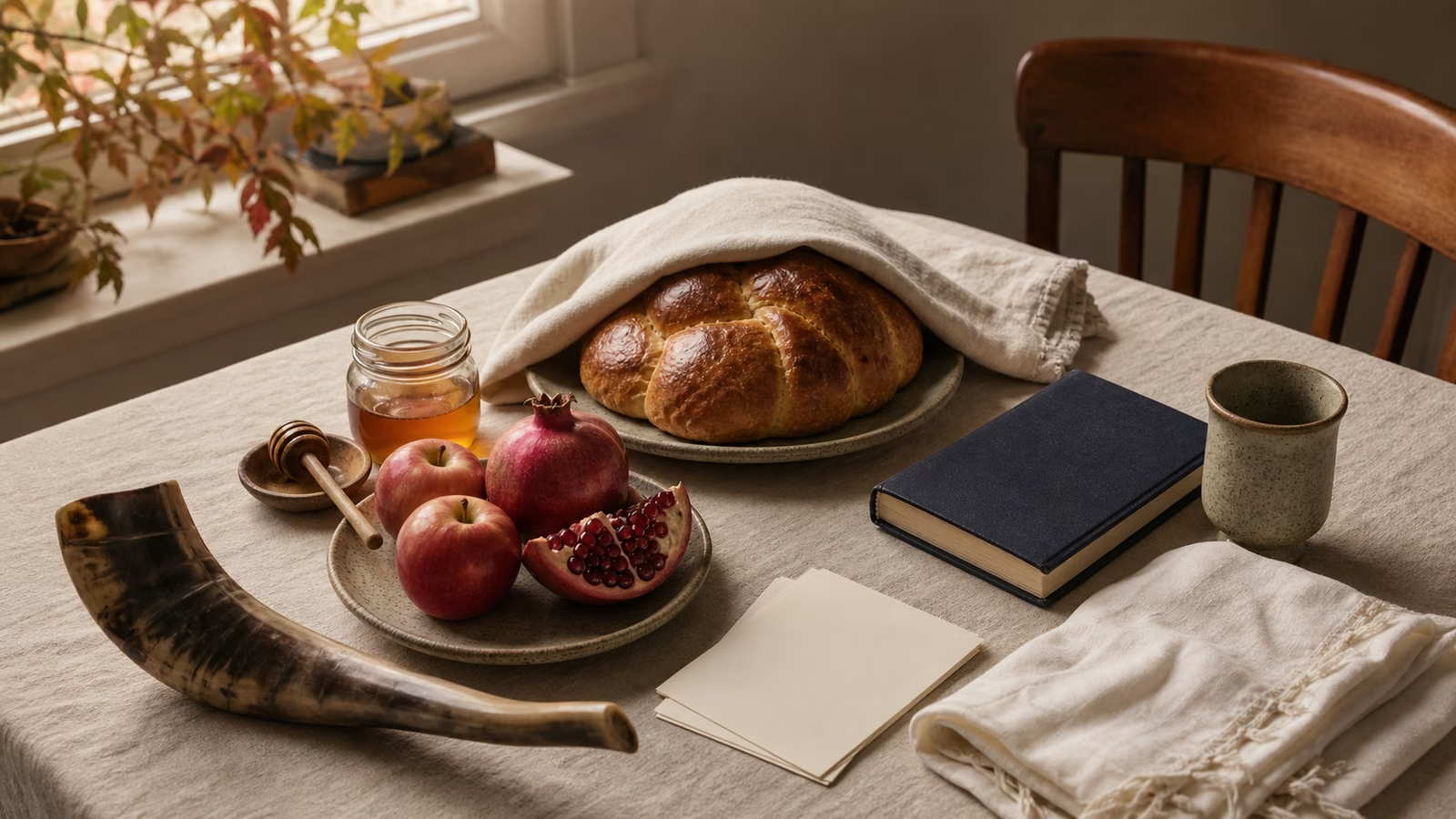
The High Holidays can feel like a doorway that opens before a person is ready. The summer has barely loosened its grip, ordinary schedules are returning, and suddenly Jewish time begins to speak in a more serious voice. Rosh Hashanah arrives with sweetness, greeting cards, apples, honey, round challah, long synagogue services, and the sound of the shofar. Yom Kippur follows with fasting for many adults, white clothing in some communities, confession, grief, hope, and a closing service that can feel like the last light of a long day.
For a beginner, the season may look like two intense holidays placed close together. In lived Jewish practice, it is more like a slow approach, a crossing, and a return. The High Holidays ask what kind of year has just passed, what needs repair, what must be admitted, what can be changed, and what kind of person might step into the year ahead.
The Jewish Holiday Year places Rosh Hashanah and Yom Kippur at the opening of the fall holiday arc, with Sukkot and Simchat Torah following close behind. This guide stays with the first threshold: the month of preparation, the new year, the ten days of return, and the long day of Yom Kippur. It is written for someone who wants to understand the room before entering it.

The Season Begins Before the Holiday
The High Holidays do not begin with the first apple dipped in honey. They begin in the approach. The Hebrew month of Elul, which comes before Rosh Hashanah, has long been treated as a time of preparation. In many communities the shofar is sounded on weekdays during Elul, not as the full drama of Rosh Hashanah but as a daily reminder. Some people add psalms, study, private reflection, cemetery visits, letters of apology, or careful giving. Some barely notice Elul until the holiday is close. Still, the idea matters: return is easier when it is not rushed.
Jewish Months and Rosh Chodesh helps explain why the month itself matters. Jewish time is not only a set of holiday dates. The month before a major threshold can carry its own mood. Elul asks a person to begin sorting the year before the synagogue seat is found, the meal is planned, or the machzor, the High Holiday prayer book, is opened.
This preparation is not supposed to be theatrical. Much of it is ordinary and private. A person may realize that an apology has been delayed too long. A family may decide where to give tzedakah before the year turns. Someone may reread a difficult message, call a sibling, return borrowed money, change a habit around speech, or admit that a relationship cannot be repaired only by wishing it were softer. The season gives spiritual language to the work people often know they need to do anyway.
Rosh Hashanah Is Sweet, But Not Simple
Rosh Hashanah is often introduced as the Jewish new year, and that is true enough for a beginner’s first map. It begins the year number and opens the Days of Awe. Many communities observe it for two days, while some observe one. The civil dates change each year because the Jewish calendar works differently from the calendar used for most public life, and Jewish holidays begin at sundown.
The sweetness of Rosh Hashanah is visible. Apples and honey ask for a sweet year. Round challah suggests fullness, return, or the cycle of time. Pomegranates, carrots, dates, leeks, fish, or other symbolic foods may appear depending on family and community custom. People greet one another with wishes for a good year. The table can feel generous and hopeful.
But the sweetness is not decoration over an easy mood. Rosh Hashanah is also called a day of judgment, remembrance, and shofar sounding. Its prayers often ask to be written in the book of life. The music can feel grand and trembling. The new year is not treated as a party that denies what has happened. It is a serious beginning that asks for mercy.
The shofar makes that seriousness physical. It is not a polished lecture. It is a ram’s horn, sounded in sharp calls and broken cries. Even someone who does not yet understand the liturgy can feel the difference between ordinary speech and shofar. It wakes the room without explaining itself completely. Some hear alarm, some hear sobbing, some hear coronation, some hear a call from somewhere older than words. A beginner does not need to master every traditional association before noticing that the sound interrupts self-protection.
Teshuvah Means More Than Feeling Sorry
The central word of the season is teshuvah, often translated as repentance, but return is just as important. Teshuvah is not merely feeling guilty. It is a movement back toward truth, responsibility, God, community, and the self one is called to become. Regret may begin the process, but regret alone is not repair.
In practical terms, teshuvah asks for honesty about harm. That can include naming what happened without softening it into excuses, apologizing directly when that is appropriate, making restitution where possible, changing behavior, and accepting that forgiveness cannot be demanded. Jewish teaching distinguishes between wrongs against God and wrongs against other people. Yom Kippur does not erase the need to seek repair with the person who was harmed.
This is one reason the High Holidays can be emotionally demanding. They do not let spirituality float above ordinary ethics. A prayerful person still has to think about the email they sent, the money they owe, the story they repeated, the child they dismissed, the worker they ignored, the parent they avoid, or the promise they keep postponing. The season narrows the distance between synagogue language and daily conduct.
Tzedakah and Giving for Beginners is especially relevant here because repair is not only emotional. Giving before the year turns can become a way to acknowledge responsibility beyond one’s private circle. It should not replace apology, and it should not become a performance. It belongs beside the deeper question of what a person’s resources are for.
The Ten Days Hold the Space Between
The days from Rosh Hashanah through Yom Kippur are often called the Ten Days of Repentance or the Days of Awe. They are not a pause between two unrelated holidays. They are the bridge. Rosh Hashanah opens the year with judgment, memory, and possibility. Yom Kippur seals the season with confession, atonement, and release. The days between ask a person to keep working while ordinary life continues.
That in-between quality can be powerful. You may go to work, pack lunches, answer messages, shop for groceries, or sit in traffic while carrying the knowledge that the year has turned and Yom Kippur is coming. The contrast is not a failure. Jewish life often places sacred time inside practical life rather than removing one from the other. The work of return happens in kitchens, offices, sidewalks, classrooms, and family conversations.
Some people use these days to make phone calls they avoided before Rosh Hashanah. Some give more. Some attend services. Some read or journal. Some do very little outwardly but feel the pressure of the season internally. A beginner should not confuse intensity with success. One honest repair may matter more than a dramatic burst of religious activity that leaves daily behavior unchanged.
Yom Kippur Gives Honesty a Container
Yom Kippur is the Day of Atonement. For many adults, it is marked by fasting from food and drink, though health, age, pregnancy, nursing, medication, eating disorders, and other needs matter deeply. Fasting is not meant to endanger a person or become a contest of endurance. Anyone with a medical concern should follow appropriate guidance from qualified professionals and from trusted religious guidance where relevant.
The day is long because the work is long. Services may include Kol Nidrei on the evening that begins Yom Kippur, repeated confessions, Torah readings, memorial prayers in many communities, and Ne’ilah, the closing service, as the day ends. The liturgy often uses plural language. We have sinned. We have betrayed. We have spoken wrongly. Even private failings are held in a communal voice. That can feel strange to beginners, but it prevents the day from becoming only individual self-analysis. Everyone stands inside a shared human condition.
The confession can be uncomfortable because it includes wrongs a person may not feel they committed personally. One way to understand this is that communal prayer makes room for more than the individual’s private checklist. A person may confess for harms they did, harms they tolerated, harms they benefited from, harms their community carries, and harms they need help recognizing. The words are not meant to produce despair. They are meant to break denial.
If you are new to services, Synagogue and Prayer for Beginners will make the physical and social landmarks less confusing. High Holiday services are often more crowded, formal, and emotionally charged than an ordinary Shabbat morning. People may have assigned seats or tickets in some communities. Books may be different from the regular siddur. Melodies may be seasonal. Nobody expects a newcomer to know everything, but it helps to arrive with patience.
The Body Learns the Day
The High Holidays are not only ideas. They are felt in the body. The sound of the shofar, the sweetness of honey, the ache of fasting for those who fast, the standing and sitting of long services, the texture of a white garment, the dry mouth before Ne’ilah, the first sip after the day ends, and the quiet tiredness afterward all teach something.
This bodily quality can surprise people who assume religion is mainly belief or information. Jewish practice often teaches through repeated actions before full interpretation catches up. A child may remember honey before theology. A newcomer may remember the shofar before the prayer book. Someone returning after years away may remember a melody with more force than a sermon. That is not shallow. It is how memory works.
Everyday Jewish Blessings describes how short pauses over ordinary food train attention. The High Holidays enlarge that same truth. Food, hunger, sound, clothing, speech, and silence all become part of the season’s grammar.
After the Fast, Return Enters Ordinary Time
Yom Kippur ends, often with a final shofar blast and a break-fast meal. The room may feel relieved, tender, tired, hungry, or all of those at once. But the ending is not an escape from the season’s questions. It is the moment when those questions return to ordinary life.
This is why the days after Yom Kippur matter. Some people immediately begin preparing for Sukkot, building a sukkah or making plans to eat in one. The calendar moves from introspection into fragile joy. Even without that next step, a person leaves Yom Kippur with the same phone, the same family, the same habits, the same inbox, and the same world. The difference, if there is one, has to become conduct.
A beginner can start modestly. Learn when the holidays fall this year. Ask a local community what to expect. Let the shofar be strange. Taste the sweetness without pretending the year was simple. Make one apology that is real. Give in a way that protects dignity. Sit through some prayer without demanding instant mastery. Notice what the day brings up in you.
The High Holidays do not ask a person to become new by force. They ask for return, and return is often quieter than reinvention. You come back to truth, to responsibility, to the people you have harmed or neglected, to the practices that steady you, and to the possibility that a year can begin with more honesty than the year before.