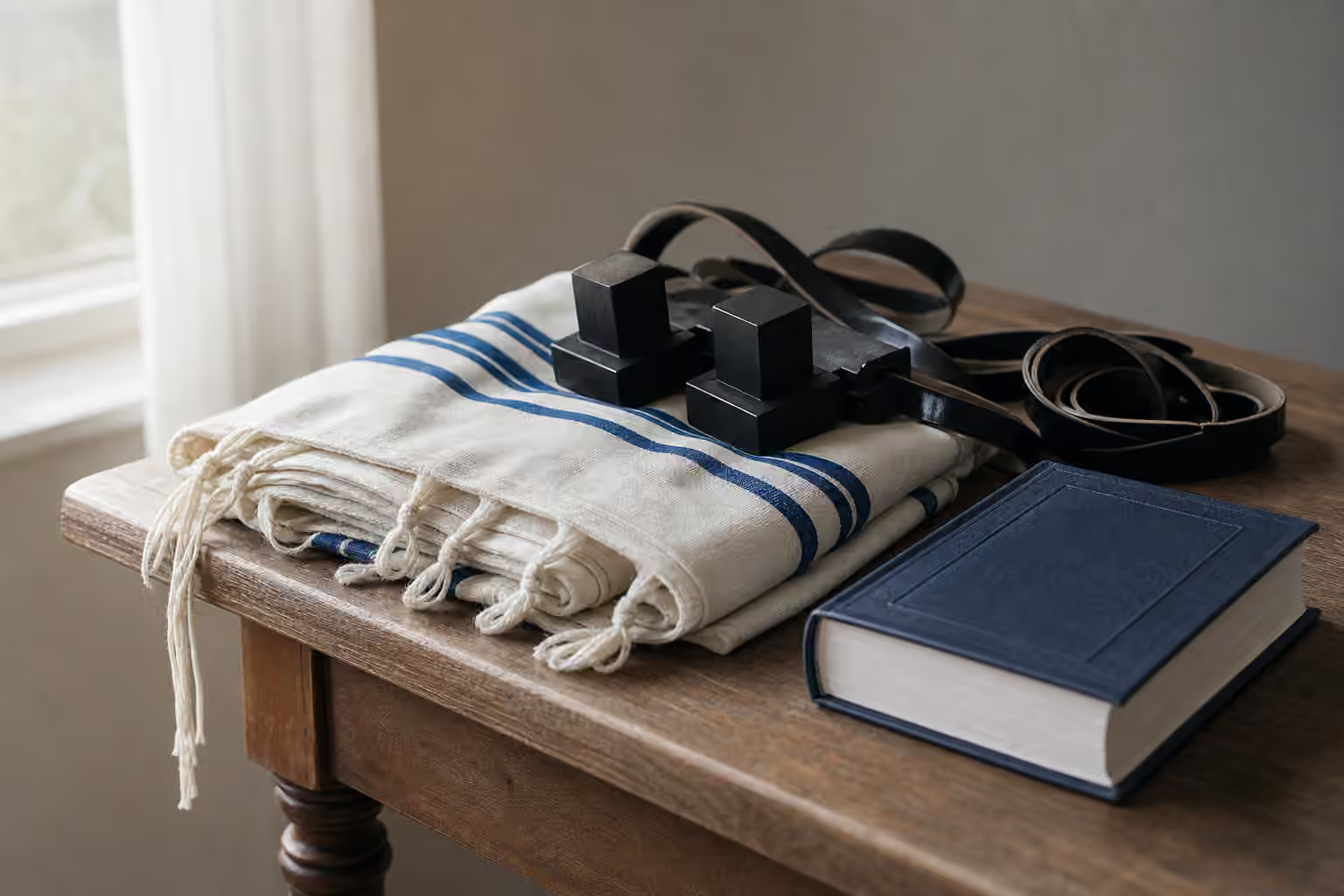
Hebrew in prayer can make a beginner feel both close and far away.
Close, because the sounds may be beautiful even before they are understood. Far away, because the page moves right to left, the letters may be unfamiliar, vowels may appear or disappear, and the room may keep singing while you are still finding the first word. A person can feel drawn to the service and embarrassed by how quickly the language exposes them. For background, read Mishnah Berakhot 5 (prayer and attention) .
The first kindness is to lower the false standard. You do not need full Hebrew fluency to begin praying, visiting synagogue, lighting Shabbat candles, saying blessings, or learning Jewish texts. You do need patience, humility, and a way to keep returning. Synagogue and Prayer for Beginners explains how to enter the room. Hebrew learning helps the room become less blurry over time.
Prayer Hebrew Is a Particular Skill
Learning Hebrew for prayer is not identical to learning modern conversational Hebrew, biblical Hebrew, or academic grammar, though they overlap. A person may speak modern Hebrew and still need help with synagogue melodies. Another may read prayerbook Hebrew well and not order coffee in Tel Aviv. Another may know biblical roots but struggle to follow a fast service.
For beginners, this distinction is freeing. You are not failing because you cannot learn every form of Hebrew at once. Prayer Hebrew begins with the siddur, blessings, repeated phrases, familiar roots, and the sound of communal prayer. Its first goal is not mastery. Its first goal is orientation.
Siddur Navigation for Beginners is essential here. A person who knows where they are in the service can participate more calmly even with limited Hebrew. Page numbers, headings, transliteration, choreography, and repeated sections all work together. Language learning should support orientation, not replace it.
Listening Comes Before Reading for Many People
Many Jews learn prayer language by ear. Children hear a melody long before they can parse the words. Adults entering or returning to Jewish life may also learn through sound: the Shema, the blessing over candles, Kiddush, Modeh Ani, Kaddish, a High Holiday refrain, or a familiar Torah blessing. Listening is not a lesser form of learning. It is how prayer becomes embodied.
Nigunim and Jewish Song for Beginners shows how melody carries memory. Hebrew prayer often travels the same way. A line you cannot yet translate may become recognizable because the tune returns every week. Later, when you learn the words, they land in a place already prepared by sound.
The risk is mumbling forever without curiosity. Listening should invite learning, not replace it permanently. Choose one prayer you hear often and study it slowly. Learn what the first few words mean. Notice which word repeats. Ask where the blessing begins and ends. A small known section can become an anchor while the rest of the service is still unfamiliar.
Transliteration Is a Tool, Not a Moral Failure
Some beginners feel ashamed to use transliteration. They imagine that “real” prayer requires reading Hebrew letters immediately. That shame is not useful. Transliteration can help a person join a blessing, learn sounds, and reduce panic in public. Many communities provide it because participation matters.
At the same time, transliteration has limits. It cannot show every pronunciation tradition accurately. It may flatten letters that sound different in Hebrew. It can make people dependent on English-letter approximations. The best use of transliteration is as a bridge. Let it help you speak while you slowly befriend the Hebrew letters.
Pronunciation also varies by community. Ashkenazi, Sephardi, Mizrahi, Yemenite, Israeli, and local synagogue pronunciations may differ. Minhag for Beginners explains why those differences matter. Do not panic if a word sounds different in another synagogue. Learn the practice of the room you are in, and stay curious about the histories behind other sounds.
Start With Prayers That Return Often
The best first prayers are the ones that come back. Modeh Ani in the morning, the Shema, blessings before food, Shabbat candle blessings, Kiddush, Havdalah, Kaddish responses, and short synagogue refrains can build confidence because repetition does some of the teaching.
Modeh Ani and Morning Blessings is a gentle place to begin at home. Shema at Home for Beginners gives another anchor. These prayers are short enough to return to without needing a full service around them. They also teach that Hebrew learning does not belong only to a classroom. It can sit beside a bed, a kitchen table, a candle, or a doorway.
Choose one prayer and give it a season. Read it in Hebrew letters if you can. Use transliteration if needed. Read a reliable translation. Learn one key word. Say it at the same time each day or week. The point is not speed. The point is making the words less foreign by meeting them honestly.
Meaning Needs More Than Dictionary Work
Translation is necessary, but prayer meaning is not only dictionary meaning. A word may carry biblical echoes, rabbinic interpretation, poetic rhythm, communal memory, and personal association. The word shalom can mean peace, wholeness, greeting, farewell, and more depending on context. The word baruch is usually translated as blessed, but Jewish teachers spend centuries asking what it means to bless God.
This should not discourage beginners. It should protect them from thinking that one English line has exhausted the prayer. A translation opens the door. Commentary, teaching, repetition, and lived practice deepen the room.
Jewish Texts and Learning for Beginners is helpful because prayer is also text. A siddur is not only a script for services. It is a Jewish library in compressed form, full of Torah verses, psalms, rabbinic blessings, poems, and local additions. Learning Hebrew for prayer slowly reveals those layers.
Public Prayer Requires Mercy Toward Yourself
The synagogue can make language learning feel public before it feels ready. You may lose the place. You may enter a response late. You may pronounce a word differently from the people around you. You may discover that a prayer you practiced is sung too quickly to follow. This is normal.
Do not turn every service into an exam. Pick one or two anchors for that visit. Maybe you will follow the Shema carefully. Maybe you will answer amen when you recognize the blessing ending. Maybe you will track page numbers and listen. A service can be successful even if you did not keep up with every Hebrew word.
It also helps to sit near someone kind. A patient neighbor can point to the page without commentary. A class can make the service less lonely. A rabbi, cantor, teacher, or tutor can help you choose what to learn next. The goal is not to hide need. It is to place need where it can be met well.
The Letters Become Familiar by Return
Hebrew letters may look like a wall at first. Then one letter becomes familiar, then a word, then a blessing ending, then a root that appears in several places. The change is gradual enough that you may not notice it until one day the page feels less sealed.
This is how much of Jewish life works. Everyday Jewish Blessings describes small pauses that accumulate. Hebrew prayer language accumulates too. A few minutes repeated honestly can matter more than an ambitious plan abandoned in embarrassment.
The beginner who learns Hebrew for prayer is not trying to earn the right to stand in the room. The room is already teaching. The letters, melodies, translations, teachers, and repeated blessings are all invitations. Accept them slowly. Let one familiar word lead to another. Let sound become text, and text become prayer, and prayer become a place you can find again.