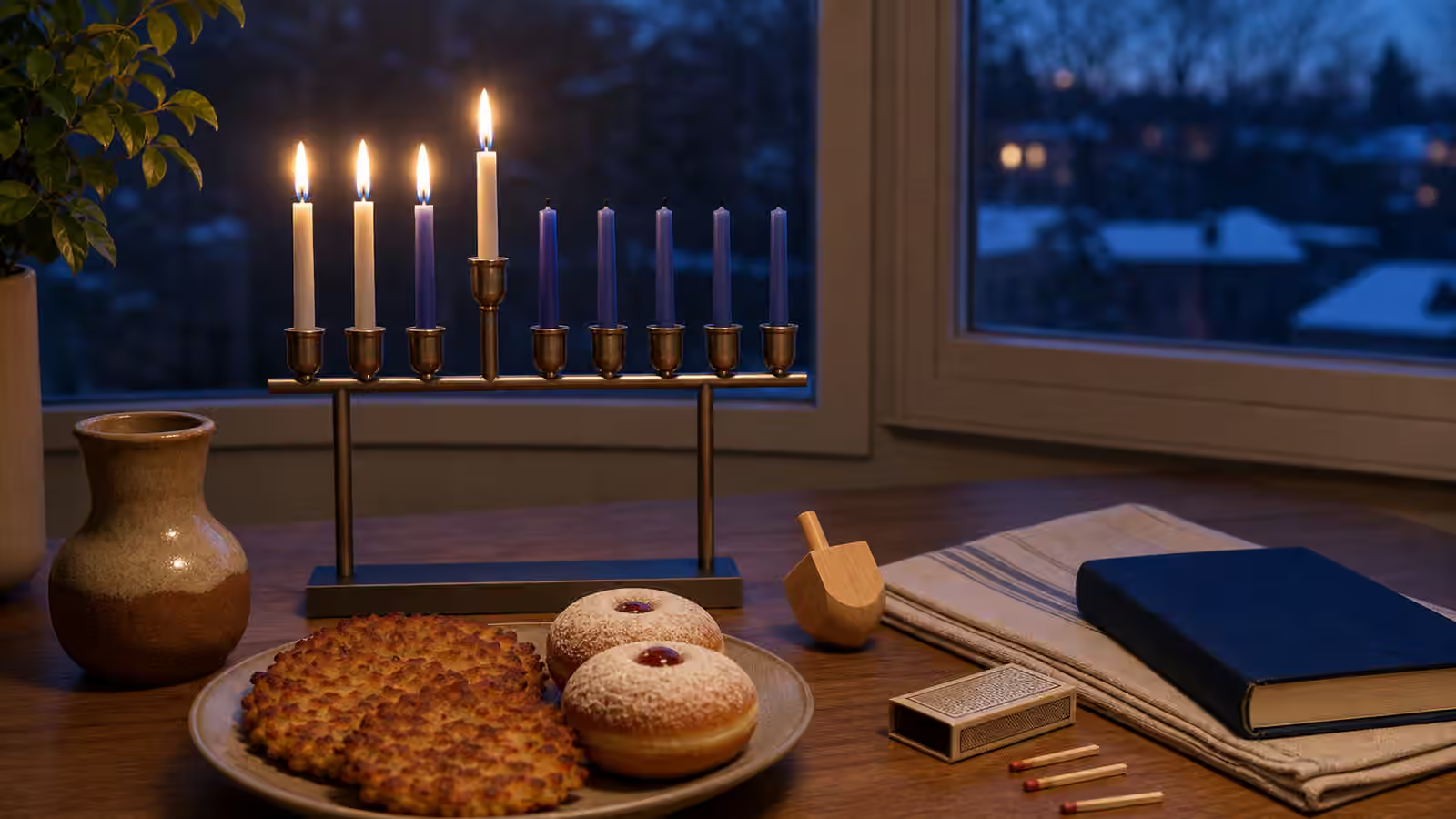
Hanukkah often enters a beginner’s imagination through a window.
Outside, the light is thin and winter has made the evening arrive early. Inside, a small row of flames gathers near the glass. The candles are not large enough to warm the room. They are not supposed to. Their work is more delicate. They make memory visible where neighbors can notice it, where children can count it, where a home can say that Jewish time is passing even when the civil calendar is shouting about other things. For background, read Shabbat 21b (Hanukkah lights) .
That first impression matters because Hanukkah is easy to mistake for something simpler than it is. In many places, it is the Jewish holiday most visible to outsiders because it falls near Christmas. That proximity can flatten the holiday into gifts, decorations, and a seasonal comparison it was never built to carry. Hanukkah is not the Jewish version of someone else’s holiday. It is an eight-day Jewish festival of rededication, light, public memory, family practice, and the stubborn refusal to let small flames be dismissed as small things.
The Jewish Holiday Year places Hanukkah in the wider calendar as a winter festival between the inward work of the fall holidays and the spring drama of Purim and Passover. A dedicated Hanukkah guide can slow down at the windowsill and ask what the candles are teaching night by night.
The Story Begins With Rededication
Hanukkah means dedication. The holiday remembers the rededication of the Temple in Jerusalem after the Maccabean revolt against Seleucid rule in the second century BCE. The historical story includes political pressure, religious coercion, armed resistance, internal Jewish conflict, and the complicated afterlife of victory. It is not a simple children’s tale about good people lighting pretty candles. It comes from a world where Jewish practice, imperial power, and communal survival were under strain.
The rabbinic memory that became central for many Jews focuses on a small amount of oil found after the Temple was reclaimed. The oil was expected to last only one day, but it lasted eight. That story gives the home ritual its emotional grammar. Light continues beyond what seemed possible. Sacred practice is restored after desecration. A community does not merely survive danger; it rededicates itself.
Beginners do not need to master every historical layer before lighting a candle or attending a celebration. It is enough at first to hear the two notes together. There is a story of human courage and conflict, and there is a story of light lasting longer than calculation allowed. Hanukkah holds both. If it becomes only military triumph, it loses tenderness. If it becomes only cozy candlelight, it loses the sharpness of rededication.
The Hanukkiah Teaches Slowly
The lamp used for Hanukkah is often called a menorah in everyday speech, though many people use the word hanukkiah to distinguish it from the seven-branched menorah associated with the ancient Temple. A hanukkiah has places for eight lights, one for each night, and usually a separate helper light called the shamash. The helper is used to light the others and is set apart in some visible way.
The practice builds gradually. One light appears on the first night, then two, then three, until the eighth night is bright with a full row. That slow increase is one of Hanukkah’s most generous teachings. The holiday does not begin with fullness. It begins with almost nothing: a single flame in a dark season. Each night asks the home to return and add a little more.
Customs vary. Some households light one hanukkiah for the home. Some have each person light their own. Some place the hanukkiah in a window. Some place it near a doorway. Some sing many songs afterward; some sing one. Some linger by the candles; some are juggling dinner, children, guests, and work. The details are real, and people should learn them from their own community, siddur, or family tradition. But the beginner can still understand the main gesture. The light is not only private atmosphere. It is a form of witness.
Jewish Home Rituals for Beginners explains how home objects become practices when they mark time, thresholds, gratitude, and responsibility. The hanukkiah belongs in that same household language. It is not a decoration that happens to be religious. It is a seasonal instrument for saying that memory belongs in the room.
The Window Is Part of the Ritual Imagination
Hanukkah has a phrase often translated as publicizing the miracle. That does not mean turning the candles into a performance or making the home into a display case. It means that the light is meant to be seen. A candle hidden deep in a room can still be beautiful, but Hanukkah often asks the home to face outward.
The window changes the feeling of the ritual. A private family act becomes faintly public. People walking past may know what the candles mean, or they may not. A child may ask a question. A neighbor may recognize the season. Someone inside the house may feel the strangeness of placing Jewish memory at the edge between home and street.
That edge can feel different in different places. In a neighborhood with many Jewish homes, Hanukkah lights may appear in window after window, making the street feel like a shared calendar. In a place where Jews are few, one hanukkiah may feel tender, lonely, brave, or quietly ordinary. In some circumstances, people choose placement with care because visibility has emotional and communal weight. Hanukkah does not erase those differences. It teaches through them.
This is why the candles should not be reduced to seasonal cheer. They are small, but they are public memory. They ask what it means for a Jewish home to be visible without becoming theatrical, confident without becoming loud, and careful without surrendering the meaning of the ritual.
Blessings Make the Lighting More Than a Mood
Before lighting, many households say blessings. The words connect the act to commandment, miracle, and time. On the first night, an additional blessing marks the arrival of a new season. A beginner may not know the Hebrew yet. A guest may listen without speaking. A child may stumble through the melody. A household may use a printed sheet, a siddur, or memory. The learning itself belongs to the ritual.
Blessings matter because they keep the candles from becoming only ambience. Beautiful candlelight can make anyone sentimental. A blessing asks for something more disciplined. It says that this flame is not only pretty. It belongs to a story, a practice, a people, and a particular night.
Everyday Jewish Blessings makes a similar point in ordinary meals and small pauses. Jewish blessings do not make the world sacred by magic. They train attention. At Hanukkah, attention is trained through repetition. You return to the same place each night, notice the number has changed, say words that many others are saying in their own homes, and let the act become familiar enough to hold memory.
After lighting, many communities sing songs. Some songs are playful and beloved by children. Some are older and more solemn. Some families add stories, divrei Torah, photographs, calls with relatives, or a few minutes of quiet. The candles burn down while the room continues around them. That continuing is part of the beauty. A Jewish home is not a stage set. It is a lived place where holiness and logistics share the table.
Oil Foods Tell the Story Through Taste
Hanukkah food often remembers oil. In many Ashkenazi homes, that means latkes, potato pancakes fried until crisp at the edges. In many Israeli and other communities, sufganiyot, jelly doughnuts or other fried doughs, have become iconic. Other Jewish communities have their own fried foods, sweets, cheese dishes, or local customs. The holiday has traveled through many kitchens, so no single menu owns it.
The point is not that fried food is spiritually superior. The point is that taste carries memory. Oil in the pan echoes oil in the story. A child may understand the holiday first through the smell of frying before any history lesson lands. An adult may remember a grandparent’s kitchen, a synagogue party, a paper plate at school, or a cold walk home after seeing candles in a window.
Food also creates practical questions. If you are bringing something to a Hanukkah gathering, ask about kosher standards before cooking or buying. A Beginner Kosher Kitchen is useful here because Hanukkah foods often move between homes, classrooms, synagogues, offices, and mixed-observance families. A sealed item with a certification someone trusts may be more welcome than a homemade dish from a kitchen the host cannot use. Hospitality is not proved by effort alone. It is proved by making food that the other person can actually receive.
Dreidel, Gelt, and Gifts Are Not the Center
Dreidel is a spinning-top game associated with Hanukkah in many communities. Children may play for chocolate coins, nuts, pennies, or small treats. The Hebrew letters on a dreidel are often explained as standing for a phrase about a great miracle happening there, or here in versions used in Israel. The game can be light, noisy, and brief. It gives children something tactile to do while adults talk too long.
Gelt, meaning money, also belongs to Hanukkah memory in many families. It may appear as actual coins, chocolate coins, small gifts, or charitable giving. Gift-giving has grown in some places partly because of the surrounding December culture. That does not make every present shallow. Families express affection in the language available to them. A book, a modest toy, a useful object, or a small ritual item can become part of the season’s warmth.
Still, gifts should not be allowed to swallow the holiday. When Hanukkah becomes mainly a pressure to shop, the candles have to compete with expectations they were never meant to serve. The better question is what will help the holiday feel like Hanukkah rather than a Jewish wrapper around the surrounding consumer season. Sometimes that means one thoughtful gift. Sometimes it means no gifts at all. Sometimes it means gelt for children and a family conversation about giving.
Tzedakah and Giving for Beginners pairs naturally with Hanukkah because light and responsibility belong together. A household can set aside money each night, choose a cause as a family, or connect gift-giving with help for others. The practice should not become a lecture that drains joy from children. It can simply teach that celebration expands when it remembers people beyond the room.
Hanukkah Is Beloved Without Being the Whole Calendar
Because Hanukkah is visible in many societies, beginners sometimes assume it is one of the central pillars of Jewish life in the way Shabbat, Passover, Rosh Hashanah, Yom Kippur, or Sukkot are. Hanukkah is deeply loved, but its place in the tradition is different from the biblical pilgrimage festivals and the High Holidays. That distinction can be freeing. The holiday does not need to be inflated to matter.
Jewish life is not a competition among holidays. Each has its own weight and work. Shabbat returns every week to teach rest and sacred time. Passover turns liberation into a table of questions. The High Holidays ask for repair and return. Sukkot asks people to dwell in fragile shelter. Purim teaches hidden courage and communal joy. Hanukkah asks for public light, rededication, and memory that grows slowly in the dark.
Jewish Months and Rosh Chodesh helps explain why Hanukkah moves on the civil calendar but arrives in its own Jewish month rhythm, beginning on the twenty-fifth of Kislev. Knowing that rhythm can keep the holiday from feeling like a floating December accessory. It belongs to the Jewish calendar first, even when the surrounding culture notices it through its own seasonal lens.
The Small Flame Is the Point
The most useful beginner move is to resist both extremes. Do not make Hanukkah so small that it becomes only candles and doughnuts. Do not make it so large that it has to answer every question about Jewish identity in a non-Jewish season. Let it be what it is: eight nights of returning to a light, telling an old story, eating foods that remember oil, making a home visible, and asking what rededication might mean now.
Rededication is not only a historical word. A person can rededicate a room, a habit, a relationship to Jewish learning, a family rhythm, a tzedakah practice, or a willingness to be seen. A community can rededicate itself after conflict, weariness, grief, or drift. A home can discover that one small flame is not enough to banish darkness, but it is enough to begin counting.
That is why Hanukkah is not embarrassed by smallness. The first night does not apologize for having only one light. It trusts the next night to come. The candles grow because someone returns, strikes a match, says the words, and places the flame where it can be seen.
Stand near the window after lighting if you can. Let the room settle. Notice the street, the glass, the table, the people who are there, and the people whose memories brought the practice to you. The lights are fragile, but they are not decorative. They are a quiet refusal to let Jewish memory stay hidden in the dark.