Counting the Omer begins when Passover is still in the room.
The seder may be over, but the taste of matzah has not disappeared. Chairs are pushed back from the table. Someone is wrapping leftovers. The haggadot are stacked, the sink is full, and the story of leaving Egypt still feels close enough to touch. Then, on the second night of Passover, Jewish time begins a quieter movement. One day is named. Then another. Then another, until seven full weeks have been counted and Shavuot arrives. For background, read Leviticus 23 (festivals and counting) .
The Passover Seder for Beginners explains how the Exodus story is taught through food, questions, and memory. Shavuot for Beginners explains how that story moves toward Torah, learning, and covenant. Counting the Omer is the path between them. It is not as visible as a seder plate or a Shavuot study table, but it gives the space between the holidays a daily voice.
The Count Makes the In-Between Holy
The Omer is a count of forty-nine days, beginning on the second evening of Passover and ending the night before Shavuot. The name comes from an ancient measure of grain and from the offering brought during the Temple period, connected with the barley harvest. In the Torah’s language, the people count seven complete weeks from that offering. In later Jewish life, when the Temple offering is no longer brought, the count remains as a daily practice of speech, memory, and expectation.
This matters because empty time can blur. Passover is dramatic. Shavuot is meaningful. The weeks between them could easily become ordinary calendar space, a stretch of workdays, meals, school schedules, errands, and weather. Counting the Omer refuses to let the bridge disappear. Each evening says that freedom is moving somewhere. The Exodus is not treated as a finished escape scene. It becomes the beginning of a journey toward teaching, obligation, and a more demanding kind of life.
For a beginner, that may be the most important lesson. Jewish time is often learned by return, but the Omer is learned by sequence. Yesterday matters because today’s count depends on it. Tomorrow matters because the path is not complete. The practice trains a person to notice continuity. It says that spiritual change is not only made of peak moments. It can also be made of small, repeated acts that keep a person oriented.
A Small Practice With Careful Edges
The actual practice can be brief. After nightfall, many Jews say a blessing and then state the count for that evening, naming both the day and, once weeks begin to accumulate, the weeks and days. A siddur, calendar, phone reminder, synagogue announcement, or household card can help. Some people count alone beside a kitchen table. Some count after evening prayers in synagogue. Some count with children before bedtime. Some say the words in Hebrew, some use transliteration, some use translation while learning, and some listen before they are ready to lead.
Everyday Jewish Blessings is useful here because the Omer can feel like a cousin of ordinary blessing practice. The moment is short, but it asks for attention. The person pauses, remembers which day it is, says the blessing if appropriate, and gives the day its number. Nothing large has to happen for the practice to matter. A single evening at the counter can become part of a forty-nine-day arc.
The careful edges of the practice are also part of its character. Because the count is meant to be continuous, missing a day raises practical questions. Many traditional instructions teach that if someone forgets at night, they should count during the following day without the blessing and then resume counting with a blessing the next evening. If a full day is missed, they continue counting the remaining nights, often without the blessing. A beginner who wants to observe carefully should follow a trusted siddur, teacher, or local community practice rather than treating a short summary as the final word.
That caution is not meant to make the Omer frightening. It simply shows that Jewish practice takes sequence seriously. The count is not a vague mood of anticipation. It has structure, and structure gives the small act weight.
Grain, Freedom, and Learning Belong Together
The agricultural layer of the Omer can surprise people who first meet it as a spiritual countdown. The image of grain is not decorative. Passover, the Omer, and Shavuot are connected to harvest seasons as well as to liberation and Torah. The ancient Omer offering was tied to barley. Shavuot is associated with first fruits and with the wheat harvest. The calendar holds body and covenant together.
That combination is very Jewish. Food, land, labor, blessing, study, and memory are not sealed away from one another. The same season that remembers leaving bondage also notices ripening grain. The same path that leads toward Torah passes through the field. When a person counts the Omer at a dining table, the practice can quietly gather those layers: bread that is not eaten during Passover in the usual way, matzah that remembers haste and affliction, grain that becomes offering, and learning that becomes a form of receiving.
This is why the Omer can make The Jewish Holiday Year feel less like a series of separate festivals. The year is telling one story in several registers. Passover speaks in matzah, questions, and freedom. The Omer speaks in days, weeks, and restraint. Shavuot speaks in Torah, study, flowers in some communities, dairy customs in many homes, and the Book of Ruth. The connection is not accidental. The calendar wants the beginner to feel that freedom, sustenance, and responsibility are braided together.
Restraint Gives the Season a Different Sound
Many communities treat parts of the Omer as a semi-mourning period. The details vary widely. Some avoid weddings, haircuts, public celebrations, or certain kinds of music for part of the count. Some observe the restrained period from Passover until Lag BaOmer, the thirty-third day. Some observe a different stretch. Some customs are shaped by Sephardi, Ashkenazi, Hasidic, Mizrahi, or local communal practice. Some Jews experience the Omer mainly through the nightly count and barely encounter these restrictions at all.
Because customs differ, the best beginner rule is simple in spirit, even if the details can be complex: ask before assuming. If you are planning a celebration, attending a wedding, getting a haircut before a family event, or choosing music for a communal gathering during the Omer, learn what your community or host observes. This is not about turning ordinary life into suspicion. It is about understanding that a season can carry more than one mood.
The restrained tone is often connected in rabbinic memory with the deaths of Rabbi Akiva’s students and with a failure of respect among learners. That memory gives the season a moral sharpness. Counting toward Torah is not only counting toward receiving beautiful ideas. It is also counting through a warning about how people who learn together can fail one another. A beit midrash, a study hall, is not holy merely because books are open. It also needs humility, patience, and respect.
Lag BaOmer changes the texture in many communities. Bonfires, outdoor gatherings, weddings, music, haircuts for young children in some traditions, and celebrations connected with Rabbi Shimon bar Yochai may appear, depending on the community. For a newcomer, Lag BaOmer can feel like a sudden bright clearing inside a restrained season. That suddenness is part of the lesson. Jewish time often makes room for interruption, relief, and complexity without flattening the whole season into one feeling.
Counting at Home Can Be Quietly Powerful
Counting the Omer is well suited to home practice because it does not require elaborate equipment. A printed calendar, a blank card moved each night, a note near the kitchen, a family reminder after dinner, or a page in a siddur can be enough. Jewish Home Rituals for Beginners describes how a home becomes Jewish through repeated gestures, not only through dramatic occasions. The Omer belongs to that kind of home rhythm.
The challenge is remembering. Passover has obvious sensory anchors. Shavuot may have synagogue schedules, study sessions, flowers, or food customs. The Omer can slip away because it asks for one quiet minute in the evening. Many people need a visible prompt. There is no shame in that. The point is not to prove that memory is effortless. The point is to build a practice that returns you to the count.
Some people add study or reflection to each night. Kabbalistic traditions connect the seven weeks and forty-nine days with combinations of spiritual qualities, often called sefirot. Other people read a short teaching, notice a word from the day’s count, write a sentence in a notebook, or simply say the count and go on with the evening. A beginner does not need to adopt every layer at once. The count itself is already a real entrance.
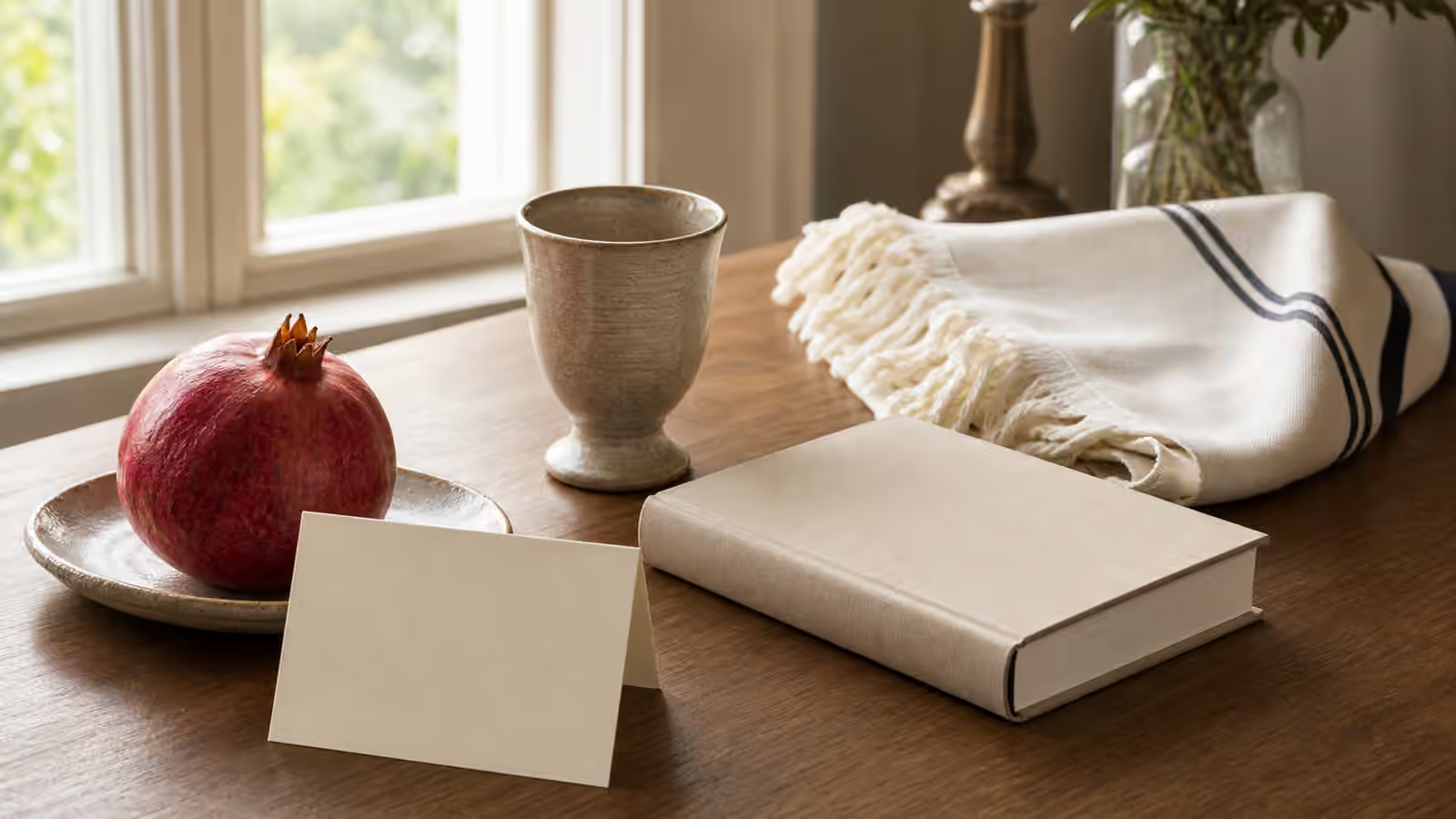
If children are present, the Omer can teach patience in a concrete way. A child can see that not every Jewish practice is a party, meal, costume, or candle. Some practices are cumulative. They become meaningful because the family returns to them. A blank card becomes a counted day. A table becomes a marker of time. The child learns that Jewish life includes waiting, not as passive delay but as prepared attention.
Arrival Is Not the End of the Work
When the forty-nine days are complete, Shavuot arrives. The count stops because the bridge has brought the calendar to its next place. But the meaning of the Omer does not end with the final number. It has taught that liberation and learning belong together, that memory can be daily, and that a person can carry a large story through a small habit.
For someone new to Jewish life, counting the Omer is a gentle but demanding practice. It does not ask you to host a room, cook a meal, master a long service, or explain every law. It asks you to return, evening after evening, and say where you are on the way from Passover to Shavuot. Some nights will feel meaningful. Some will feel ordinary. Some will be remembered late, or forgotten, or said with a tired voice while the kitchen light is the only light still on.
That honesty is part of the practice. The Omer is not a performance of perfect attention. It is a way of letting the calendar tug attention back into place. Passover says that leaving Egypt matters. Shavuot says that receiving Torah matters. Counting the Omer says that the road between them matters too.