Water quality is one of those topics that can quietly take over a plant hobby if you let it. Somewhere online there is always a suggestion that your tap water is the reason for every brown tip, and that only rainwater, distilled water, or an expensive filter will save your plants. For the large majority of houseplants in the large majority of homes, that is not true. Ordinary tap water is fine, and the far more likely culprit is how often you water, not what you water with. This guide is about telling the rare real water problem apart from the many imagined ones.
Start by ruling out watering habits
Before you blame the water, look at the watering. Brown tips, crispy edges, and general decline are far more often produced by inconsistent moisture, low humidity, a root-bound pot, or a fertilizer routine that is too heavy than by anything dissolved in your tap. If a plant swings between bone dry and soaking wet, the roots take damage and the leaf tips are usually the first to show it. Fix the rhythm first. If you are still building that skill, stop watering houseplants on a schedule and overwatered vs underwatered houseplants are the place to start, because a plant that is watered well tolerates ordinary tap water far better than a stressed one.
What is actually in tap water, and why it usually does not matter
Most municipal tap water contains some combination of chlorine or chloramine used for disinfection, dissolved minerals like calcium and magnesium that make water “hard,” and sometimes fluoride. At the concentrations found in drinking water, these are tolerated by the great majority of common foliage plants: pothos, philodendron, snake plants, monstera, and their many relatives grow perfectly well on it for years. Chlorine in particular largely off-gasses, and even when it does not, the amounts are small. Letting water sit out overnight before using it is a harmless habit if you enjoy it, but for hardy plants it is not doing much.
The minerals matter more over the long term than any single watering, because they do not leave. Every time you water and the water evaporates or is used by the plant, a little of the dissolved salt stays behind in the mix. This is the real mechanism behind most genuine water-quality trouble, and it is also the one that is easy to manage without buying anything.
Reading salt buildup
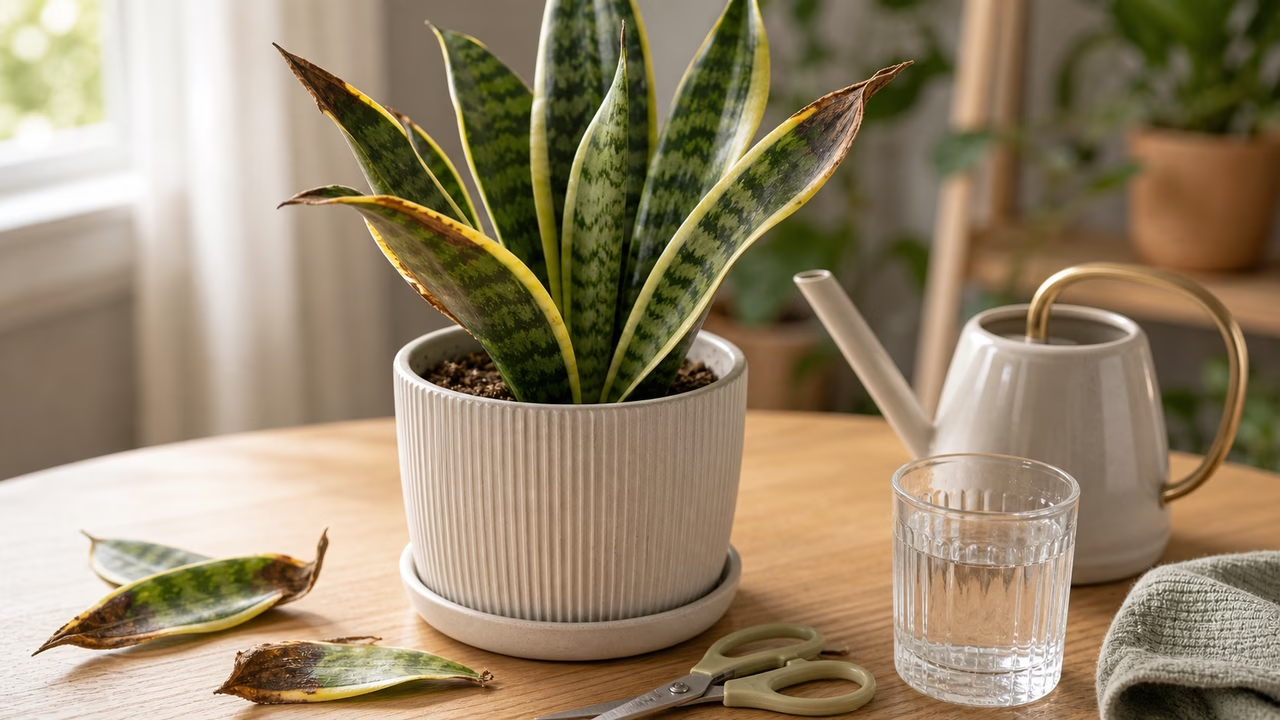
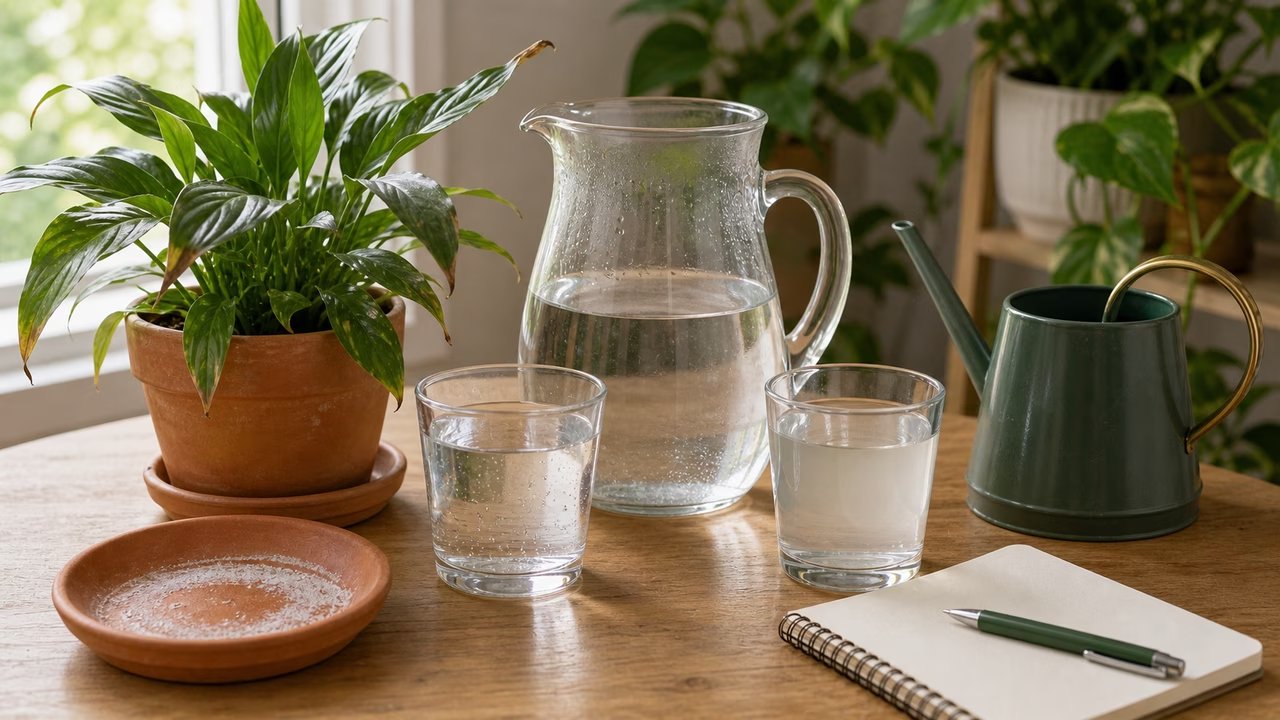
The signature of accumulated salts is a white or yellowish crust on the surface of the soil and around the rim of the pot, sometimes creeping up an unglazed terracotta wall. Fertilizer contributes to this at least as much as tap minerals do, so a crusty pot is often a sign of overfeeding rather than bad water. Alongside the crust you may see uniform brown, dry leaf edges, more pronounced on older leaves. The plant is not being poisoned dramatically; it is dealing with a slowly rising salt concentration in the root zone.
The fix is flushing. Every couple of months, take the plant to a sink or tub and run water slowly through the pot several times its volume, letting it drain completely each time. This dissolves accumulated salts and carries them out the bottom. Flushing only works if the water can leave freely, which is why an open drainage hole matters so much here; a pot sitting in its own runoff is being re-soaked in the very salts you just tried to remove. Drainage holes and cachepots explained covers making sure that path is clear, and scraping off the visible crust before you flush helps too.
The genuinely sensitive plants
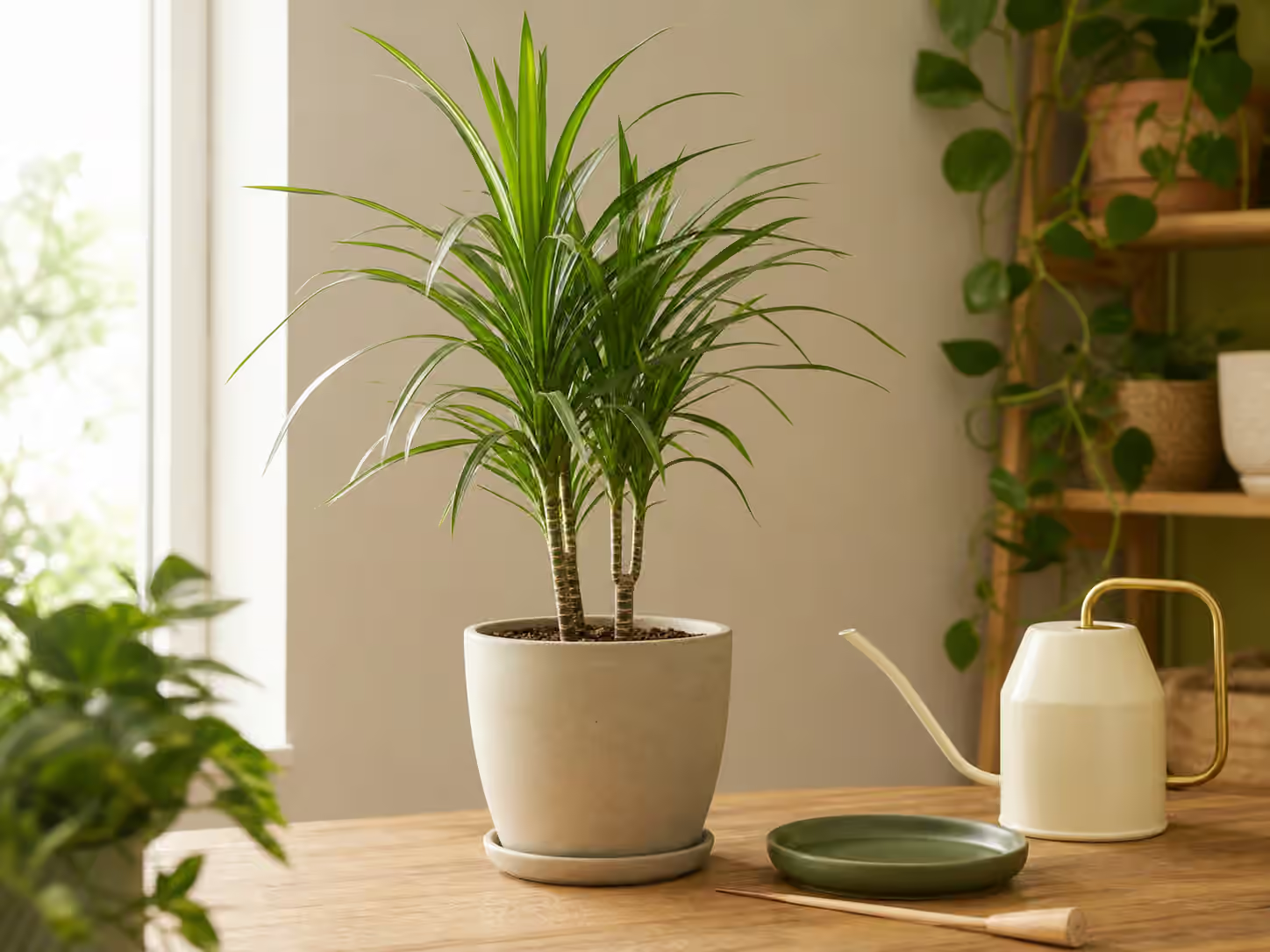
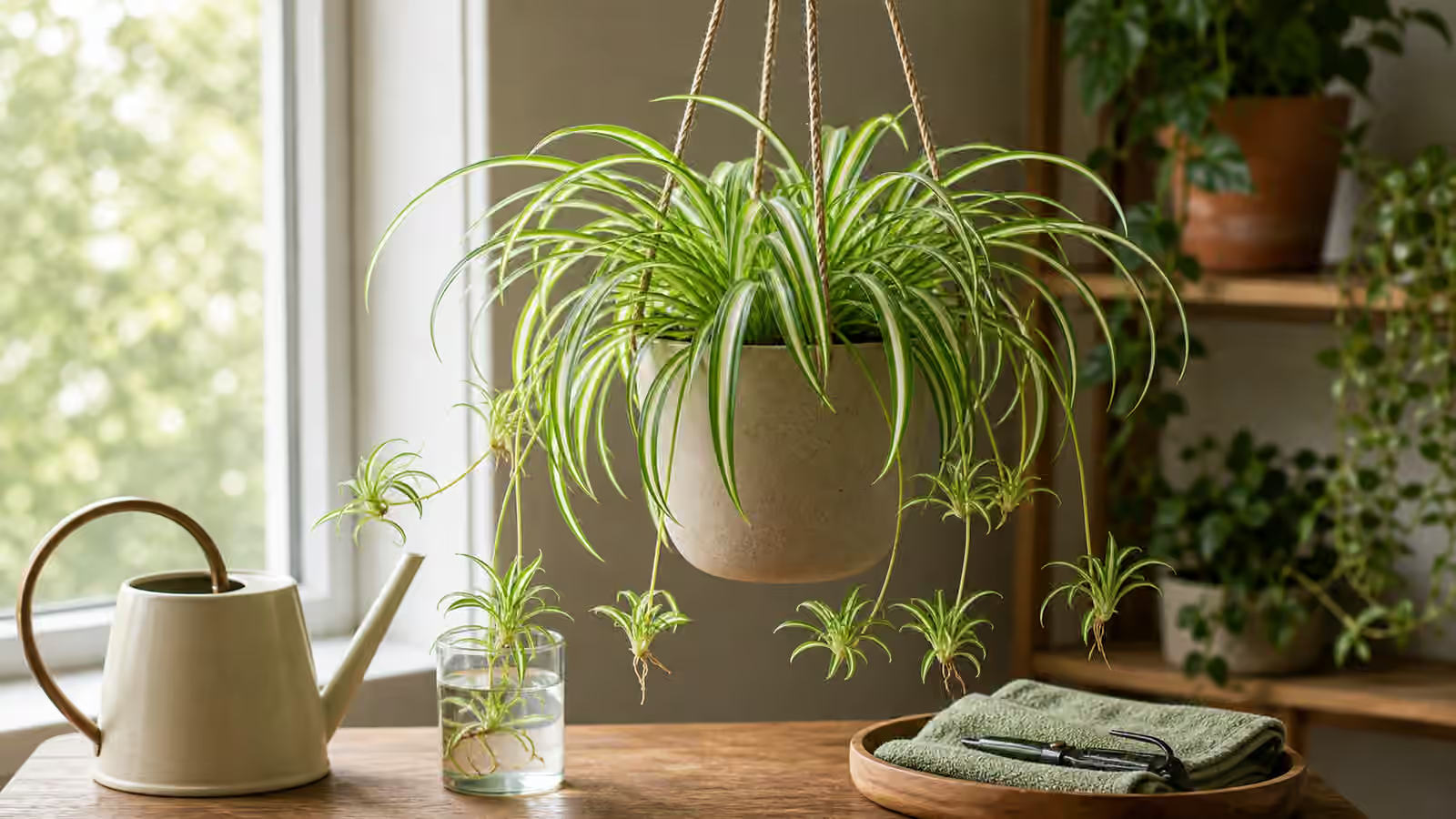
There is a short list of plants that are more particular, and it is worth knowing so you can spend your effort where it counts. Prayer plants and calatheas, some dracaenas, spider plants, and certain palms are known to show brown tips in response to fluoride and, sometimes, to chlorine or hard water. Even with these, poor watering and dry air usually contribute more than water chemistry, but if you have corrected everything else and a truly sensitive plant is still tipping, switching that one plant to filtered, distilled, or collected rainwater is a reasonable experiment. Change it for that plant, watch for a few weeks, and keep the change only if new growth actually comes in cleaner. There is no reason to filter water for a pothos because a calathea is fussy.
Avoid overcomplicating it
The trap with water quality is spending money and worry on a problem that is not there. Reverse-osmosis systems and gallon jugs of distilled water are real tools for a real, narrow set of cases; they are not a baseline requirement for growing houseplants. If your plants are generally healthy and you have one plant with brown tips, the odds strongly favor watering, humidity, or feeding, and brown tips on houseplants works through those causes in order. A softener-treated water supply is one genuine exception worth flagging: water softeners often replace hardness minerals with sodium, which plants dislike, so if your home is softened, watering from an unsoftened outdoor tap or with collected water is the better default.
The calm next action
Use ordinary tap water for tolerant plants and stop treating water as the prime suspect. Reserve your attention for two concrete things: flush the pot every couple of months if you see salt crust, and, only for a genuinely sensitive plant that is still struggling after everything else is right, try switching that single plant to filtered or collected water and judge it by the next few leaves. Let the pattern of the plant guide the change rather than a rule you read.
As always, this is everyday care, not a substitute for professional help. If a plant keeps declining after watering, drainage, and feeding are corrected, or if the situation ever crosses into pet safety, pesticide use, or heavy mold, step out of the home experiment and reach the appropriate qualified professional.
Helpful references
For the horticultural background, see the University of Maryland Extension guide to watering indoor plants , its companion on overwatered indoor plants , and West Virginia University Extension’s overview of common houseplant care .