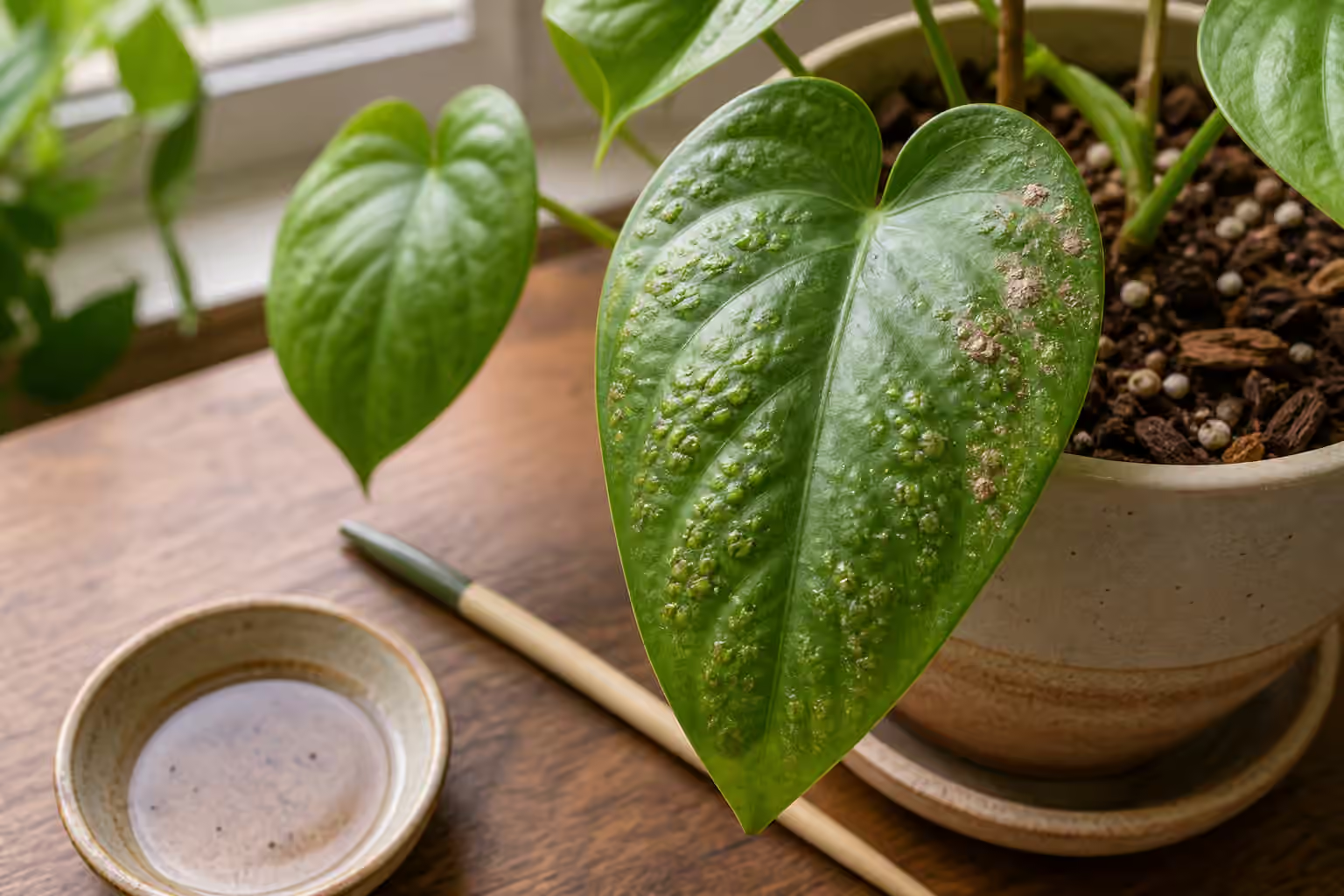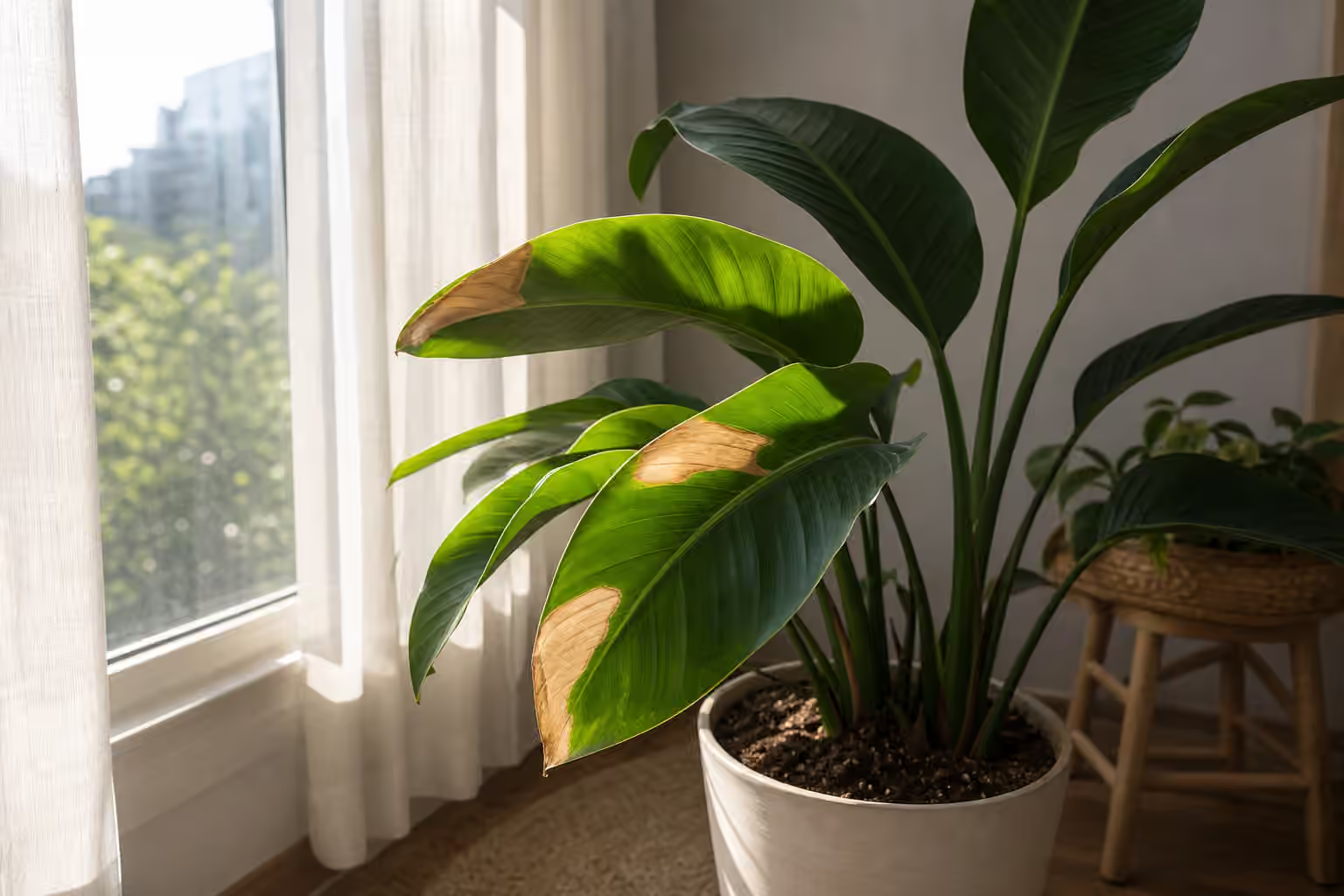
Sunburn on houseplants is not always dramatic. It may look like pale tan patches, crispy windows in the leaf, bleached areas where green tissue used to be, or dry edges on the side that faces the glass. Because scorched tissue often turns brown, it can be confused with underwatering, fertilizer burn, low humidity, pests, or general decline. The useful question is not only what color the mark has become, but where it appeared and what changed before it showed up.
Read the pattern on the plant
Leaf scorch usually has a location. It appears on the leaves most exposed to direct sun, on the side of the plant facing the window, or on tissue that was suddenly moved into stronger light. The marks may be sharply placed where sun hit through a window, or they may be broad pale patches on tender leaves that were not acclimated. New growth can burn faster than older leaves because it has not hardened to the new exposure. Thin leaves often show damage sooner than thick, waxy, or upright leaves.
Brown tips have a different feel. They usually start at the very end or margin of many leaves and often relate to water quality, drying stress, fertilizer salts, root stress, or low humidity. Pest damage may appear as stippling, distorted growth, sticky residue, webbing, or marks clustered near veins and new leaves. Old mechanical damage may be random and stable. Sunburn is more likely when a mark lines up with light and appears after a move, a curtain change, a seasonal sun-angle shift, or a plant growing into a brighter part of the window.
The timing matters because light indoors changes more than people expect. A plant that handled a window in winter may scorch in late spring or summer when sun is higher, hotter, or less filtered by clouds. A plant that lived several feet from glass may burn when moved directly onto the sill. A sheer curtain opened for a week can change the plant’s exposure. The guide to Seasonal Light Changes Indoors is useful here because scorch is often a seasonal placement problem, not a sign that the whole plant is failing.
Do not treat scorch as thirst automatically
A scorched leaf is dry in the damaged area, but that does not mean the rootball is dry. This distinction prevents a common mistake. Someone sees crispy tissue, waters heavily, and creates a second problem in the pot. Before watering, lift the pot and check the mix below the surface. If the rootball is still moist, adding water will not repair burned tissue. If the rootball is dry and light, water thoroughly and drain, but still address the light exposure that caused the mark.
Sun and heat can travel together near a window. A leaf may burn because light is too direct, because the glass area is hot, or because the pot is warming and drying faster than expected. In those cases the plant may need a slight move, filtered light, or a different angle rather than a large retreat into low light. Pulling a light-loving plant all the way across the room can solve scorch while creating legginess, slow drying, and weak growth. Bright Indirect Light Explained helps with that middle ground: bright enough for growth, softened enough to avoid harsh direct exposure for plants that need protection.
Fertilizer is another tempting but wrong response. Scorched tissue does not need feeding, and a stressed plant may be less able to use fertilizer well. If the plant is otherwise stable, wait for clean new growth before returning to normal feeding. If the rootball is struggling, solve water, drainage, and light first. The same principle applies to pruning. You can remove a fully dead leaf or trim a crispy edge for appearance, but pruning does not cure the condition. The cure is a better exposure pattern.
Acclimate plants to brighter light
Plants can adapt to stronger light, but they need time. A plant grown in greenhouse shade, shipped in a box, or displayed under store lighting may not be ready for direct sun through glass. Start in bright indirect light and increase exposure gradually if the plant type benefits from more sun. Morning sun is often gentler than hot afternoon sun, though actual conditions depend on the window, season, climate, and room. Watch the leaves after each change instead of assuming a label phrase describes your exact window.
Acclimation is especially important for plants newly brought home. A nursery plant may look sturdy, but its leaves were built for the light it used to receive. If you place it immediately against a bright pane, old leaves can become a test surface for conditions they did not grow under. The slower approach in Acclimating a New Houseplant gives you time to inspect the plant and learn the room before assigning a permanent exposure.
Use the plant’s orientation deliberately. If only one side is exposed, rotate cautiously and not too often. A sudden rotation can present shaded leaves to harsh direct light before they are ready. For some plants, it is better to filter the window with a sheer curtain or move the pot a short distance back than to keep spinning the plant in and out of stress. If a plant is reaching strongly toward light while also scorching on one leaf, the issue may be uneven exposure rather than simple excess.
Separate scorch from pest and disease worries
Scorched patches are dead tissue. They do not spread across a leaf in the same way a pest population moves or a rot condition advances. A burned area may dry, crisp, and look more obvious over time, but the pattern should stabilize after the plant is moved out of the harsh exposure. If new patches continue appearing on leaves that are not receiving direct sun, revisit the diagnosis. Check leaf undersides, stems, soil moisture, pot weight, water quality, and recent product use.
Do not ignore pests simply because light seems likely. Spider mite stippling can become more visible near bright windows, and dry, warm conditions can favor pest trouble. Sticky residue, webbing, moving dots, distorted new growth, or repeated marks on protected leaves are reasons to inspect more closely. Spots, Speckles, and Marks on Leaves is the better companion when the marks are scattered, dotted, or not clearly tied to exposure.
Water quality and mineral salts can also create brown margins that people call scorch. Those problems usually do not line up neatly with window direction. They may affect many leaves across the plant and progress with repeated watering or fertilizer use. Water Quality for Houseplants and Brown Tips on Houseplants are stronger references when damage is mostly at tips and edges rather than exposed patches.
Recovery looks like clean new growth
A sunburned leaf will not turn green again. This is disappointing, but it also simplifies expectations. The goal is to stop new damage, keep enough healthy leaf area for the plant to function, and wait for future growth to show whether the placement is working. If a leaf is mostly green with a burned patch, it can often stay. If it is mostly dead, collapsing, or inviting decay in a crowded plant, remove it with clean tools.
After the move, keep care steady. Do not compensate with extra water unless the pot is actually dry. Do not repot unless roots or soil conditions justify it. Do not fertilize heavily to “replace” lost leaf tissue. Watch the next leaves. If they emerge firm, appropriately colored, and free of new patches, the plant has adjusted. If they are smaller, pale, stretched, or slow, the new location may be too dim. Good scorch care is not about hiding from light. It is about finding the amount and timing of light the plant can use without losing tissue faster than it can grow.