Philodendrons earned their beginner reputation because many of them forgive imperfect rooms, but that does not mean they thrive on neglect. The group includes trailing heartleaf types, upright self-heading types, and climbing aroids that eventually want more structure. They can all look calm in a shop pot, then behave differently once home light, watering habits, pot size, and support start to matter. Good philodendron care begins with reading which kind of plant you actually have and what the room is asking it to do.
Start With The Growth Habit
A heartleaf philodendron that trails from a shelf is not asking for the same handling as a large-leaved climbing philodendron reaching sideways from a pot. A compact self-heading philodendron may hold a rosette shape for a long time, while a vining type keeps extending from nodes along a stem. Look at where new leaves emerge, whether aerial roots appear along the stem, and whether the plant is naturally hanging, leaning, or making one upright trunk. That habit tells you how to water, prune, support, and inspect the plant.
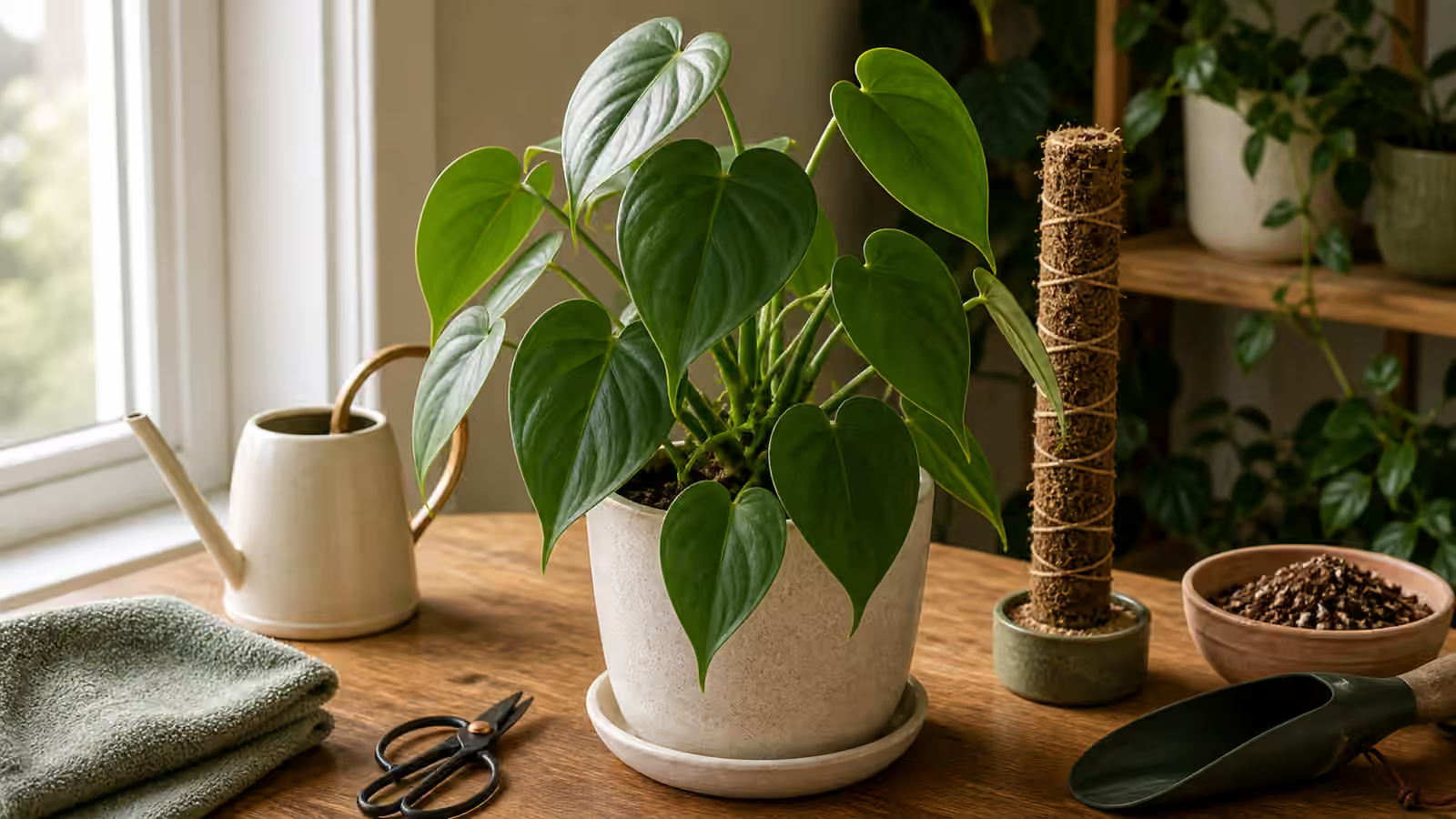
Vining philodendrons often grow well in hanging pots or on shelves where the stems can trail. They can also be trained up a stake, pole, or small trellis, but support should solve a real problem rather than imitate a display photo. If the plant is producing long bare spaces between leaves, better light may matter more than a pole. If stems are heavy and the pot is tipping, support and pot stability belong together. The guide to Supporting Climbing Houseplants is useful when the plant has outgrown its tidy starter shape.
Self-heading philodendrons usually need room around the pot more than a tall support. Their leaves can be broad, their petioles can snap if crowded, and the plant can lean toward light if one side is much brighter. Rotate only enough to keep the plant balanced. Constant spinning can make it harder to tell whether a leaf mark came from sun, handling, or an old rub against a wall.
Give Bright Light Without Hot Glass
Most common philodendrons tolerate medium indoor light, but tolerance is not the same as strong growth. In a dim corner, a trailing philodendron may survive while producing smaller leaves, longer gaps between nodes, and a slower drying pot. In brighter indirect light, the same plant can make fuller growth and use water more predictably. If you are unsure what the plant receives, use the habits in How to Check Indoor Plant Light before changing the pot or fertilizer.
Direct sun is a different question. Gentle early light may be fine for many plants, but hot afternoon sun through glass can scorch leaves, especially if the plant was raised under filtered greenhouse light. A bleached patch on the window-facing side tells a different story than a whole plant slowly stretching. Move the plant by degrees when the light changes sharply. A philodendron can adapt, but it reads sudden moves through leaf posture, drying speed, and the quality of its next growth.
Variegated philodendrons need special patience because pale sections have less chlorophyll. They often need brighter indirect light than solid green forms, but the pale tissue may burn more easily. The answer is not darkness. It is a measured placement where the whole plant has enough energy without the tender portions pressing against hot glass. Watch new leaves rather than old scars. Old damage will not turn green again, while new leaves show whether the placement is improving.
Water For The Pot You Have
Philodendrons dislike stale wet roots more than they dislike a short dry interval. Let the top portion of the mix begin to dry, then check deeper with a finger, skewer, or pot weight before watering. A plant in a small airy nursery pot near good light may dry quickly. A similar plant in a glazed decorative pot, dense mix, or low light may stay wet much longer. The plant name does not decide the schedule. The actual pot and room do.
Water thoroughly when the plant needs it, then let excess drain away. Small nervous sips can leave dry pockets in the center and damp mossy conditions on top. If the rootball becomes hydrophobic, water may run down the side without wetting the center, which makes the plant look thirsty even after watering. Bottom Watering Houseplants and Compacted and Hydrophobic Potting Mix explain those situations in more detail.
Yellow leaves near the base are not always a disaster. An old leaf may yellow as the plant redirects energy. Several yellowing leaves at once, especially while the pot remains heavy, deserve a closer look at drainage, mix density, light, and roots. A drooping plant can be dry, but it can also be sitting in wet mix with roots that are not functioning well. When the evidence is confusing, compare it with Overwatered vs Underwatered Houseplants before pouring more water into a heavy pot.
Prune For Fullness, Not Punishment
Philodendron pruning should have a purpose. A long vine can be shortened above a healthy node to encourage a fuller shape and create cuttings. A damaged leaf can be removed when it is mostly spent. A stem growing into a walkway or light fixture can be redirected. Pruning is not a cure for low light, and it is not a way to force instant bushiness from a plant whose base is shaded and tired.
The node is the important part. On a trailing philodendron, each leaf attaches at a point where roots and future shoots can emerge. Cuttings need viable nodes, not just pretty leaves. The parent plant also needs healthy nodes left behind if you want new growth. If you want to refresh a sparse plant, Pruning Leggy Houseplants and Propagation: Water, Soil, Division, and Patience give a slower method than cutting everything short and hoping.
Do not remove every imperfect leaf from a young philodendron. Leaves with small tears, old brown edges, or shipping marks still feed the plant. A plant stripped for appearance may look neater for a day and weaker for weeks. Judge recovery by the next few leaves, the firmness of stems, and how predictably the pot dries.
Watch For Pests In Tight Places
Philodendrons can hide pests in rolled new leaves, stem joints, aerial roots, and places where vines overlap. Mealybugs and scale can sit along petioles and nodes. Thrips can distort new growth. Spider mites are less famous on thick philodendron leaves than on thin foliage, but dry crowded shelves can still invite trouble. Inspection is easier when vines are not tangled into an unmoving mass.
Set aside a few minutes when watering to lift vines, look under leaves, and check the newest growth. Sticky residue, cottony patches, fine speckling, silvery streaks, distorted leaves, or moving dots are reasons to isolate and inspect more carefully. The goal is to notice early, not to spray first and identify later. Houseplant Pest Inspection Routine pairs naturally with philodendrons because their easygoing reputation can make owners skip the close look.
A steady philodendron is rarely dramatic. It sits in useful light, dries at a readable pace, and grows from healthy nodes. It may need a support as it matures, or it may be happiest trailing from a shelf. It may shed an old leaf without being in decline. The work is to keep the plant readable: enough light, enough air in the pot, careful watering, occasional pruning, and regular inspection. When those basics are in place, philodendrons feel forgiving because the room is finally making sense to them.