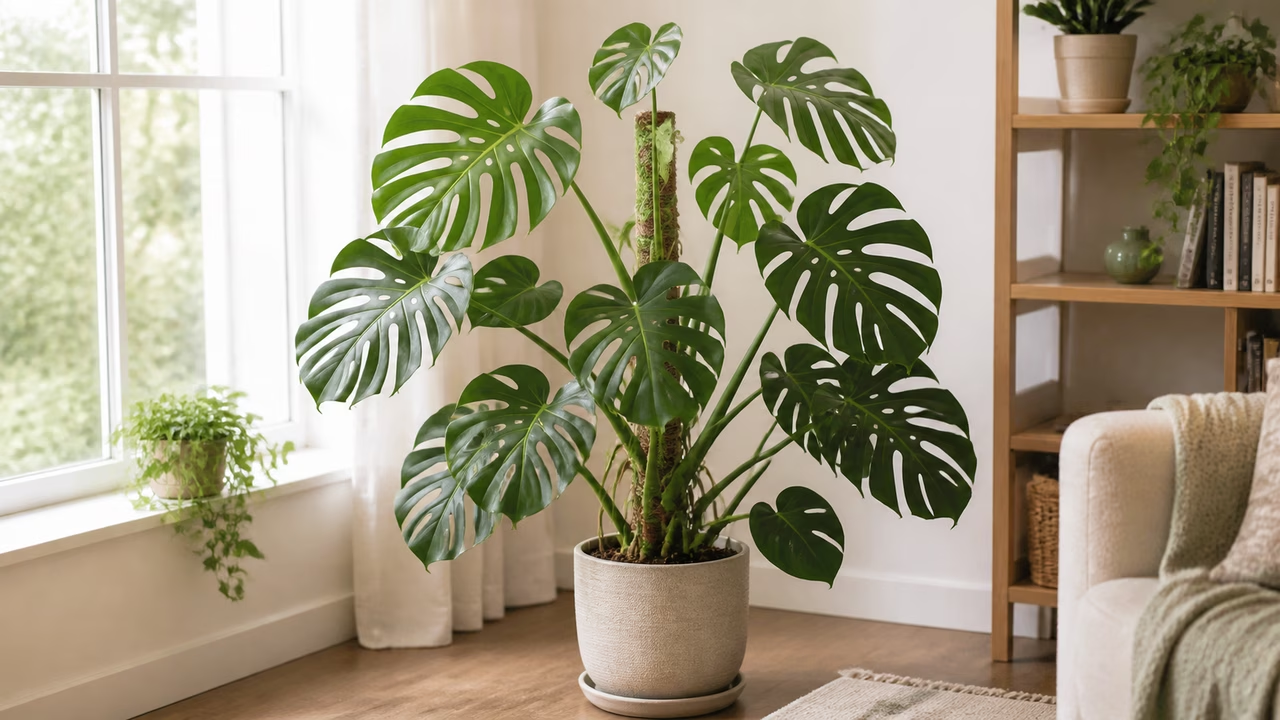
Almost everyone who buys their first Monstera deliciosa is buying a picture in their head: enormous glossy leaves torn through with dramatic holes and splits. The plant is genuinely easygoing, but that mental picture causes most of the early disappointment, because those famous fenestrations are not a default setting. They are something the plant earns when its conditions are right, and understanding what actually drives them is the whole game.
The truth about the holes
A young Monstera puts out solid, heart-shaped leaves with no splits at all, and that is completely normal. Fenestration develops as the plant matures, and it develops fastest in bright light with something to climb. In a dim corner, a Monstera will survive for years and simply keep making plain juvenile leaves, growing leggy and reaching toward the nearest window with long bare stretches of stem. So when a beginner worries that their plant is broken because the new leaf came out solid, the honest answer is usually that the plant is young, the light is modest, or both. Time plus light, not any special feed or trick, is what unlocks the splits.
This is the single most useful thing to internalize: nearly every “why won’t my Monstera do the thing” question comes back to light and maturity. No fertilizer, misting routine, or leaf-shine product substitutes for a well-lit spot and patience.
Light it actually wants
A Monstera thrives in bright, indirect light: a few feet back from an east or west window, or near a bright south-facing one with a sheer curtain softening the harshest hours. It tolerates a fair amount of shade, which is exactly why it ends up in gloomy corners and then sulks. It does not love long stretches of direct midday sun on its leaves, which can scorch and bleach them. If your plant is stretching, making small leaves, and leaning hard toward the window, it is telling you plainly that it wants more light than it is getting, and moving it is the first thing to try. If you have read the clinic’s notes on bright indirect light explained , you already know how to judge a spot by shadow sharpness.
Watering by the pot, not by the leaf
Monsteras like their potting mix to dry out partway before the next drink. The reliable approach is to water thoroughly until it runs from the drainage holes, then wait until the top couple of inches feel dry before watering again. Because these plants can carry big, thirsty foliage, beginners sometimes assume a large leafy plant must need constant water, and they overdo it. The size of the leaves is not a watering signal. Soil moisture and the weight of the pot are the signals. A Monstera sitting in perpetually wet soil is heading toward root problems no matter how impressive it looks on top. If the soil stays soggy for many days after watering, the fix is usually a chunkier, better-draining mix and a pot with real drainage, not a change in schedule.
Yellowing lower leaves on an otherwise healthy plant are often just age or a stretch of soil staying too wet. Reading the difference is easier once you have looked through the clinic’s guide to overwatered vs underwatered houseplants .
Support changes everything
In the wild, a Monstera is a climber that hauls itself up tree trunks, and it behaves the same way indoors given the chance. Provide a sturdy moss pole, a coir pole, or a wooden plank, and the plant will begin producing larger, more deeply cut leaves as it climbs, because climbing is tied to its maturing habit. Left to sprawl across the floor or flop out of the pot, it tends toward smaller leaves and a messy, unstable shape. A support is not a cure for a light problem or a root problem, and beginners sometimes add a pole hoping it will fix a plant that is really just under-lit. Treat the pole as what it is: the thing that lets a well-lit, healthy Monstera express its climbing nature and grow up rather than out.
Aerial roots are not a problem to solve
The thick, cord-like roots a Monstera sends out from its stem alarm a lot of new owners, who assume something has gone wrong and start snipping them all off for tidiness. These aerial roots are entirely normal and healthy; they help the plant anchor to its support and take in moisture and air. You can gently guide them into the moss pole or down into the pot, and you can trim the odd one that is genuinely in the way, but there is no need to remove them wholesale. Cutting every aerial root does nothing to help the plant and removes a structure it uses to climb and stabilize itself.
A note on pets and the sap
Monsteras contain insoluble calcium oxalate crystals, so chewing on the leaves can irritate the mouth of a curious pet. This is a placement matter more than a reason to avoid the plant: keep it where animals cannot reach it, and if a pet does chew a leaf, follow up with your veterinarian rather than treating it as a plant-care question. The Pawstead notes on pet-aware home setup are a good companion here.
What good early care looks like
For the first months, resist the urge to fuss. Put the plant in the brightest indirect spot you can offer, give it a support to climb, water it when the top couple of inches dry out, and then watch. New leaves will come slowly, and the exciting moment when a leaf first emerges with a split or a hole is the plant confirming that its conditions are working. If growth stalls or leaves come in small and solid, look to light and support before anything else, because that is where the answer nearly always lives.
When to step back
A plant clinic can help you read your Monstera, but it is not a substitute for professional help. If a pet has ingested part of the plant, if you are dealing with a serious pest outbreak or mold, or if the plant keeps declining after you have genuinely corrected light, support, and watering, that is the point to bring in a veterinarian or another qualified professional.
For related beginner reading, see the clinic’s guides to pothos care and philodendron care , close relatives that share many of the same habits.