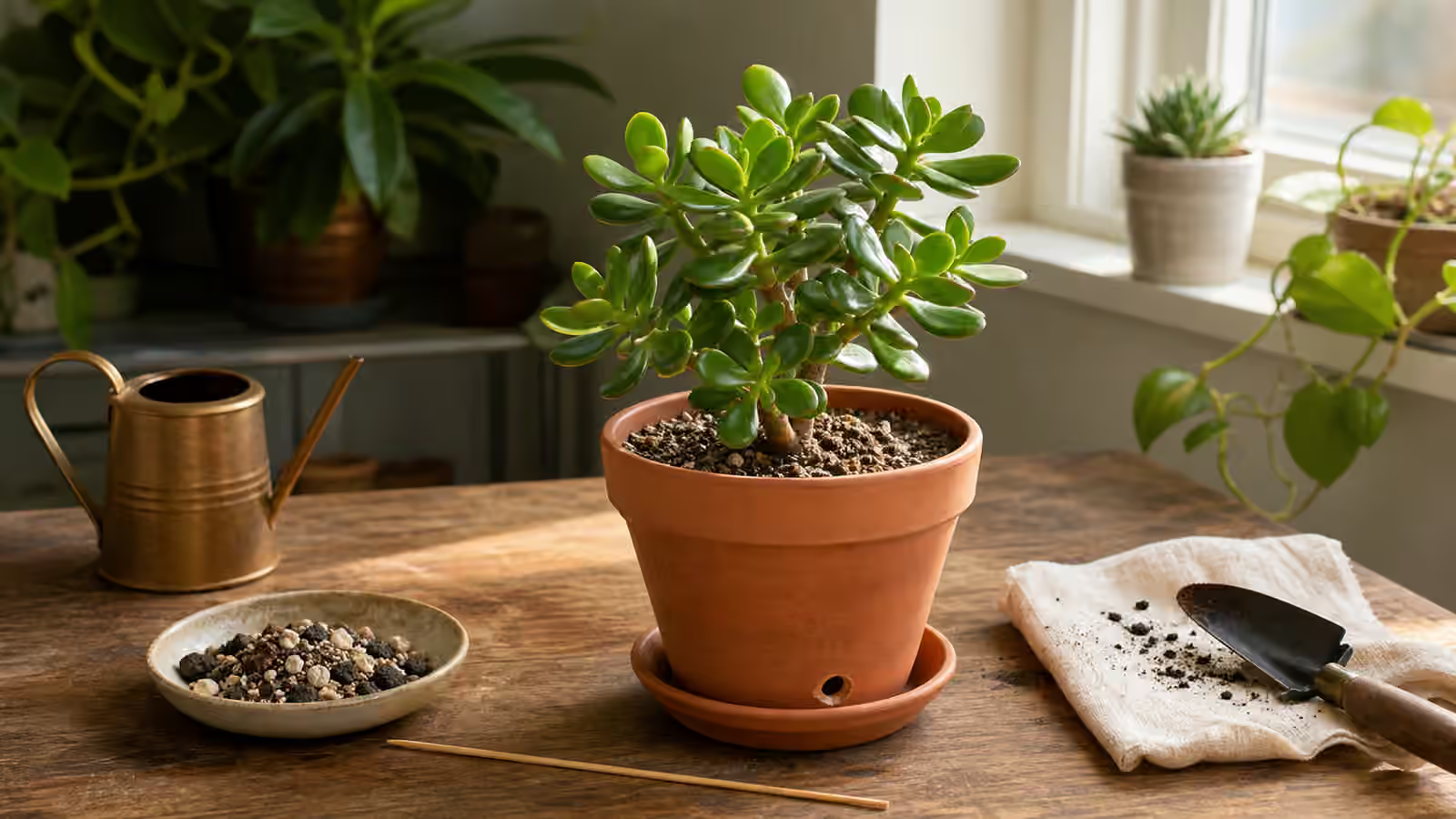
A jade plant can live for years indoors, but it should not be treated like a low-light decoration that happens to be green. Thick leaves and woody stems store water, which makes jade forgiving of dry intervals and unforgiving of soggy habits. Most indoor failures are simple: too little light, too much water, dense soil, an oversized pot, or pruning that tries to shape a weak plant before the growing conditions are right.
Treat Jade As A Light-Hungry Succulent
Jade plants need strong indoor light to stay compact and sturdy. In too little light, stems stretch, leaves become spaced farther apart, and the plant leans toward the window. The pot also dries more slowly, which makes overwatering more likely. A jade can remain green in a dim room for a while, but survival is not the same as good growth. The plant’s stored water can hide decline until roots or stems have already weakened.
A bright window is usually the best indoor starting point. Gentle direct sun or several hours of strong light can suit many jade plants after acclimation. Sudden exposure through hot glass can still scorch leaves that were grown in softer light, so move gradually and watch the plant. Red edging on leaves can be a normal response to brighter light, while pale burned patches or collapsed tissue suggest too much too quickly. Sunburn and Scorched Houseplant Leaves can help separate light stress from general browning.
If your room lacks a bright window, a grow light may be more useful for jade than hopeful shelf placement. The light must be close and strong enough to matter, not a decorative lamp across the room. Grow Lights for Houseplants is worth reading before buying because distance and coverage decide whether the plant receives usable energy.
Water Fully, Then Let The Pot Dry
Jade watering should be complete and infrequent rather than tiny and constant. When the plant is ready, water the mix thoroughly and let excess drain away. Then wait until the pot has dried appropriately before watering again. Thick leaves are the plant’s storage system. They are not an invitation to keep the soil lightly damp.
The leaves can help you read the plant, but they should not be the only signal. Slight softness or faint wrinkling can suggest thirst if the pot is dry. Yellowing, translucent leaves, mushy stems, or sudden leaf drop while the mix is wet can point toward overwatering or root stress. A jade with damaged roots may look thirsty because it cannot take up water, not because it needs more. That is why pot weight and deeper checks matter.
Use a wooden skewer, finger test, and pot weight together. Learn what the pot feels like after watering and when dry. The interval may be short in a small terracotta pot in strong light and much longer in a glazed pot during a dark winter. Stop Watering Houseplants on a Schedule is the central habit. The plant does not know your calendar.
Choose A Pot And Mix That Let Roots Breathe
A jade plant wants a root zone that drains and dries clearly. Dense all-purpose potting soil in a large pot can stay wet too long, especially indoors. A gritty, open mix with mineral structure helps water move through while leaving air around the roots. Perlite, pumice, coarse mineral particles, bark, and similar components can all play a role depending on what you have. The exact recipe matters less than the behavior: water enters the mix, drains from the pot, and the center does not remain stale.
Terracotta can help in some homes because it breathes and dries faster, but it is not required. A plastic or glazed pot can work if the mix, light, and watering rhythm match it. Drainage holes are not optional for a beginner jade setup. A sealed decorative container makes it too easy to trap water under a plant that expects dry-down. If you love a cachepot, use it as an outer sleeve and remove the inner pot to water and drain. Drainage Holes and Cachepots Explained covers that arrangement.
Avoid overpotting. Jade stems and leaves can make the plant look substantial while the roots occupy a much smaller space. A pot only slightly larger than the root ball is usually safer than a decorative leap. If the plant is top-heavy, solve stability with a heavier outer pot, measured pruning, or a better pot shape rather than burying a small root system in too much damp mix.
Prune After The Plant Has Enough Energy
Jade plants can be pruned into handsome branching shapes, but pruning works best when the plant has enough light to respond. Cutting a stretched jade in a dim room may only produce more weak growth. Improve the light first, then prune with a clear purpose: remove damaged stems, shorten a leggy branch, encourage branching above a node, or reduce top-heaviness.
Use clean tools and avoid removing too much from a stressed plant at once. A healthy jade can often handle pruning, but a plant recovering from rot, low light, or a recent repot needs leaves to rebuild. Let cut surfaces dry before exposing them to heavy moisture. Do not leave fallen leaves and stem pieces rotting on the soil surface because they make inspection harder and can keep the surface messy.
Propagation is one reason jade plants become family plants. Leaves and stem cuttings can root when allowed to callus and then placed in suitable conditions. Still, propagation should not become a way to avoid fixing the parent plant’s room. A cutting in the same weak light and wet soil will meet the same limits. Houseplant Propagation Methods gives the broader method and patience needed.
Read Leaf Drop Without Panic
Jade plants may drop leaves after a move, after a sharp light change, during overwatering, during underwatering, or when a branch is shaded. The pattern matters. A few older leaves dropping after relocation is different from many soft yellow leaves falling from a wet plant. Leaves shriveling while the pot is dry tell a different story from leaves turning translucent while the pot is heavy.
Cold windows can also stress jade plants, especially when the pot is damp and light is weak. Keep the plant away from freezing glass, drafty doors, and heat vents that swing conditions sharply. Seasonal changes matter too. In winter, lower light and cooler rooms slow water use. In summer, a sunny sill may dry the pot faster. Seasonal Light Changes for Houseplants helps connect those shifts to care.
Pests are less common than watering problems but still worth checking. Mealybugs can hide in branch joints, and scale can sit quietly on woody stems. Inspect before fertilizing or pruning a stalled plant. If you see cottony clusters, bumps that scrape off, sticky residue, or distorted new growth, isolate and confirm the issue. Mealybugs and Scale on Houseplants is the next stop.
Jade care is mostly restraint with enough light. Give the plant a bright place, a drying pot, an open mix, and water only when the root zone is ready. Prune when the plant has energy to answer. Accept slow, woody growth as part of the charm. A jade plant does not need constant encouragement; it needs a room that matches its succulent design.