Brown tips are the houseplant complaint most likely to send an owner into a flurry of unnecessary action. A crisp brown edge appears on an otherwise green leaf, it looks like distress, and the instinct is to do something big: fertilize, repot, drench, or start misting several times a day. In most cases the brown tip is the mildest kind of message a plant can send, a record of a small stress that has already passed, and the calmest response is nearly always the right one. Learning to read the tip for what it is keeps you from treating a cosmetic blemish as an emergency.
What a brown tip usually is
The tip of a leaf is the end of the plant’s plumbing. Water travels from the roots out to the leaf edges and tips last, so whenever the plant runs short on water at the wrong moment, the tips are the first tissue to feel it and the first to dry out. That is why brown tips so often accompany inconsistent watering, low humidity, a buildup of mineral salts in the soil, or the dry blast of a heat vent nearby. It is also why brown tips, once formed, do not turn green again. The tissue is dead, not sick, and no amount of care will re-green it. This is the single most useful fact about the symptom: you are not trying to cure the brown tip, you are trying to keep the next leaf from developing one.
Reading the tip like a small clock
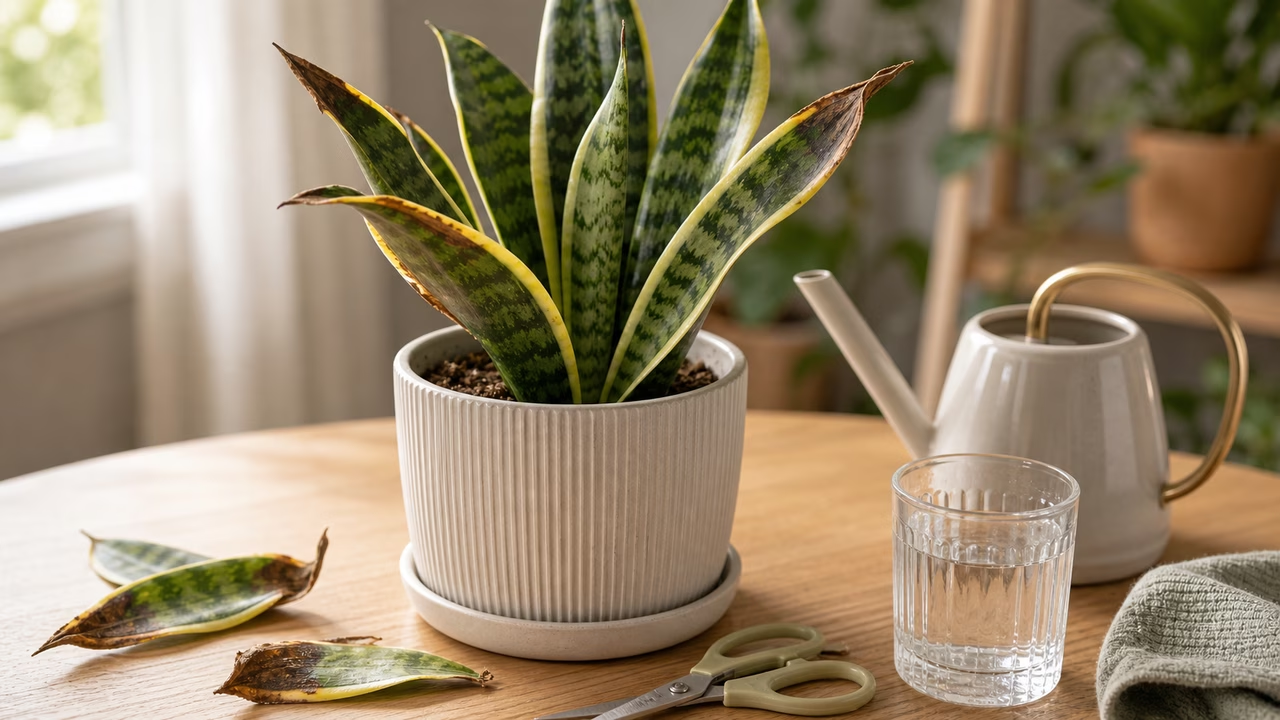
Before changing anything, look closely at how the browning is arranged, because the pattern carries the diagnosis. A tip that is dry and crisp while the rest of the leaf stays firm and green points toward a water or air issue rather than a disease. A narrow band of yellow between the green and the brown often marks the boundary where the leaf lost the fight gradually. If the browning is confined to just the extreme tips across many leaves, it usually reflects the room’s dry air or the swings in your watering. If instead the browning is spreading in from the edges and creeping toward the center, or if leaves are also going soft and yellow from the base, that is a different and more serious story, more likely about roots and overwatering than about tips alone, and worth reading alongside the yellow leaves guide.
The water-quality wrinkle
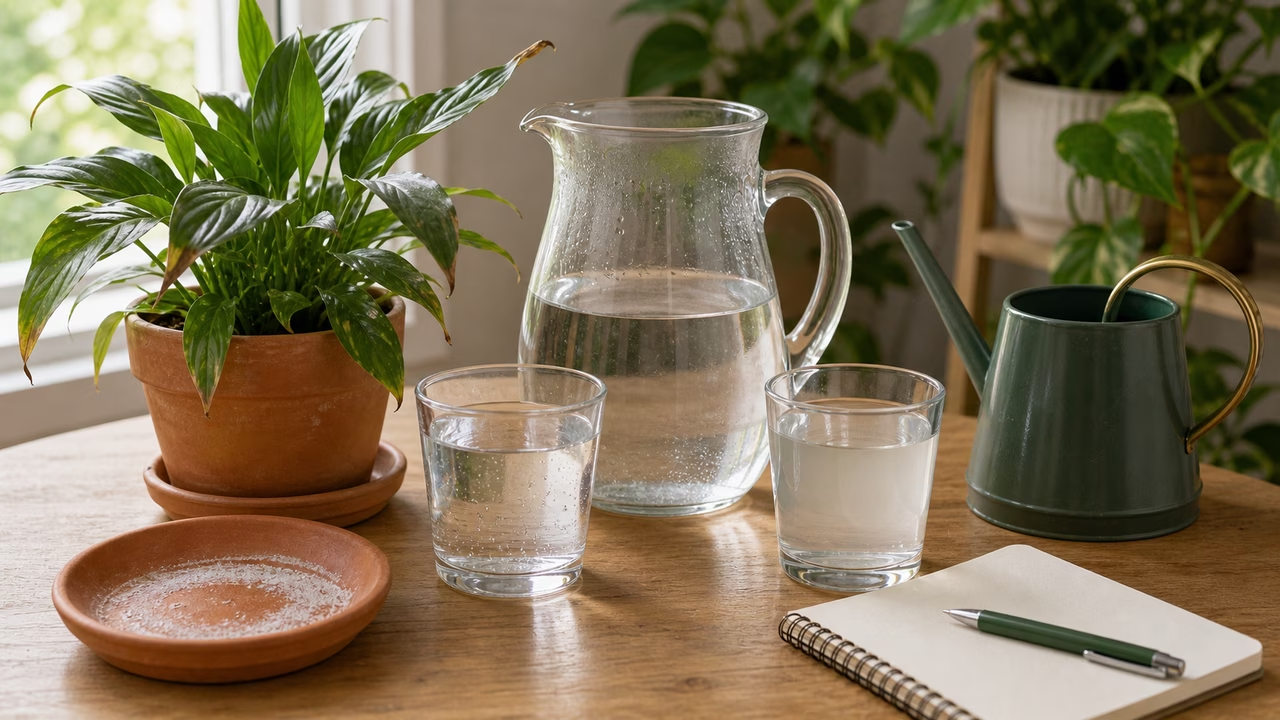
Some plants are unusually sensitive to what is in the tap water. Species with fine, strappy foliage such as spider plants, dracaenas, calatheas, and prayer plants can react to the fluoride, chlorine, and dissolved minerals in ordinary tap water by browning at the tips, and the same minerals accumulate as salts in the potting mix over months of watering and fertilizing. For these sensitive plants, the practical moves are to water thoroughly enough that some runs out the bottom, which flushes salts through rather than concentrating them, and to consider filtered or left-to-stand water if the tap seems to be the trigger. Easing off fertilizer also helps, since excess feed is itself a salt load, and adding more of it is a common way to make brown tips worse while believing you are helping.
The trim, done gently and only for looks
You can trim brown tips, but be honest about why: it is for appearance, not for the plant’s health. The plant does not need the dead tissue removed, and cutting will not stop new tips from browning if the underlying condition persists. If you do trim, use clean, sharp scissors so you are not crushing tissue or introducing anything into a fresh cut, and follow the natural silhouette of the leaf, cutting on an angle that mimics the leaf’s point rather than lopping it square. Leaving a thin sliver of the original brown edge is normal and looks more natural than cutting into green, since cutting into living tissue simply creates a fresh brown line where the wound heals. Dirty scissors and over-eager cutting are how a cosmetic problem becomes a genuine one.
Fixing the cause, then waiting on new leaves
The real repair is upstream of the leaf. If watering has been erratic, the fix is a more consistent rhythm keyed to the soil rather than the calendar, which the stop watering on a schedule guide walks through in detail. If dry air is the culprit, moving the plant away from a heat vent or radiator often does more than misting, which raises humidity only for the minutes it lingers. If salts have built up, a thorough flush and a lighter hand with fertilizer resets the soil. Whatever you change, change one thing and then measure success where it actually shows: on the leaves that emerge over the following weeks. The old browned leaves are a permanent record of the past; the new growth is the report card. Related symptoms like curling leaves and general drooping often share the same watering roots, so stabilizing the routine tends to quiet several complaints at once, and the beginner’s clinic guide ties them together.
When to stop the home experiment
Brown tips alone are almost never an emergency, and adjusting water, air, and feeding is entirely appropriate to do yourself. Escalate only when the picture grows past the tips: if a pet has been chewing the leaves, if a pesticide exposure or severe allergy is involved, if serious mold appears in the soil or on the plant, or if the plant keeps declining after you have corrected watering, humidity, and salts. At that point a veterinarian, clinician, or appropriate specialist is the right call. This guide can help you read a brown tip calmly and fix its cause. It is not a substitute for professional help once the situation crosses those lines.