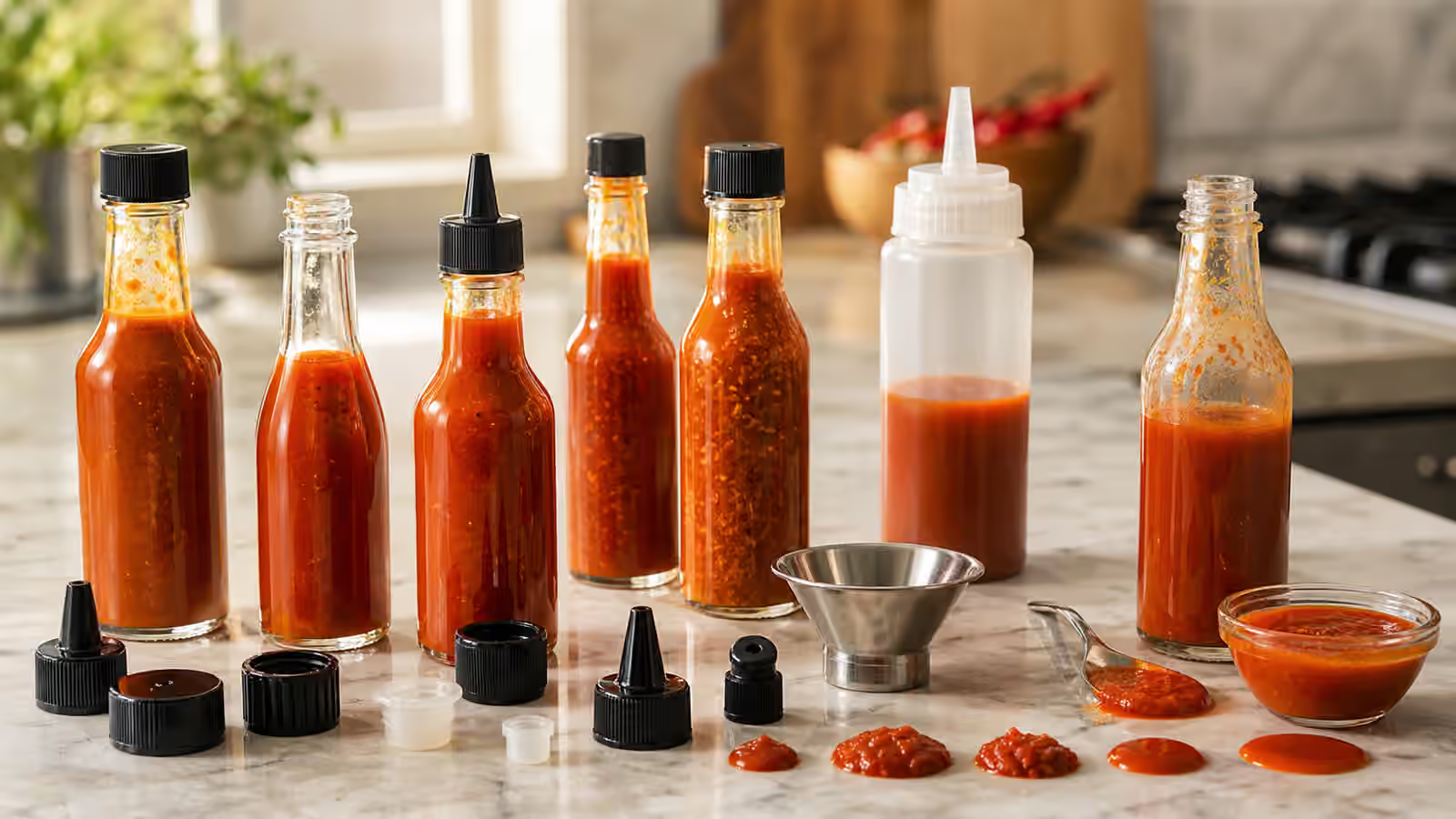
Small-Batch Testing Before Scaling Hot Sauce
The best time to make a hot sauce mistake is before the full batch exists. A spoonful of extra vinegar can teach you something useful in a tasting cup. The same spoonful multiplied through a blender jar can turn a bright pepper sauce thin, sour, and hard to rescue. Small-batch testing gives you a way to listen to a sauce before committing all of the peppers, salt, fruit, brine, roasted vegetables, and time you have put into it.
This does not mean every homemade sauce needs laboratory treatment. It means the most changeable parts of hot sauce deserve a smaller stage first. Heat accumulates. Vinegar thins as it brightens. Salt can make pepper flavor bloom or make bitterness louder. Fruit can soften burn in the first taste and taste sticky by the third bite. A small test turns those surprises into information while the main batch is still safe from overcorrection.
If your larger question is how to record recipes, keep Hot Sauce Batch Notes and Recipe Development nearby. This guide is narrower. It focuses on the practical bridge between a tiny tasting sample and the bottle you actually want to make again.
Start With A Base That Already Has A Point Of View
A test cup cannot fix a sauce that has no direction. Before you split samples, make sure the base already knows what it wants to be. A green jalapeno sauce may want freshness, lime, herbs, and a clean pour. A red fresno sauce may want direct acidity and enough salt to make eggs or beans taste finished. A habanero-carrot sauce may want a wider body so the heat arrives with sweetness and color instead of sharpness alone. Testing works best when it sharpens a clear idea rather than searching for one from scratch.
That clarity starts with the pepper and the intended food. Choosing Peppers for Hot Sauce is useful here because two sauces can share a heat level and still belong to different tables. A grassy serrano sauce and a ripe habanero sauce should not be tested against the same imagined job. One may need rice vinegar and cilantro. The other may need carrot, apple cider vinegar, or a small fruit note. If you test without naming the job, the loudest sample often wins even when it is less useful.
Blend the base plainly before adjusting. Leave out the optional flourish for a moment. If the sauce needs garlic, smoke, fruit, or spice, you can test those additions in cups. If every extra ingredient goes into the blender at once, the test can only tell you whether the whole collection worked. It cannot tell you which part changed the sauce.
Weigh The Base Before You Divide It
Small-batch testing becomes much easier when the base has a known weight. Volume is slippery with hot sauce because air bubbles, pulp, seed fragments, and different pepper cuts all change how much fits in a cup. Weight gives you a cleaner way to scale a successful adjustment. If you pull 100 grams of sauce into a cup and add 4 grams of vinegar, you have tested a four percent acid addition by weight. If that sample tastes right, you can apply the same proportion to the remaining sauce with less guessing.
The math does not need to become fussy. The important move is weighing the cup before and after the addition. A kitchen scale lets you see that a “small splash” of vinegar might be 7 grams one time and 18 grams the next. In hot sauce, that difference matters because liquid changes flavor and texture at the same time. The same is true for salt, brine, fruit puree, roasted pepper, and honey. A pinch may be fine for a quick dinner correction, but a sauce you want to repeat deserves numbers.
This habit connects directly to Salt Balance in Hot Sauce and Vinegar and Acid Balance in Hot Sauce . Salt and acid are not afterthoughts. They are part of the structure. Weighing them keeps a good test from disappearing into memory.
Make Samples That Ask Different Questions
A useful test cup asks one question at a time. One sample might ask whether the sauce needs more salt. Another might ask whether white vinegar is too sharp and rice vinegar is cleaner. Another might ask whether a cooked carrot base calms the heat better than fruit. If one cup gets salt, vinegar, fruit, and garlic all at once, you may create a better bite without learning how to build the batch.
The first question is often salt because under-salted sauce can masquerade as almost every other problem. It can taste flat, thin, muddy, or too hot because the pepper flavor is not focused. Test a small salt correction before assuming the sauce needs more vinegar, sweetness, or aromatics. Stir until the salt has dissolved and wait long enough for the sample to settle. Thick sauces hide salt briefly, then reveal it.
The second question is usually brightness. Add acid to a separate sample and notice both taste and pour. A sauce can become more alive and more watery in the same move. If a small vinegar addition improves flavor but weakens body, the full batch may need more pepper solids, a shorter thinning step, or a different texture plan. Hot Sauce Texture and Body is the better companion when the sample tastes right but moves wrong.
Heat deserves its own test because it changes after repeated bites. A sample that seems exciting on a spoon may become exhausting on rice, eggs, beans, or grilled vegetables. If you are using very hot peppers, treat the intense ingredient as an accent sample before it becomes the whole batch. Superhot Peppers With Restraint covers that design problem in more detail, but the testing habit is simple: prove the heat on food before multiplying it.
Taste On The Food The Sauce Is Meant To Help
Straight tasting is fast, but it is not the final judge. Hot sauce is usually too concentrated to evaluate fairly on a bare spoon. Acid feels sharper, salt feels louder, and capsaicin has nothing to lean against. A sauce meant for fried potatoes, tacos, beans, eggs, noodles, rice, or grilled vegetables should meet at least one of those foods before you scale the test.
Choose a plain version of the target food, not a complicated dish that hides the result. If the sauce is for eggs, a bit of plain scrambled egg or potato tells the truth. If it is for beans, use beans without much seasoning. If it is for tacos, use a tortilla and a mild filling. The goal is not to stage a meal. It is to find out whether the sauce seasons food instead of merely performing on a spoon.
This is where small samples often surprise you. The brightest cup may taste thin once it hits starch. The slightly saltier cup may become the most useful on food. The fruitier cup may feel charming alone and too sweet by the third bite. The smoky cup may taste deep with beans and dull with eggs. Scaling should reward the sample that does the real job, not the sample that wins a one-bite contest.
Scale The Winning Move Carefully
Once a sample wins, do not dump the matching ingredient into the main batch by instinct. Calculate the addition from the sample weight, then apply most of it first. If 100 grams of sample improved with 3 grams of vinegar, 900 grams of remaining sauce would suggest 27 grams of vinegar. Adding 20 or 22 grams first is often wiser because the main batch may taste slightly different after a longer stir, a short rest, or a change in temperature.
After each full-batch adjustment, blend or stir completely and let the sauce pause. Air bubbles rise. Pepper solids hydrate. Salt dissolves. Vinegar spreads. Garlic gets louder. A sauce that tastes perfect thirty seconds after the correction may feel sharper after ten minutes. This is why Adjusting Hot Sauce After Blending emphasizes resting before final bottling. The sample tells you the direction. The full batch still deserves a final read.
Keep a little unadjusted sauce aside if the batch matters. That reference cup prevents palate drift. After several rounds of tasting heat, acid, and salt, it becomes easy to forget the starting point. The reference cup shows whether the sauce actually improved or whether your mouth simply adapted to the new version.
Account For Texture, Yield, And The Bottle
Scaling is not only flavor. A sauce that works in a tasting cup may behave differently in the container. A thick sample can feel generous on a spoon and clog a narrow bottle. A thin sample can seem lively in a cup and splash too fast at the table. If the sauce will live in a woozy bottle with a reducer, a squeeze bottle, or a jar, test that format before calling the recipe finished.
Texture also changes yield. Straining a batch after the test may remove pulp that was carrying salt, heat, or color. Simmering after the test concentrates everything. Adding vinegar to correct acidity increases volume and can make the final sauce feel less pepper-driven. These changes are not failures, but they should be counted. If the test is meant to predict the bottle, the sequence should match the bottle as closely as possible.
Bottling Hot Sauce for the Table is useful at this stage because the right container can preserve a sauce’s best behavior. A tiny, intense sauce may need a slow pour. A rustic roasted sauce may belong in a jar. A green sauce with herbs may be better in a small refrigerated bottle that gets used quickly. Scaling should make the sauce more repeatable, not force it into the wrong serving ritual.
Keep Safety Questions Out Of Guesswork
Small tests are excellent for flavor, but they do not replace careful storage decisions. A balanced tasting cup does not prove that a larger bottle is shelf stable. If you are making sauce for home refrigeration and short-term use, the testing process can stay focused on flavor and handling. If you intend a sauce to sit at room temperature, leave your assumptions at the door and use measurement, clean process, and a tested preservation approach for that style.
pH testing belongs after the sauce is fully mixed, because a watery layer and a dense pepper layer can read differently. If a sample changes the acid profile in a meaningful way, the full batch should be mixed and tested again rather than judged from the sample alone. pH Testing Homemade Hot Sauce explains the practical side of strips, meters, sampling, and calibration. The short version is that testing gives information, not permission to ignore cleanliness, refrigeration, or process.
Fermented sauces need the same humility. A small cup of mash finished with vinegar can taste excellent, but the full batch may keep changing after blending. Brine, lactic acidity, residual activity, garlic, and refrigeration all affect the bottle. Scale the flavor with care, then store conservatively unless you are following a process designed for something else.
Let The Test Teach The Next Batch
The final value of small-batch testing is not only the sauce in front of you. It is the next sauce. Write down the base weight, the sample size, the addition that worked, the food used for tasting, and what happened after the sauce rested. Those notes do not need to be polished. They need to be specific enough that you can repeat the choice when a different basket of peppers arrives.
Over time, patterns become visible. You may learn that green sauces need less vinegar than you expect once they meet food. You may learn that carrot-habanero sauces want salt earlier than sweetness. You may learn that dried chile sauces need more soaking liquid but less finishing acid. You may learn that your favorite sauce is not the loudest one in the sample cups, but the one that keeps dinner balanced after several bites.
Small-batch testing is a quiet habit, but it changes the way hot sauce gets made. It protects good peppers from panic corrections. It turns lucky adjustments into repeatable ratios. Most of all, it keeps the bottle connected to food. A sauce that survives the small cup, the scale, the target bite, the rest, and the final pour has already answered the questions that matter. Scaling then becomes less of a gamble and more of a careful yes.