What is the Scoville Scale?
The Scoville scale puts a number on heat. It measures the spiciness of peppers and spicy foods in Scoville Heat Units (SHU).
That number helps, but it does not tell the full story.
If a sauce looked mild on paper and still hit hard, or a big SHU number felt manageable, this guide shows why. It explains what SHU measures, why it varies, and how to use it when you buy peppers or sauce.
How it works
The scale was created in 1912 by pharmacist Wilbur Scoville. At first, tasters diluted pepper extract in sugar water until they could no longer taste the heat. More dilution meant a higher score.
Today, labs measure the capsaicinoids that cause heat and convert that result into SHU.
So the number is based on chemistry, but your experience still depends on the food and on your own tolerance.
Capsaicin is the heat source
Capsaicin is what makes peppers hot. But how hot it feels depends on how the heat is carried.
Think of SHU as heat potential. The way the heat is carried still matters:
- thin vinegar sauces spread fast but may not stick,
- thick or oily sauces cling and feel hotter per bite,
- powders spread differently,
- cooked and raw peppers can feel different,
- fermented sauces can feel smoother even at the same heat.
SHU is real, but it is not the whole picture.
Why SHU varies
Peppers are not all the same. Heat can change from one pepper to the next.
Common reasons include:
- Genetics and cultivar: a habanero is a type, not one exact plant.
- Growing conditions: sunlight, water, and soil all matter.
- Ripeness: ripe peppers can taste and feel different.
- Pepper anatomy: most heat sits in the internal tissue, not spread evenly through the pepper.
That is why the numbers are ranges. They are useful, but they are not exact.
Pepper anatomy
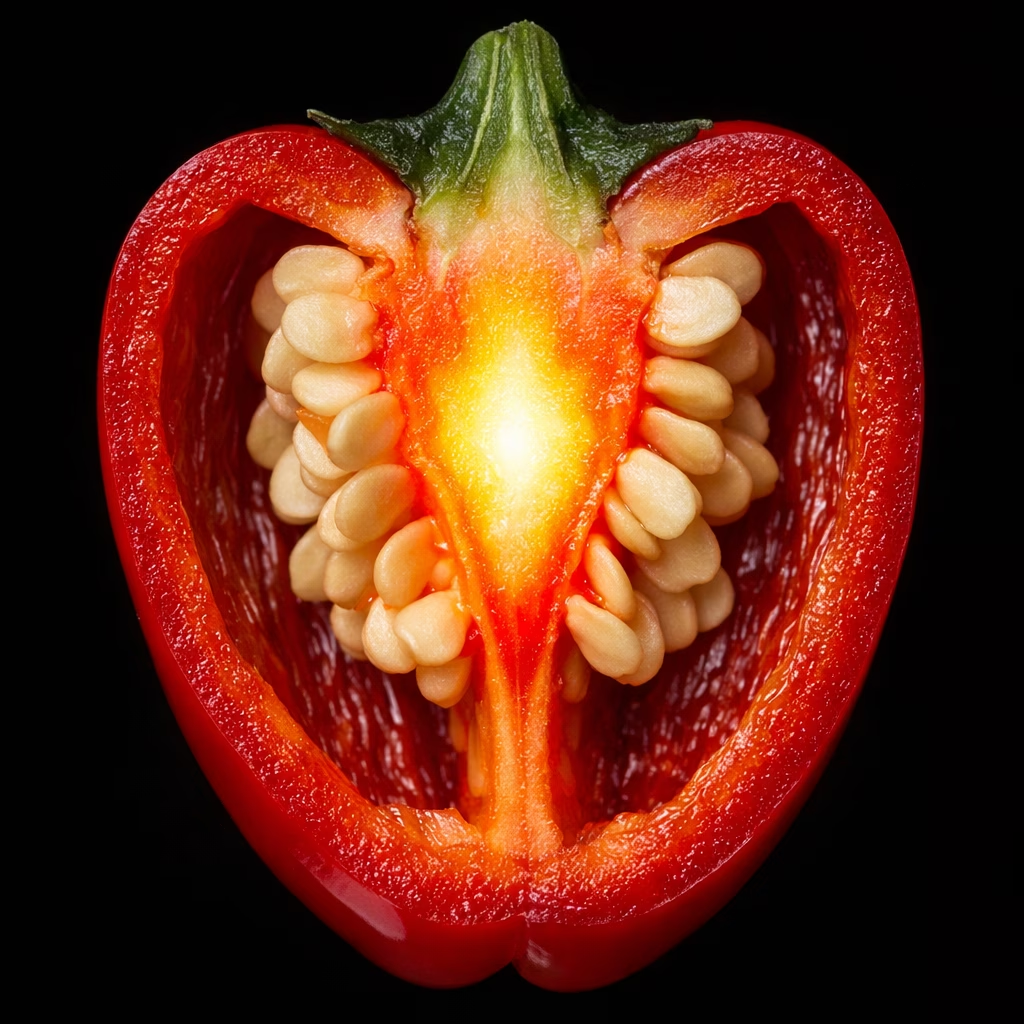
If you want to control heat in cooking, it helps to know where it sits.
Most capsaicin is in the internal membranes and pith, not the seeds themselves. Seeds can still sting because they touch those tissues, but taking out the seeds alone does not remove all the burn.
If you want more flavor and less heat, remove the membranes too.
Why a big SHU number can feel small
Even when the number is high, the dish can feel milder because of context:
- Dilution: a sauce can use a super-hot pepper in a small amount.
- Sweetness and acidity: both change how heat lands.
- Fat content: this changes mouthfeel and can soften the burn.
- Portion size: a drop is not the same as a spoonful.
That is why SHU works best as a guide, not a contest.
Pepper heat levels
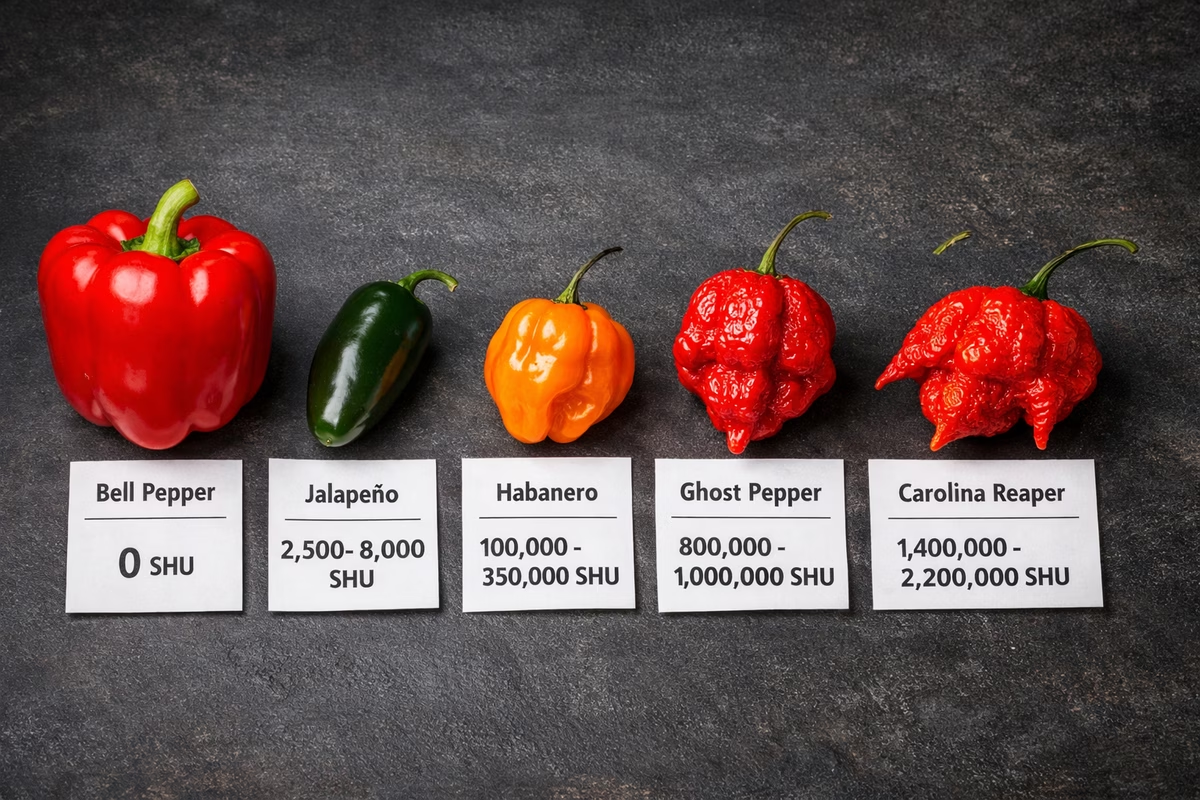
Pepper heat ranges vary because peppers are agricultural products. Even within the same type, heat can shift with growing conditions, ripeness, and genetics.
Still, the ranges help with planning:
| Pepper | Scoville Heat Units |
|---|---|
| Bell Pepper | 0 |
| Banana Pepper | 0-500 |
| Jalapeño | 2,500-8,000 |
| Serrano | 10,000-25,000 |
| Cayenne | 30,000-50,000 |
| Habanero | 100,000-350,000 |
| Ghost Pepper | 855,000-1,041,427 |
| Carolina Reaper | 1,400,000-2,200,000 |
Super-hot peppers above 500,000 SHU should be handled with gloves and care.
What SHU feels like in practice
Think in terms of usable dose, not peak heat.
Two sauces can have the same SHU but behave differently:
- One sauce might be so sharp and thin that you only use a few drops.
- Another might be balanced and flavorful, so you use a full spoonful.
The second sauce can deliver more total heat per meal because you use more of it.
Your experience also depends on:
- how the pepper is used (fresh, cooked, or fermented),
- how the heat is carried (watery, oily, or thick),
- how fast you eat,
- your tolerance, which changes with practice.
As a rough guide:
- 0–2,500 SHU: mostly pepper flavor, little burn.
- 2,500–30,000 SHU: clear heat that is still easy to use.
- 30,000–100,000 SHU: noticeable burn. Best in smaller doses.
- 100,000+ SHU: very intense. Usually best as an ingredient.
Find your heat level
The goal is not to chase bigger numbers. The goal is to stay in a range where you can still taste the food.
Start mild, then climb slowly:
Beginner: 0–2,500 SHU
Intermediate: 2,500–30,000 SHU
Advanced: 30,000–100,000 SHU
Expert: 100,000+ SHU
If you jump too fast, you start to expect pain instead of flavor. If you move slowly, you learn what each pepper tastes like.
Hot sauce vs raw peppers
Hot sauce heat changes based on:
- the peppers used,
- how many peppers are in it,
- dilution with vinegar, fruit, vegetables, or water,
- how it is processed.
Two important implications:
A habanero sauce can be mild if it is heavily diluted or sweetened.
A jalapeño sauce can feel hot if it is thick, oily, or used in a lot of food.
Check the ingredients list. Peppers listed first usually mean a hotter sauce.
How to use SHU
Treat SHU as a range, then choose based on how you will use the sauce.
Finishing (eggs, tacos, bowls)
For finishing, mild to medium heat usually works best. You want enough sauce to taste the sauce itself.
If the sauce is too hot to use freely, it is a dropper sauce instead.
Cooking (stews, beans, marinades)
For cooking, you can go hotter because the food will dilute it. You can also choose peppers for flavor.
Mixing (mayo, ranch, butter)
Mixing helps. Fat carries flavor and softens the edge.
If you want to use a very hot sauce, mix it with mayo or yogurt first.
When SHU isn’t listed
Many sauces do not list SHU. Use label cues:
- pepper listed first and few diluters usually means hotter
- lots of fruit or sugar often means milder per spoonful
- oily or paste-like sauces often feel hotter because they cling
For profile-based shopping beyond numbers, use the Hot Sauce Database .
Pick by role
Instead of asking how hot it is, ask what job you want the sauce to do.
Table sauce
Table sauces are meant to be used in spoonfuls, not drops. They should taste good at that dose.
For many people, that means mild to medium heat. The exact number matters less than whether the sauce is usable.
Cooking sauce
Cooking sauces can be hotter because they will be spread across a pot, marinade, or batch of food.
Dropper sauce (super-hot concentrate)
Very high SHU sauces often work best as concentrates. Add a drop or two to a bowl, soup, or mayo.
That gives you heat without flooding the dish with vinegar or sugar.
The mistake is using a dropper sauce like a table sauce.
Heat management
If you overheat your palate, everything after tastes hot. That is not tasting.
Use these tools:
- Fat helps. Yogurt, sour cream, avocado, and mayo all work.
- Starch helps. Rice, bread, and tortillas spread the heat out.
- Acid brightens. Lime and vinegar can make heat feel sharper.
- Water does not help much and can spread the capsaicin around.
If you are building tolerance, keep sessions short and stop before you lose the flavor.
Handle super-hots safely
Very hot peppers and sauces need care.
- Use gloves when chopping very hot peppers.
- Do not touch your eyes or face during prep.
- Keep the room ventilated if you are heating very hot peppers.
- Clean cutting boards and knives well after use.
Heat is fine when it is controlled. It stops being fun when it is accidental.
Next steps
- Explore the Hot Sauce Database
- Continue with Learn with Fizz for extra practice
- If you want a broader base, start with Hot Sauce Quickstart
Taste before turning up the heat
Hot sauce is more than force. For Understanding the Scoville Scale, the useful question is how heat, acid, salt, sweetness, fruit, smoke, fermentation, texture, and aroma work together. A sauce can be fiery and still feel flat if the rest of the structure is missing.
Start with a small taste on a neutral food. Notice when the heat arrives, where it sits, how long it lasts, and what flavor remains after the burn fades. Pepper character, vinegar snap, garlic, fruit, smoke, and salt should each have a place.
Then adjust only one thing. More acid can brighten but also thin the sauce. More salt can wake up flavor but quickly dominate. More sweetness can round heat but make the sauce heavy. More pepper can add character or simply overwhelm.
For fermented or preserved sauces, safety and process matter. Clean equipment, acidity, storage, pH when relevant, and spoilage signs are part of the craft. Flavor should not be separated from responsible handling.
Understanding the Scoville Scale should help the sauce become more expressive, not just hotter. The best bottle makes food taste more alive.
Test heat in context
After reading Understanding the Scoville Scale, taste the sauce with food as well as from a spoon. Heat behaves differently on eggs, rice, beans, grilled meat, soup, tacos, and vegetables. A sauce that seems too sharp alone may become perfect with fat, starch, or smoke.
Write down where the heat lands. Does it hit fast and vanish, build slowly, sit on the lips, or warm the throat? Then notice what flavor remains. A useful hot sauce leaves more than a number on a heat scale.
If you are making sauce, adjust in small steps and keep safety practices visible. Acid, salt, fermentation, cooking, bottling, refrigeration, and pH when relevant are part of the craft.
The best heat has direction. It wakes up food, carries pepper character, and invites another bite instead of ending the conversation.