The idea started as a joke. My friend Val, who had been collecting hot sauces the way some people collect records—one at a time, from every trip, every farmers market, every internet rabbit hole—looked at her shelf one evening and said, “I have too many. We should taste them all.”
“All of them?”
“All of them.”
There were thirty-seven bottles on that shelf. We negotiated down to twelve.
What started as a joke became one of the best dinner parties I’ve ever attended: structured enough to feel special, loose enough to feel fun, and calibrated just well enough that nobody cried. (One person came close. She’s fine.)
This is the guide to hosting your own version—a hot sauce tasting that’s memorable, educational, and doesn’t require a fire extinguisher.
Step 1: Choose your lineup (twelve is the sweet spot)
Twelve bottles sounds like a lot, but each person only tastes a tiny dab of each. It’s enough variety to tell a story without overwhelming anyone.
How to build a good lineup
Think of the twelve bottles as a narrative arc, not a random assortment. You want:
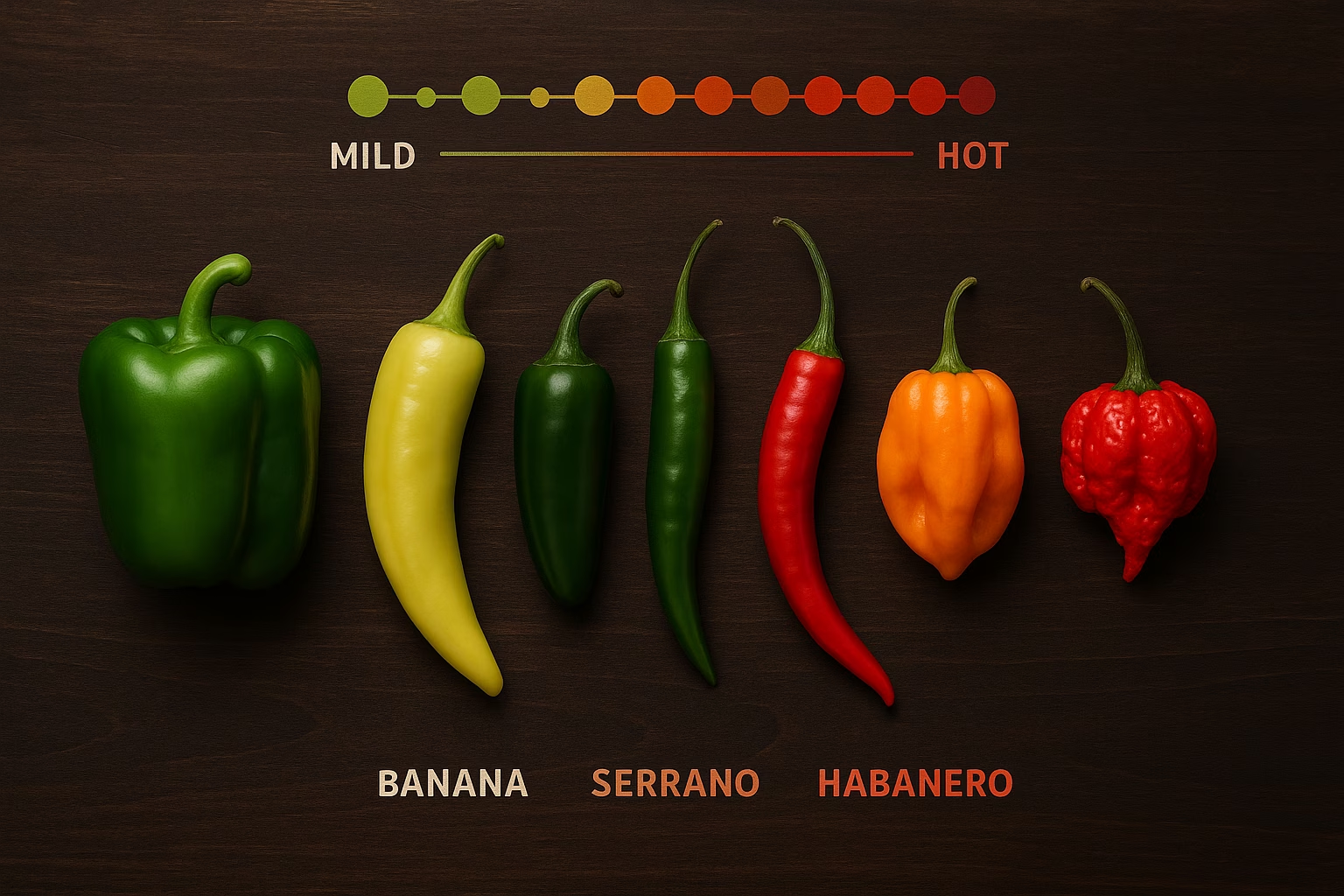
Low heat openers (bottles 1–3): Friendly, flavorful sauces under 5,000 SHU. These set the tone and prove that hot sauce is about taste, not punishment. Think: a mild verde, a classic Louisiana-style, a fruity Caribbean yellow.
Medium heat middle (bottles 4–8): The heart of the tasting. Sauces with personality and moderate heat—10,000 to 50,000 SHU. This is where you include your favorites: a smoky chipotle, a tangy habanero-mango, a fermented garlic sauce, a classic Cholula or Valentina.
High heat climbers (bottles 9–11): Things get serious. 50,000 to 350,000 SHU. Ghost pepper sauces, scorpion blends, concentrated Caribbean scotch bonnets. Warn people. Provide bread.
The finale (bottle 12): One show-stopper at the top of the scale. This is optional and should be clearly labeled as voluntary. Nobody has to try the last one. But someone always does.
Building variety
Try to include sauces from different categories:
- Vinegar-based (Louisiana-style: Crystal, Frank’s, Tabasco)
- Fermented (Sriracha, homemade lacto-fermented, aged styles)
- Fruit-forward (mango-habanero, pineapple-ghost, peach-scotch bonnet)
- Smoky (chipotle, smoked jalapeño, fire-roasted blends)
- Mustard-based (Southern-style, Caribbean yellow)
- Super-hot (Carolina Reaper sauces, extract-based for the finale only)
Step 2: Set the table right
The difference between a chaotic evening and a memorable one is setup.
What you need
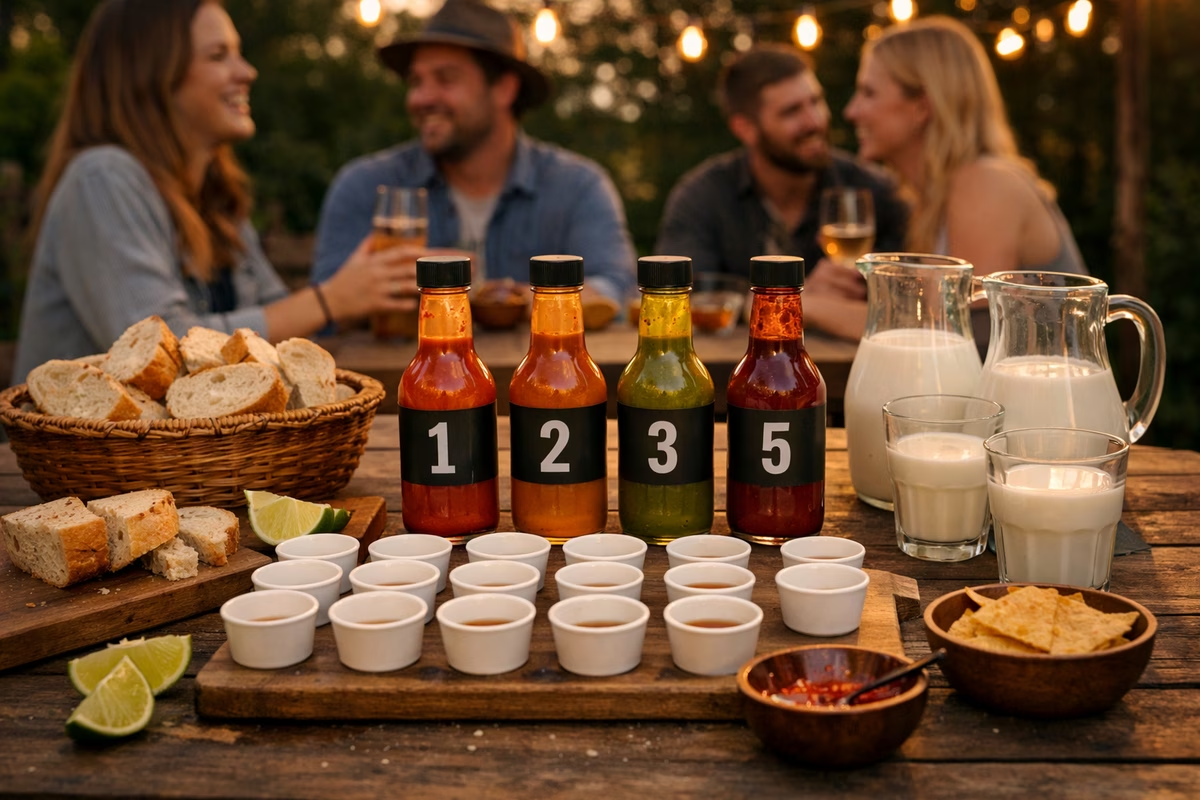
- Twelve numbered bottles (tape a number to each one; reveal the names later for a blind tasting)
- Small tasting spoons or toothpicks (one per sauce per person, or a big stack)
- Tasting cards (simple index cards with spaces for: number, heat level guess, flavor notes, rating)
- Bread. White bread is the universal palate cleanser. Have a lot of it.
- Whole milk. Casein in milk neutralizes capsaicin. This is not optional.
- Water. Less effective than milk for heat, but everyone wants it anyway.
- A carrier food. Small tortilla chips, plain crackers, or sliced cucumber. Something to put the sauce on rather than tasting it straight.
The tasting station
Lay the twelve bottles in order from mildest to hottest. Place bread and milk at both ends of the table. Give each person a tasting card and a pen.
Step 3: Run the tasting
Pace it
Don’t rush. Spend 3–5 minutes on each sauce. That’s nearly an hour for the full twelve, which is the perfect length.
For each sauce:
- Look at it. Color and texture tell you a lot. Thin and vinegary? Thick and chunky? Bright orange or deep red?
- Smell it. Before tasting, hold it near your nose. You’ll catch fruit, smoke, garlic, fermentation—all the flavor that heat will partially mask.
- Taste a small dab. On a chip or bread. Let it sit on your tongue for a moment before chewing.
- Note three things: What flavors do you taste besides heat? How fast does the heat build? How long does it last?
- Write it down. Even two words on the tasting card—“fruity, slow burn” or “smoky, hits fast”—creates a record you’ll appreciate later.
Managing the heat progression
After every 3–4 sauces, take a bread-and-milk break. This resets palates and prevents the cumulative heat from overwhelming the later tastings.
If someone hits their limit, that’s fine. They can step out of the progression and rejoin for the finale (or not). The best hot sauce tastings give people permission to tap out.
The reveal
If you did a blind tasting, the reveal is the highlight. Unmask each bottle and watch people react to what they loved (and what they hated). The cheap supermarket sauce that everyone rated highly? That’s a great moment. The $15 artisan bottle that nobody liked? Also great—it’s honest feedback.
Step 4: Score and crown a winner
Keep it simple. After all twelve sauces:
- Everyone writes their top 3 on their tasting card
- Collect the cards and tally votes
- Announce the People’s Choice (most overall votes)
- Award the Dark Horse (the sauce nobody expected to love)
- Acknowledge the Bravery Award (whoever tried the finale and survived)
Prizes are optional but fun. A bottle of the winning sauce. A novelty “I Survived” certificate. A small trophy made of a hot pepper.
The food that saves the night
After the tasting, serve food. Not as an afterthought—as the reward.
The best post-tasting meals are simple, filling, and pair with the sauces everyone just tasted:
- Tacos with multiple protein options (let people add their favorite sauces)
- Mac and cheese (the ultimate heat absorber)
- Fried chicken tenders with dipping sauces from the lineup
- Rice bowls with customizable toppings
The post-tasting meal is where conversations get best. People compare notes, argue about rankings, and reach for bottles from the lineup to add to their plates. The tasting becomes a living thing that extends into dinner.
What goes wrong (and how to prevent it)
Someone goes too fast. This is the most common problem. Slow the pace. If people are reaching ahead in the lineup, remind them that the later sauces need a clean palate.
The heat stacks up. Capsaicin is cumulative. By sauce number eight, everyone’s mouth is warm even if the sauce is moderate. Build in breaks and have plenty of bread and milk.
Someone has a bad reaction. It happens rarely, but some people are more sensitive than they expect. Have milk, bread, and a cool damp cloth available. Don’t pressure anyone to try anything they don’t want to.
Not enough variety. If all twelve sauces are habanero-based, the tasting gets monotonous. Aim for diversity in pepper type, base (vinegar vs. fruit vs. fermented), and origin.
The ending: the shelf after midnight
The tasting went until eleven. Twelve sauces, two hours, five friends, one mild emergency (quickly resolved with milk), and a final hot sauce so intense that three people tried it and all three made the same face.
The next morning, Val’s shelf looked different. Not because we’d finished the bottles—each one still had plenty. But because every bottle now had a story: “That’s the one Jordan loved.” “That’s the one that made Claire laugh.” “That’s the one we all agreed was overrated.”
A hot sauce collection is nice. A hot sauce collection with memories attached to each bottle is better.
You don’t need thirty-seven bottles to host a tasting. You need twelve, some bread, some milk, and friends who are willing to be surprised.
The heat isn’t the point. The conversation is.
Next steps
- Read the Scoville Scale guide to understand the heat levels behind your lineup
- Explore Sauce Pairing for what to serve alongside each style
- See Making Hot Sauce if the tasting inspires you to create your own
- Try Growing Your Own Peppers to start a sauce completely from scratch