Before hot sauce was a condiment, it was survival. Before it was a bottle on a diner table, it was a sacred food. Before it crossed oceans, it grew wild in a narrow strip of land between southern Mexico and northern South America, tended by people who understood its power long before the rest of the world had any idea it existed.
The story of hot sauce is really two stories: the pepper, which is ancient, and the sauce, which is the human impulse to take something that burns and make it delicious.
The pepper’s origin: Mesoamerica (7000 BCE – 1500 CE)
Before cultivation
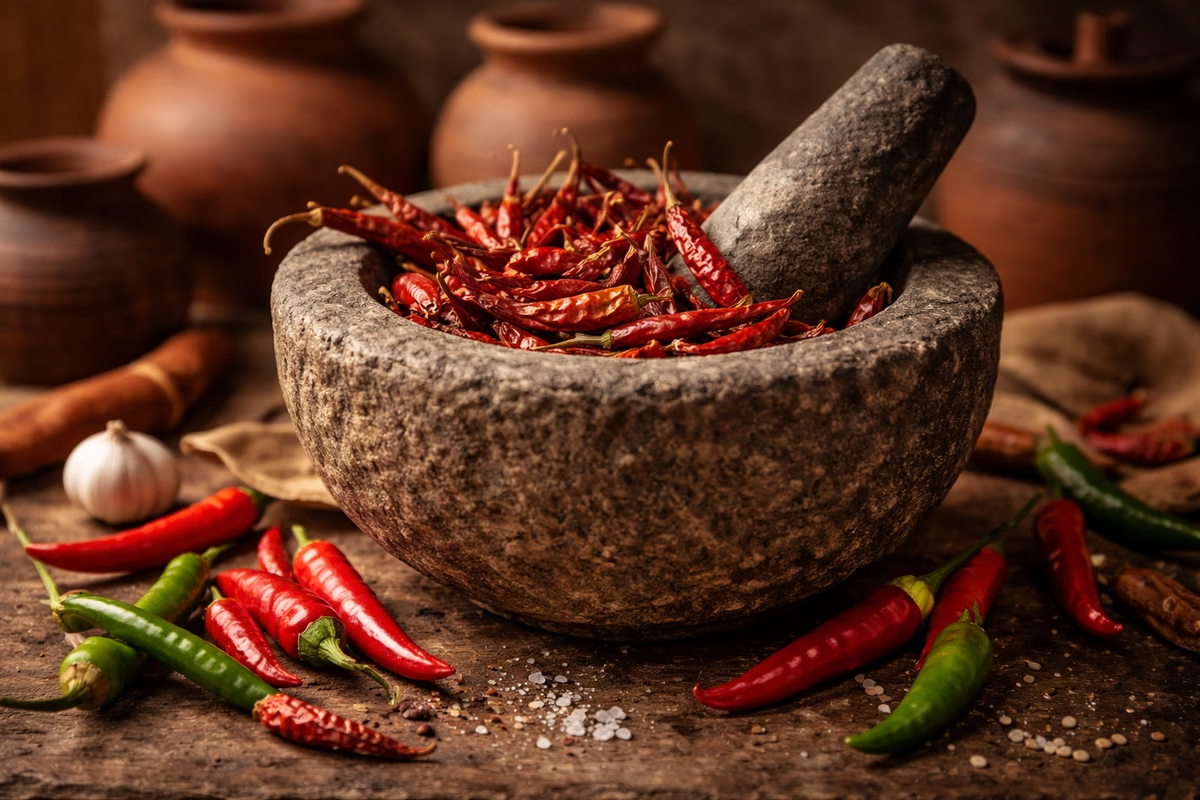
Capsicum peppers—the genus that includes jalapeños, habaneros, serranos, and every other hot pepper—originated in the Americas. Archaeological evidence from sites in Mexico and Central America shows humans consuming wild chilies as far back as 7000 BCE, making peppers one of the oldest cultivated crops in the Western Hemisphere.
The earliest pepper use wasn’t about flavor. It was about preservation. Capsaicin—the compound that makes peppers hot—is antimicrobial. In hot climates without refrigeration, adding chili to food slowed spoilage. The burn was a side effect of an ancient food-safety strategy.
Over millennia, Mesoamerican cultures—Aztec, Maya, Olmec—domesticated wild Capsicum into dozens of varieties, selecting for flavor, heat, color, and shape. By the time Europeans arrived, peppers were deeply embedded in every aspect of food culture, from daily meals to religious ceremonies.
The Aztec sauce tradition
The Aztecs made what historians consider the earliest documented hot sauces: ground chili peppers mixed with water, tomatoes, and sometimes cacao, herbs, or ground squash seeds. These sauces, called molli (the root of the word “mole”), were not condiments spooned onto food after cooking. They were integral to the dish—complex preparations designed to balance heat, acidity, sweetness, and bitterness.
Aztec markets sold dozens of pepper varieties, each with a specific culinary purpose. Bernal Díaz del Castillo, a Spanish soldier who accompanied Hernán Cortés, described the Aztec capital’s market as containing “chilis of every kind” and noted that the Aztec nobility ate their food with elaborate chili-based sauces.
The pepper goes global: the Columbian Exchange (1493–1600s)
Columbus and the wrong name
When Christopher Columbus arrived in the Caribbean in 1492, he was looking for black pepper (Piper nigrum)—a spice worth more than gold in medieval Europe. He found Capsicum peppers instead and, either through confusion or marketing optimism, called them “peppers.” The misnomer stuck.
Columbus brought Capsicum seeds back to Spain in 1493. Within fifty years, the pepper had spread across the entire globe—faster than almost any other New World crop. The reason was simple: peppers grew easily in tropical and subtropical climates, produced abundantly, and provided intense flavor at minimal cost.
Eastward explosion
Portuguese traders carried peppers from Brazil to their colonies in Africa, India, and Southeast Asia. The pepper arrived in India in the early 1500s and was adopted so rapidly that within a generation, it was considered essential to Indian cuisine. Today, India is the world’s largest producer and consumer of chilies—a food that didn’t exist on the subcontinent five hundred years ago.
Peppers reached China, Korea, and Japan through similar trade routes. Korean gochugaru (chili flakes), Sichuan chili oil, and Japanese shichimi togarashi all derive from plants that arrived via European traders in the 1500s and 1600s.
In West Africa, peppers merged with existing spice traditions to create the piri piri and berbere blends that define regional cuisines today.
Thailand, the adopted homeland
Thai cuisine’s famous heat—the nam prik sauces, the green and red curries—is entirely post-Columbian. Peppers arrived in Thailand through Portuguese trade routes in the 1500s. Thai cooks integrated them so completely that modern Thai food is unimaginable without chili, yet the relationship is barely five hundred years old.
This pattern repeated across dozens of cultures: a foreign plant, adopted within a generation, became so integral that its foreign origin was forgotten.
Bottled fire: the industrialization of hot sauce (1800s)
Tabasco: the sauce that built an industry
In 1868, Edmund McIlhenny, a banker-turned-farmer on Avery Island, Louisiana, began producing a pepper sauce using tabasco peppers (brought to Louisiana from Mexico), vinegar, and salt. He aged the mash in barrels, strained it, and bottled it in small cologne bottles with a sprinkler top.
He called it Tabasco. It was not the first commercial hot sauce—several small producers had been selling pepper vinegar sauces since the early 1800s—but it was the first to achieve national and eventually global distribution. By 1872, McIlhenny had a patent (later invalidated) and a growing business. Today, Tabasco is sold in over 195 countries and territories.
Tabasco’s genius was consistency and simplicity: three ingredients, a recognizable bottle, and a flavor that enhanced food without demanding attention. It became the default American hot sauce for nearly a century.
The Louisiana tradition
Tabasco was not alone. Louisiana’s French Creole and Cajun food cultures had long used pepper sauces—thinner, vinegar-forward sauces designed to brighten rich, heavy foods like gumbo, jambalaya, and po’boys.
Brands like Crystal, Louisiana, and Texas Pete (despite the name, from North Carolina) followed a similar formula: aged peppers, vinegar, salt. These sauces emphasized tang and moderate heat over intense burn—a style that remains the backbone of American hot sauce to this day.
The global sauce pantry (1900s–2000s)
While Louisiana-style sauces dominated the American market, the rest of the world was developing its own bottled traditions:
Sriracha
The sauce Americans know as “Sriracha” was created by David Tran, a Vietnamese immigrant who founded Huy Fong Foods in Los Angeles in 1980. Tran based his recipe on the chili sauces of Si Racha, Thailand—a coastal town with a long tradition of pepper-garlic sauces.
Huy Fong’s rooster-branded Sriracha became a phenomenon: garlicky, sweet-hot, and thick enough to squeeze onto anything. By the 2010s, it had become one of the best-selling condiments in the United States, with an estimated 20 million bottles sold annually—achieved almost entirely without advertising.
Harissa, sambal, gochujang
The global hot sauce story isn’t just Louisiana and Sriracha. It’s:
- Harissa (North Africa): roasted chili paste with cumin, coriander, caraway, and garlic. Earthy, smoky, complex.
- Sambal (Southeast Asia): a family of chili pastes ranging from simple (sambal oelek: just chilies and salt) to elaborate (sambal terasi: with fermented shrimp paste).
- Gochujang (Korea): fermented chili paste with glutinous rice and soybeans. Sweet, funky, deeply savory.
- Peri-peri (Mozambique/Portugal): chili sauce with citrus and herbs, carried globally by Portuguese colonists.
- Zhug (Yemen): fresh green chili paste with cilantro and cardamom. Bright, herbal, fiery.
Each of these traditions is centuries old. Each reflects a specific culture’s answer to the same question: how do we turn the pepper’s fire into something beautiful?
The craft hot sauce boom (2010s–present)
The new makers
Starting around 2010, hot sauce experienced a craft explosion similar to what happened with beer, coffee, and chocolate. Small producers began making artisanal sauces with specific pepper varieties, fermentation techniques, and flavor profiles that went far beyond “hot vinegar.”
The modern craft hot sauce shelf includes:
- Single-variety pepper sauces (showcasing the flavor of a specific chili, like Scotch bonnet or ají amarillo)
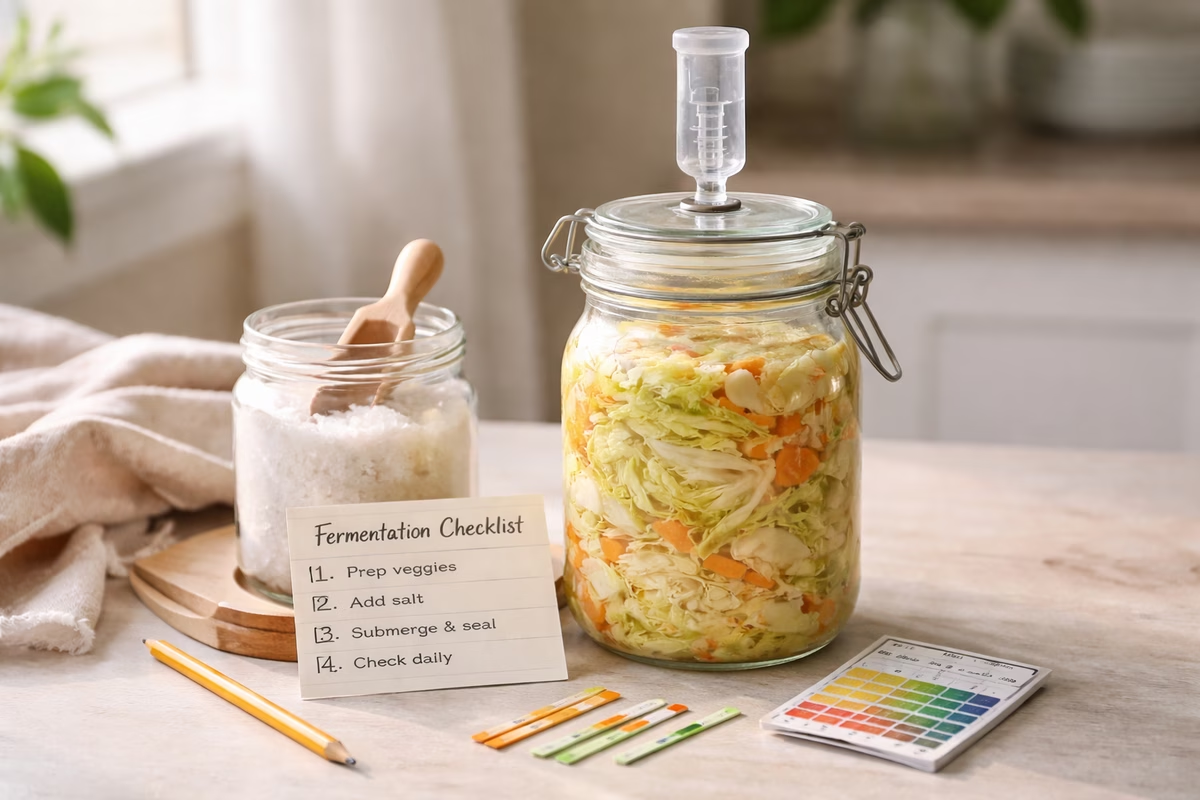
- Fermented sauces (using lacto-fermentation for complex, tangy depth)
- Fruit-forward sauces (mango-habanero, pineapple-ghost pepper—sweet heat)
- Smoked sauces (chipotle-based, or using smoked fresh peppers)
- Super-hot sauces (made with Carolina Reapers, Pepper X, and other extreme cultivars)
The heat race
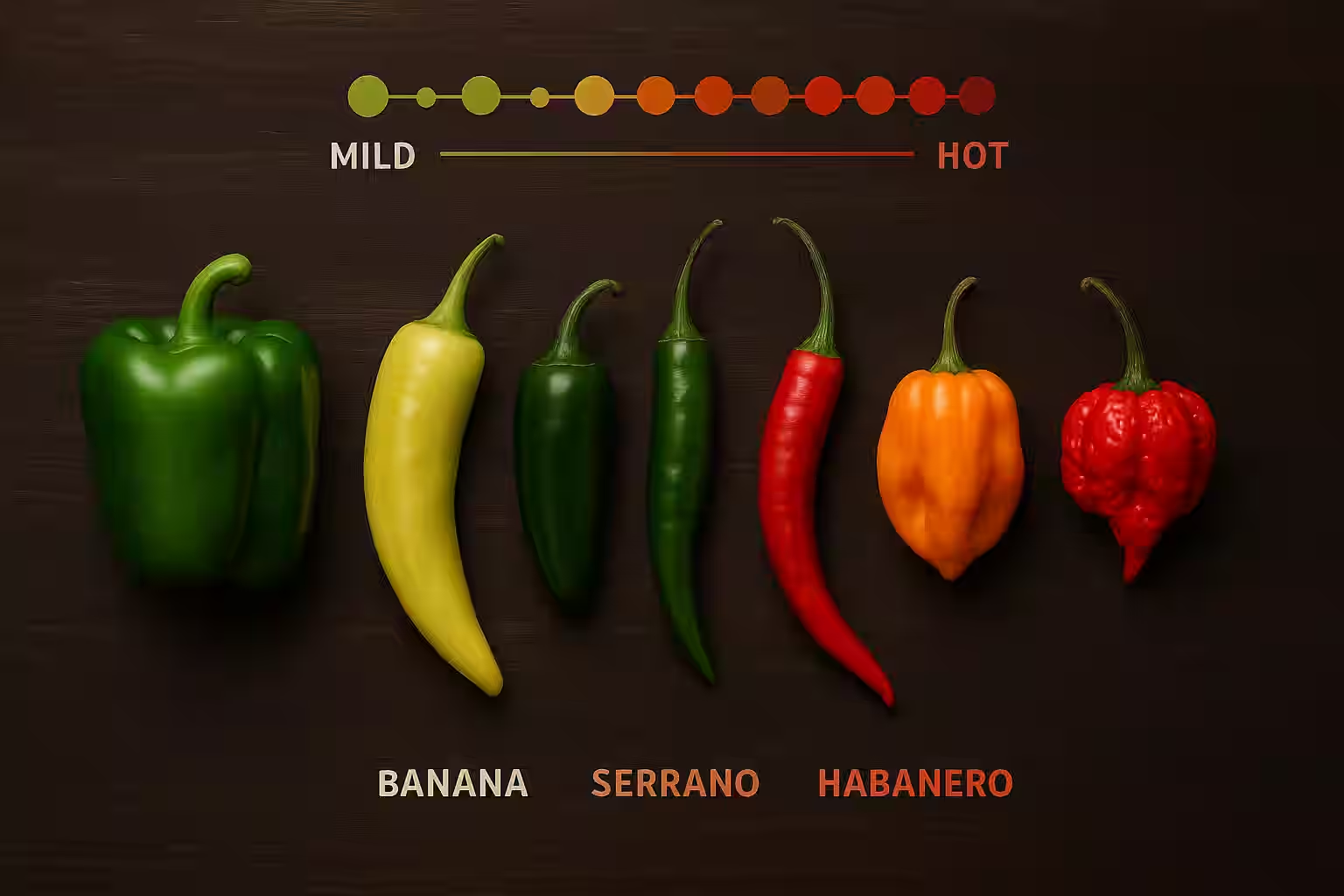
The development of super-hot peppers—starting with the Red Savina habanero (1994), through the Bhut Jolokia/Ghost Pepper (2007), Trinidad Moruga Scorpion (2012), Carolina Reaper (2013), and Pepper X (2023)—created a culture of heat-chasing that drives a significant segment of the market.
The Scoville Scale guide covers the measurement science. The cultural phenomenon is about something more: the thrill of controlled suffering, the bragging rights, the YouTube reaction video. Heat-chasing is entertainment as much as gastronomy.
But the most interesting development in craft hot sauce isn’t the hottest peppers. It’s the shift toward flavor-first sauces—products where heat is balanced with complexity, where the pepper variety is chosen for its taste as much as its Scoville rating, and where fermentation and aging add dimensions that simple pepper-and-vinegar sauces can’t achieve.
The pepper’s paradox
Here’s the strange thing about capsaicin: it causes pain. Literal pain. It activates the same nerve receptors (TRPV1) that respond to actual burns. Nothing about the experience should be pleasant.
And yet humans—alone among mammals—deliberately seek it out. We breed peppers to be hotter. We compete to eat the hottest ones. We put hot sauce on everything from eggs to ice cream.
The best explanation is that capsaicin triggers a pain response without causing damage. The brain registers danger, floods the body with endorphins to cope, and then—when no injury follows—you’re left with a pleasant rush. It’s a safe thrill. A controlled burn. The flavor equivalent of a roller coaster.
This is why hot sauce culture is emotional. It’s not just about flavor. It’s about the human relationship with intensity—the desire to feel something vivid, something that wakes you up, something that makes the next bite of food taste more alive.
That impulse started with a wild plant in Mesoamerica seven thousand years ago. It hasn’t changed.
Next steps
- Read Understanding the Scoville Scale for the science of measuring heat
- See Hot Sauce Pairing Guide for matching sauces to food
- Explore Making Your Own Hot Sauce to continue the tradition yourself
- Try A Fermented Hot Sauce Weekend for a hands-on fermentation narrative
- Check Growing Your Own Peppers to start from seed