The first batch almost broke me.
Not because it was hard—the recipe was five ingredients and two steps. Not because it was expensive—twelve dollars in peppers and a jar I already owned. It almost broke me because of the waiting. Three weeks of watching a jar of mashed peppers sit on my counter, doing apparently nothing, while I resisted the urge to open it, stir it, smell it, or throw it away.
Fermentation is a test of faith. You combine raw ingredients with salt and time, seal them in a jar, and trust that invisible microorganisms will transform them into something better than you could create by cooking, blending, or adding vinegar. There’s no oven timer. No recipe that says “done in 30 minutes.” Just a jar, a countertop, and the slow, quiet work of bacteria that have been doing this for longer than humans have existed.
Here’s what happened with my first batch—and everything it taught me about the oldest preserved food tradition on Earth.
Day 0: The mash
The recipe came from a forum post that had exactly the amount of authority I needed: not a professional chef, not a fermentation guru, just someone who had made hot sauce at home and wanted to share what worked.
The ingredients:
- 1 pound fresh red jalapeños (about 12-15 peppers)
- 4 cloves garlic, peeled
- 2 tablespoons kosher salt (roughly 3% of the total weight)
- 1 cup water (unchlorinated—this matters)
The process:
- Remove the pepper stems. Leave the seeds (they carry heat and flavor).
- Blend the peppers, garlic, salt, and water into a rough mash.
- Pour the mash into a clean mason jar, leaving at least an inch of headspace.
- Seal with a fermentation lid (or a regular lid, loosely tightened).
- Wait.
That was it. No cooking. No vinegar. No preservatives. Just raw peppers, salt, garlic, and time.
I blended the mash in thirty seconds—a rough, chunky paste that was violently orange-red and smelled like fresh peppers and garlic. I poured it into a quart mason jar, screwed on a fermentation lid with an airlock, and set it on the counter next to the coffee maker.
Then I waited.
Lacto-fermentation is one of the oldest food preservation methods on Earth. The “lacto” refers to Lactobacillus—a genus of bacteria naturally present on the surface of all fresh fruits and vegetables. Here’s the process:
Salt creates a selective environment. The 2-5% salt concentration inhibits harmful bacteria but allows Lactobacillus to thrive. This is why salt percentage matters—too little and bad bacteria can grow; too much and nothing ferments.
Lactobacillus converts sugars to lactic acid. The bacteria consume natural sugars in the peppers and produce lactic acid as a byproduct. This acid lowers the pH of the mash.
Acid preserves and flavors. Once the pH drops below 4.6, the environment becomes inhospitable to pathogenic bacteria (including botulism). The mash is now preserved—and the lactic acid contributes a tangy, complex flavor that vinegar can’t replicate.
CO2 is a visible sign of life. The bacteria also produce carbon dioxide as they work, which is why you’ll see bubbles forming in the mash. This is good—it means fermentation is active.
The entire process is self-regulating. The salt protects the mash while Lactobacillus gets established; the acid from Lactobacillus then takes over preservation duties. Humans didn’t invent this—we just learned to harness it.
Days 1-3: The quiet phase
Nothing happened. Or rather, nothing I could see. The jar sat on the counter looking exactly the same as when I’d filled it. The mash settled slightly. A thin layer of brine appeared on top. The color didn’t change.
I know now that this phase—the “lag phase”—is when the most important work is happening. Lactobacillus populations are doubling every few hours, building the colony that will dominate the fermentation. The bacteria are there; they’re just not yet producing visible CO2 at a rate I could detect.
But I didn’t know that then. I just saw a jar of raw peppers sitting on my counter, and the part of my brain that equates room-temperature food with spoilage was loudly suggesting that I was growing poison.
I texted the forum poster. “Is it supposed to look exactly the same after two days?”
“Yes,” they replied. “Don’t touch it. Don’t open it. Be patient.”
Days 4-7: The first bubbles
On day four, I saw it: a single bubble, rising slowly through the mash, breaking at the surface. Then another. Then, over the next hour, a slow but steady stream of tiny bubbles percolating upward through the orange paste.
The fermentation had entered its active phase. The airlock on the lid was pulsing gently—one small blurp every thirty seconds or so, releasing CO2 that the bacteria were producing. The mash had begun to smell different: still peppery, still garlicky, but with something new underneath. Something tangy and alive—like the difference between grape juice and wine.
By day six, the activity had increased. Bubbles were constant. The airlock was pulsing every ten seconds. The mash had risen slightly in the jar—pushed up by trapped CO2 bubbles. The color had shifted from bright orange-red to a deeper, more brownish red. And the smell had changed dramatically: sour, funky, complex, with a depth that raw peppers don’t have.
I was, despite myself, fascinated.
Healthy signs (expected and good):
- Bubbles forming in the mash and rising to the surface
- Tangy, sour, slightly funky smell (like sauerkraut or kimchi)
- Color deepening or shifting slightly
- Mash rising in the jar due to trapped CO2
- Brine becoming slightly cloudy
- A slight yeasty smell during active fermentation
Unhealthy signs (stop and discard):
- Fuzzy mold on the surface (white, green, or black fuzz). A thin white film (kahm yeast) is harmless but fuzzy mold is not.
- Foul smell—putrid, rotten, or ammonia-like. Sour is fine; rotten is not.
- Pink or black discoloration throughout the mash (not just surface oxidation)
- Slimy texture that coats the jar sides
The most common problems are caused by:
- Not enough salt (below 2% by weight)
- Chlorinated water (chlorine kills Lactobacillus)
- Exposed mash (peppers above the brine line can mold)
- Contaminated equipment (always clean jars with hot water)
Days 7-14: The transformation
The second week was when the sauce began to become sauce. The vigorous bubbling of the first week slowed to a steady, gentle percolation. The mash had settled and compressed. The brine on top was now visibly cloudy—filled with Lactobacillus and the lactic acid they’d produced. The pH, which I checked with a strip on day ten, had dropped to 3.8. Safe. Preserved. Alive.
The smell had evolved again. The initial raw pepper smell was almost completely gone, replaced by something far more complex: a tangy, almost vinegar-like sourness layered over a deep, warm pepper flavor with garlic undertones that had mellowed from sharp to sweet. There was a funkiness—not unpleasant, but present—that reminded me of aged cheese.
I broke my own rule on day twelve and opened the jar. Just for a second. Just to taste.
The mash was tangy, salty, deeply flavorful, and very, very hot—the capsaicin hadn’t diminished at all (it doesn’t break down during fermentation), but the flavor surrounding it had developed a richness that made the heat more interesting. Raw jalapeños are sharp and one-dimensional. Fermented jalapeños are complex and layered—the heat is the same, but everything around it has gained depth.
I sealed the jar and forced myself to wait one more week.
Day 21: Blending day
Three weeks. The bubbling had nearly stopped—a sign that the bacteria had consumed most of the available sugars and the fermentation was approaching equilibrium. The mash had settled to about two-thirds of its original volume. The color was a deep, warm red-brown. The smell was intoxicating: tangy, complex, with caramel-like sweetness beneath the sourness.
I poured the entire contents of the jar—mash and brine together—into a blender and blitzed it until smooth. The texture was thick, like a rustic tomato sauce. I tasted it again.
It was extraordinary. Not because I had done anything skillful—the recipe was almost insultingly simple. It was extraordinary because the bacteria had done something that no amount of cooking, blending, or seasoning could replicate. They had taken raw peppers and salt and produced a sauce with:
- Depth: Layers of flavor that unfolded over several seconds
- Tanginess: A bright, clean sourness (lactic acid) that was nothing like vinegar’s sharpness
- Umami: A savory, almost meaty quality that comes from protein breakdown during fermentation
- Complexity: Subtle notes of fruit, caramel, and earthiness that weren’t in the raw ingredients
I strained half through a fine-mesh sieve (producing a smooth, pourable sauce) and left the other half unstrained (producing a thick, chunky condiment). I bottled them in repurposed swing-top bottles and put them in the fridge.
What the batch taught me
Patience is the primary ingredient. The sauce needed three weeks. Not because three weeks is a magic number, but because the Lactobacillus needed that much time to fully colonize the mash, produce enough acid to preserve it, and develop the complex flavors that make fermented sauce different from cooked sauce. There’s no shortcut. You can ferment for as little as five days for a milder result, or as long as six months for maximum complexity. But you cannot rush biology.
Simplicity creates complexity. Five ingredients. Two steps. Three weeks. The result was more flavorful than any store-bought hot sauce with twenty ingredients and industrial processing. Fermentation generates complexity through biochemistry—hundreds of flavor compounds created by bacterial metabolism—that no recipe can replicate by adding ingredients.
Fermentation is forgiving. Despite my anxiety, the process was remarkably robust. The salt protected the mash from harmful bacteria. The Lactobacillus colonized quickly and dominated the environment. The acid production was automatic. I didn’t need to regulate temperature (room temperature was fine), monitor pH (it dropped naturally), or intervene at any point. The bacteria knew what to do.
The sauce improves with age. Even after bottling and refrigerating, the sauce continued to develop. At one month, the tanginess had mellowed and the pepper flavor had intensified. At two months, a subtle sweetness had emerged. At three months, the flavors had harmonized into something I can only describe as complete.
Ingredients:
- 1 lb fresh hot peppers (any variety), stems removed
- 4 cloves garlic, peeled
- 2 tablespoons kosher salt (~3% of total mash weight)
- 1 cup unchlorinated water (filtered or bottled spring water)
Equipment:
- Blender or food processor
- Quart mason jar
- Fermentation lid with airlock (or regular lid, loosely tightened and “burped” daily)
Process:
- Blend peppers, garlic, salt, and water into a rough mash
- Pour into jar, leaving 1 inch of headspace
- Seal with fermentation lid
- Store at room temperature (65-80°F) away from direct sunlight
- Wait 2-4 weeks (longer = more complex flavor)
- Blend smooth, strain if desired, bottle, and refrigerate
Shelf life: 6-12 months refrigerated. The acid and salt are natural preservatives.
Variations to try after your first batch:
- Habanero + mango + ginger
- Serrano + tomatillo + cilantro
- Cayenne + roasted garlic + smoked paprika
- Thai chili + lime leaf + lemongrass
Next steps
- Read Making Hot Sauce for the complete recipe guide
- Explore Fermentation Flavor Design for advanced techniques
- See Fermented Hot Sauce Safety for safety science
- Read Fermentation Troubleshooting for solving common problems
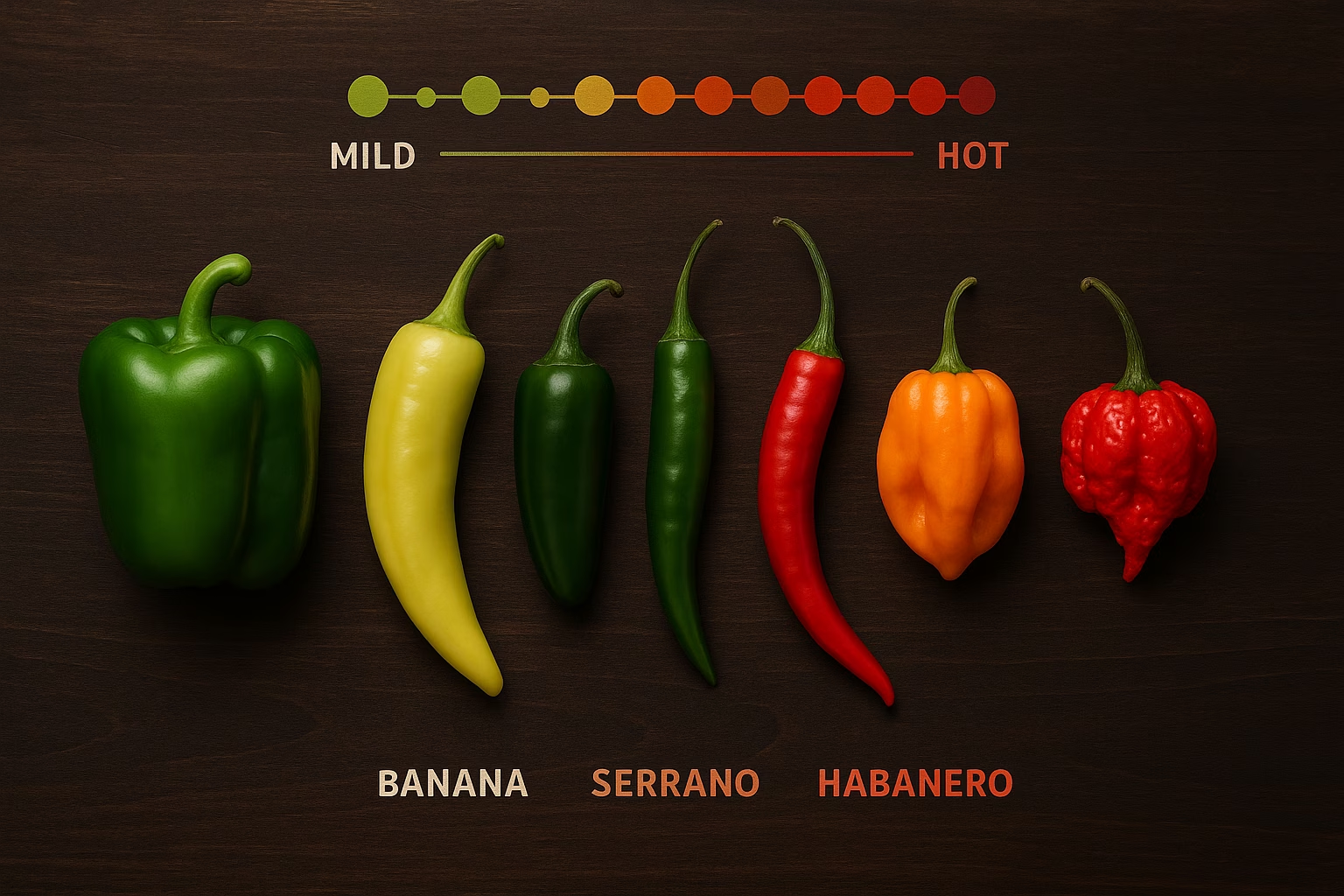
- Check Scoville Scale for understanding heat levels