Most home energy confusion comes from mixing up watts and kilowatt-hours. They sound similar enough to blur together, but they answer different questions.
Watts describe the speed of energy use. Kilowatt-hours describe the amount of energy used over time. A 100-watt device running for 10 hours uses 1,000 watt-hours, or 1 kWh. The watt number tells you how hard the device is pulling in the moment. The kilowatt-hour number tells you how much energy the device consumed while it was running.
The useful formula
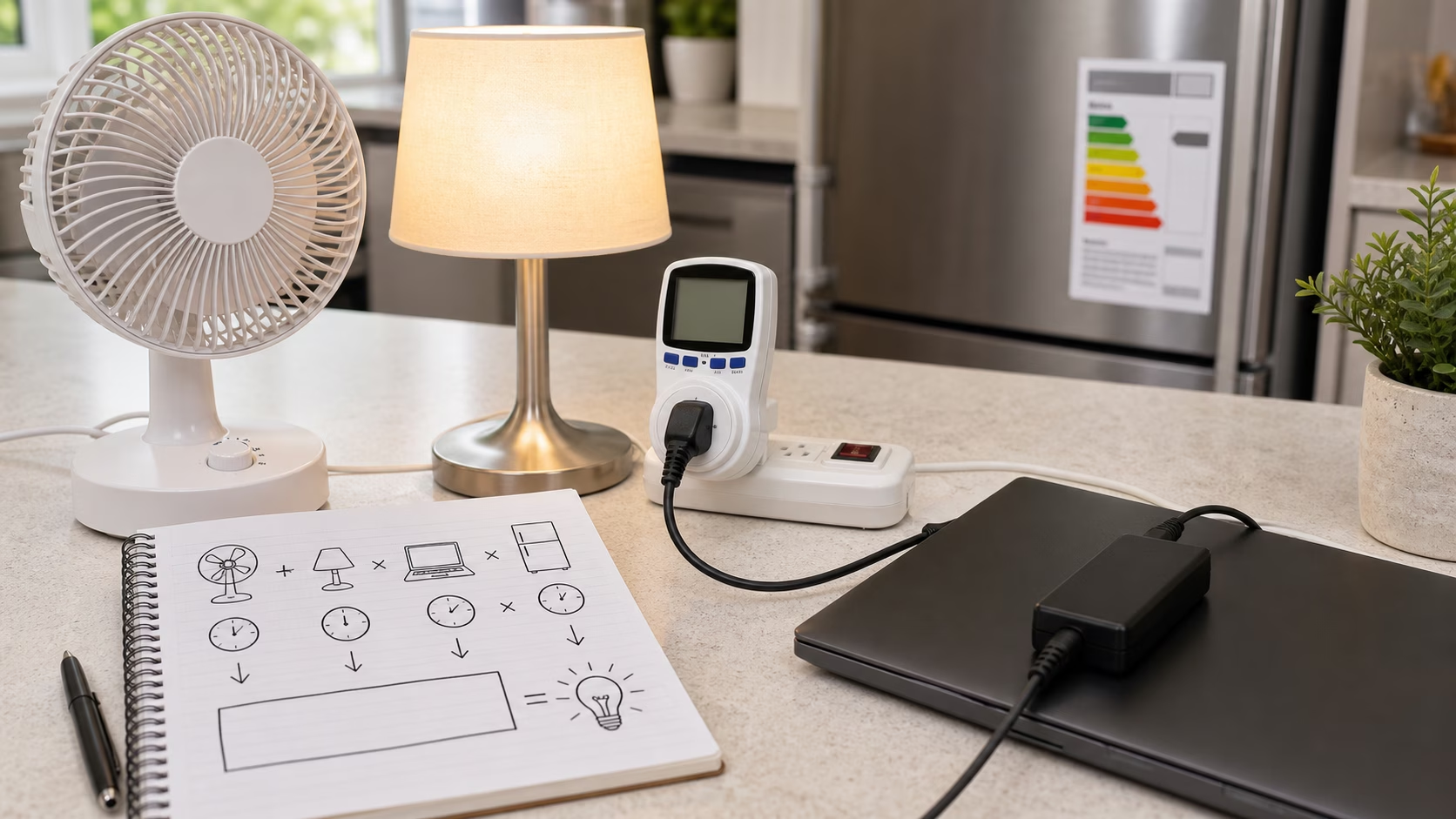
The basic formula is watts x hours = watt-hours. Divide watt-hours by 1,000 and you have kilowatt-hours. A 60-watt router and network setup running for 24 hours uses 1,440 Wh, or 1.44 kWh. A 1,500-watt appliance running for 20 minutes uses about 0.5 kWh. Short high-power loads and long low-power loads both matter, which is why intuition alone often gets backup sizing wrong.
This distinction explains why a small device can become a large energy user if it never turns off. It also explains why a very powerful appliance may not dominate the bill if it runs briefly. Energy planning is not just about the biggest number on a label. It is about power multiplied by time.
How loads behave
Continuous loads run for long stretches. Routers, medical equipment, aquarium gear, some fans, and standby electronics may not look dramatic, but they can consume a meaningful amount over a full day. During an outage, continuous loads are often the ones that quietly drain a battery because they never take a break.
Intermittent loads cycle on and off. Refrigerators, freezers, sump pumps, dehumidifiers, and heat pumps may use little or no power for part of the hour and then draw more when they run. Their average energy use matters for runtime, but their momentary draw matters for whether an inverter can carry them.
Surge loads are the loads that ask for extra power at startup. Pumps, compressors, motors, some tools, and some appliances can demand much more power for a short moment than they use while running. Surge affects inverter sizing even when total energy use looks reasonable on paper.
How to measure
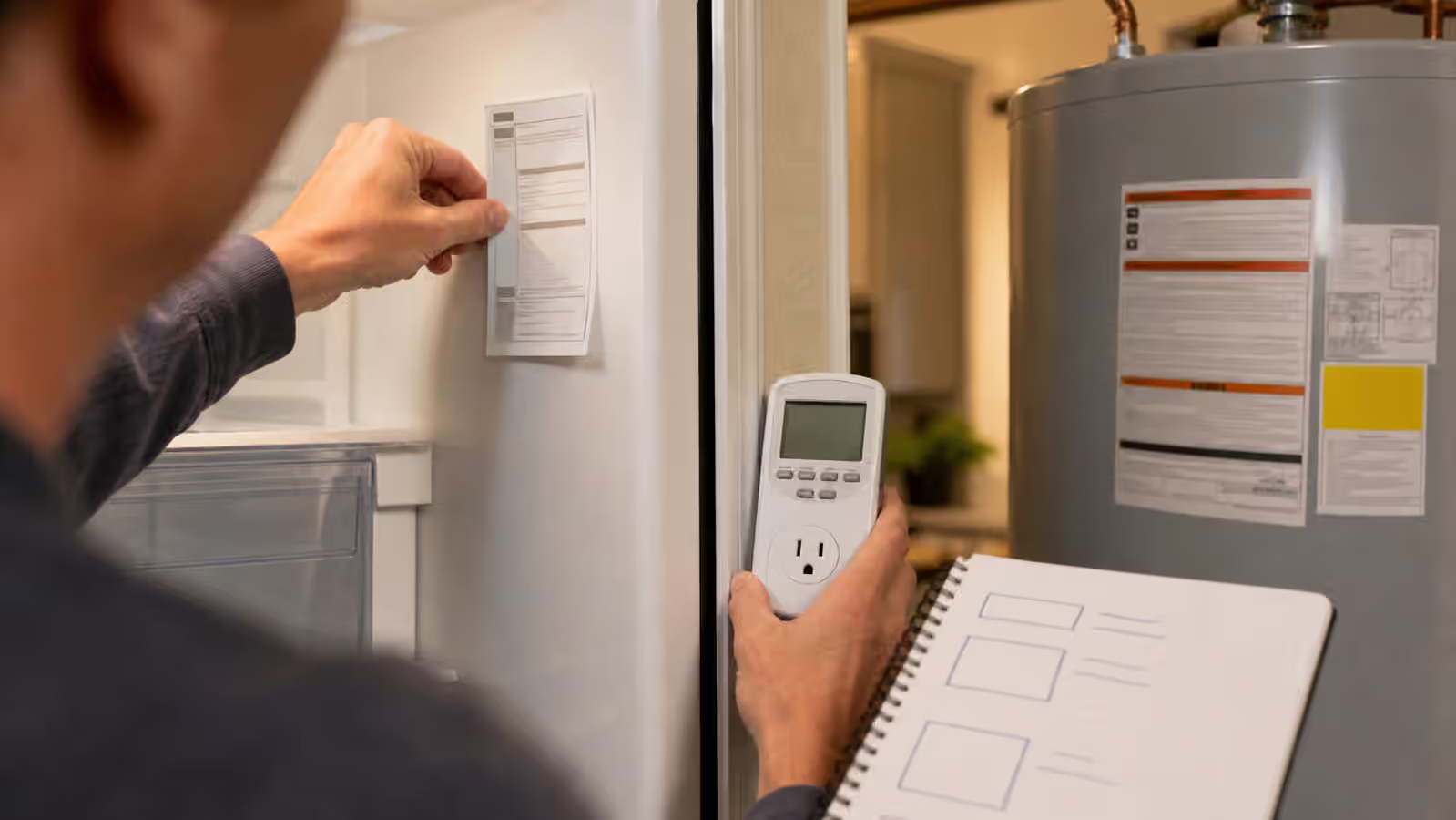
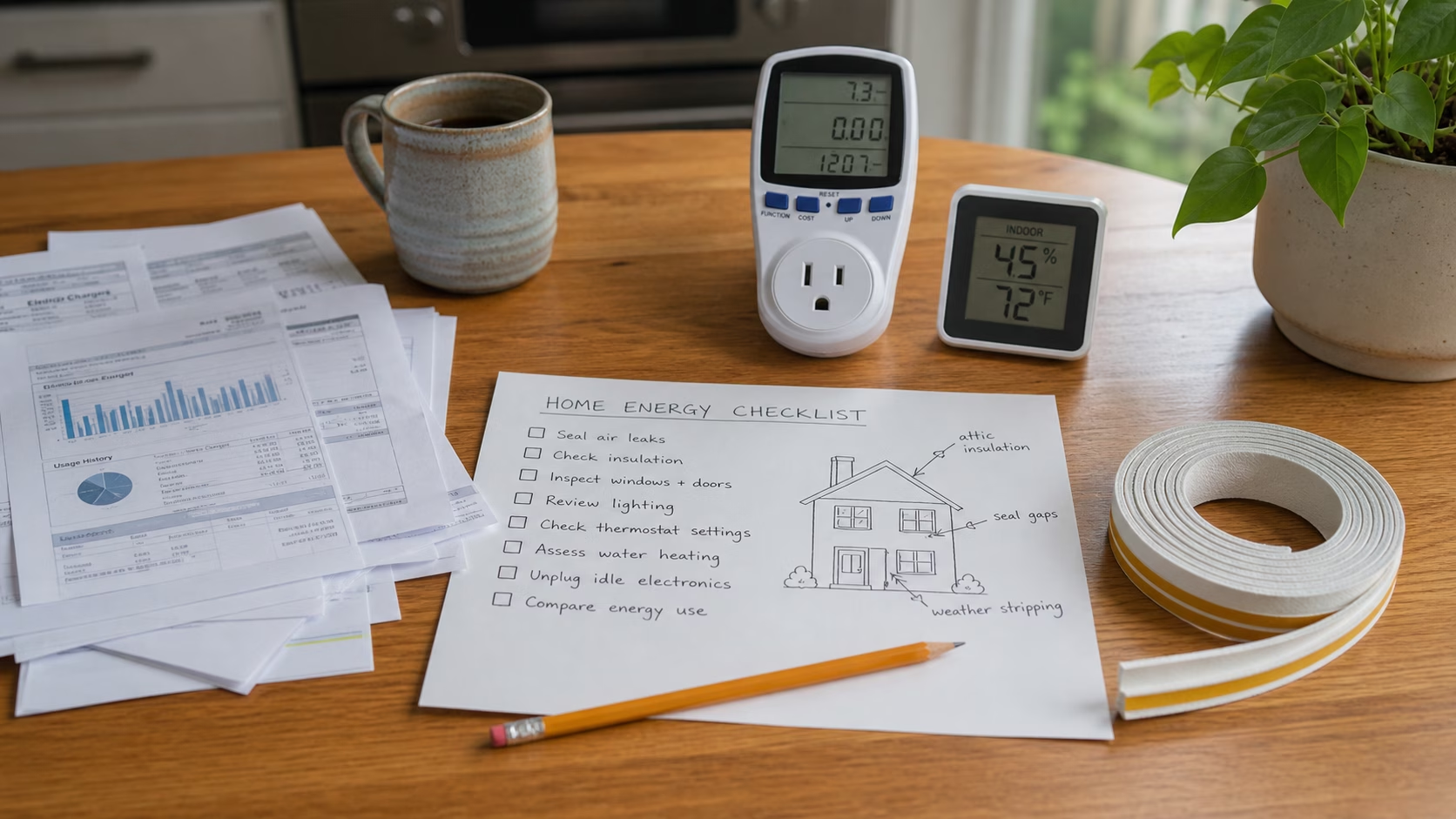
Use labels, manuals, utility data, smart plugs, a plug-in power meter , or a whole-home monitor. Plug-in meters are useful for ordinary 120V devices because they turn vague guesses into real numbers. For 240V appliances, do not improvise measurement. Use manufacturer documentation, professional data, or properly installed monitoring equipment.
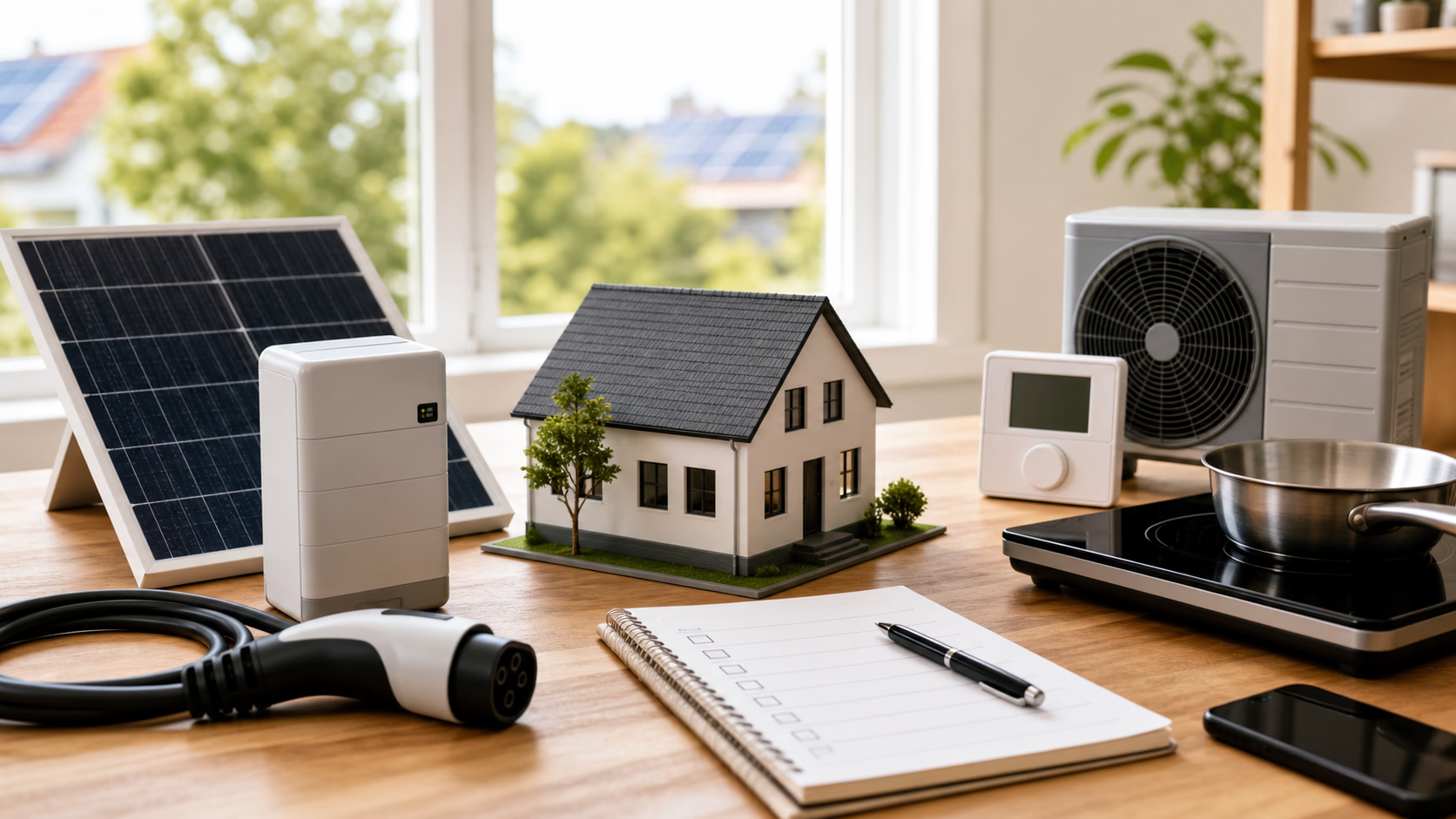
This math touches every upgrade. A portable power station needs it for runtime and surge capability. A home battery needs it for usable capacity and backed-up circuits. Solar panels need it for a daily production target. EV charging uses it to balance circuit capacity with driving needs. Heat pumps and induction ranges bring it into comfort, cooking, and panel planning.
Tiny homes make this math obvious because the systems are smaller. The same load-list habit appears in Tiny Home Solar Power Sizing .
The useful habit
Make a household load list once. Keep it in a note. Every future energy decision becomes easier because you are comparing equipment against your actual life, not a generic marketing scenario.
Apply this guide as a decision record
Use Watts, kWh, and Loads: The Home Energy Math That Matters to turn a vague household question into a checkable one. Its scope is specific: A beginner-friendly explanation of watts, kilowatt-hours, surge loads, and why backup power sizing starts with energy use. Before changing the setup, write down the condition you are trying to change, the constraint that matters most, and the evidence you still lack.
For a first pass through watts kwh loads, compare the current state with a relevant baseline and record one observation, measurement, or conversation. Make the smallest reversible change available. Keep the manual, model number, room condition, schedule, or maintenance note beside the decision so a future check does not depend on memory. Keep watts, kwh, loads in view as separate signals instead of treating them as one verdict.
A useful follow-up asks whether Watts, kWh, and Loads: The Home Energy Math That Matters improved the named problem without creating a new one. Check the tradeoff that fits this subject — heat, noise, comfort, water, power, wear, effort, or cost — and describe the result in plain language. If a boundary is safety-critical, stop at the guide’s limit and bring the details to a qualified local professional.
The conclusion for watts kwh loads should stay narrow. Record what was observed, which condition made the result possible, what maintenance keeps it dependable, and what would make you revisit the choice. That turns a guidebook into a decision record you can use again rather than a promise to remember.