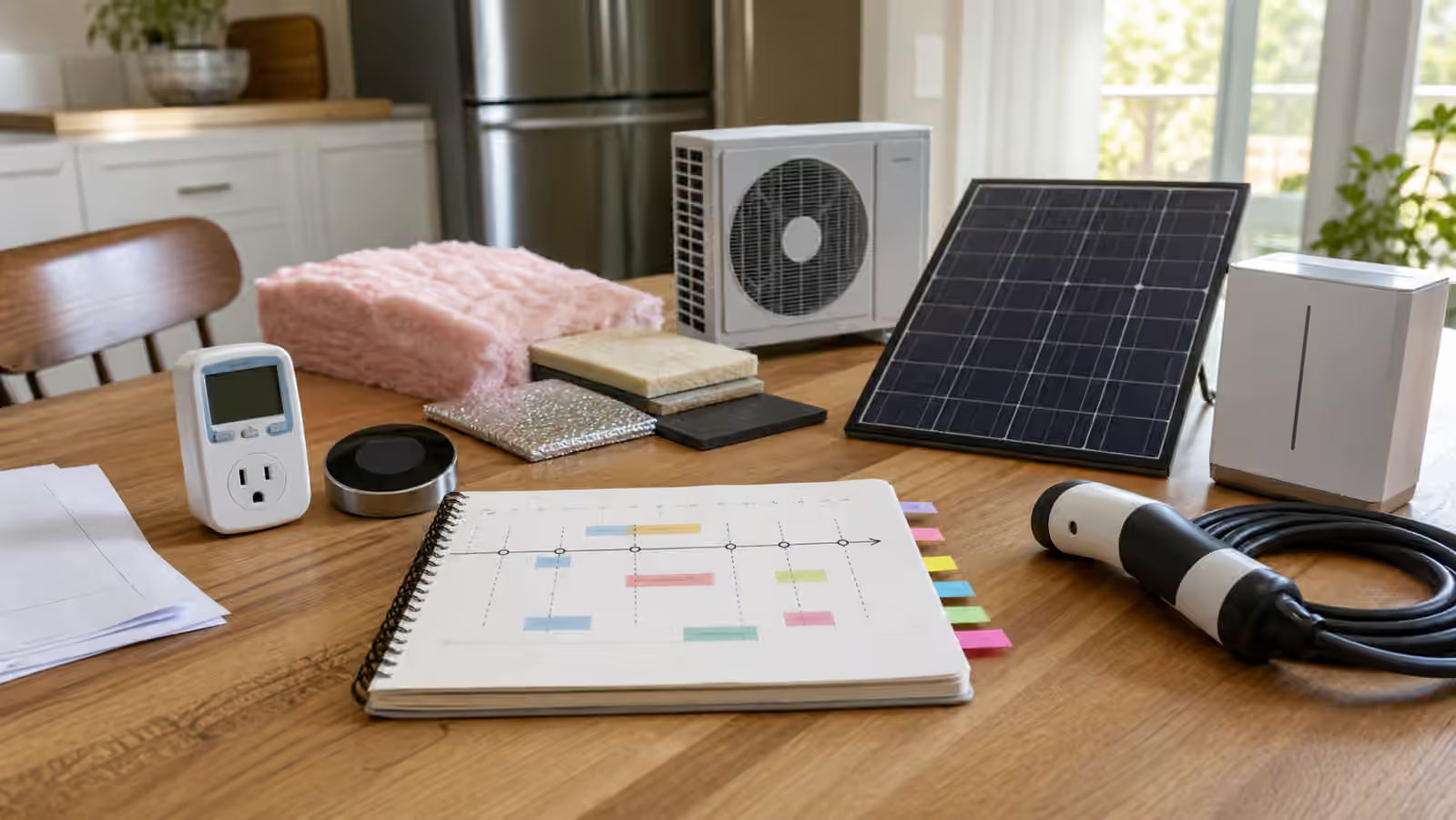
The utility bill is the oldest energy monitor in the house. It is slow, imperfect, and often surrounded by confusing charges, but it still tells a useful story. Before a homeowner prices rooftop solar, chooses a home battery, compares heat pumps, or wonders why the electric bill changed after buying an EV, the bill can show the household’s seasonal rhythm. It gives a baseline that is not based on memory, sales estimates, or a single afternoon with a plug-in meter. For background, see Virginia Tech Extension — Estimating Appliance and Home Electronic Energy Use .
That baseline matters because home energy planning is full of equipment that sounds precise. Solar proposals talk about annual production. Batteries promise backup hours. EV chargers list amperage. Heat pumps publish efficiency ratings. None of those numbers means much until the household knows what it already uses, when that use rises, and which fuels are carrying the work today. A bill baseline is not the final answer. It is the map you bring to the first serious conversation.
Start with the monthly shape
The most useful first pass is not the total cost. Cost can change because rates, taxes, delivery charges, fuel adjustment clauses, weather, and billing cycles change. Begin with energy units. Electric bills usually report kilowatt-hours. Gas bills may report therms, cubic feet, or another local unit. Heating oil, propane, and delivered fuels may arrive as separate receipts. The exact unit matters less than the habit of recording it consistently.
Line up at least a year if you can. A single month can be distorted by travel, guests, a heat wave, a cold snap, a billing estimate, or a new appliance. Twelve months show whether the house is summer-peaking, winter-peaking, balanced, or steadily high. A summer electric peak may point toward air conditioning, dehumidification, pool equipment, or EV charging. A winter gas peak may point toward space heating or water heating. A flat electric baseline can reveal always-on loads that deserve measurement with Home Energy Monitoring Basics .
Do not rush to diagnose every month immediately. The shape itself is useful. A house that uses little electricity most of the year and then spikes in August has a different planning problem than a house with a high overnight baseline every month. A house with large gas use in winter has a different electrification path than one where gas is mostly cooking and water heating. The bills are not judging the house. They are describing it.
Separate energy from money
It is tempting to use the dollar amount as the main score because that is what hurts. For planning, dollars are a mixed signal. They include energy, delivery, fixed charges, taxes, fees, minimum charges, riders, credits, and sometimes time-based or demand-based pricing. A solar proposal built only around bill cost can hide how much energy the home actually uses. A battery sized around a painful bill may miss the fact that the painful part is a fixed charge or a peak charge rather than ordinary kilowatt-hours.
Energy units let you compare the house to itself across seasons. Money tells you how the utility applies rules to that energy. Both matter, but they answer different questions. If electric kilowatt-hours are rising, something in the house or routine changed. If kilowatt-hours are stable but cost rises, the rate structure changed or fixed charges increased. If gas use falls while electric use rises after a heat pump installation, that may be expected rather than alarming.
The planning notebook should therefore keep a simple distinction: units used, bill cost, days in the billing period, and any obvious context. A thirty-four-day bill and a twenty-eight-day bill should not be compared as if they cover the same time. Divide by days when you need a fairer monthly rhythm. That small correction often prevents dramatic stories based on nothing more than the calendar.
Convert fuels into planning language
Homes that use more than one fuel need a combined view. Electric planning often gets attention because solar, batteries, EV charging, and induction cooking all land on the electric side. Yet a home that heats with gas or oil may have a large amount of energy sitting outside the electric bill. Electrification changes where that energy appears. A future heat pump may lower gas use and raise electricity use. A heat pump water heater may do the same. The electric bill after the upgrade can look larger even if total delivered energy falls.
This is where Whole-Home Energy Map helps. The map should show which fuels serve space heating, water heating, cooking, clothes drying, transportation, and backup equipment. The bill baseline tells you how large those categories may be across seasons. You do not need perfect conversion math for every early decision, but you do need to avoid pretending the electric bill is the whole house when major loads still live on another fuel.
A contractor or energy adviser may convert fuel use into comparable energy units for a load calculation or savings estimate. The homeowner’s job is to preserve the records and ask how the estimate treats the old fuel. If a heat pump proposal ignores past heating fuel use, it may be missing the main load it is supposed to replace. If a solar proposal ignores planned EV charging, it may be built around yesterday’s house rather than tomorrow’s.
Look for base load before big purchases
Every bill has some amount of energy that keeps flowing when nobody is cooking, washing clothes, charging a car, or changing the thermostat. That quiet layer includes refrigeration, networking, standby electronics, pumps, controls, chargers, and sometimes equipment that should not be running as often as it does. The monthly bill cannot identify every device, but it can hint at whether the base load is high enough to investigate.
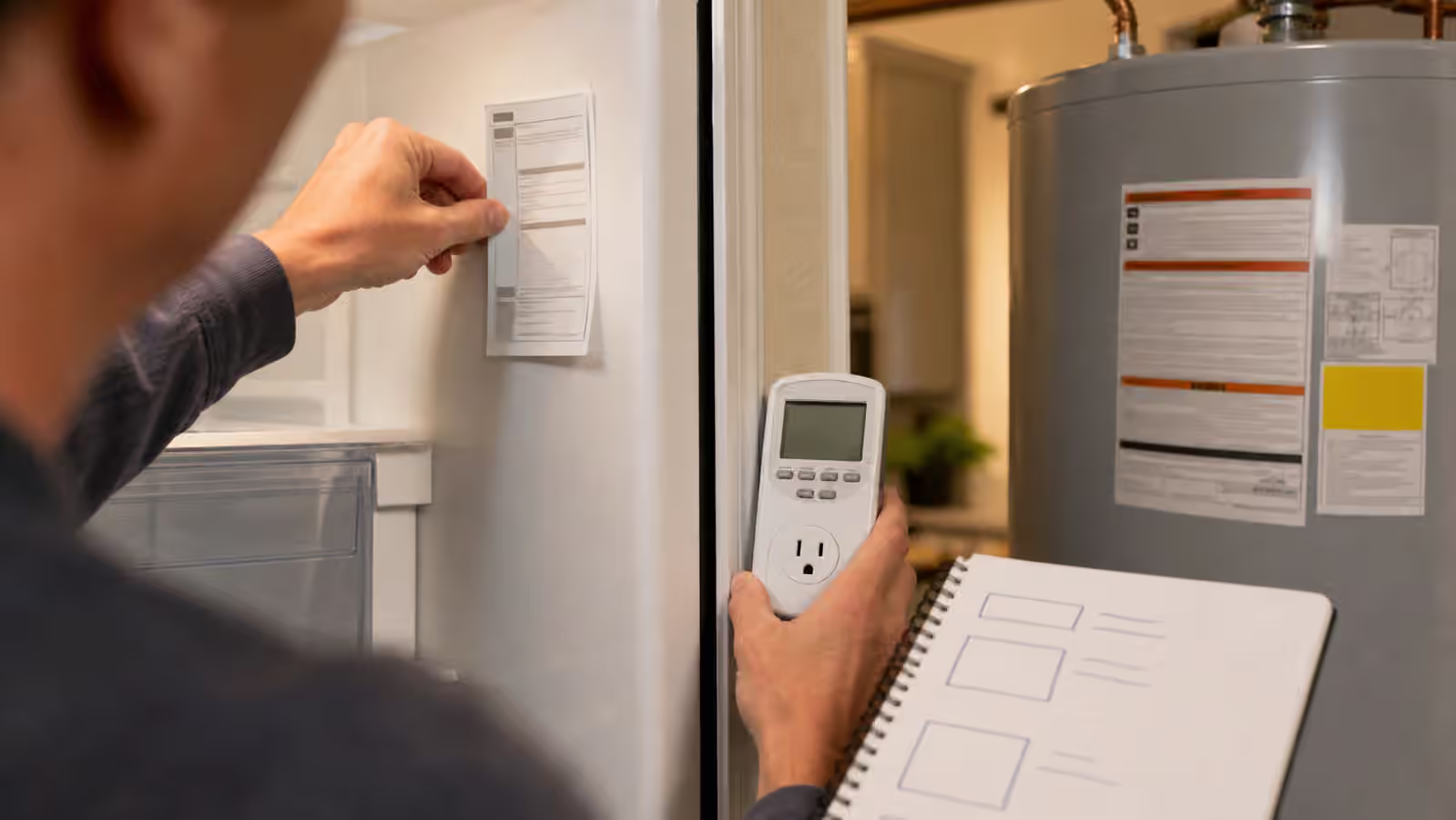
If electric use stays high in mild months when heating and cooling are light, start with Standby Loads and Home Office Energy and a few plug-in measurements. A whole-home monitor can help, but patient observation works too. Refrigerators, freezers, dehumidifiers, pumps, and network gear deserve attention because they run across many hours. A small load that runs constantly can matter more than a large load used briefly.
Base load is especially important for batteries and outage planning. A battery does not care whether an always-on load feels small. It has to carry it every hour. Reducing accidental background use can stretch a portable power station or home battery without buying a larger system. That is not the glamorous part of resilience, but it is often one of the cheapest.
Use bills to test upgrade promises
Upgrade proposals should be compared with the baseline, not with a vague memory of the house. If a solar estimate says it will offset most annual electricity use, check the annual kilowatt-hours used by the home and ask how future loads were handled. If a battery estimate promises backup time, compare it with the loads chosen in Outage Priority List rather than the whole bill. If an EV charger plan assumes overnight charging, check whether the household already has a strong nighttime baseline.
Bill history also keeps weatherization honest. Air Sealing and Insulation Priorities may reduce heating or cooling loads, but the bills will show the change slowly and imperfectly because weather varies. Look across comparable seasons rather than demanding proof from the next invoice. A colder winter can hide a better envelope. A mild summer can make a weak air conditioner look efficient. The baseline helps you ask better questions, not declare victory too soon.
The same caution applies after electrification. A heat pump may move heating from gas to electricity. The electric bill may rise while the gas bill falls. A new EV may add substantial electricity while removing gasoline purchases that never appeared on the utility bill. A bill baseline needs enough context to avoid calling every increase a problem.
Keep the baseline alive
A useful baseline is not a decorative spreadsheet made once and forgotten. Update it when the house changes. Add notes for a new EV, heat pump, water heater, induction range, baby, roommate, home office, freezer, dehumidifier, solar system, battery, or major insulation work. Energy use follows life. The notes explain why the line moved.
The baseline can stay simple. A folder of bills, a spreadsheet, or a notebook is enough if it records the date, billing days, energy units, total cost, major fuel type, and important changes. The goal is not to become the utility’s accountant. The goal is to make home energy decisions with a memory longer than last month.
Once the bill baseline is visible, the rest of the lab gets calmer. Watts, kWh, and Loads explains individual devices. Monitoring shows real-time behavior. The bill shows the long view. Together they turn a pile of equipment choices into a household energy story with seasons, habits, and evidence.