A thermostat schedule is not a personality test for the house. It is a small operating plan for when comfort matters, when the home can drift, and how quickly the equipment can recover without waste. Used well, it keeps the house steady enough that people stop touching the controls. Used poorly, it creates a cycle of cold mornings, hot afternoons, emergency overrides, and arguments with a screen that was supposed to simplify life. For background, see DOE — Energy Saver (2022): heating, cooling, and heat pumps .
The useful way to think about scheduling is to start with the building, not the device. A tight, well-insulated home can often coast for hours without much change. A leaky home with big west-facing windows may swing quickly. A heat pump, furnace, boiler, mini-split, or window air conditioner each responds differently. The same schedule that works in one home can feel erratic in another.
Comfort starts with drift
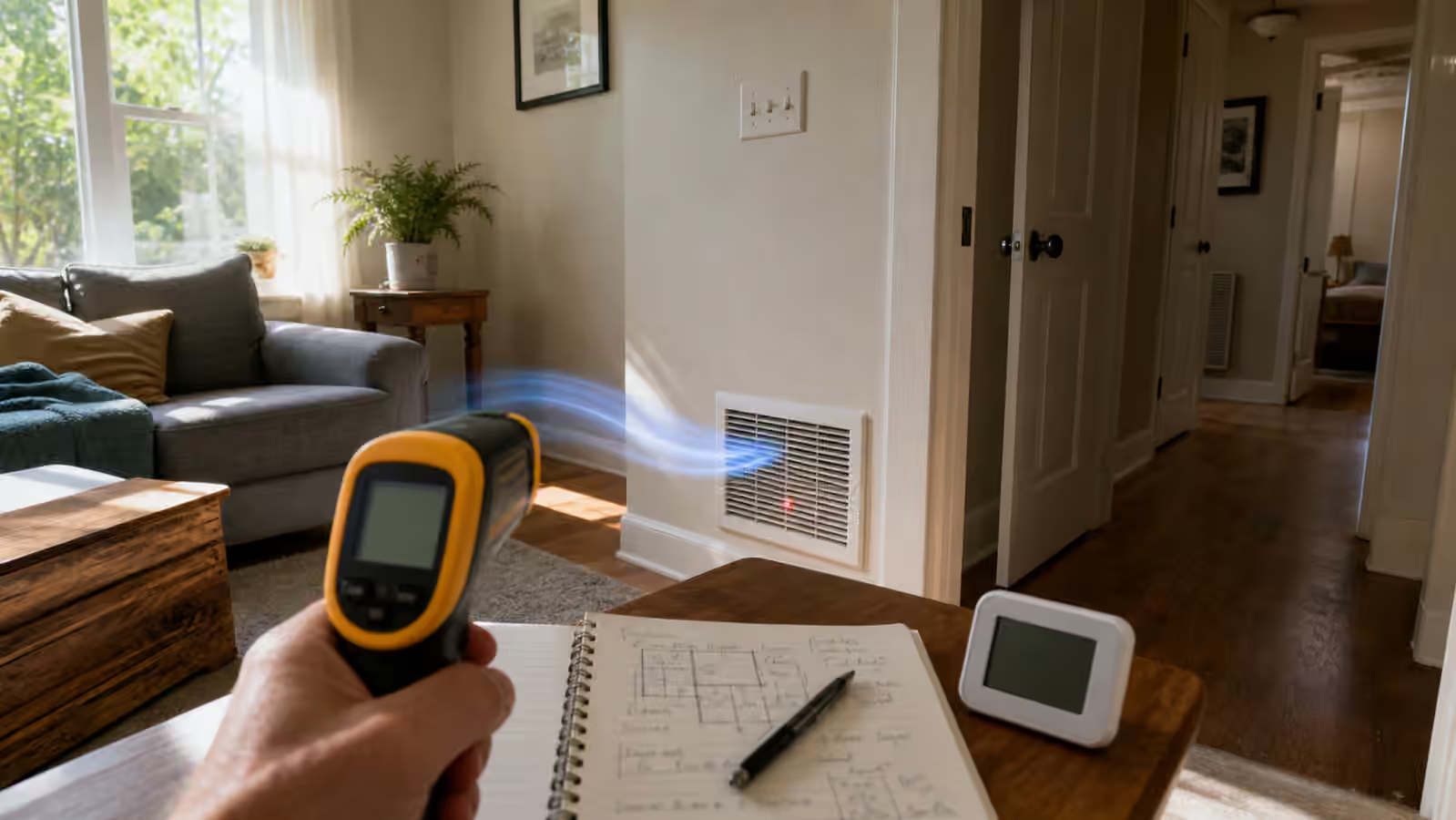
Before changing the schedule, learn how the home drifts. Pick a normal day, avoid unusual cooking or open-window experiments, and notice how quickly the main rooms warm up or cool down when the system is not running hard. The exact numbers are less important than the pattern. Does the bedroom lose heat before the living room? Does a sunny room overheat in the afternoon? Does the downstairs stay comfortable while the upstairs runs away? These clues explain why one thermostat setting can produce several different lived experiences.
This is where Whole-Home Energy Map helps. Mark the thermostat location, rooms that lag, rooms that gain sun, and rooms that stay occupied at odd hours. A thermostat in a hallway may not know that a corner office is cold. A bedroom over a garage may not match the main floor. A mini-split head may sense air near itself rather than the chair where someone sits all evening. Schedules become more realistic when the thermostat is treated as one sensor in a messy house.
The drift test also keeps setbacks honest. A deep overnight setback can save energy in some homes and punish others with a long recovery. If the house loses heat quickly, the morning warm-up may run hard right when everyone is busiest. If the house coasts slowly, a smaller setback may be enough. The point is not to find the most aggressive number. The point is to let the home relax when comfort is less important without creating a recovery problem.
Heat pumps need a different kind of patience
Heat pumps reward steadier operation than many people expect. A furnace may blast heat and recover quickly from a large setback. A heat pump often works best when it moves heat steadily, especially in colder weather. Asking it to recover a large temperature gap can bring on auxiliary heat, short cycling, or long uncomfortable runs, depending on the system. That does not mean schedules are useless with heat pumps. It means the schedule should respect the equipment.
Heat Pump Thermostat Controls goes deeper into balance points, auxiliary heat, fan behavior, and installer settings. The scheduling habit is simpler: make changes gradually, observe the recovery, and avoid treating every uncomfortable hour as proof that the heat pump is wrong. A heat pump may need a smaller setback, an earlier recovery, or a steadier setpoint during severe weather. In milder seasons, it may tolerate a wider drift.
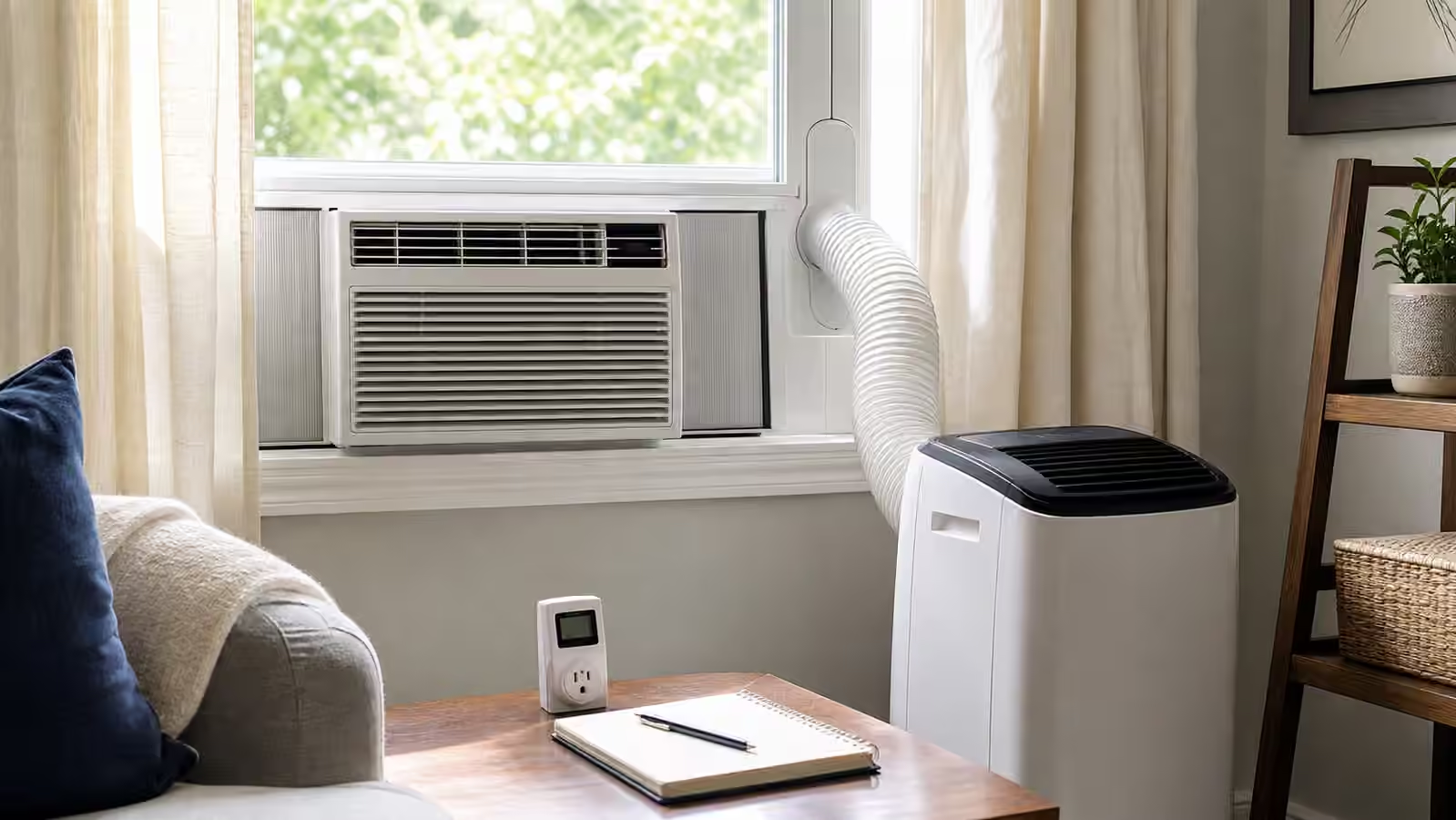
Mini-splits add another wrinkle because they may serve a zone rather than the whole house. A ductless head in a living space can keep that room comfortable while bedrooms drift. A schedule for the head should match the room it actually serves. If doors are closed or air paths are weak, a beautiful schedule on the remote will not solve distribution. Ductless Mini-Split Placement Planning is worth reading before assuming the thermostat is the only control problem.
Cooling schedules are about heat gain
Cooling schedules fail when they ignore sunlight, humidity, and the time it takes surfaces to cool. A house that bakes all afternoon may not become comfortable just because the thermostat drops at dinner. Walls, floors, furniture, and attic heat can keep giving heat back to the room. If the system waits too long, the evening recovery can feel slow and noisy.
That does not mean cooling should run all day for empty rooms. It means the schedule should work with shade, fans, and humidity control. Window Shading and Solar Heat Gain can lower the afternoon burden before the thermostat ever acts. Ceiling Fans and Room Circulation can make a room feel better at a slightly warmer setting when people are present. Dehumidifier Energy Planning matters because damp air can make a reasonable temperature feel wrong.
The best cooling schedule often starts earlier and gentler than the dramatic version people imagine. Letting a house climb too far may save a little run time and then cost comfort during recovery. A modest daytime drift, good shading, and a sensible pre-cool before occupied hours can be calmer than a hard off-and-on routine. The right answer depends on equipment, climate, utility rates, and occupancy, but comfort usually improves when the schedule avoids large swings.
Do not schedule against real life
A schedule that ignores the household will be overridden. Shift work, remote work, naps, pets, guests, medical needs, school schedules, and weekend routines all matter. The thermostat should reflect recurring life, not an imaginary house that empties at eight and refills at six. If someone works from a cold room every weekday, the schedule needs to recognize that room or the whole plan will collapse into manual changes.
This is where smart controls can help, but they do not remove judgment. Occupancy sensing may miss quiet people. Geofencing may misunderstand shared households. Learning modes may copy bad habits if the first week is chaotic. Remote sensors can improve comfort in rooms that matter, but only if they are placed away from sun, drafts, electronics, and closed-off corners. A sensor is a measurement point, not a promise.
Keep the schedule simple enough to remember. A weekday, a weekend, and a sleep period may be enough. Too many tiny periods make troubleshooting harder because nobody knows which rule is active. If a household frequently overrides one period, that period is wrong. Adjust it rather than blaming the people in the home.
Use bills and observations together
Thermostat changes should be checked against both comfort and energy use. Utility Bill Baselines for Home Energy Planning gives the long view, while daily observation explains what happened inside the home. A lower bill paired with miserable mornings is not a success. A comfortable house with a surprising bill may mean the schedule, equipment, weather, or another load deserves attention.
Avoid judging a schedule from one strange week. Weather, guests, cooking, travel, open windows, and laundry can distort the story. Give a change enough time to show a pattern, then compare similar conditions. A small notebook entry can be more useful than a perfect spreadsheet: what changed, how the rooms felt, and whether the equipment sounded different.
Thermostat schedules work best when they disappear into routine. The house is comfortable when occupied, allowed to drift when it can, and protected from extreme swings that equipment cannot gracefully fix. That is not a glamorous upgrade, but it is one of the cheapest ways to make the rest of the home energy plan behave.