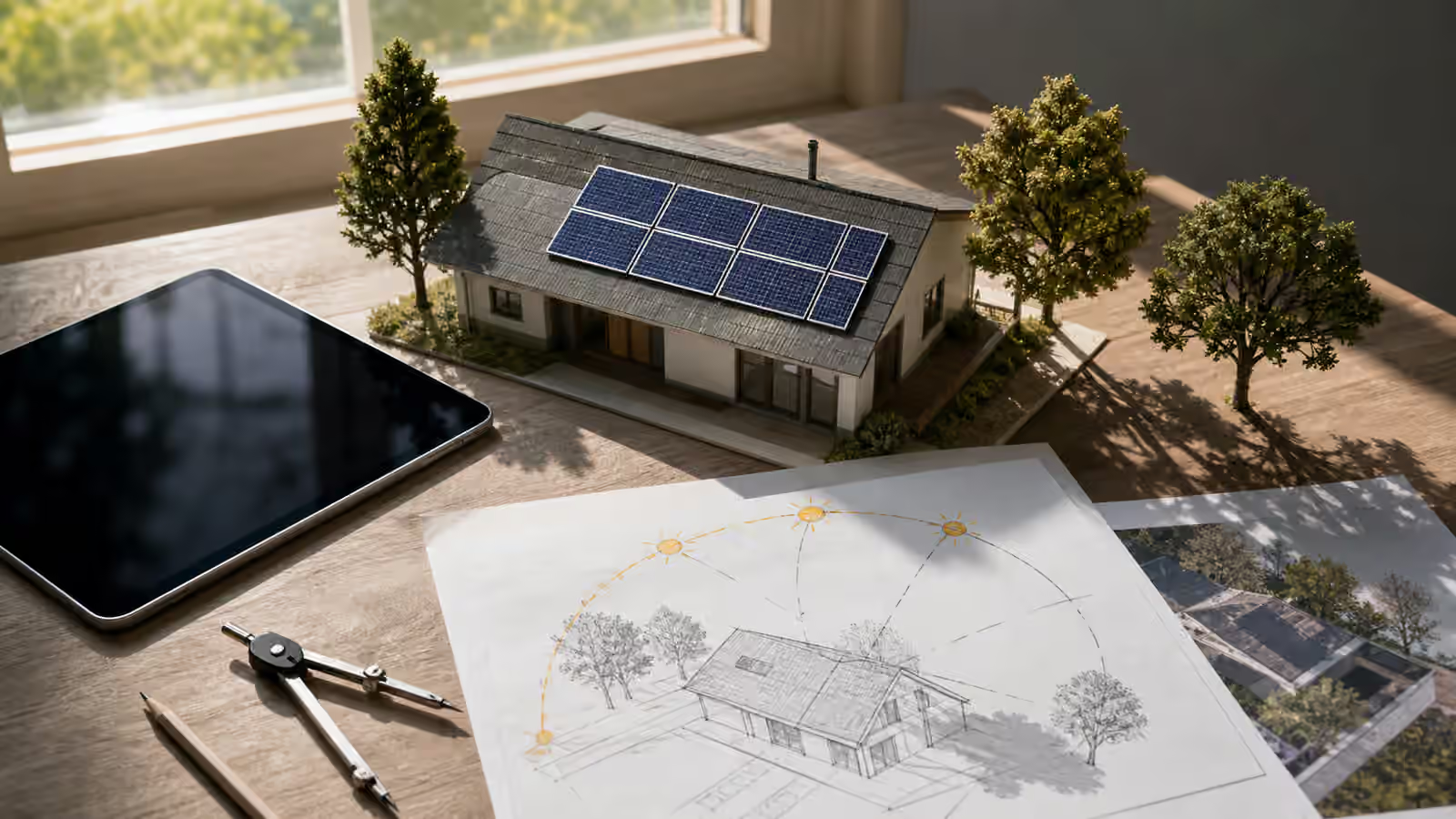
Solar planning often begins with annual kilowatt-hours, but the roof starts with geometry. Panels can only use the sunlight that reaches them. A roof plane with a good angle, a clear sky view, and few obstructions behaves differently from a roof plane that spends part of the day behind a chimney, dormer, tree, neighboring building, or taller section of the same house. Before a homeowner compares proposals or guesses array size, the roof deserves a slow look. For background, see DOE — Energy Saver (2022): installing a small solar electric system .
That slow look does not require climbing on the roof. In fact, roof access is a safety and professional-work issue for many homes. The useful homeowner work is observational: which roof planes face useful sun, which shadows appear, which seasons matter, what condition the roof is in, and which assumptions a solar proposal is making. Solar Panel Sizing is stronger when the available sunlight has been treated as a real site condition rather than a generic input.
A clear roof is not the same as a clear solar window
A roof can look open from the ground and still have a complicated solar window. Shade does not have to cover the entire roof to matter. A narrow shadow crossing a panel group at the wrong time can reduce production or force design choices around panel electronics, layout, and string behavior. Modern systems have ways to manage partial shade, but those tools do not make shade disappear. They make the consequences more manageable.
Start with the times of day when the roof is in direct sun. Morning, midday, and afternoon sun are not equal in every location or rate plan, but the broad pattern is useful. A roof that gets strong midday exposure may be a good candidate. A roof that is shaded until late afternoon may produce less than its open square footage suggests. A roof with scattered tree shade may need a different layout than a roof with one predictable chimney shadow.
The observation should include seasons. A tree that is harmless in midsummer may cast a long winter shadow. A neighboring building may matter when the sun is low. Deciduous trees change with leaf cover, but bare branches can still shade. Evergreen trees are more consistent. The roof’s solar story is a year-round story, not a single bright day in June.
Orientation sets expectations, not destiny
People often hear that one direction is best for solar and assume every other roof is poor. Orientation matters, but it is not the only variable. Roof pitch, shade, climate, local rates, panel layout, inverter design, and household load timing all affect the result. A slightly less ideal orientation with open sky may outperform a theoretically ideal plane with heavy afternoon shade.
The planning question is not whether the roof matches a textbook diagram. It is how each usable roof plane produces across the day and year. East-facing planes may make more morning energy. West-facing planes may make more afternoon energy. South-facing planes often receive strong midday sun in many northern-hemisphere contexts. North-facing planes may be weak in some places and still usable in others depending on pitch, latitude, cost, and goals. Local solar professionals use modeling tools because simple rules are not enough.
Solar Panel Buying Guide becomes more useful when the homeowner can ask how the proposal treats each roof plane. Are panels placed where production is strong, or where they are easiest to fit? Are shaded areas excluded or managed? Is the design built around annual production only, or does it consider when the home uses energy?
Roof condition belongs in the solar decision
A solar array is a long-lived building system. Installing panels on a roof that is near the end of its service life can create avoidable work later. Removing and reinstalling panels for roof replacement adds cost, coordination, and risk of delay. That does not mean every roof must be new before solar is considered. It does mean roof condition, age, drainage, flashing, penetrations, access, and structural questions belong in the first conversation.
Homeowners should not diagnose roof structure from the driveway. They can, however, collect records and notice obvious issues. When was the roof last replaced? Are there leaks, patched areas, sagging sections, failing shingles, old skylights, or complex valleys? Are there vents, chimneys, dormers, satellite mounts, or plumbing stacks in the desired panel area? Does the roof have enough access for maintenance and safe work?
Good solar planning also respects future roof work. A design that fills every open surface may make later repairs harder. A design that ignores a worn roof may look cheaper at first and more expensive later. Solar is not only an electrical project. It is also a roof project.
Shade sources need names
Vague shade is hard to plan around. Named shade is easier. The oak tree shades the east roof until midmorning. The chimney cuts across the lower south plane in winter. The dormer shades one corner after lunch. The neighbor’s building affects late afternoon in December. Those plain observations help a proposal become specific.
A homeowner can take ground-level photos from safe places at different times of day. The photos do not replace professional shade analysis, but they preserve context. They also help the homeowner remember that shade moves. A roof that looks perfect at noon may be compromised at nine in the morning. A roof that looks shaded from one angle may be more open from another.
Tree decisions deserve care. Removing or pruning trees for solar may affect shade, cooling comfort, stormwater, privacy, habitat, property appearance, and local rules. It can also change the cooling load discussed in Window Shading and Solar Heat Gain . A tree that blocks panel production may also keep a west room livable. The solar design should be weighed against the whole home energy map, not only the roof.
Proposals should explain their assumptions
A useful solar proposal should make its assumptions visible. It should show which roof planes are used, the approximate array size, expected production, major shade constraints, inverter or optimizer approach, battery assumptions if included, and any electrical work needed. It should also make clear what is not included. Roof repair, tree work, panel upgrades, trenching, battery backup, and critical-loads work may be separate.
The homeowner does not need to become a solar designer, but they should ask how shade was modeled, whether the model uses real site data, and how production varies by season. They should ask whether the proposal assumes future EV charging, heat pump use, or other loads from Electrical Panel Planning Before Home Electrification . A proposal based on last year’s electric bill may miss the house that is being planned for next year.
Solar Electrical Safety also belongs near this conversation. Roof layout affects wiring, disconnects, rapid shutdown requirements, access pathways, labels, and emergency considerations. Those details are not decoration. They are part of making a roof system real.
Ground, garage, and portable options have different tradeoffs
Not every solar plan belongs on the main roof. Some homes may consider a detached garage, carport, pergola, ground mount, or portable solar kit. Each option changes the problem. A ground mount may have better orientation and easier service access but needs space, structure, trenching, permitting, and protection from damage. A garage roof may have a clear plane but a longer electrical path. A portable solar kit may help small backup loads but is not the same as an interconnected rooftop system.
Solar Panels vs Solar Generators separates permanent building systems from portable gear. That distinction matters when the main roof is shaded or complex. A portable kit may be right for camping, small outage loads, or renters. It should not be presented as a simple replacement for a properly designed home solar array.
The site should lead the decision. A clean roof can make solar straightforward. A shaded roof may still work with careful design. A roof nearing replacement may need sequencing. A rental or apartment may point toward portable options instead of permanent equipment. The right answer is the one that matches the actual surfaces available.
Put roof sunlight on the home energy map
The roof belongs on Whole-Home Energy Map just as much as the panel, battery, EV charger, and major appliances. Mark the roof planes that seem usable. Note shade sources. Add roof age and known repairs. Add future loads such as EV charging or a heat pump. Add whether backup power is part of the goal or whether the solar plan is only about normal operation.
This map keeps solar from becoming a disconnected purchase. A household that needs daytime production for flexible loads has one design conversation. A household that cares about evening peaks, battery reserve, or outage loads has another. A household with a shaded roof may need efficiency work, load timing, or a different site option before it needs a bigger array.
Solar panels are often described by their rated output, but the roof decides what that rating can become. Shade, orientation, roof condition, and timing are not small details. They are the site. Once they are visible, a solar proposal is easier to read, easier to question, and easier to fit into the rest of the home energy plan.