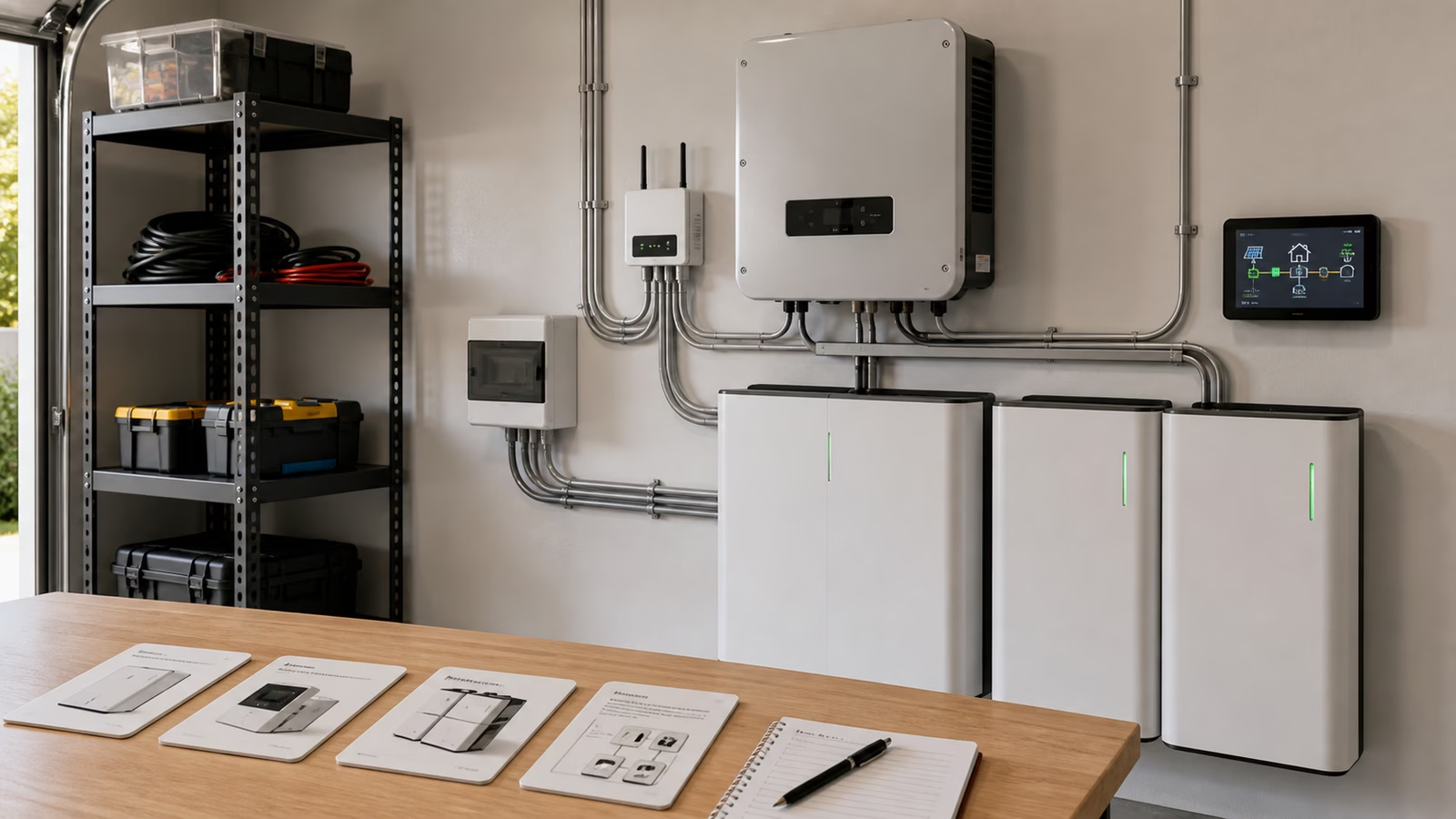
A home battery is often sold as hardware, but the controls decide how it behaves day after day. The same battery can feel generous, disappointing, cautious, or clever depending on whether it is saving energy for outages, using solar production inside the home, responding to time-based settings, or holding reserve for a forecast storm. Capacity and inverter output still matter, but control modes are the part the household lives with. For background, see DOE — Energy Saver (2022): installing a small solar electric system .
The useful question is not which mode sounds most advanced. The useful question is what the battery is supposed to do for this home. Backup resilience, solar self-consumption, bill management, peak reduction, and daily cycling are related goals, but they are not identical. A setting that helps one goal can weaken another if the household has not chosen its priorities.
Reserve is a real design choice
Backup reserve is the portion of the battery held back for outages. A high reserve can make the home feel safer before a storm, but it leaves less capacity for daily solar shifting or bill management. A low reserve can let the battery work harder every day, but it may leave the household with less stored energy when the grid fails. Neither choice is universally correct.
The reserve should follow the outage plan. If the battery backs up only a few critical circuits, a moderate reserve may carry the refrigerator, network, lights, and selected outlets for a useful period. If the system is expected to support heating, cooling, a well pump, or other larger loads, the reserve conversation becomes more serious. Backup Power Sizing and Critical Loads Panel Planning give that discussion a better foundation than a guess.
Reserve also has a psychological role. Some households sleep better knowing the battery is held mostly full. Others want the battery to cycle daily because they bought it to use solar energy after sunset. A good installer or system designer should be able to explain the tradeoff plainly. If a proposal promises maximum savings and maximum backup without naming the reserve behavior, the plan is not finished.
Self-consumption is about timing
Solar self-consumption means using more of the solar energy on site instead of exporting it when the home does not need it. A battery can help by charging during sunny hours and discharging later when cooking, lighting, entertainment, cooling, or office loads rise. That can make the solar system feel more connected to the household rather than only to the utility meter.
The benefit depends on the actual utility arrangement, system design, and household schedule, so it should be discussed carefully rather than treated as a universal rule. The evergreen planning question is simple: does storing midday production for later use help this home under the rules it actually has? Solar Panel Sizing estimates production and future loads, but control settings decide how much of that production is shifted across the day.
Self-consumption also exposes load habits. If the home exports heavily at midday while the EV, dishwasher, laundry, and water heating all wait for evening, the battery may be doing work that a simpler schedule could share. Load Shifting at Home can reduce stress on the battery by moving flexible loads into better hours. Controls and habits should cooperate rather than compete.
Time-based modes need good assumptions
Some battery systems can operate by schedule. They may charge, discharge, or hold energy based on time periods, utility rates, expected solar production, or household demand. This can be useful where time-based billing or demand management matters. It can also be confusing if the household does not understand why the battery charged from the grid, refused to discharge, or saved energy during a period when people expected it to help.
The assumptions behind the schedule deserve review. When is the house usually occupied? When does the EV charge? When does the heat pump water heater recover? When is cooking most likely? Is there a home office load during the day? Does summer cooling create a late afternoon peak? Does winter bring different behavior? Home Energy Monitoring Basics turns these questions into observations instead of opinions.
Time-based control should also leave room for manual clarity. A household should know how to place the system in a backup-focused setting before a forecast outage if the equipment supports it, how to return to ordinary operation, and what the app indicators mean in plain language. A system that only one person understands is fragile. The controls may be automated, but the plan should be explainable.
Storm settings are not magic
Many battery systems include a storm, weather, or backup-priority behavior. The general idea is to raise reserve or charge ahead of likely outages. That can be useful, but it is not a promise that the battery will cover every load for every outage. The physical limits still apply: usable capacity, inverter output, surge capability, solar recharge conditions, backed-up circuits, and load shedding.
Storm preparation should therefore include the household, not only the app. Before bad weather, decide which loads can be turned off, which flexible tasks should be finished early, and which large loads should be avoided if the grid fails. A battery can be drained quickly by electric resistance heat, an unmanaged EV charger, a dryer, or cooling loads beyond the system’s design. The same hardware that feels robust with lights and a refrigerator can feel small if the home treats it like the grid.
Outage Food, Water, and Communications belongs beside the battery settings because resilience is not only stored electricity. Cold food, charged phones, safe water, working communication, and a plan for comfort can reduce pressure on the battery. The best outage mode is a whole-house habit, not a button.
Load shedding should be named
Load shedding means selected loads are turned off, delayed, or blocked when the system cannot support everything. In a battery-backed home, this may happen through a critical-loads panel, smart panel, controlled breakers, relays, appliance settings, or simpler household rules. The details vary by equipment and local requirements, but the principle is evergreen: the battery should protect priorities before comforts.
A proposal should name what happens during backup. Does the battery support the entire panel, a subpanel, or selected circuits? What happens if the heat pump starts while the oven is on? Is the EV charger disabled automatically during backup? Can the homeowner override anything? Which loads are never backed up? These questions connect directly to Home Battery Buying Guide because the battery box is only one part of the system.
Load shedding is not a failure when it is planned. It is what lets a finite battery feel useful. The problem is hidden shedding that surprises the household, or missing shedding that lets a large load drain the system before anyone notices. Good controls make the boundary visible.
The app is not the plan
Battery apps can be helpful. They show state of charge, solar production, home use, grid import or export, and backup behavior. They can also make the system feel more precise than it is. Measurements have delays, device labels may be broad, and graphs can encourage constant checking without improving decisions. The app is a window into the plan. It is not a substitute for the plan.
The plan should live in ordinary language. What reserve is normal? What reserve is used before storms? Which circuits are backed up? Which large loads should be avoided during an outage? What should the system do on a sunny day? What should it do during a long cloudy stretch? Who knows how to change the setting, and who knows how to put it back? These questions are more durable than any particular screen layout.
Put the answers into Whole-Home Energy Map . Draw the solar array, battery, inverter, panel, backed-up loads, flexible loads, and controls as relationships. The battery will make more sense once it is no longer a mysterious box on the wall. It becomes part of a household rhythm: store when storage helps, reserve when resilience matters, discharge when the load is worth it, and stay out of the way when a simpler schedule would do.
Solar battery controls are successful when they make decisions calmer. The household knows what the battery is saving, what it is spending, and why. That clarity is worth as much as another graph.