Load control sounds like something that belongs in a utility control room, but much of it starts with ordinary household decisions. A desk lamp can turn off when nobody is working. A media cabinet can sleep more deeply. A dehumidifier can be watched before it is scheduled. A battery charger can be unplugged when the tool is full. Smart plugs, switched power strips, and timers are small devices, but they can make the difference between a house that uses energy intentionally and one that lets convenience quietly become a baseline load. For background, see Virginia Tech Extension — Estimating Appliance and Home Electronic Energy Use .
The goal is not to automate every outlet. Too much control becomes fragile, annoying, and sometimes unsafe. The useful approach is selective. Measure a cluster of loads, decide whether readiness matters, and control only the devices that can be interrupted without harm. When used that way, simple controls support the habits described in Standby Loads and Home Office Energy and make Load Shifting at Home easier to practice.
Control begins with measurement
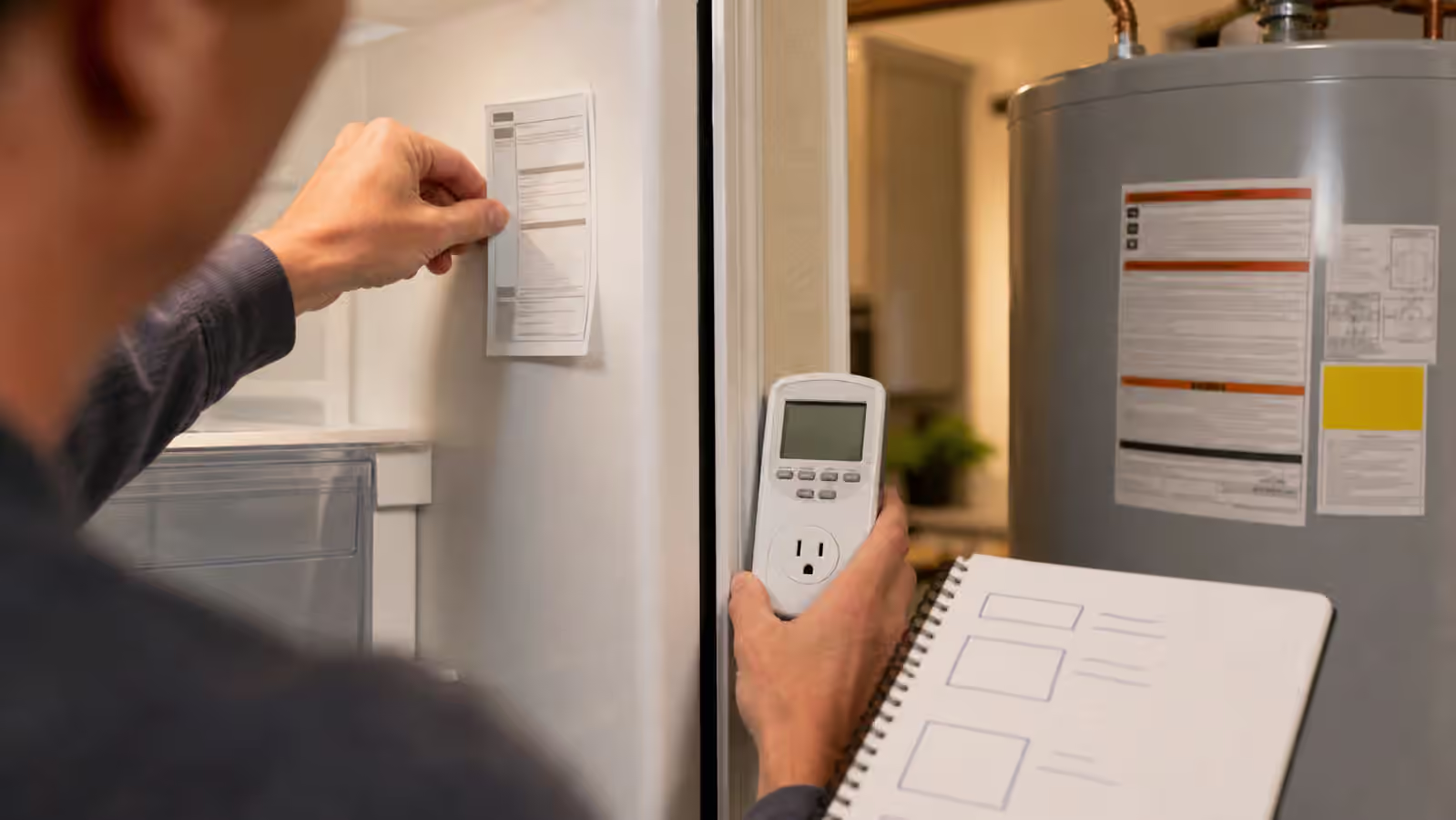
A smart plug is most useful when it answers a question before it controls a device. How much does this printer use when it waits? Does the desk setup keep drawing power after the laptop sleeps? Does a small appliance cycle through the day? Does the media cabinet ever go truly idle? A plug-in electricity meter or energy-reporting smart plug can turn vague suspicion into a number.
The number should be measured across real use. A few seconds of wattage can mislead. A charger, desktop computer, or entertainment system may behave differently during use, sleep, updates, and standby. Measure overnight, during a workday, or through a weekend. The language from Watts, kWh, and Loads matters here because watts multiplied by hours become watt-hours. A ten-watt standby load running all month is more important than a hundred-watt device used for a short chore.
Measurement also protects convenience. If a device uses almost nothing in standby, adding a smart plug may not be worth the complexity. If a device uses a surprising amount and does not need to be ready all the time, it becomes a good candidate. The best control projects are discovered, not assumed.
Some loads should not be casually switched
Not every plug should be controlled. Refrigerators, freezers, medical equipment, sump pumps, routers needed for emergency communication, security systems, and devices with special shutdown procedures should not be placed behind casual automation without a serious reason and a safe design. Computers with external drives may need clean shutdown. Some appliances should not be cycled frequently. Some power strips are not rated or arranged for the cluster people try to plug into them.
This caution is not meant to make smart plugs scary. It is meant to keep them boring. They are best for nonessential, plug-in loads that tolerate being turned off: lamps, chargers, some entertainment gear, speakers, small office accessories, seasonal decorations, and devices that have no memory or safety issue when power is removed. A timer on the wrong device is not efficiency. It is a problem waiting for an inconvenient hour.
The same restraint applies to daisy-chaining. A smart plug should not become an excuse to pile power strips into power strips or hide warm adapters under rugs. Cord management and load control are separate habits. Good control makes the setup clearer, not more tangled.
Match the device to the habit
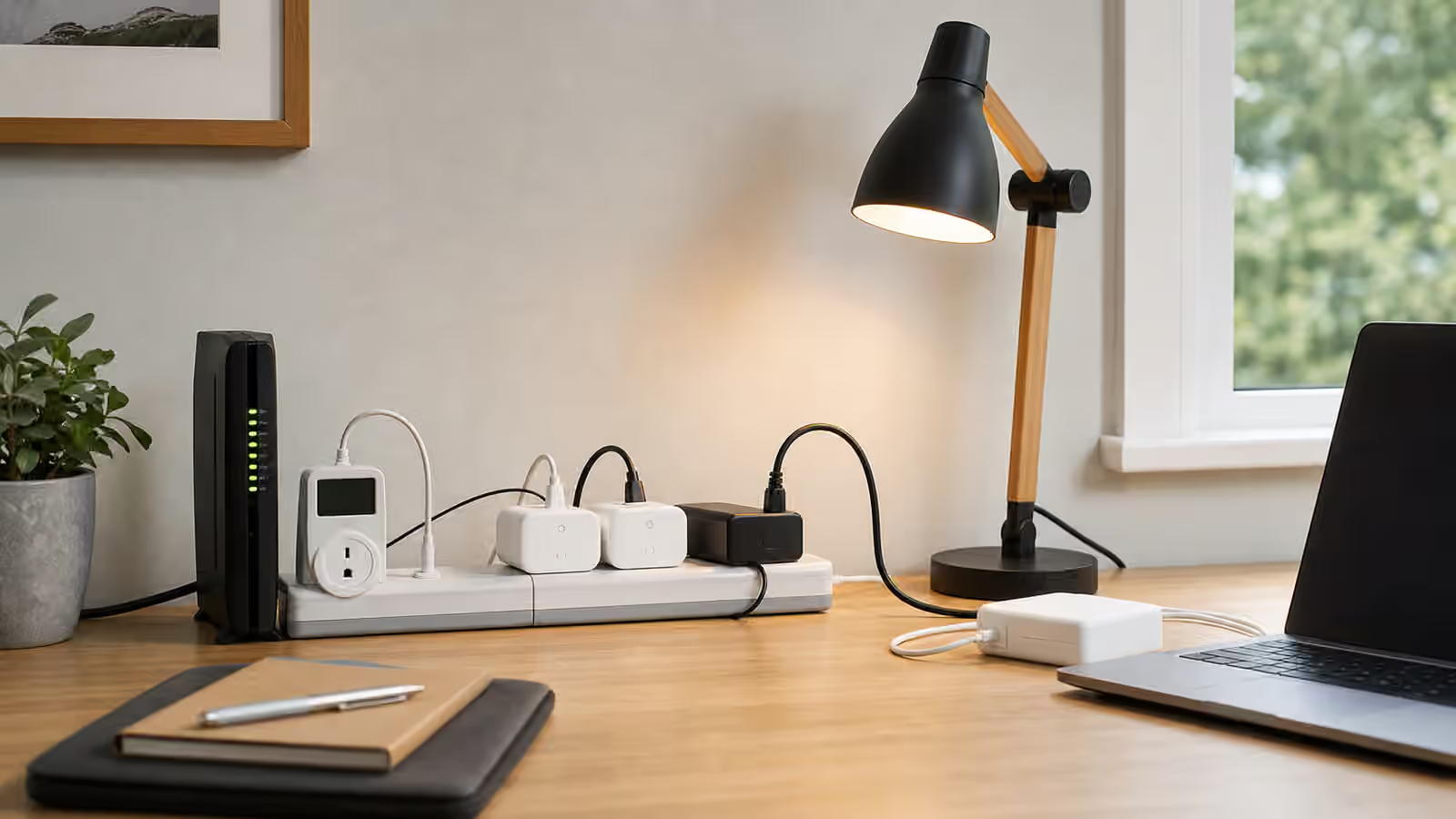
Different controls fit different habits. A switched power strip works well when several devices should shut down together and someone is already at the desk or media cabinet. A simple mechanical or digital timer works for predictable schedules, like a lamp or a device that should run only during certain hours. A smart plug helps when remote control, scheduling, or energy measurement is useful. A smart power strip can cut accessory loads when a main device turns off, although it needs testing because some electronics sleep in ways that confuse the trigger.
The household routine should decide. A home office may benefit from a switched strip that turns off speakers, a dock, task lighting, and accessory chargers at the end of the day while leaving network gear alone. A guest-room media setup may use a smart plug or strip because it is used occasionally. A workshop charger area may use a timer so batteries are not left on chargers indefinitely, if the chargers and batteries are compatible with that practice and manufacturer guidance allows it.
Controls fail when they fight the way people live. If the television takes too long to recover, someone will bypass the control. If the office strip shuts off a device that should have stayed on, it will be abandoned. A good setup should feel like tidying the room, not managing a tiny power plant.
Load shifting starts with flexible loads
Load shifting means moving energy use to a better time. That better time may be when solar is producing, when the grid is less stressed, when rates are lower under a given tariff, or when the household wants to reserve battery energy for evening. Smart plugs and timers can help with small flexible loads, but the bigger lesson is deciding which loads are actually flexible.
A router is not flexible if people need internet. A freezer is not a scheduling toy. A battery charger for a cordless tool may be flexible. A dehumidifier may be partly flexible in some homes, but only if humidity remains controlled and the equipment is used safely. A heat pump water heater may have scheduling features of its own, making it a better candidate than a plug-in timer. The more important the load, the more the control should come from proper equipment settings rather than an improvised outlet device.
Load Shifting at Home gives the broader schedule. Plug controls are the small end of that practice. They can move chargers, lamps, and accessory loads. They should not pretend to replace proper controls for HVAC, EV charging, water heating, or hardwired equipment.
Backup power rewards simple control
During an outage, every unnecessary watt shortens runtime. A portable power station connected to a router, lamp, laptop, and phone chargers behaves very differently from one that also feeds a sleeping printer, monitor speakers, and a forgotten media box. Load control before the outage makes the emergency setup less confusing.
This is where Battery Runtime Calculator becomes practical. Measure the loads that would be plugged into backup power. Then decide which should be on the backup strip and which should be physically absent from it. The most reliable outage control is often not an app. It is a clearly labeled, modest group of devices that have already been measured and tested.
Smart plugs themselves may or may not be useful during an outage. Some need Wi-Fi or cloud service for full control. Some remember their previous state. Some do not. If a smart plug is part of an outage plan, test it while the house is normal. A backup plan that depends on an app should be treated with skepticism until it has worked without grid power, without internet if that is realistic, and with the people who will actually use it.
Privacy and reliability belong in the decision
Connected devices bring software into a place where a simple switch might have been enough. That does not mean smart plugs should be avoided, but it does mean the choice should include reliability, local control options, update behavior, account requirements, and what happens if the network is down. A mechanical timer has no app. A switched strip has no firmware. Those older tools are sometimes exactly right.
For devices that do use an app, keep the setup readable. Name plugs by room and function. Avoid building a maze of automations that nobody else in the household understands. If an automation saves a few watt-hours but creates confusion, it is not a durable improvement. Energy systems are easier to maintain when the logic is visible.
The same idea applies to data. Energy-reporting smart plugs can be useful for a short measurement campaign and then moved to the next load. They do not have to become permanent surveillance for every outlet. Measure, learn, simplify, and keep the controls that continue to solve a real problem.
Make the house quieter, not fussier
The best plug-load control is almost invisible. The desk shuts down cleanly. The guest room stops waiting for guests who are not there. Chargers do their work and then rest. Backup loads are measured before a storm. A few flexible devices run at better times. The household does not have to think about every indicator light.
Start with one cluster. A home office, media cabinet, workshop charging shelf, or seasonal display is enough. Measure it, decide what readiness is useful, choose the simplest control that fits, and record the result in Whole-Home Energy Map . Small controls are not a substitute for insulation, efficient equipment, solar, or batteries. They are the housekeeping layer that keeps those larger decisions from carrying avoidable waste.