Many home energy projects begin with one uncomfortable room. The bedroom is cold with the door closed. The home office overheats every afternoon. The living room feels drafty even when the thermostat says the house is warm. The basement feels damp. The kitchen bakes in summer after dinner. It is tempting to treat that discomfort as proof that the main equipment is wrong, but a room can misbehave for many reasons. For background, see DOE — Energy Saver (2022): heating, cooling, and heat pumps .
Room-by-room diagnostics slow the decision down. They ask what the room is experiencing before the household buys a larger heat pump, adds a space heater, changes thermostat settings, or calls the whole house inefficient. A room has sun, shade, walls, windows, ducts, doors, plug loads, people, moisture, and habits. The system serving it may be part of the problem, but it is rarely the only thing worth checking.
Begin with the pattern, not the complaint
The first question is when the room feels wrong. A bedroom that is cold only on windy nights suggests a different problem than one that is cold every morning after the door has been closed. A west-facing office that overheats at four in the afternoon may be fighting solar gain and computer equipment more than HVAC capacity. A basement that feels damp in summer may need moisture planning rather than more cooling. The pattern is the diagnostic tool.
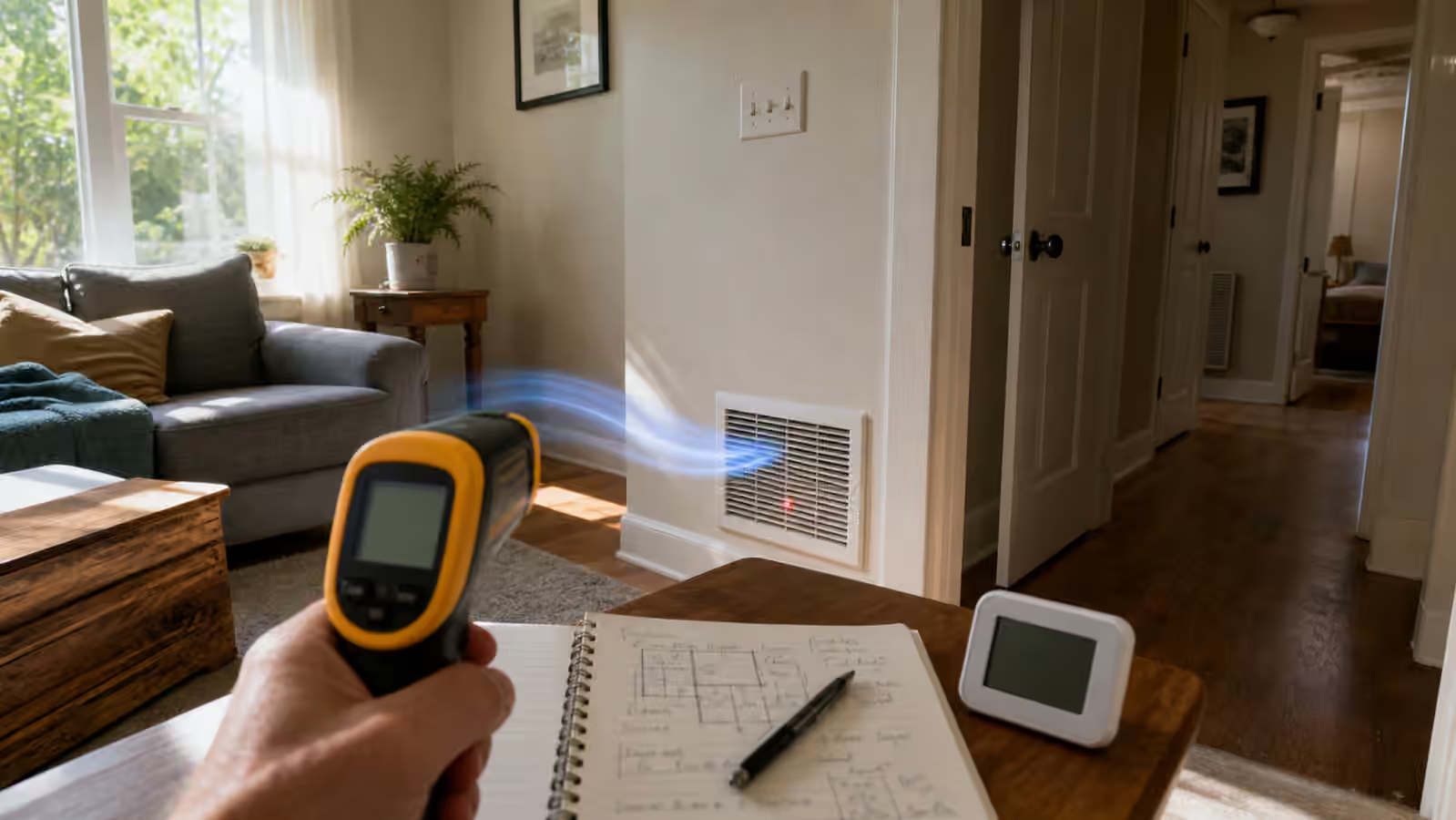
Write down the season, time of day, weather, door position, window covering, equipment running, and what the thermostat is doing. That sounds fussy until the pattern appears. The room may be fine when the door is open. It may fall behind only during strong sun. It may be affected by a return-air path, a blocked vent, an attic leak, a crawlspace connection, or a large device. A few days of notes can prevent a very expensive guess.
Home Energy Monitoring Basics can help when the room contains real loads. A gaming computer, printer, dehumidifier, aquarium, freezer, or home office setup can turn electricity into heat inside a small space. The utility bill may not identify the room, but a plug-in meter and observation can.
Airflow is often the missing middle
Comfort depends on air reaching the room and returning from it. A supply vent can be open and still weak because of duct leakage, poor balancing, a dirty filter, a closed damper, a crushed duct, or a room layout that blocks movement. A room can receive air but have no easy return path when the door closes. The result may be pressure differences, uneven temperatures, and noise.
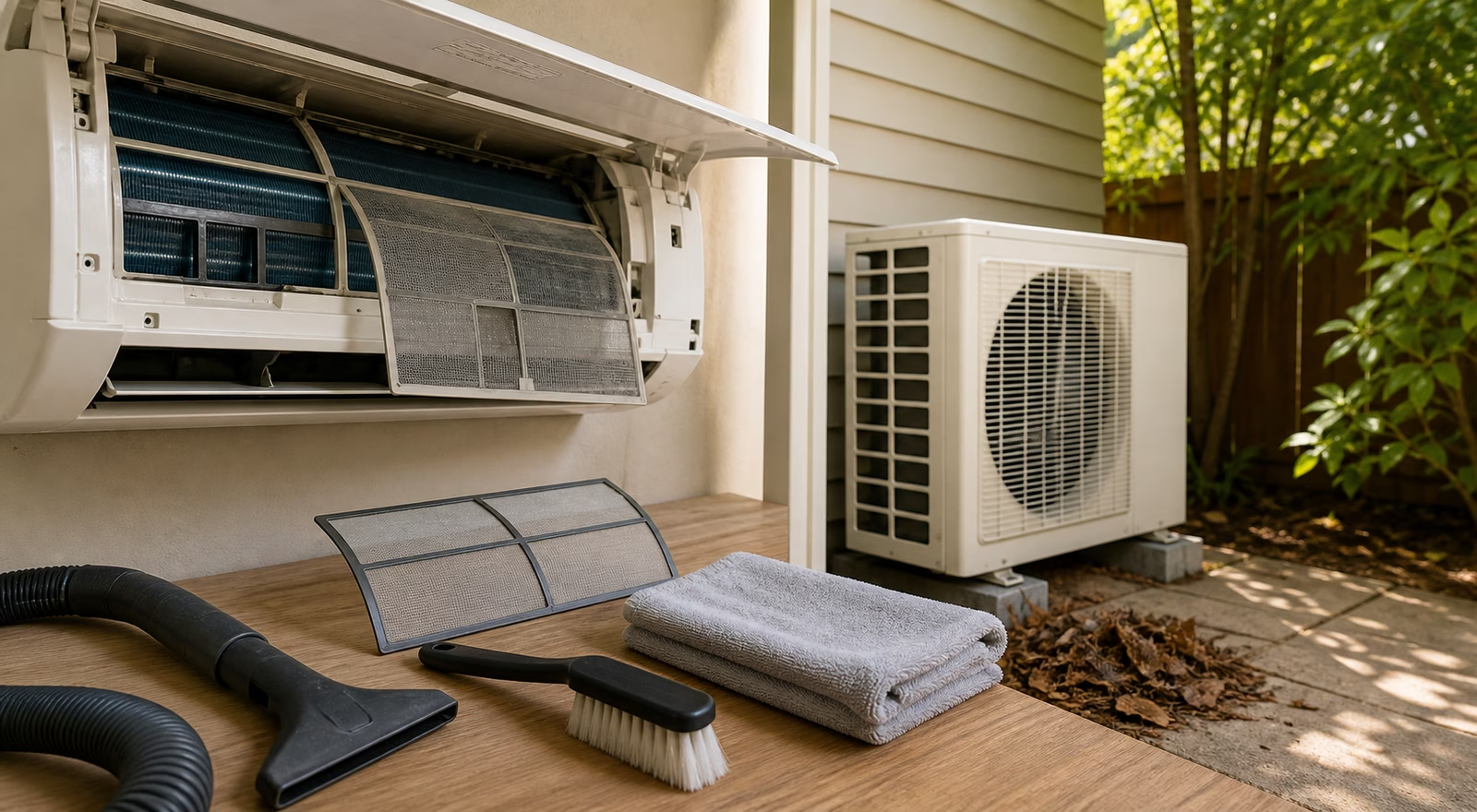
Ductwork and Airflow for Heat Pumps explains why airflow matters for equipment performance, but the room-level version is easier to see. Does the room change when the door is open? Does a tissue or light ribbon near the vent show strong flow, weak flow, or no flow? Is furniture blocking a register or return? Does the filter look neglected? Are some rooms blasting air while others barely move? These are homeowner observations, not duct design.
The fix may require a professional, especially if ducts need sealing, balancing, redesign, or insulation. Still, the homeowner can bring better evidence than “this room is bad.” Evidence helps separate equipment capacity from distribution. A strong system with poor distribution can disappoint. A well-sized heat pump cannot comfort a room that air cannot reach.
Windows and surfaces shape comfort
A room can feel cold or hot because of surfaces, not only air temperature. Cold glass can make a person feel chilled even when the thermostat is satisfied. Strong sun can heat floors, desks, and walls long after the air conditioner starts. A poorly insulated wall or ceiling can radiate discomfort. Drafts can make a room feel worse than its average temperature.
Window Shading and Solar Heat Gain focuses on cooling seasons, while Window Insulation and Winter Comfort looks at cold-weather windows. The diagnostic habit is the same in both seasons: notice what the room is facing. Afternoon sun, bare glass, leaky sashes, missing storm windows, thin curtains, or furniture placed against a cold wall can all change comfort.
Surface comfort explains why a small intervention can sometimes beat a large equipment change. Exterior shade, better curtains, an interior window insert, air sealing around trim, or moving a desk away from a window may improve the room without changing the main system. Those fixes are not universal, but they deserve consideration before buying more capacity.
Thermostat location can hide the room
Most homes have fewer thermostats than rooms. The main thermostat reports the conditions near itself, not the conditions in the difficult room. If the thermostat sits in a hallway, near a sunny wall, above a heat source, or in a room with different airflow, it may satisfy the system before another room catches up. Smart sensors and zoning can help in some homes, but they can also create new control complexity if the underlying airflow or envelope problem remains.
Thermostat Schedules and Home Energy is useful because a schedule can either reveal or mask room problems. A deep setback may make a weak room lag during recovery. A steady setting may make the same room tolerable. A closed bedroom door may create a problem only at night. The schedule and the room should be evaluated together.
Do not use thermostat changes as a permanent substitute for diagnosis. Raising or lowering the whole house to fix one room may waste energy and make other rooms uncomfortable. A better room plan asks why the room is different.
Moisture and air quality are part of comfort
Comfort is not only temperature. Humidity, odors, dust, and stale air can make a room feel wrong even when heating and cooling look fine. A basement office may need Dehumidifier Energy Planning . A newly tightened room may need better transfer air or ventilation thinking from Ventilation Planning After Air Sealing . A bathroom-adjacent bedroom may be affected by weak exhaust. A room over a garage may have envelope and air-sealing concerns.
Moisture patterns deserve caution. Condensation, musty smells, staining, or persistent dampness should not be treated as ordinary comfort complaints. They may point to ventilation, drainage, insulation, air leakage, or building problems that need appropriate expertise. Energy work should not hide moisture. It should make moisture easier to understand.
Air quality also affects equipment choices. A room that feels stale with the door closed may need airflow or ventilation attention before someone buys a portable heater or cooler. Adding a device can increase energy use without solving the underlying air path.
Use temporary fixes as tests
Temporary changes can be useful if they are treated as tests rather than permanent hacks. Opening a door, moving furniture away from a register, closing a shade during peak sun, changing a filter, running a bath fan longer, or measuring a plug load can reveal the direction of the problem. The lesson should be recorded. If opening the door fixes the room, the return path deserves attention. If shading fixes the afternoon heat, solar gain deserves attention. If a plug load is larger than expected, the room may be carrying an internal heat source.
Temporary electric heaters and portable air conditioners need special care because they can create large loads and safety issues. Portable Electric Space Heater Energy Planning and Window and Portable AC Energy Planning cover those devices more directly. They may help a room, but they should not be used to ignore a duct, envelope, or moisture problem that keeps getting worse.
Room diagnostics succeed when the room becomes understandable. The answer may still be a heat pump adjustment, duct repair, weatherization work, shading, a small appliance change, or professional design. The difference is that the household is no longer buying equipment in response to a vague feeling. It is responding to a pattern.