Refrigerators and freezers are easy to underestimate because they rarely feel dramatic. They do not roar like a generator, pull attention like an EV charger, or invite a large proposal like solar panels. They sit in the background and cycle. Over a full day, that background load can matter more than many appliances people notice. During an outage, the same quiet load becomes a practical question about food, thermometers, battery runtime, and how often the door opens. For background, see DOE — Energy Saver (2022): refrigerators and freezers .
Cold storage belongs in the home energy plan because it is both an everyday baseline load and a resilience load. Watts, kWh, and Loads gives the language for understanding power and energy. Home Energy Monitoring Basics explains how to measure instead of guess. A refrigerator or freezer is where those ideas become concrete: a compressor starts, rests, defrosts, responds to room temperature, and repeats whether anyone is paying attention or not.
Nameplate watts are not the daily load
The label on an appliance may tell you something about electrical requirements, but it does not tell the whole energy story. A refrigerator draws more power while the compressor is running and much less when it rests. Some models also run fans, controls, lights, heaters, or defrost cycles. The daily energy use depends on the appliance, room temperature, door openings, food load, seal condition, coil cleanliness, and how hard the machine has to work to reject heat.
This is why a single watt reading can mislead battery planning. If a meter catches the compressor while it is off, the appliance looks tiny. If it catches startup or defrost behavior, it may look larger than its ordinary average. The useful number is energy over time, usually measured across at least a full day and preferably across several normal days. A basement freezer in a cool room, a garage refrigerator in summer heat, and a kitchen refrigerator opened constantly by a large household can behave like different categories of load.
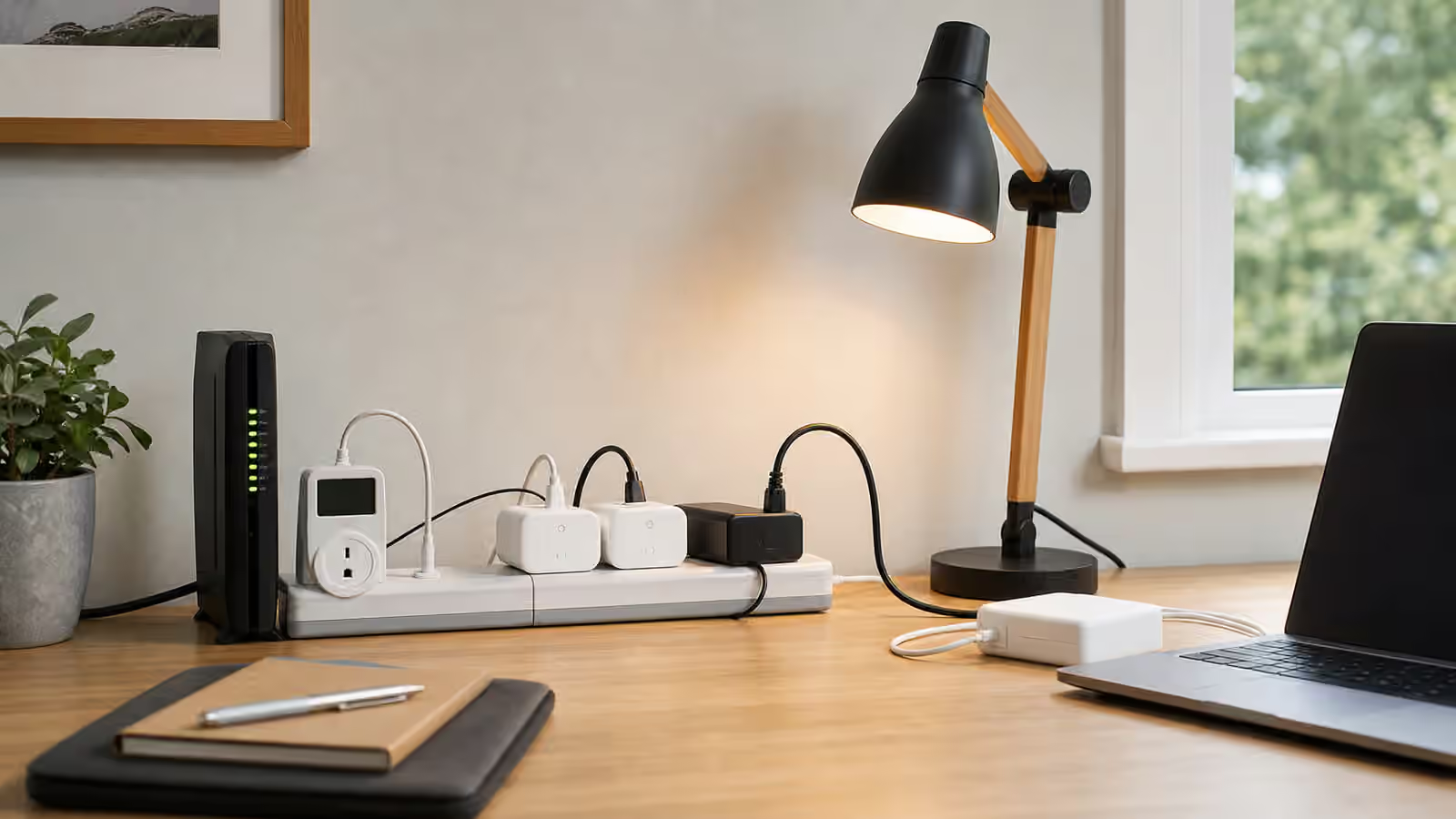
A plug-in energy meter can be useful when the appliance is within the meter’s rating and the setup follows the device instructions. Hardwired equipment, damaged cords, questionable outlets, and overloaded adapters are not measurement projects. When measurement is safe, write down the total watt-hours or kilowatt-hours, the duration, the room conditions, and anything unusual about use. A number without context is easy to misuse later.
Location changes the work
Refrigerators and freezers are heat movers. They pull heat from the box and dump it into the room. That means the room around the appliance matters. A unit in a hot garage, a tight alcove, a sunny pantry, or a dusty mechanical room can work harder than the same unit in a cooler, ventilated space. The appliance manual usually specifies clearances and acceptable ambient conditions, and those details are not decorative. They are part of the energy plan.
Airflow around the appliance should be treated like ordinary maintenance. Blocked vents, dirty condenser coils, and crowded storage can make the machine run longer. Door gaskets matter too. A weak seal lets warm, moist air enter, which can increase runtime and frost. The fix may be simple cleaning or adjustment, or it may be a sign that an aging appliance is no longer worth treating as harmless background load.
Extra refrigerators deserve special attention. A second unit in the garage may be useful for a household that stores bulk food, harvests, beverages, or meal prep. It may also be an old appliance kept alive because it still turns on. The energy question should not be moralized. It should be measured. If a second appliance uses meaningful energy all year but protects little value, it may be a poor trade. If it supports a real food system and is reasonably efficient in its location, it may deserve a place in the plan.
Outage planning starts with the thermometer
Backup power can help protect food, but the first outage tool is an appliance thermometer and a door discipline plan. Outage Food, Water, and Communications covers the safety side: keep doors closed, use thermometers, follow official food safety guidance, and do not rely on smell or optimism. The energy side begins after that, with a realistic understanding of how much load the cold storage actually adds.
A refrigerator is often a tempting battery load because food matters and the load is intermittent. That does not make runtime simple. The compressor may start with a brief surge. The average energy may rise in hot weather. A freezer that is opened often during an outage may lose its advantage. A battery that runs a refrigerator comfortably for one household may disappoint another if the second home has an old garage unit, warm room conditions, and several door openings per hour.
Use Battery Runtime Calculator with measured energy when possible. If measurement is not available, treat estimates as rough planning placeholders and add margin. Backup Power Sizing is also relevant because cold storage may share a battery with routers, lights, medical-adjacent needs, sump pumps, or communications. The refrigerator is important, but it is rarely the only load asking for attention.
Do not put food safety on a clever timer
Some loads are flexible. Laundry, dishwashing, water heating, and EV charging can often move to easier hours with a sensible schedule. Cold storage is different. A refrigerator or freezer may coast for a while if closed and already cold, but that does not mean it should be casually controlled by a timer, smart plug, or homemade strategy. Manufacturer instructions, food safety, compressor protection, and household risk all matter.
If a home has solar, batteries, or time-of-use rates, the safer question is usually not “how do I turn the refrigerator off more often?” The safer question is “how do I keep the appliance maintained, measured, well placed, and included in the baseline?” Some advanced systems may manage loads under defined rules, but cold storage should be treated conservatively. The penalty for a bad experiment is not just an uncomfortable room. It can be spoiled food and a household decision made under stress.
There are still sensible habits. Let hot foods cool according to food safety guidance before storing them. Avoid standing with the door open while deciding what to eat. Keep frequently used items easy to find. Check that the door closes fully. Defrost manual-defrost freezers when needed. Keep the appliance full enough to have thermal mass but not so packed that air cannot circulate. These habits are ordinary, but ordinary habits shape long-duration loads.
Measurement turns suspicion into a decision
A refrigerator that seems expensive may not be the problem. A freezer that seems harmless may be a steady drain. A plug-in meter, a few days of data, and a seasonal note can settle the argument better than guessing. Measure a normal weekday and a weekend if use differs. If the appliance lives in a garage or hot room, measure during the season when that location is hardest on the unit. If a defrost cycle appears in the data, record it rather than treating it as an error.
Once the daily energy is known, put the appliance on Whole-Home Energy Map . Mark it as an always-on load and an outage consideration. If it is important during outages, decide whether it belongs on a critical-loads plan, a portable power routine, or a manual extension-cord setup that follows equipment instructions and safety boundaries. Critical Loads Panel Planning is the place to think about permanent backed-up circuits, while portable batteries demand their own cord and placement discipline.
The final decision may be maintenance, replacement, relocation, or simple acceptance. Some appliances earn their energy use. A reliable freezer full of food in a cool basement may be a better household tool than many gadgets. An old refrigerator heating a garage all year for a few drinks may be harder to defend once its measured use is visible. The point is not to shame cold storage. The point is to stop letting an always-on appliance remain invisible just because it is quiet.