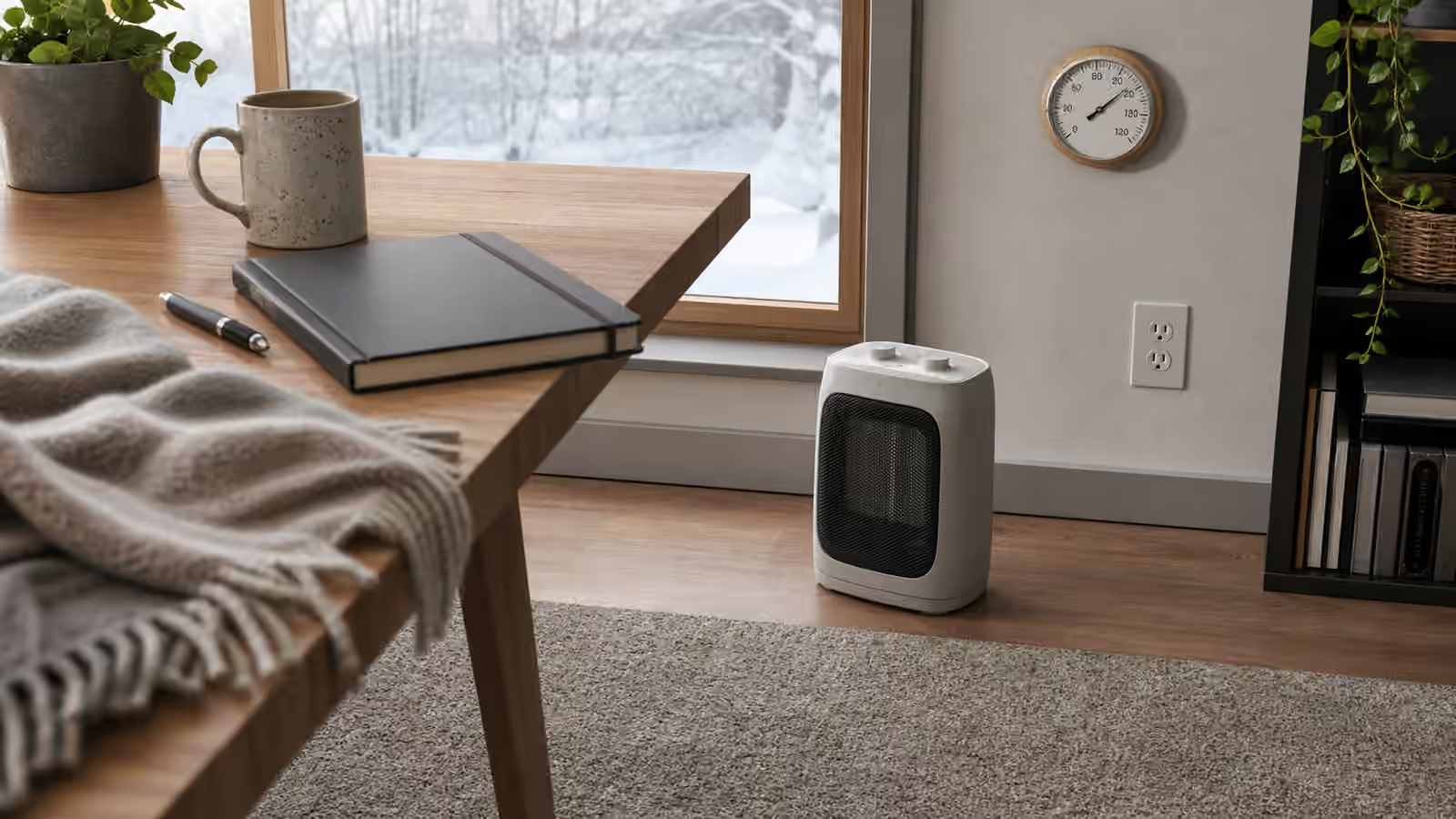
A portable electric space heater is simple to understand and easy to misuse as an energy plan. It turns electricity into heat in the room where it sits. That can be useful when one desk, bedroom, workshop corner, or temporary living area needs a little help. It can also hide a draft, overload a weak circuit, raise a bill quietly, or give a false sense that the home’s heating problem has been solved. For background, see DOE — Energy Saver (2022): assessing home energy use .
The useful way to treat a space heater is as a visible load and a comfort clue. It tells you where people feel cold, when central heat is not reaching a room, and how quickly a small resistance heater changes comfort. It also draws enough power that it belongs in Watts, kWh, and Loads rather than in the mental category of small appliances.
The wattage is ordinary, the run time is not
Many portable heaters use a familiar household outlet and draw roughly the kind of power that makes a circuit notice. The exact number depends on the model and setting, but the energy math is plain: a resistance heater that runs for many hours can add meaningful kilowatt-hours. A short warm-up at a desk is different from all-day operation in a cold room. The heater’s size is less important than how long it runs and what else shares the circuit.
This is why Home Energy Monitoring Basics helps. A plug-in meter can show actual consumption over a day or week. The result often surprises people because the heater feels like a small box but behaves like a major load when used for long stretches. A heater that runs under a desk every workday may matter more than a larger appliance that runs briefly.
Run time also changes the comparison with central heat. A space heater may save energy if it lets a person warm one occupied room while lowering heat elsewhere. It may waste energy if it runs in addition to central heat without changing the larger heating pattern. The bill does not care that the heater felt local. It counts the hours.
A cold room deserves a diagnosis
A space heater often appears in the room that should be investigated first. Is the room over a garage, under an attic, at the end of a duct run, beside leaky windows, or exposed to strong wind? Does it have a closed door, blocked register, poor return path, bare floor, or thermostat located somewhere else? Does the room cool quickly after the heater turns off? Those clues point toward building and airflow issues rather than a permanent need for portable resistance heat.
Home Energy Audit and Air Sealing and Insulation Priorities give the slower path. A draft at the baseboard, cold exterior wall, attic bypass, or uninsulated knee wall may be a better target than buying another heater. Ductwork and Airflow for Heat Pumps may matter if the room is served by forced air but never receives enough supply or return flow.
The heater can still be useful during diagnosis. It can keep a person comfortable while a room is studied. It can show whether a small amount of added heat solves the complaint or whether the room loses heat so fast that envelope work is needed. It should not end the investigation automatically.
Placement and circuits are not side details
Portable heaters deserve conservative placement. They should be used according to their instructions, kept away from items that can overheat, and placed where they are not likely to be knocked over, covered, or crowded. They should not be treated as background equipment that disappears under laundry, bedding, paper, curtains, or furniture. The safest-looking plan is the one that leaves the heater visible, stable, and boring.
The circuit matters too. A heater may share a circuit with computers, lamps, chargers, a printer, a vacuum, or other outlets in nearby rooms. A tripping breaker is not an invitation to try a different unsafe workaround. It is a sign that the load plan needs attention. Extension cords and power strips are especially poor matches for high-load heaters unless the manufacturer explicitly allows a specific arrangement, and many do not.
Electrical Panel Planning Before Home Electrification is mostly about larger upgrades, but the same mindset applies here. The home has circuits with limits. A plug-in heater may be temporary, but the load is real.
Thermostats and habits decide the energy result
A space heater with a thermostat or low setting can behave very differently from one left on high. The goal is usually comfort in a small zone, not turning the room into a separate climate. A room thermometer helps because people tend to judge cold rooms emotionally. If the room is already comfortable, the heater may be running from habit. If the room warms quickly and stays warm after the heater cycles off, a lower setting may be enough. If the room never stabilizes, the building problem is probably larger than the heater.
Timing matters. A heater used for twenty minutes before sitting down at a desk is not the same as a heater that starts at breakfast and runs until bedtime. A heater used during a rare cold snap is not the same as a heater that carries a bedroom all winter. Thermostat Schedules and Home Energy can help coordinate central heat with local comfort, but the schedule should be comfortable enough that people do not immediately defeat it with plug-in heat.
Noise, light, and air movement also affect whether a heater is acceptable. Some people dislike fan noise. Some heaters create hot spots. Some rooms feel warmer with a small fan or better air mixing instead. Ceiling Fans and Room Circulation may help in rooms where warm air collects above the occupied zone.
Backup power changes the answer
Portable heaters are usually poor backup-power loads. They convert electricity to heat directly, which can drain batteries quickly and stress small generators or inverters. During an outage, a portable power station that can run lights, phones, a router, and a small medical device may be overwhelmed by electric resistance heat. A generator may run a heater, but fuel, circuit capacity, ventilation safety, and load priority still matter.
Outage Priority List should treat electric heat carefully. Keeping people warm may be essential, but the method may involve building heat retention, safe clothing and bedding strategies, a properly designed heating system, fuel planning, or a generator system installed for that purpose. A random plug-in heater should not be assumed to be the outage answer.
This is where Portable Power Station Buying Guide can prevent disappointment. Battery capacity that seems large for electronics can look small when connected to resistance heat. Backup heating is a system decision, not a last-minute outlet decision.
Use the heater as a temporary tool with a memory
The best space-heater plan leaves a record. Which room needed it? What outdoor conditions triggered use? How long did it run? Did the central thermostat change? Did a plug-in meter show heavy use? Did the room have drafts, blocked airflow, or window problems? Those notes turn a portable heater from a recurring mystery into evidence.
A household may decide that the heater is fine for a specific corner during rare conditions. It may decide that the room needs air sealing, duct balancing, a heat pump adjustment, better window coverings, or a larger renovation. It may decide that a home office should move to a warmer room in winter. Each of those decisions is clearer than simply buying another small heater and hoping the bill stays quiet.
Portable electric heat is not bad by definition. It is direct, controllable, and useful in narrow situations. It becomes a problem when it replaces diagnosis, ignores circuit limits, runs for long hours unnoticed, or gets counted as backup power without energy math. Treat it like a real load and a useful clue, and it can help the home energy lab ask better questions about comfort.