
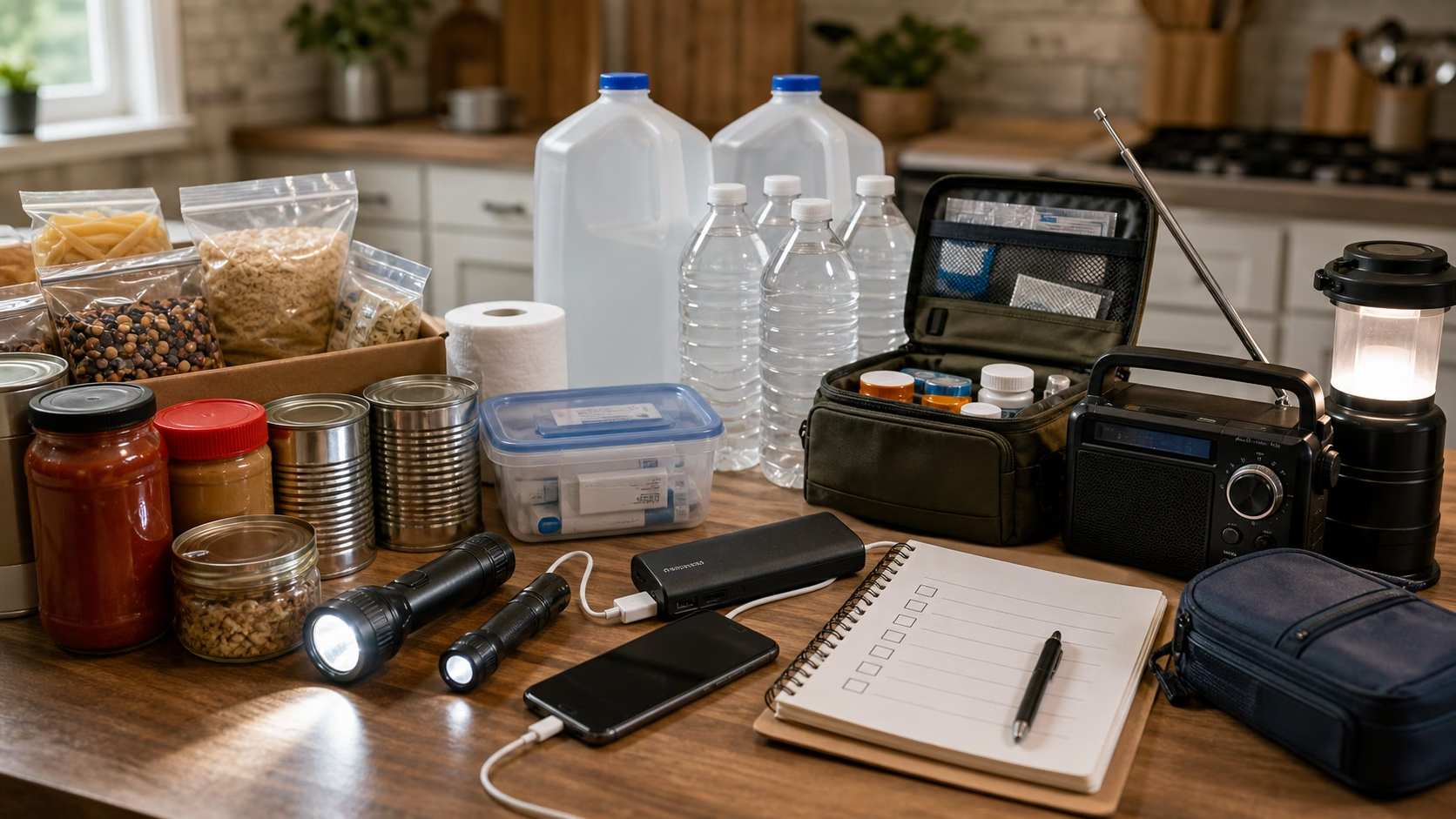
Backup power is only one part of outage prep. It is easy to focus on batteries, panels, and generators because they feel like equipment you can buy your way into. The harder truth is that food, water, communication, medication, lighting, and temperature safety often matter more than another watt-hour of storage.
The best outage plan starts by making the household less fragile. A phone that can charge is useful. A phone that also has printed emergency contacts beside it is better. A refrigerator backed by a battery is useful. A refrigerator with a thermometer and a food safety plan is better. A bright flashlight is useful. A lantern you can actually find in the dark is better.
Food Safety Is A Clock, Not A Guess
Ready.gov, CDC, and FDA all point toward the same calm habits. Keep refrigerator and freezer doors closed as much as possible. Use appliance thermometers. Know what must be discarded. Use coolers and ice when appropriate. When in doubt, throw it out.
Ready.gov and CDC give a common planning rule: a closed refrigerator keeps food cold for about 4 hours, and a full freezer can hold temperature much longer if unopened. Those are planning anchors, not permission to rely on smell or optimism. Food safety becomes much easier when a thermometer tells the story. A backup battery may help, but the first protection is not opening the door every few minutes to check.
Water And Communication Need Their Own Plan
Store water before storms when possible. If your water depends on a pump, electricity matters. If local officials issue boil-water or safety instructions, follow those instructions rather than improvising. Water planning is not glamorous, but it is one of the fastest ways to make an outage less frightening.
Communication also deserves a layer that does not depend entirely on the home internet staying alive. Charge phones before expected storms. Keep a battery bank and car charger available. Print key emergency contacts. Have a local alert method that does not require scrolling social media. A hand-crank emergency radio is old-fashioned in exactly the right way: it gives you another path to information when the usual path is down.
Lighting is similar. A phone flashlight is fine until the phone is the thing you are trying to conserve. A rechargeable LED lantern gives a room usable light without turning every movement into a one-handed balancing act. Cooler ice packs are not exciting, but they are the kind of small preparation that makes food decisions calmer.
Medical Needs Are Not Generic Loads
If you use refrigerated medicine or power-dependent medical equipment, make a plan before the outage with your medical provider, device provider, or pharmacist. Do not rely on a generic battery estimate for critical care. The question is not just how many watts a device draws. It is how long it must run, what backup method is approved, what happens during transport, and who to call when the plan breaks.
Once the non-gadget plan is clear, backup sizing gets easier. A refrigerator thermometer, radio, lantern, phone charging plan, and water plan may reduce the pressure to run the entire house. The goal is not to own the largest backup system. The goal is to keep the household safe, informed, fed, and reasonably calm.
Official references: Ready.gov Power Outages , CDC Power Outage Safety , and FDA Food and Water Safety During Power Outages .
Apply this guide as a decision record
Use Outage Food, Water, and Communications: The Non-Gadget Backup Plan to turn a vague household question into a checkable one. Its scope is specific: A practical outage prep guide for food safety, water, phones, radios, medicines, lighting, and communication plans. Before changing the setup, write down the condition you are trying to change, the constraint that matters most, and the evidence you still lack.
For a first pass through outage food water communications, compare the current state with a relevant baseline and record one observation, measurement, or conversation. Make the smallest reversible change available. Keep the manual, model number, room condition, schedule, or maintenance note beside the decision so a future check does not depend on memory. Keep outage prep, food safety, water in view as separate signals instead of treating them as one verdict.
A useful follow-up asks whether Outage Food, Water, and Communications: The Non-Gadget Backup Plan improved the named problem without creating a new one. Check the tradeoff that fits this subject — heat, noise, comfort, water, power, wear, effort, or cost — and describe the result in plain language. If a boundary is safety-critical, stop at the guide’s limit and bring the details to a qualified local professional.
The conclusion for outage food water communications should stay narrow. Record what was observed, which condition made the result possible, what maintenance keeps it dependable, and what would make you revisit the choice. That turns a guidebook into a decision record you can use again rather than a promise to remember.


