Load shifting is the practice of moving flexible energy use to a better time. That can mean charging an EV overnight instead of during dinner, running a dishwasher after the kitchen peak has passed, heating water when solar production is strong, or pre-cooling a home before the hardest part of a hot afternoon. The idea sounds technical, but the household version is mostly about rhythm. For background, see Virginia Tech Extension — Estimating Appliance and Home Electronic Energy Use .
The goal is not to make daily life feel like managing a control room. A useful schedule should reduce strain on the electrical panel, make better use of solar production, preserve battery capacity, and lower avoidable peaks while leaving the home easy to live in. If the plan requires constant attention, it will fade. If it follows habits the household already has, it can become almost invisible.
Flexible loads are not all the same
The first step is separating loads by how much timing freedom they really have. Refrigeration, medical equipment, sump pumps, security equipment, and network gear may have little room to wait. Cooking has some flexibility but is usually tied to people being hungry. Heating and cooling are comfort loads with thermal inertia, which means the home may be able to coast for a while if the building shell is decent. EV charging, dishwashing, laundry, water heating, and some pool or workshop loads often have more room to move.
That difference matters because load shifting should not punish the essential parts of the home. A refrigerator does not become more efficient because someone delays it. A sump pump does not wait for a convenient hour. An EV that sits parked for ten hours has far more scheduling freedom. A heat pump water heater with a tank can sometimes store hot water before demand. A dishwasher can often wait until later in the evening. The schedule should follow the physical behavior of the load, not a generic wish to use less energy.
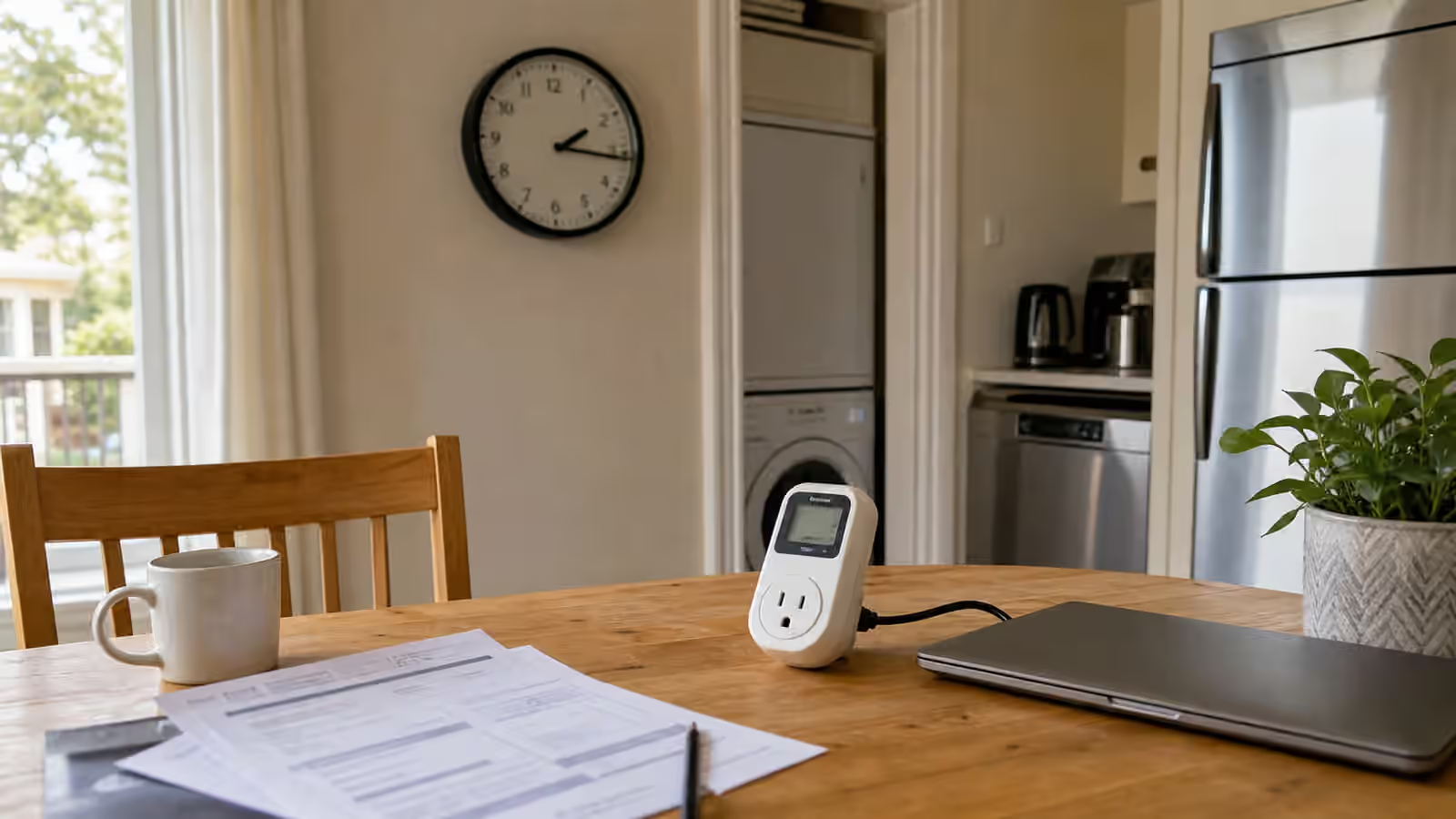
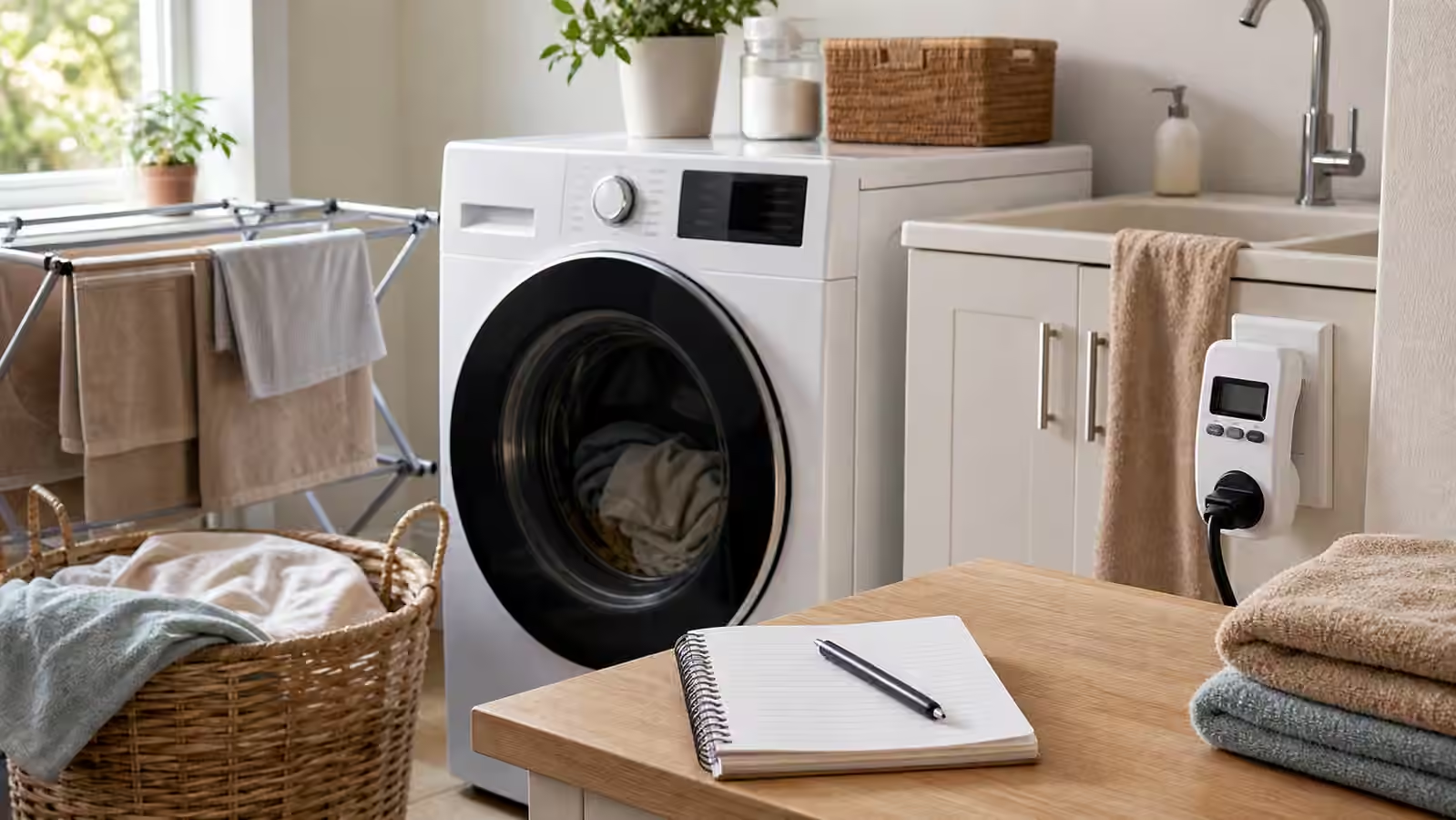
Home Energy Monitoring Basics helps here because timing is easier to change when you know what actually runs. A utility bill shows monthly shape, while a monitor or plug-in meter shows which loads repeat and which ones are occasional. Once the patterns are visible, load shifting becomes a planning tool rather than a superstition.
EV charging is the obvious candidate
Home EV charging is one of the cleanest examples because the car is often parked much longer than it needs to charge. The household need is not maximum charger output. The need is enough energy by the next departure. That distinction is the center of EV Charging Load Planning , and it is also the center of load shifting.
A charger may be configured below its maximum output. Charging may be scheduled for quieter household hours. Some systems can respond to solar production, utility signals, or load management equipment. Those options are not interchangeable, and they depend on the vehicle, charger, electrical installation, and local program rules. The evergreen lesson is simpler: the car should fit the home rather than forcing the home to behave as if every night is an emergency fast-charge session.
Load shifting can also preserve panel capacity. If the EV charger, dryer, range, heat pump, and water heater all compete at the same time, the panel conversation gets harder. If the EV can charge later, slower, or under managed control, the same home may be easier to electrify. That does not replace professional load calculations or permits, but it gives Electrical Panel Planning Before Home Electrification a better set of assumptions.
Water heating can store comfort
Water heating is easy to ignore because the tank sits quietly until it fails. Yet a tank of hot water is stored thermal energy. A Heat Pump Water Heater Planning project can include timing because the tank may be able to recover during easier hours and coast through others. That can be useful in a home with solar, a home trying to avoid evening peaks, or a home where several large electric loads have started to share one panel.
The details belong to the specific equipment. Some controls are simple. Some are app-based. Some households use more hot water at predictable times, while others have scattered demand. A schedule that leaves showers cold is not a smart schedule; it is a failed one. The useful approach is to understand the household’s ordinary hot-water rhythm, the tank size, recovery behavior, room conditions, and any backup resistance elements before assuming the water heater can carry a large timing strategy.
Sound and airflow matter too. A heat pump water heater may be more noticeable at certain hours, especially near bedrooms or quiet rooms. A schedule that looks good on a graph may be annoying in a hallway closet. Load shifting has to respect the building, not only the electrical meter.
Solar changes the shape of the day
Solar production can make midday energy feel abundant, but only if the home can use it or store it under the system’s actual rules. A sunny roof may export power while the house is empty, then import power when cooking, laundry, charging, and cooling arrive in the evening. Load shifting can move some flexible use into the production window, but it cannot move every part of life to noon.
This is where Solar Panel Sizing and the household schedule meet. A dishwasher with a delay setting, a water heater with appropriate controls, an EV parked at home during the day, or a battery charging strategy may all change how much solar is consumed on site. The value of that change depends on utility arrangements and equipment, which vary too much for a universal rule. The practical question is evergreen: does moving this load help the system you actually have, or does it only make the schedule more complicated?
Solar timing also exposes weak assumptions. A portable battery connected to a small panel may not recharge fast enough to support a daily shifting habit. A home battery may reserve capacity for outage backup instead of daily cycling. A water heater may not be available during sunny hours because the household uses hot water in the morning and evening. Good scheduling starts with the life of the home, then asks what the equipment can support.
Comfort loads need a gentle hand
Heating and cooling are tempting targets because they are large loads, but comfort cannot be shifted like laundry. A home can sometimes pre-cool before a hot period, reduce a short peak, or coast through a mild hour without discomfort. A leaky house, a poorly insulated attic, weak ducts, or a system that relies heavily on backup resistance heat may have much less room to maneuver. Air Sealing and Insulation Priorities can create more flexibility by letting the home hold temperature longer.
Heat pumps deserve particular care. Large thermostat setbacks can backfire in some systems if recovery triggers auxiliary heat or forces the system into a less efficient pattern. Controls, climate, installation quality, and backup heat settings all matter. Heat Pump Maintenance and Heat Pump Sizing Basics are useful companions because the schedule is only as good as the system underneath it.
Comfort load shifting should be tested gently. If a small adjustment keeps the house comfortable and reduces a peak, it may be worth keeping. If the home becomes clammy, too cold, too hot, noisy, or dependent on emergency settings, the schedule is asking too much. The point is to improve the system, not win an argument with the thermostat.
Make the schedule durable
A durable energy schedule is simple enough to survive guests, busy weeks, and storms. It should name the loads that can move, the loads that must not move, and the controls that make the timing happen. It should also leave manual overrides clear. A household should know how to charge the car immediately when needed, how to run laundry outside the usual window, how to return the thermostat to ordinary operation, and how to protect backup reserves before a forecast outage.
This is why Whole-Home Energy Map is more useful than a scattered collection of app settings. Put EV charging, water heating, laundry, dishwashing, solar production, battery reserve, and comfort loads on one page. The schedule will reveal itself as a set of relationships. The car can wait. The refrigerator cannot. The water heater may be able to recover earlier. The dryer may be the wrong load to run during a panel peak. The heat pump may need steadiness more than cleverness.
Load shifting is successful when it disappears into ordinary life. The house still works. The car is ready. Hot water is available. Comfort remains steady. The panel sees less avoidable overlap. Solar has better places to go. Backup power is not drained by loads that could have waited. That is enough. A home energy schedule should make decisions calmer, not make the people in the home feel scheduled by the equipment.