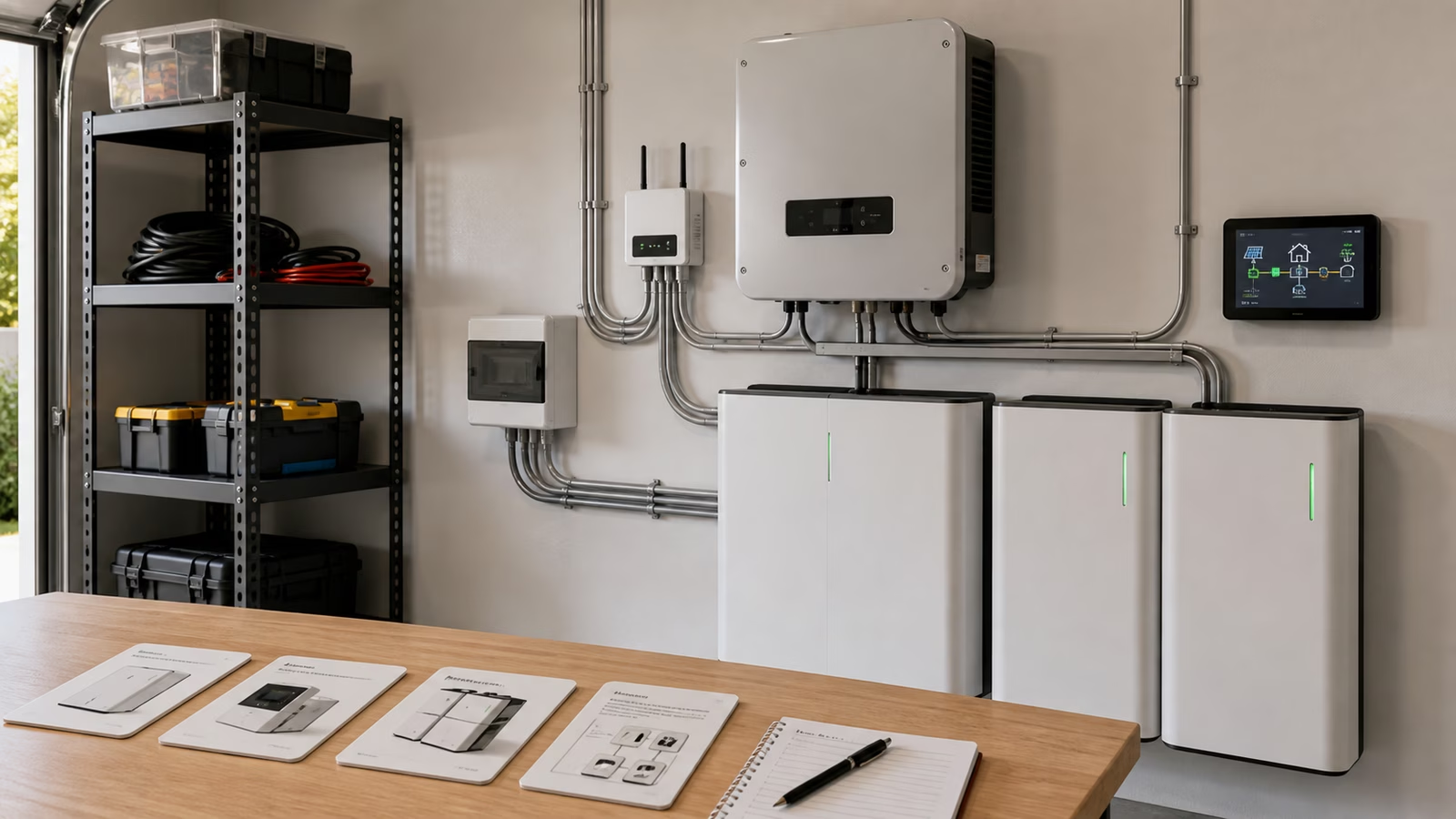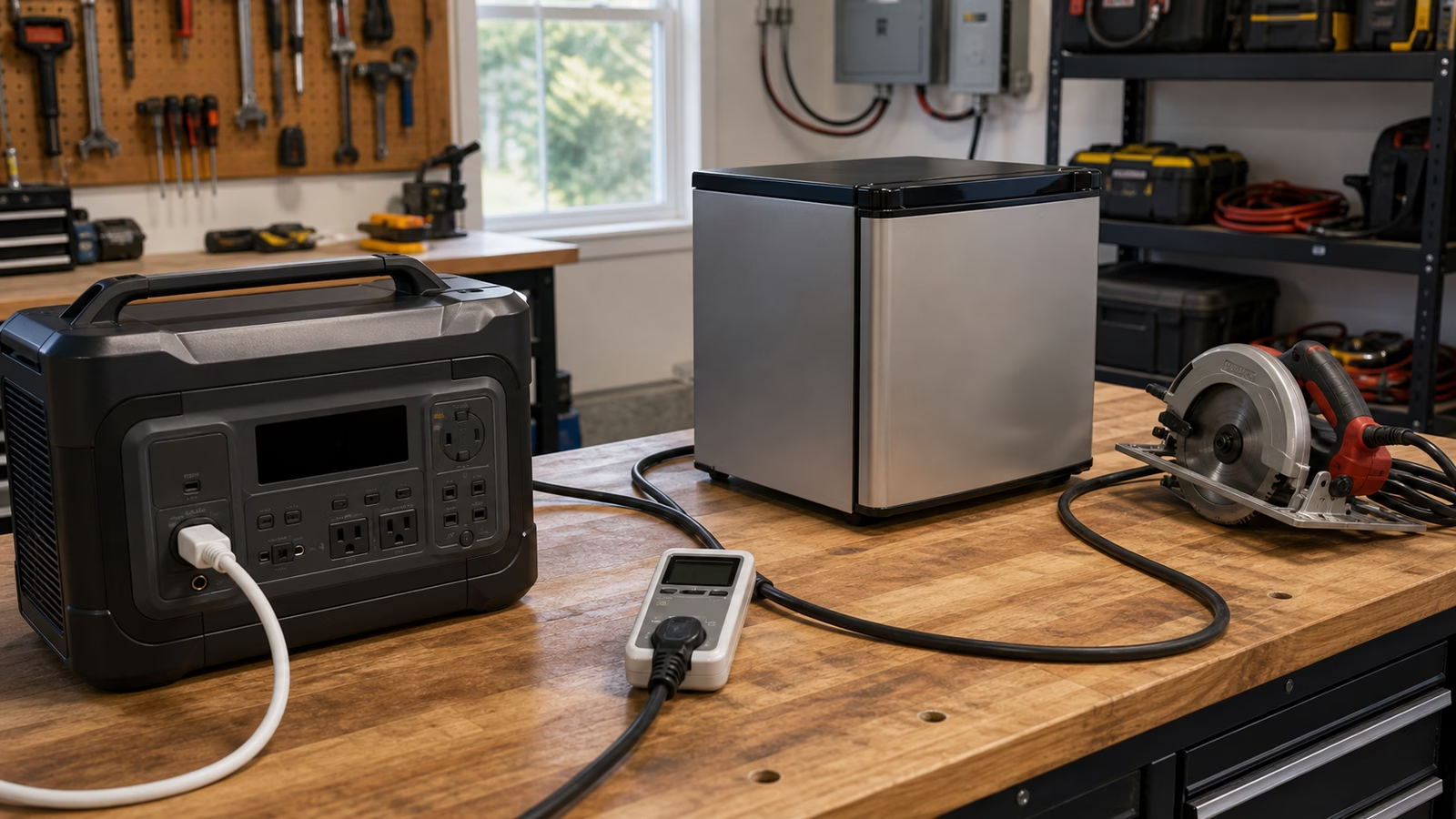
An inverter converts battery DC power into AC power your home loads can use. It is the translator between stored energy and ordinary household equipment. When it is sized badly, the result is especially frustrating: the battery may have plenty of energy sitting inside it, but not enough output to start the refrigerator, run the pump, or support the combination of loads you actually care about.
This is why inverter sizing has to be tied to a load list. Watt-hours tell you how long energy might last. Inverter output tells you what can run in the first place. A small battery with a strong inverter may run a demanding load briefly. A large battery with a weak inverter may run gentle electronics for a long time but fail at the appliance that motivated the purchase.
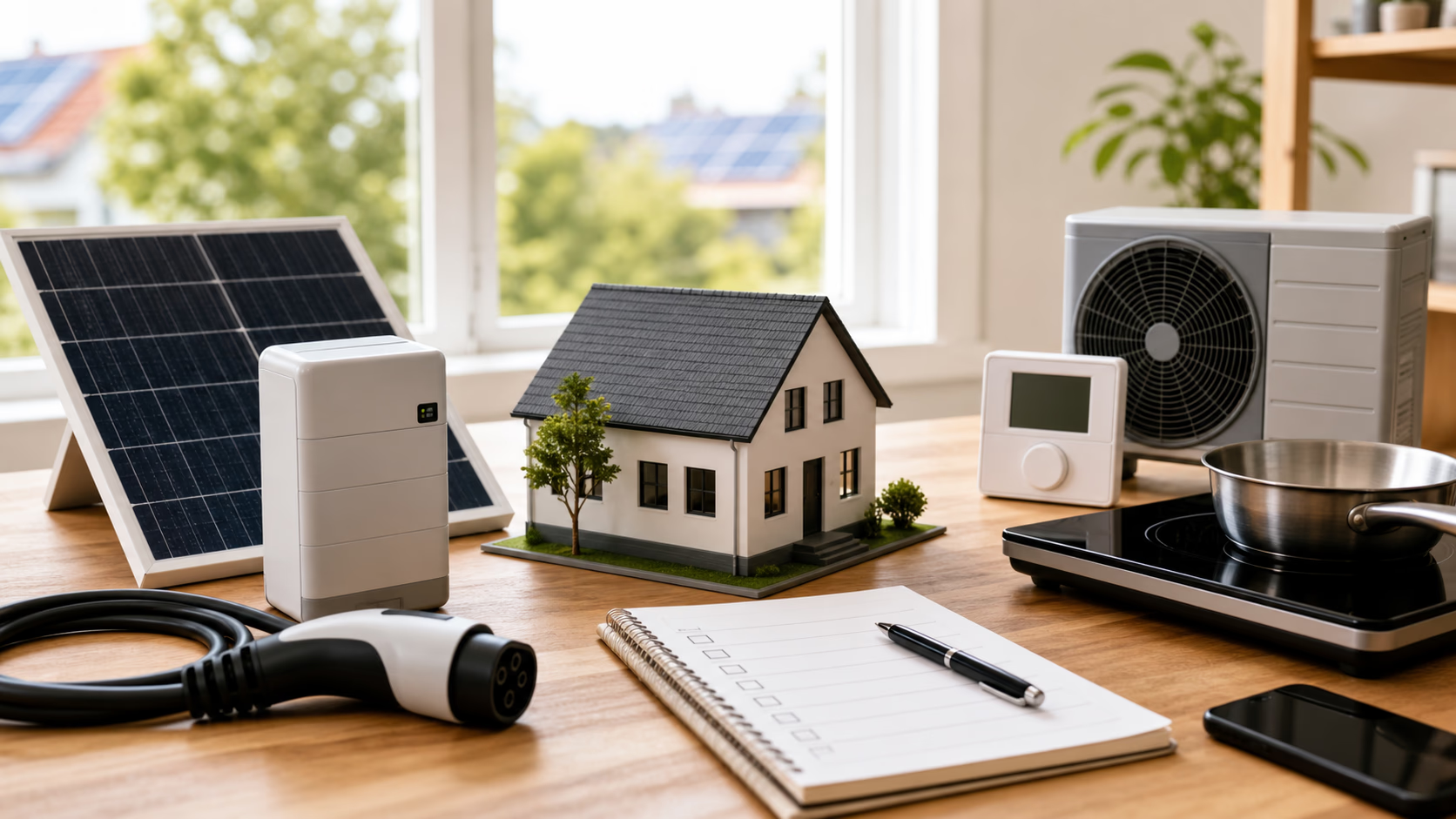
Continuous Power Is The Everyday Limit
Continuous output is the power the inverter can provide steadily. If a router, lamp, laptop, and small fan might run at the same time, their combined draw belongs in the continuous conversation. The number should leave margin, because real loads vary and inverters may have limits based on temperature, battery state, outlets, or operating mode.
The practical question is not “How many outlets does it have?” It is “What will I actually plug in together?” A device with many outlets can still have one shared output ceiling.
Surge Power Is The Moment Of Truth
Motors, pumps, compressors, and some tools may need a short burst of power at startup. A refrigerator, freezer, sump pump, air conditioner, or well pump can draw far more for a moment than it uses while running. That moment is where many undersized backup plans fail. The screen may show enough stored energy, but the inverter trips when the compressor starts.
Surge is also why measured or documented load data matters. Guessing from an appliance label can be misleading. If the load is important, research its startup behavior or have the system designed by someone who understands it.
Voltage Changes The Conversation
Many portable power stations are built around 120V loads. That can be perfect for phones, routers, laptops, lights, small appliances, and some refrigerators. It does not automatically help with 240V or split-phase loads such as many well pumps, dryers, ranges, EV chargers, and some HVAC equipment.
Do not assume a battery can run a large appliance because the watt-hour number looks impressive. Voltage, inverter output, outlet design, wiring, transfer equipment, and manufacturer rules all matter. If the plan involves panel integration or permanent wiring, it has moved beyond casual plug-in backup.
Waveform And Compatibility Matter
For household electronics and motor loads, pure sine wave output is the normal target. Modified sine wave inverters can create compatibility problems, extra heat, noise, poor motor behavior, or device refusal. The cheaper inverter is not cheaper if it makes the load unreliable.
The decision should feel concrete. Identify the largest load you want to run, what may run at the same time, which loads have startup surge, whether any load needs 240V, whether transfer equipment or a subpanel is part of the plan, and what the manufacturer allows. If any part of that answer includes permanent wiring, panel work, or large 240V loads, bring in a qualified electrician.
For upstream load planning, read Watts, kWh, and Loads . For system safety, read Solar Electrical Safety .
Apply this guide as a decision record
Use Inverter Sizing: Continuous Watts, Surge, 120V, 240V, and Load Reality to turn a vague household question into a checkable one. Its scope is specific: How to think about inverter sizing for portable power stations, home batteries, solar systems, and backup loads. Before changing the setup, write down the condition you are trying to change, the constraint that matters most, and the evidence you still lack.
For a first pass through inverter sizing, compare the current state with a relevant baseline and record one observation, measurement, or conversation. Make the smallest reversible change available. Keep the manual, model number, room condition, schedule, or maintenance note beside the decision so a future check does not depend on memory. Keep inverter, sizing, backup power in view as separate signals instead of treating them as one verdict.
A useful follow-up asks whether Inverter Sizing: Continuous Watts, Surge, 120V, 240V, and Load Reality improved the named problem without creating a new one. Check the tradeoff that fits this subject — heat, noise, comfort, water, power, wear, effort, or cost — and describe the result in plain language. If a boundary is safety-critical, stop at the guide’s limit and bring the details to a qualified local professional.
The conclusion for inverter sizing should stay narrow. Record what was observed, which condition made the result possible, what maintenance keeps it dependable, and what would make you revisit the choice. That turns a guidebook into a decision record you can use again rather than a promise to remember.