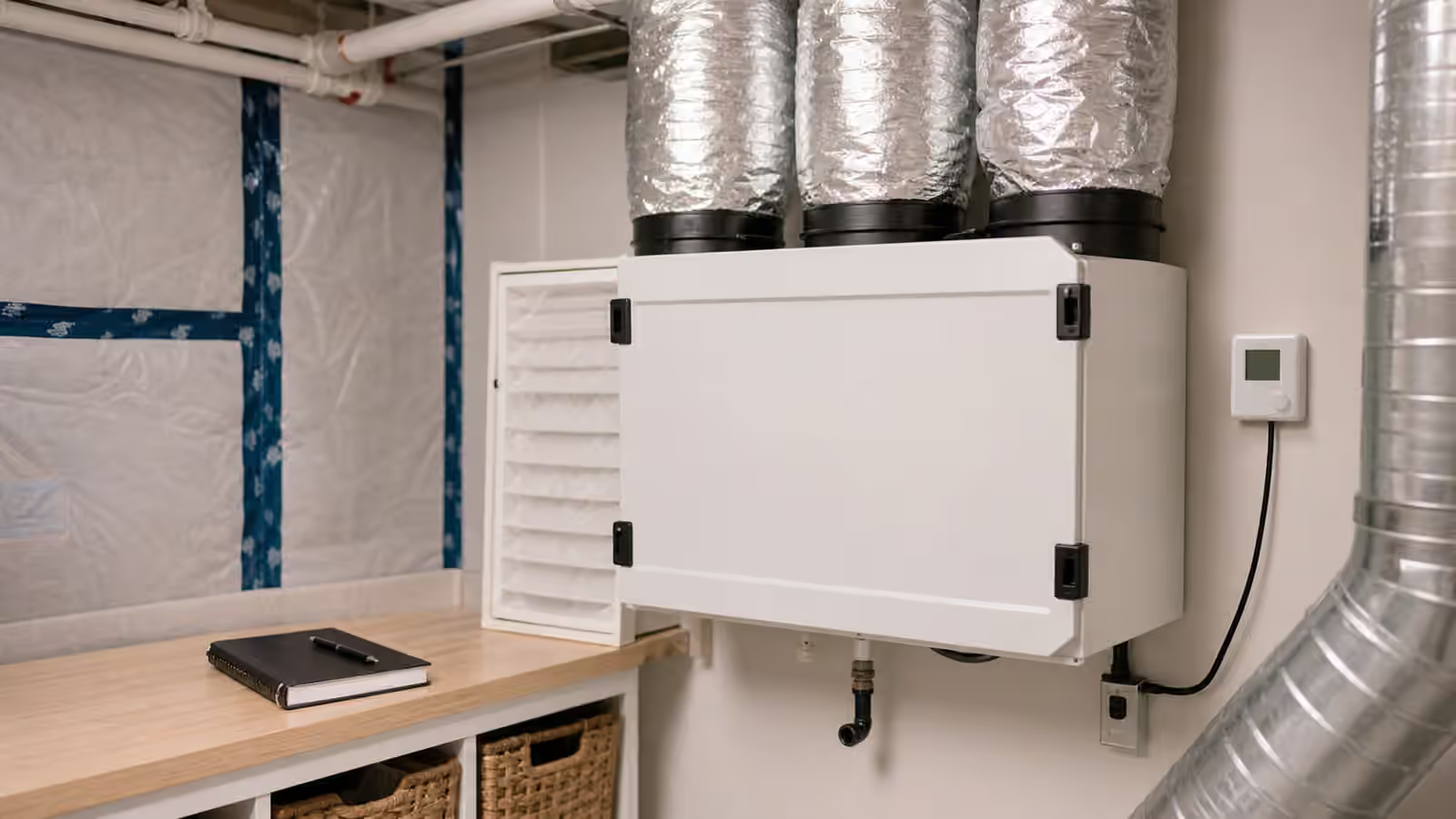
Air sealing makes a home easier to heat and cool, but it also changes how fresh air enters the building. A leaky house may have wasted energy through cracks, gaps, attic bypasses, and rim joists, yet those same leaks may have been providing accidental ventilation. Once the leaks are reduced, the home may need a more deliberate way to bring in outdoor air and remove stale or humid indoor air. Heat recovery ventilation is one answer, but it should be planned as a system rather than bought as a box. For background, see EPA — Improving Indoor Air Quality .
An HRV or ERV moves air in two directions. Exhaust air leaves the home while outdoor air comes in, and a heat exchanger transfers some energy between the two streams. An HRV focuses on heat transfer. An ERV also transfers some moisture, depending on design and conditions. The details matter by climate, building enclosure, occupancy, and moisture behavior. The useful homeowner skill is knowing when the conversation belongs in the weatherization plan and what questions to ask before ducts are installed.
Ventilation is not the opposite of efficiency
It is easy to think of ventilation as energy loss because outdoor air has to be heated, cooled, dried, or humidified. In a loose house, that is often what infiltration does: it leaks in uncontrolled air and leaks out conditioned air. Balanced ventilation is different. It brings air in through known paths, exhausts air through known paths, filters incoming air where the system allows, and recovers some energy that would otherwise leave.
Ventilation Planning After Air Sealing explains the broader principle. Heat recovery ventilation is the equipment conversation that may follow. It should not be used as a license to ignore source control. A range hood, bath fan, dryer vent, combustion appliance, moisture problem, or attached garage still needs its own attention. An HRV or ERV is part of the fresh-air plan, not a magic correction for every indoor air problem.
Efficiency and ventilation can support each other when they are sequenced well. Air sealing reduces random leakage. Insulation improves comfort. Mechanical ventilation provides intentional fresh air. Heating and cooling equipment can then be sized and controlled around a tighter, more predictable building.
The house tells you what the ventilation has to solve
Before choosing equipment, describe the symptoms and the building. Does the house feel stale after air sealing? Are there persistent window condensation patterns? Do bathrooms dry slowly? Is the basement damp? Are there odors that linger? How many people live in the home? Are there pets, hobbies, cooking habits, or workspaces that add moisture or particles? Does the home already have bath fans, kitchen exhaust, or a central air handler that runs often?
The answers do not automatically prove that an HRV or ERV is required, but they shape the design conversation. A small, tight home with several occupants may need a different strategy than a larger home with modest occupancy. A humid climate asks different questions than a cold dry climate. A house with recurring moisture problems needs source diagnosis, not only more air movement. Dehumidifier Energy Planning may belong beside the ventilation conversation when moisture loads are driving energy use.
A qualified energy auditor or HVAC professional can measure leakage, review ventilation standards, and recommend airflow targets. The homeowner should bring observations, not guesses. A notebook with condensation timing, bath fan use, cooking habits, and recent air sealing work is more valuable than saying the house simply feels wrong.
Duct routing can make or break the system
The ventilation unit is only the visible appliance. Duct routing decides whether the system actually moves air where it should. Outdoor intake and exhaust locations need separation, weather protection, and sensible placement away from contaminants. Ducts through unconditioned spaces may need insulation. Long, kinked, poorly sealed, or undersized ducts can reduce airflow and waste energy. A quiet unit can become annoying if ducts or grilles are placed badly.
Supply and exhaust locations matter too. Many designs exhaust from bathrooms, laundry areas, or other stale-air zones and supply fresh air to living areas or bedrooms. Some systems connect to existing ductwork, while others use dedicated ducts. Each approach has tradeoffs around balancing, controls, filtration, noise, and interaction with heating and cooling equipment.
Ductwork and Airflow for Heat Pumps is relevant even though ventilation ducts are not the same as heating ducts. Airflow problems follow similar patterns. A well-rated machine connected to poor ducts will disappoint. A design that looks simple in a brochure can become complicated in a real attic, crawlspace, basement, or finished ceiling.
HRV and ERV choice depends on moisture as well as heat
The common shorthand says HRVs are for cold climates and ERVs are for humid climates. That may be a useful starting point, but it is too simple for final decisions. An ERV’s moisture transfer can help reduce the amount of outdoor humidity brought indoors in some cooling seasons and can help retain indoor humidity in some heating seasons. An HRV may be preferred where moisture removal is more important or where the climate and building call for that behavior. Equipment design, local practice, and the home’s moisture sources all matter.
The homeowner should ask what problem the equipment choice is solving. Is the home too dry in winter, too humid in summer, or both at different times? Does the building have a basement moisture problem that should be fixed at the source? Does the HVAC system already dehumidify well? Are there combustion safety or pressure concerns that need professional evaluation? How will filters be accessed and changed?
Do not let the equipment label replace design. A poorly installed ERV may not control humidity well. A well-designed HRV may be a better fit in some homes than a casually chosen ERV. The right answer comes from climate, enclosure, occupancy, mechanical systems, and maintenance reality.
Controls should match real life
Ventilation can run continuously, intermittently, on schedules, with boost switches, or under more advanced controls. Each pattern has tradeoffs. Continuous low-speed operation can be simple and steady. Intermittent operation may save energy but needs careful airflow and timing. Bathroom boost controls can help after showers. Occupancy and humidity controls may help in some designs but can also become confusing if nobody understands them.
The control plan should be written in ordinary language. When does the system run? When should boost be used? What setting is normal? What changes during smoke events, extreme humidity, very cold weather, vacations, or maintenance? What should occupants do if windows show condensation or the house feels stale?
Seasonal Home Energy Maintenance Calendar is a natural place to put filter changes, intake checks, condensate checks where applicable, and cleaning reminders. A ventilation system with inaccessible filters will not stay efficient. A system with blocked outdoor hoods will not ventilate correctly. Maintenance access is not a detail to leave until after installation.
Heat recovery affects HVAC planning
Outdoor air is a load. Bringing it in deliberately changes heating, cooling, and dehumidification work. Heat recovery reduces that penalty, but it does not erase it. The ventilation rate, climate, and equipment efficiency all affect how much load the HVAC system sees. This is why ventilation should be included in Heat Pump Sizing Basics instead of added as an afterthought.
A tighter home with balanced ventilation may be more comfortable and predictable than a leaky home with oversized equipment. Rooms may have fewer drafts. Humidity may become easier to manage. Odors may clear more consistently. But those benefits depend on commissioning. Airflows should be measured and balanced, not assumed. Noise should be checked at normal settings. Controls should be explained. Filters should be easy to reach.
The homeowner can ask for measured airflow results and basic maintenance instructions. Those documents are as important as the model number because they describe how the system was made to work in that house.
Fresh air belongs in the upgrade sequence
Heat recovery ventilation is rarely the first energy upgrade a homeowner thinks about. Solar panels, batteries, heat pumps, and insulation are more visible. Yet fresh air belongs in the same plan because the building enclosure, HVAC equipment, and occupants all interact. A home can save energy and still feel poor if air quality, moisture, or odors are ignored. A home can ventilate generously and waste energy if leakage and duct losses are ignored.
The calm sequence is to reduce uncontrolled leakage, understand moisture sources, choose intentional ventilation where needed, and then size heating and cooling around the improved house. Air Sealing and Insulation Priorities and Whole-Home Energy Map give that sequence a place to live.
An HRV or ERV is not a trophy appliance. It is a quiet piece of infrastructure that should make the home fresher, more predictable, and less dependent on accidental leaks. When it is planned with ducts, controls, filters, climate, and maintenance in mind, it becomes part of the energy lab’s larger discipline: measure the house, reduce waste, then add systems that solve the remaining problem on purpose.